


More news on this day
Operations at Paris Charles de Gaulle, also known as Roissy Airport, have come under renewed pressure as a cluster of European airlines suspend seven scheduled flights and rack up more than 100 delays, disrupting links between France, Switzerland, the United States, Portugal, Norway, Spain and other key markets at the height of the early summer travel period.
Get the latest news straight to your inbox!
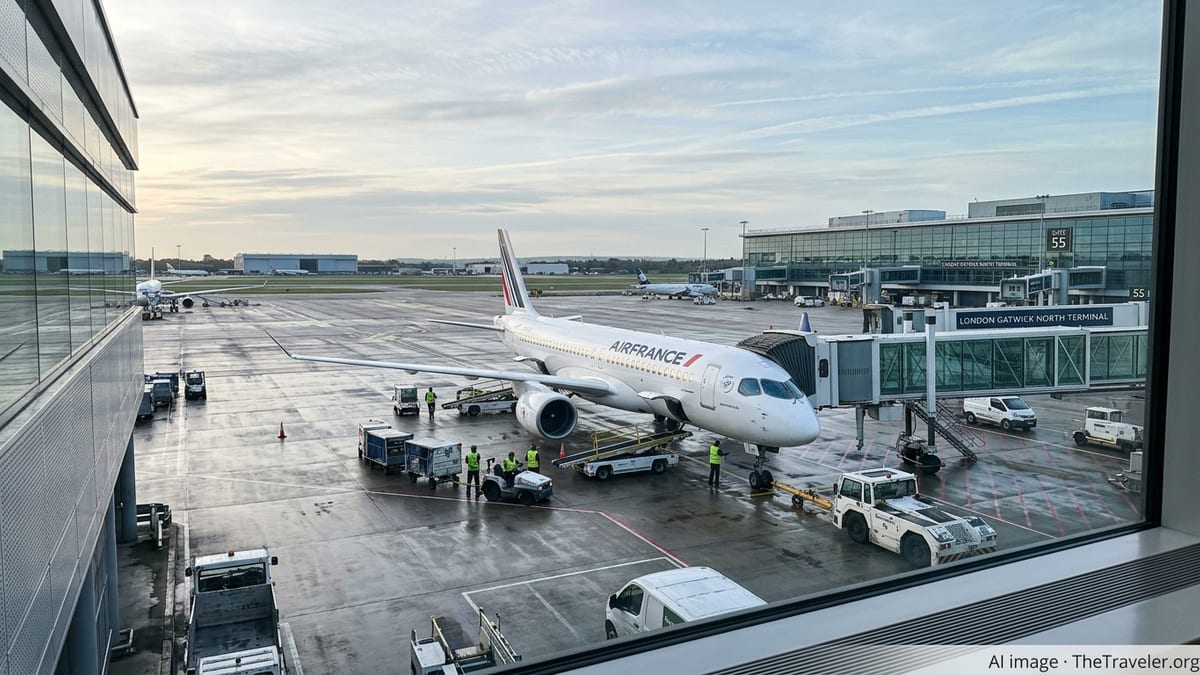
Wave of Cancellations and Delays Across Flagship Carriers
Publicly available flight tracking and airport operations data for June 24 indicate that a group of services operated by Air France, Air Baltic, KLM and regional affiliate HOP! from Paris Charles de Gaulle have been suspended, while more than 100 other departures and arrivals are operating behind schedule. The affected services include both intra European routes and long haul links connecting France with North America and Southern Europe.
The suspensions cover seven flights in total, according to aggregated schedules and disruption logs. These cancellations are spread across the four airlines, with Air France and its regional brand HOP! most prominent because of their role in feeding the Roissy hub, and KLM and Air Baltic affected on northbound and northeast European links. The cancellations are concentrated in peak travel banks in the morning and late afternoon, amplifying the impact on connecting traffic.
Alongside the outright cancellations, more than 100 flights have been recorded as delayed against their planned departure or arrival times. Data compiled from live disruption trackers and day of operation reports show that the delays range from minor schedule slips of 15 to 30 minutes through to extended disruptions of more than two hours on some long haul and European services. The pattern highlights how relatively small operational shocks at a hub like Charles de Gaulle can cascade into widespread timetable instability.
The disruption has been notable because it overlaps with a period when European aviation is already under scrutiny for punctuality. Recent travel coverage has documented heavy delay volumes at major hubs such as Paris Charles de Gaulle, Amsterdam Schiphol and London Heathrow, with more than a thousand late departures and dozens of cancellations across the region on some peak days in mid June. The latest issues at Roissy add to that pressure and underscore the fragility of the current summer schedule.
Key Routes Hit in Switzerland, the US and Northern Europe
The impact of the latest setback at Charles de Gaulle stretches well beyond Paris. Schedule data and delay reports show that routes linking the Roissy hub with Switzerland, the United States, Portugal, Norway and Spain are among those feeling the strain. These markets rely heavily on Charles de Gaulle as either an origin and destination airport or a connecting point onward to Africa, the Middle East and Asia.
On transatlantic sectors, Air France services from Paris to major US gateways have been operating with knock on delays as late arriving aircraft and crew imbalances ripple through the system. Industry tracking has recently highlighted waves of late running flights between Europe and the United States, with Paris listed among the key hubs experiencing schedule pressure. Even when departures from Charles de Gaulle remain technically on the board, substantial holding on the ground or in the air can lead to missed onward connections at both ends.
Within Europe, links to Switzerland and Norway also show elevated disruption levels. Flights between Paris and Swiss airports, including Geneva and Basel Mulhouse, and between Roissy and Oslo Gardermoen, play a significant role in channeling business and leisure traffic. When a single sector is cancelled or heavily delayed, passengers bound for long haul connections often need to be reprotected via alternative hubs such as Amsterdam, Frankfurt or London, adding further stress to already busy corridors.
The Iberian and Portuguese markets have likewise seen knock on effects. Recent coverage of delays across Spain referenced Paris and Amsterdam as upstream sources of schedule problems, and live data for the current disruption at Charles de Gaulle shows late departures toward destinations in Spain and Portugal. This includes a mix of point to point holiday traffic and connecting passengers bound for long haul flights via the French capital.
Structural Strain at a Crowded European Hub
The current bout of disruption at Charles de Gaulle sits against a wider backdrop of structural strain in the European air transport system. Industry reports on the June travel period have pointed to a combination of factors, including high seasonal demand, tight staffing levels in some airport and air traffic control functions, and the lingering impact of earlier operational constraints at French hubs where capacity had previously been reduced during periods of industrial action or infrastructure works.
Charles de Gaulle, operated by Groupe ADP, is one of Europe’s busiest airports and the primary global hub for Air France. The airport handles hundreds of daily departures, feeding both the Air France long haul network and partner services under the Air France KLM umbrella. Any shock to ground handling, aircraft availability or air traffic control capacity can quickly propagate across the tightly banked schedule, particularly around the early morning and late afternoon waves that are designed to optimize connectivity.
Publicly available long term statistics also show that punctuality at major European hubs can vary significantly from month to month, particularly when weather, technical issues or staffing disruptions strike. While many days pass with a high proportion of on time departures from Charles de Gaulle, peaks of several hundred delayed flights across France, including at Roissy, have been documented in recent weeks, highlighting how quickly performance can deteriorate when conditions align against the system.
For the airlines involved, balancing the need to maintain network integrity with the constraints of aircraft rotations and crew duty time limits can lead to difficult decisions on which flights to cancel outright. By suspending a small number of services such as the seven flights highlighted today, carriers like Air France, Air Baltic, KLM and HOP! attempt to stabilize the remainder of the schedule, even though this inevitably creates significant disruption for the passengers booked on the affected routes.
Passenger Rights and Options Under European Rules
For travelers caught up in the latest wave of delays and cancellations at Roissy, European passenger protection rules remain a key point of reference. Under the EU261 framework, passengers on flights departing from European Union airports, including Charles de Gaulle, may be entitled to assistance and, in some circumstances, financial compensation when their services are heavily delayed or cancelled and the cause lies within the airline’s control.
Recent consumer and legal guidance covering similar disruptions at French airports has underscored that passengers whose flights are cancelled at short notice, or who arrive at their destination with a delay of more than three hours, may qualify for fixed compensation amounts depending on the distance of the flight. At the same time, airlines are required to offer care such as meals, refreshments and overnight accommodation in the event of long waits, although the practical delivery of that support can vary widely at busy hubs.
Separately from compensation, individual carriers including KLM and Air France have published travel alerts and advisories in recent weeks outlining rebooking options for customers whose flights are affected by operational disruptions. These measures can include the ability to move travel dates, reroute via alternative hubs or request refunds where services have been cancelled. The precise options depend on the ticket conditions, the cause of the disruption and the period during which the airline’s flexibility policy applies.
Consumer advocates continue to encourage passengers to document the exact timing of delays, keep receipts for any additional expenses incurred and check both airline specific policies and statutory rights under EU261 or equivalent frameworks. In periods of heightened disruption such as the current one at Charles de Gaulle, clear information and proactive follow up are often critical to securing redress.
Outlook for the Summer Travel Season
The timing of the current problems at Roissy raises concerns about how resilient the wider European air transport network will be through the peak of the summer. Early season data already show a pattern of concentrated disruption days at major hubs, including Paris, Amsterdam and other large European airports, with some days recording more than a thousand delayed flights region wide.
Industry observers note that airlines and airports have sought to add resilience compared with earlier post pandemic summers, including efforts to increase staffing and refine schedules. However, the latest setback at Charles de Gaulle suggests that margins remain tight. When several variables align, from weather and airspace constraints to aircraft availability and ground capacity, even a modest spike in demand can push the system into a cycle of rolling delays.
For travelers planning to pass through Paris in the coming weeks, publicly available travel advisories recommend allowing extra time for connections, monitoring flight status frequently and being prepared to adjust itineraries if the situation deteriorates on specific travel days. While many flights will still operate broadly on time, the experience of passengers affected by the suspended services and the more than 100 delays at Charles de Gaulle illustrates how quickly conditions at a major hub can change, affecting journeys across Switzerland, the United States, Portugal, Norway, Spain and beyond.