


More news on this day
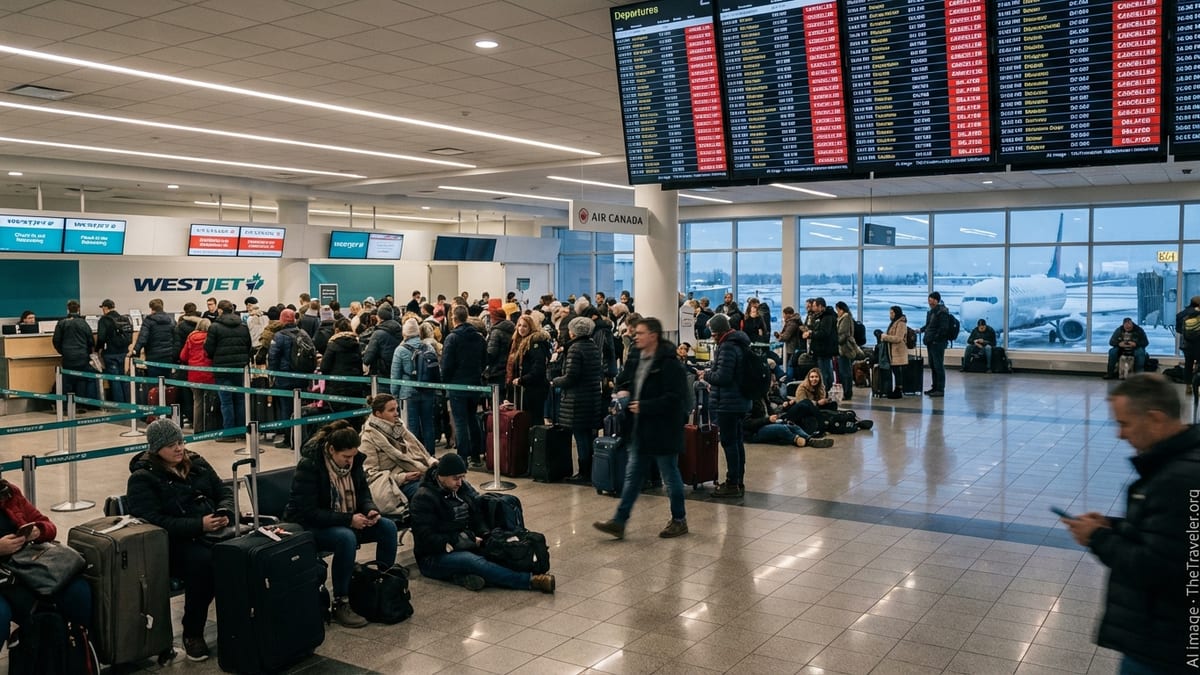
Travelers across Canada faced mounting disruption on Tuesday as operational issues at Calgary International Airport led to 36 delayed departures and arrivals and at least five outright cancellations, affecting services operated by WestJet, Air Canada Rouge, United Airlines and KLM and sending knock-on effects through Toronto, Vancouver and other key hubs.
Get the latest news straight to your inbox!
Calgary Hub Struggles Under Morning and Midday Pressure
Publicly available flight tracking data for Tuesday indicates that Calgary International Airport entered the day with relatively normal operations before delay minutes began to accumulate across morning and midday banks of departures. By early afternoon, the tally had grown to 36 delayed flights involving a mix of domestic, transborder and international routes touching Toronto, Vancouver, Montreal and several U.S. cities.
WestJet, which designates Calgary as its primary global hub and bases its widebody fleet there, appeared among the most visibly affected operators. Multiple departures to Toronto and Vancouver saw hold times built into their schedules, while several regional spokes into western Canada also posted late pushes from the gate. The carrier’s concentration of flying through Calgary meant that even minor schedule slips in the morning quickly propagated into missed connection risks for passengers heading onward to other destinations.
Air Canada Rouge, United Airlines and KLM also reported disrupted movements linked to the Calgary operation, though on a smaller scale. Rouge services tied to domestic and leisure routes, United’s cross border operations and KLM’s long haul connectivity into Europe all registered individual delays in the Calgary departure and arrival stream, adding to congestion at already busy connection banks in central Canada.
While precise causality for the disruption has not been formally detailed, patterns in the operational data suggest a combination of modest weather challenges, flow control in the surrounding airspace and ground handling constraints. Overcast conditions and low ceilings in the early hours, combined with a tightly choreographed morning departure push, appeared to leave little room for schedule recovery once the first wave of flights ran behind.
Toronto and Vancouver Feel the Knock On Effects
With Calgary serving as both an east west connector and an international gateway, the day’s disruption quickly radiated into Toronto Pearson and Vancouver International airports. Arrivals from Calgary into both hubs started posting late times, compressing the connection windows that airlines typically plan for passengers continuing on to Atlantic Canada, the United States and overseas destinations.
In Toronto, radar and schedule boards showed inbound Calgary flights arriving out of their scheduled sequence, forcing gate changes and modest re timing of onward departures. Publicly available information indicates that several flights from Toronto to secondary Canadian cities departed late after waiting on connecting customers and baggage from delayed Calgary services. This created pockets of crowding at departure gates as passengers contended with conflicting information from apps and departure screens.
Vancouver, a critical gateway for western Canada and transpacific traffic, experienced similar pressures. WestJet and partner carriers moving passengers between Calgary and Vancouver had to absorb delay minutes into already tight turnaround times, narrowing the margin for repositioning aircraft and crews. In some cases, aircraft that arrived late from Calgary were turned quickly but still pushed back behind schedule for their next legs, amplifying the ripple effects along the west coast and into northern communities.
These knock on impacts highlight the degree to which Calgary now functions as a strategic node within Canada’s aviation network, linking domestic spokes with intercontinental routes. When that node experiences disruption, even at a level below full system meltdown, the consequences are felt disproportionately in Toronto and Vancouver, where passenger volumes and connection options are highest.
Five Cancellations Deepen the Disruption for Travelers
Alongside the 36 recorded delays, at least five flights associated with Calgary’s operation were canceled during the day, removing capacity from an already constrained schedule. Publicly available tracking shows that these cancellations included a mix of domestic and cross border services, some of which were part of multi leg itineraries involving connections through Toronto and Vancouver.
For affected travelers, the removal of these flights created a familiar set of challenges. Many itineraries had to be rebooked onto later same day departures with WestJet, Air Canada Rouge or partner airlines where seats were available. In other cases, passengers were shifted to next day flights as remaining services reached or neared capacity, especially on popular business and leisure routes between major Canadian cities.
The cancellations also had operational implications beyond the immediate passenger impact. When a flight is pulled from the schedule, the aircraft and crew assigned to that segment must be repositioned or reassigned, affecting later rotations. In a hub structure as centralized as Calgary’s, several such changes in close succession can complicate the broader day of operation, particularly when aircraft are scheduled to operate long haul sectors to or from Europe and the United States.
Industry observers note that airlines in Canada continue to operate with relatively lean spare capacity outside peak seasons, limiting their ability to absorb unexpected cancellations without visible disruption. Against that backdrop, five strategic cancellations within a single day at a major hub can be enough to transform a difficult operating environment into one that feels chaotic for travelers in the terminal.
International Links with Europe and the United States Affected
Tuesday’s turmoil at Calgary also touched international connectivity. KLM, which maintains transatlantic service linking western Canada to Amsterdam, saw its Calgary related operations pulled into the day’s pattern of disruption. Even when long haul departures remained scheduled, upstream delays on feeder flights and ground handling bottlenecks at the hub placed pressure on boarding cutoffs and connection margins for passengers arriving from other Canadian cities.
United Airlines experienced similar headwinds on its U.S. bound flights tied to Calgary, particularly services connecting through major American hubs. Delays on Calgary departures to the United States in turn exposed passengers to missed onward flights within United’s domestic network, complicating travel plans that depended on tightly timed itineraries into smaller U.S. markets. Publicly available information indicates that recovery options often involved extended layovers or overnight stays to reach final destinations.
Air Canada Rouge’s role in linking Calgary to sun and leisure destinations, as well as in supplementing mainline capacity on certain domestic corridors, meant that its disruptions had a predominantly leisure focused impact. Some passengers heading from Calgary through Toronto or Vancouver onward to vacation markets reported extended waits and rebookings as the network absorbed the shock of cancellations and delays.
These international and leisure market effects underscore how closely integrated Calgary’s local operations are with transatlantic and transborder networks. Small timing shifts at the hub can cascade into schedule changes an ocean away, particularly on days when aircraft and crew are already heavily utilized during busy summer travel periods.
What Travelers Across Canada Can Expect Next
Experience from prior disruption events suggests that the operational impact of Tuesday’s travel turmoil at Calgary may extend beyond a single day. Aircraft and crews displaced by delays and cancellations often require an additional cycle to return to regular patterns, meaning that early morning departures on Wednesday could still show irregular times even if conditions at the airport improve.
Passengers scheduled to travel through Calgary, Toronto or Vancouver in the coming 24 hours are being advised by publicly available airline guidance to monitor their flight status frequently and to allow extra time for connections. Industry data across recent disruption events indicates that travelers with checked baggage and tight connection windows are particularly vulnerable when a hub experiences staggered delays like those seen in Calgary, as baggage handling and security queues can lengthen quickly.
Operational data from other major North American hubs in recent weeks, including cases of significant delays in San Francisco and Boston, points to a broader trend of constrained airline and airport systems heading into the peak summer season. Analysts note that higher load factors, limited spare crews and intense utilization of aircraft fleets leave little slack to absorb localized problems, so a weather cell, equipment issue or airspace constraint at one airport can trigger widespread knock on effects.
For Calgary and its airline partners, the priority in the near term will be schedule stabilization and clearing residual backlogs, while travelers will continue to navigate rebookings, missed connections and altered itineraries as the network resets. The events of Tuesday offer another reminder that in a tightly coupled aviation system, disruption at a single hub can quickly become a national story for passengers from coast to coast.