


More news on this day
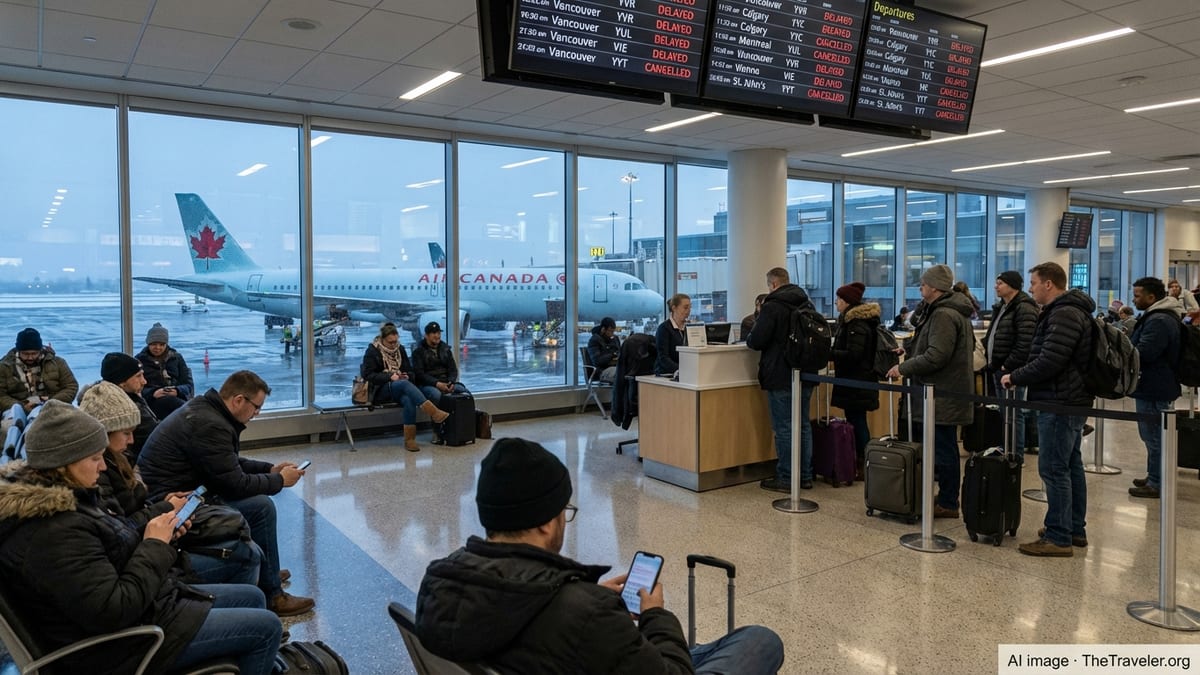
Canada’s already stretched aviation network is facing a fresh wave of turmoil as more than 100 Air Canada and WestJet flights are cancelled and hundreds of additional disruptions ripple through major airports at the height of the summer travel season.
Get the latest news straight to your inbox!
Nationwide Disruptions Hit Peak Summer Travel
Publicly available tracking data and airline updates indicate that at least 101 flights operated by Air Canada and WestJet have been cancelled across Canada within a short operating window, contributing to a broader pattern of more than 800 delays and disruptions at airports nationwide. The disruption comes just as passenger volumes approach their summer peak, straining airport infrastructure and airline schedules from Vancouver to Halifax.
Major hubs such as Toronto Pearson, Vancouver International and Calgary International appear to be absorbing the worst of the impact, with rolling delays that extend well beyond the individual cancelled services. When departures are pulled from the schedule or pushed back by several hours, aircraft and crews fall out of position, creating a cascading effect that spills into subsequent rotations and connecting flights.
Operational data and recent reporting suggest that many of the cancellations cluster around heavily trafficked domestic trunk routes, such as Toronto to Vancouver and Calgary to Toronto, as well as select transborder and international services. While most passengers are being rebooked on later flights, seat availability is tight on popular routes, making same-day alternatives difficult to secure.
Passengers have been urged in airline communications and airport advisories to check their flight status frequently, arrive early where possible and prepare for longer than usual wait times at check-in, security and boarding gates as carriers work through the backlog.
Air Canada and WestJet Under Pressure
Air Canada and WestJet, which together carry the majority of Canada’s domestic air traffic, are at the center of the latest disruption wave. Public timetables and historical performance summaries for 2026 show that both carriers usually complete more than 97 percent of their scheduled flights in a typical operating day, but the remaining fraction still translates into hundreds of cancellations over a busy travel period.
Air Canada has already been navigating a complex operating environment this year, including schedule adjustments on North American and Caribbean routes, fleet and crew realignments, and the lingering effects of earlier winter weather disruptions. Industry analyses of recent months indicate that the airline has proactively trimmed capacity on some routes to stabilize operations when storms or congestion threaten to overwhelm the system.
WestJet has simultaneously been rebalancing its network in response to rising fuel costs and evolving demand patterns. Recent public coverage highlights that the carrier has reduced capacity in the spring and into June, consolidating flights on lower-demand routes to protect performance on its busiest corridors. These structural cuts, while planned, mean that the airline has less slack in the system when day‑of disruptions occur, increasing the likelihood that cancellations will have a broader knock‑on effect.
The combination of tight schedules, constrained spare capacity and episodic operational shocks has left both airlines with a narrower margin for error. When irregular operations hit multiple hubs at once, rapid recovery becomes significantly more difficult, particularly during peak travel weeks.
Weather, Staffing and System Strain Converge
While no single cause fully explains the current wave of disruptions, several intertwined factors appear to be at play. Seasonal weather remains one of the most persistent drivers of cancellations in Canada, and recent guidance documents for 2026 highlight how snow, heavy rain, strong crosswinds and reduced visibility can prompt airlines to preemptively cancel flights to maintain safety margins and reduce the risk of extended tarmac delays.
Beyond weather, the broader aviation system is still adjusting to chronic staffing and training bottlenecks that emerged in the post‑pandemic recovery period. Many airports and air navigation services have been working to rebuild workforces, but specialist roles such as pilots, licensed aircraft maintenance engineers and air traffic controllers require lengthy training pipelines. Even incremental shortages in these areas can limit schedule flexibility, making it harder for airlines to field reserve crews or quickly swap aircraft when problems arise.
Infrastructure constraints at key hubs further compound the challenges. Terminal congestion, limited gate availability during peak waves and runway capacity restrictions can force small timetable adjustments that ripple throughout the day. When inbound aircraft arrive late due to weather or congestion at another airport, departures from Canadian hubs may be delayed or cancelled altogether if turnaround windows become too tight.
Industry analysts note that the summer travel surge magnifies all of these pressures. With load factors running high and many flights close to full, there are fewer empty seats on alternative departures, and even a modest number of cancellations can strand significant numbers of travelers or push rebookings several days into the future.
Impact on Travelers and Passenger Rights
For passengers, the immediate impact of the latest disruption wave is measured in missed connections, scrapped itineraries and long hours spent in terminal queues. Social media posts and travel forums are filled with reports of travelers facing same‑day cancellations, multi‑hour delays and difficulties securing prompt assistance from call centers and airport service counters as demand for help spikes.
Canada’s Air Passenger Protection Regulations outline entitlements for travelers affected by cancellations and long delays, including standards for communication, rebooking and, in some circumstances, compensation or expense reimbursement. Publicly available enforcement records from recent years show that carriers, including WestJet, have faced financial penalties when regulators determined that these standards were not met during previous disruption events.
Consumer advocates often urge travelers to keep detailed records of their disruption experience, including boarding passes, receipts and screenshots of flight status changes, to support any future claim. Travel insurance policies, where purchased, may also provide additional coverage for accommodation, meals or alternative transport, depending on the circumstances of the delay and the specific policy wording.
However, the distinction between disruptions within an airline’s control and those caused by weather or air traffic constraints remains critical. Available guidance emphasizes that eligibility for compensation can vary based on the cause of the cancellation, even when the passenger experience on the day feels similar.
What Passengers Can Do Now
With cancellations and delays continuing to ripple through the network, travel experts recommend that passengers adopt a more proactive approach when flying within or via Canada in the coming days. Checking flight status repeatedly in the 24 hours before departure, using airline apps where available, can provide early warning of schedule changes and may allow travelers to request alternative routings before flights become fully booked.
Arriving at the airport earlier than usual can help mitigate the impact of longer queues at check‑in and security, but travelers are also encouraged to build additional buffer time into onward connections, particularly when combining separate tickets or planning same‑day events at their destination. Choosing earlier flights in the day, when possible, may also reduce exposure to rolling delays that tend to accumulate by afternoon and evening.
Passengers whose flights have already been cancelled are generally advised, in publicly accessible guidance, to first explore self‑service rebooking tools on airline websites or apps, which can sometimes provide faster results than waiting in telephone queues. If automated options are limited, contacting the airline by phone or speaking with an airport representative may unlock additional alternatives, including rerouting through different hubs or, in some cases, moving to partner airlines.
As Canada’s aviation system works to absorb the latest wave of cancellations and delays, the coming days will test the resilience measures airlines and airports have introduced ahead of the busy summer period. Travelers, meanwhile, are likely to face a more demanding and unpredictable journey than timetables alone might suggest.