


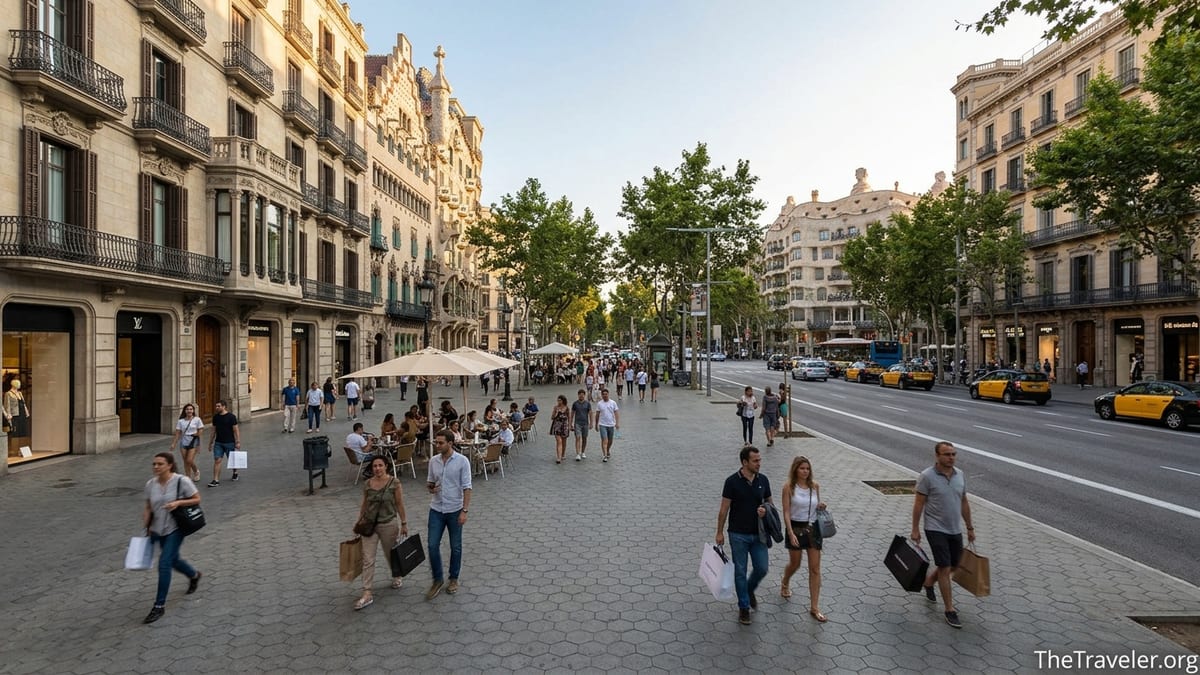
Passeig de Gràcia is Barcelona’s most glamorous boulevard, where Modernista mansions sit above flagship fashion boutiques and café terraces hum from morning until late at night. Stretching between Plaça de Catalunya and Avinguda Diagonal, this broad avenue combines big-name shopping, world-famous Gaudí architecture and a very local ritual of strolling, people-watching and lingering over coffee. This guide brings together the essentials: how to explore its architecture, where to shop at every budget, and the small practical details that help you experience Passeig de Gràcia more like a Barcelonian than a rushed visitor.
Get the latest updates straight to your inbox!
Getting Oriented on Passeig de Gràcia
Passeig de Gràcia runs roughly north from Plaça de Catalunya for just over a kilometer until it meets Avinguda Diagonal in the Eixample district. The lower section near Plaça de Catalunya feels busier and more urban, with department stores and mid-range international brands. As you walk uphill toward Diagonal, the pavements widen, the traffic eases slightly and the buildings become grander, including some of the most famous Modernista facades in the city. Think of the street as a spine: to one side you have Rambla de Catalunya, a more relaxed parallel avenue with café terraces, while to the other side the grid of Eixample opens into residential blocks and quieter bars.
Most visitors arrive via Plaça de Catalunya, but you can just as easily start from the Diagonal end and walk downhill, which gives you long views framed by Gaudí’s Casa Milà at the top and the square below. For many travelers, a practical tactic is to visit in two segments: one morning or afternoon dedicated mainly to architecture, and another primarily for shopping and dining. This keeps you from rushing between sights and allows time to appreciate how the light and mood on the avenue change from day to night.
Public transport access is straightforward. Passeig de Gràcia station, roughly in the middle of the avenue near Gran Via, connects several metro lines and commuter trains, which is useful if you are coming from the airport or Sants rail station. Closer to the northern end, Diagonal station serves metro lines that drop you just a short walk from Casa Milà and the luxury boutiques around it. Taxis are easy to hail along the avenue, but traffic can be slow at peak times, so the metro is often faster during rush hour.
Because Passeig de Gràcia is a wide, sun-exposed boulevard, season and time of day matter. In summer, locals often avoid the brightest midday hours and instead stroll in the early morning or after 6 pm, when the façades take on a softer golden color. In winter, the same open aspect makes it one of the streets that feels bright and pleasant even on cooler days.
Modernista Icons: Architecture You Should Not Miss
Two buildings dominate most visitors’ architectural checklist on Passeig de Gràcia: Casa Batlló and Casa Milà, also known as La Pedrera. Both were designed by Antoni Gaudí in the early 20th century and are recognized as UNESCO World Heritage Sites. Casa Batlló, with its shimmering blue-and-green tiled facade and bone-like balconies, sits closer to Plaça de Catalunya. Many travelers book timed-entry tickets, often choosing evening slots when the interior lighting highlights details like the sinuous wooden staircase and the skylight that resembles a whirlpool of glass and ceramic. Expect ticket prices to be at the higher end for Barcelona attractions, reflecting its popularity and multimedia experiences inside.
Farther up the avenue toward Diagonal, Casa Milà / La Pedrera stands out with its undulating stone facade and wrought-iron balconies. From the street you can appreciate the building for free, but paying to visit gives access to a rooftop that feels like a sculptural landscape of chimneys and ventilation towers. On many evenings, there are special rooftop visits or light-and-sound events, which can be worth considering if you prefer smaller crowds and cooler temperatures. Booking online in advance is advisable during peak seasons and long holiday weekends, when day-of tickets can sell out or come with long waits.
Between these two Gaudí landmarks lies what locals sometimes call the “Block of Discord,” a short stretch where several Modernista architects competed for attention. Look for the ornate facade of Casa Amatller next to Casa Batlló, with its stepped roofline reminiscent of central European townhouses, and Casa Lleó Morera on the corner of Passeig de Gràcia and Consell de Cent, decorated with floral stonework. Even if you do not tour the interiors, pausing on the central pedestrian islands to look back at the row of houses gives a sense of how experimental Barcelona’s architecture was in the early 1900s.
To explore the architecture without feeling overwhelmed, many travelers adopt a simple routine: commit to going inside one paid attraction, then spend the rest of the time observing buildings from street level. For example, you might book Casa Batlló for late morning, then use the early part of the day to wander up from Plaça de Catalunya, stopping to admire details such as mosaic-tiled entryways, wrought-iron balconies and the distinctive hexagonal paving stones with marine motifs that line the sidewalks along parts of Passeig de Gràcia.
Luxury Shopping: Flagships and Designer Names
Passeig de Gràcia is widely considered Barcelona’s premier luxury shopping avenue, and you will see most of the major international houses represented along its length. Flagship boutiques from brands such as Chanel, Gucci, Louis Vuitton, Hermès and Prada line the blocks around Casa Batlló and between the central Passeig de Gràcia metro station and Avinguda Diagonal. Spanish heritage brand Loewe also has an important presence here, drawing shoppers interested in leather goods with a connection to local design culture rather than just global logos.
Many of these stores are designed as much as architectural experiences as retail spaces. For example, some Chanel and Louis Vuitton locations incorporate art installations or specially commissioned interior design elements rather than simple display racks. Seasonal collections, limited-edition items and collaborations often appear first or in greater variety at these flagship stores than in smaller mall locations elsewhere in the city. If you are serious about buying, ask staff about services such as in-store alterations or hotel delivery, which allow you to continue sightseeing without carrying multiple branded bags.
In early 2026, the long-established Louis Vuitton flagship on Passeig de Gràcia has been undergoing a significant renovation, with the brand operating a larger temporary boutique just across the street. For travelers, this means you may see construction work around the original building while still having access to a full range of products and, in some cases, shorter outdoor queues thanks to larger indoor waiting areas. If you are visiting primarily to shop for one specific brand, it is worth checking opening hours shortly before your trip, as premium boutiques occasionally adjust schedules for events or refurbishment.
Luxury shopping here can be expensive but may still offer relative value to some visitors. Travelers from outside the European Union can usually benefit from VAT refund schemes, which, combined with seasonal sales and favorable exchange rates, can significantly reduce the effective price compared with buying the same item at home. A common pattern is for visitors from North America or Asia to time larger purchases for the January or July sales periods, then process tax-refund paperwork at the airport before departure. Staff in most high-end boutiques are familiar with this process and can provide the necessary forms on request.
Mid-Range & High-Street Finds Along the Boulevard
While Passeig de Gràcia is famous for luxury labels, it is not exclusively for big-ticket shopping. Several Spanish and European high-street brands maintain large, well-stocked stores on or just off the avenue. Expect to find familiar names in fashion, cosmetics and footwear, including prominent multi-level stores from popular chains that can be more spacious and better merchandised than their side-street counterparts in the Gothic Quarter. This makes the boulevard a practical one-stop area whether you are browsing affordable basics or designer pieces.
For travelers looking to update a wardrobe without designer prices, a useful tactic is to start near Plaça de Catalunya and walk uphill, stepping into whichever high-street stores catch your eye while saving the luxury-brand browsing for later. Many visitors use Passeig de Gràcia’s branches of mid-range retailers to pick up items they forgot to pack, such as smarter shoes for dinner or a light jacket when the sea breeze proves cooler than expected. Prices are generally aligned with other Western European capitals, so you are unlikely to find deep discounts outside of major sale periods, but the range and availability of sizes are usually good.
You will also find multi-brand beauty and fragrance stores that stock both mainstream and niche labels. These can be particularly handy if you want to try European pharmacy skincare lines or pick up a recognizable gift without devoting a full boutique visit to a single brand. Accessories shops along the avenue sell everything from locally designed costume jewelry to mid-range leather goods, offering alternatives to the most internationally famous labels while still reflecting Mediterranean style.
If you are traveling with teenagers or younger adults, look out for newly refreshed concept stores from popular youth-oriented chains near the upper end of Passeig de Gràcia. These often feature trend-driven collections, loud music and photo-friendly interiors aimed at social media sharing. Visiting during weekday mornings can make the experience more relaxed, as afternoons and early evenings tend to be busy with both locals and visitors.
Eating, Drinking and People-Watching
Food on Passeig de Gràcia tends toward the polished and occasionally pricey, but there are ways to enjoy the culinary scene without overspending. Many of the buildings host ground-floor cafés with outdoor terraces on the central pedestrian islands, where locals linger over a mid-morning coffee or an early evening vermut. A simple café con leche and pastry on the terrace will often cost a bit more than in a side-street bar, but the price includes front-row seats for some of the best people-watching in Barcelona. Sitting here around 10 or 11 am, you will see everyone from office workers in sharp suits to tourists plotting their Gaudí visits over guidebooks.
For lunch, business menus and set-price offerings can offer better value than à la carte ordering at upscale restaurants along the avenue. Look for the phrase “menú del día” on blackboards or printed menus; these fixed-price meals usually include two courses, bread and sometimes a drink. Nearby streets such as Rambla de Catalunya and Consell de Cent often have slightly more relaxed, neighborhood-style restaurants where the same budget stretches further, so it is common for locals working in Passeig de Gràcia offices to step a block or two away at midday.
When it comes to evening drinks, rooftop bars in hotels just off Passeig de Gràcia are popular choices for visitors. Many offer views over Gaudí rooftops or the geometric grid of Eixample. Cocktails can be expensive by local standards, but catching the sunset behind Casa Milà’s sculptural chimneys or watching the city lights come on around Plaça de Catalunya can justify a splurge night. If you prefer a low-key approach, wine bars on side streets serve local Catalan wines by the glass, often with a small tapa like olives or pan con tomate.
A useful local tip is to check opening hours carefully and avoid assuming you can dine on a continuous schedule. Some higher-end restaurants close between lunch and dinner, and kitchens might not start serving evening meals until around 8 or 8:30 pm. However, cafés and some tapas bars remain open throughout the afternoon, making them convenient spots to rest between shopping and museum visits.
Practical Tips: When to Go, Safety and Transport
Passeig de Gràcia is generally safe and well-policed, but it is still a very popular tourist area, which means you should take normal big-city precautions. Pickpocketing can occur on crowded pavements, metro platforms and at pedestrian crossings. Many locals carry bags zipped shut and worn across the body, and they keep phones and wallets in front pockets rather than back pockets or open handbags. Some luxury boutiques offer to deliver purchases directly to central hotels so that customers do not have to walk around with multiple branded shopping bags, which can be both tiring and conspicuous.
The boulevard is busy throughout the year, but crowd intensity does vary. Spring and autumn are particularly pleasant, with mild temperatures and long daylight hours. In July and August, daytime heat can be intense, and the sun reflects strongly off building facades and pavements, which can make midday walks feel draining. If you are visiting in high summer, consider planning indoor activities such as shopping or museum visits during the hottest hours, then schedule an early-morning or late-afternoon architectural stroll.
Public transport is the most efficient way to reach and move around Passeig de Gràcia. The central station under the avenue connects multiple metro lines and suburban trains, including routes commonly used by travelers arriving from the airport or long-distance services. The Diagonal station at the northern end is a good access point for Casa Milà and the upper luxury-shopping stretch. Because some transfer passages here are long and involve stairs, travelers with limited mobility or heavy luggage may prefer to use surface-level taxis for certain connections rather than changing metro lines underground.
If you are staying elsewhere in the city, a common local-style plan is to combine a Passeig de Gràcia visit with another nearby neighborhood. For instance, you might start at Sagrada Família in the morning, take the metro a few stops to Passeig de Gràcia for lunch and an afternoon of shopping, then continue on foot toward the Gothic Quarter and the waterfront in the evening. This makes use of the boulevard’s central location without spending an entire day in one place.
Experiencing Passeig de Gràcia Like a Local
To move beyond the surface impressions of a shopping avenue, it helps to pay attention to the rhythms of the day and how locals use the space. Early weekday mornings see commuters heading to offices and shops setting up for the day, with delivery vans and café staff preparing terraces. Around mid-morning, the atmosphere softens as people step out for a quick coffee, and the pace slows just enough to notice small details like the distinctive hexagonal paving stones, the patterns of balconies and the streetlights designed in an ornate style that echoes Modernista motifs.
In the late afternoon and early evening, Passeig de Gràcia becomes a promenade for both locals and visitors. Families, friends and couples stroll the central walkway, stopping for ice cream or a glass of cava. This is a good time to join in the passeig, the local tradition of walking and seeing who else is out, rather than hurrying from store to store. Even if you are not planning major purchases, browsing window displays at this time of day lets you see current European fashion trends without the pressure of crowded fitting rooms.
Small rituals can make the visit feel more grounded and less like a checklist. Many locals have a preferred café on or just off the avenue where they always order the same drink. You can create your own version by choosing a spot and returning to it more than once during your stay, even if only for 15 minutes between activities. Ordering something simple and seasonal, such as an espresso and a slice of coca (a local pastry) in winter or a glass of chilled white wine in summer, can anchor your memory of the boulevard more strongly than a rushed visit to a single attraction.
Finally, do not hesitate to explore the cross-streets that intersect Passeig de Gràcia. Within one or two blocks you will find quieter residential corners, independent boutiques, galleries and small bakeries where prices and pace feel more neighborhood-like. Stepping briefly away from the main avenue and then returning helps you see how Passeig de Gràcia fits into the wider fabric of Eixample, rather than existing only as a collection of flagship stores and famous facades.
The Takeaway
Passeig de Gràcia is more than just Barcelona’s luxury shopping street. It is a showcase of Modernista architecture, a central transport hub and a stage for daily urban life. From the sculpted rooftops of Casa Milà to the colored tiles of Casa Batlló, the boulevard condenses a century of architectural experimentation into a walkable stretch that is easy to explore in half a day yet rewards slower, repeated visits.
Whether you arrive for a specific goal, such as buying a designer handbag, or simply to wander between cafés and admire facades, treating Passeig de Gràcia as an experience rather than a checklist makes the visit more rewarding. Combine one or two major sights with unhurried time on the central pedestrian islands, and do not overlook the parallel streets that offer a more everyday view of Barcelona life.
With a little planning around time of day, transport and budget, this elegant boulevard can fit comfortably into almost any Barcelona itinerary. Viewed from a rooftop at sunset or from a café terrace after a morning of shopping, Passeig de Gràcia captures a particular side of the city: sophisticated, visually striking and yet woven into the daily routines of locals who walk it every day.
FAQ
Q1. How much time should I plan for Passeig de Gràcia? Most travelers are comfortable with half a day, enough to visit one major building such as Casa Batlló or Casa Milà, browse some shops and enjoy a relaxed meal or coffee. Architecture enthusiasts or dedicated shoppers often spread their visit over two separate sessions to avoid fatigue.
Q2. Is Passeig de Gràcia safe at night? The area is generally considered safe and remains busy into the evening, with illuminated storefronts and hotel entrances providing good lighting. Normal big-city precautions still apply, especially regarding pickpockets on crowded pavements and at nearby metro stations.
Q3. What is the best way to get to Passeig de Gràcia from the airport? Many visitors take the airport train or metro to central Barcelona and then connect to Passeig de Gràcia station, which sits underneath the avenue. Taxis and app-based rides from the airport are also straightforward, typically taking around 25 to 35 minutes depending on traffic.
Q4. Do I need to book tickets in advance for Casa Batlló and Casa Milà? Booking ahead is strongly recommended, especially from spring through early autumn and on weekends. Buying timed-entry tickets online lets you choose a convenient slot and reduces waiting time, which is helpful if you are coordinating visits with shopping or meal reservations.
Q5. Are luxury boutiques on Passeig de Gràcia tourist-friendly? Staff in high-end stores are accustomed to serving international visitors and generally speak several languages, including English. It is acceptable to browse without buying, although being respectful of merchandise and asking before taking photos inside is appreciated.
Q6. Can I find affordable food options on or near Passeig de Gràcia? Yes, although prices on the main avenue are often higher than on nearby side streets. For better value, many visitors choose to have a coffee or drink directly on Passeig de Gràcia, then walk a block or two to surrounding streets for more moderately priced tapas bars and menú del día restaurants.
Q7. Is Passeig de Gràcia suitable for travelers with limited mobility? The sidewalks are wide and mostly flat, which is helpful for wheelchairs and strollers. However, some metro transfers involve stairs and long corridors, so taxis or accessible buses may be more comfortable for certain journeys; when visiting buildings like Casa Batlló or Casa Milà, check current accessibility information in advance as historic architecture can present constraints.
Q8. When are the sales periods on Passeig de Gràcia? In Barcelona, major winter sales usually begin in early January and summer sales typically start around early July, with exact dates varying slightly each year. During these times, both luxury and high-street stores along Passeig de Gràcia offer marked-down items, though the most sought-after sizes and styles often sell out quickly.
Q9. Is there a dress code for visiting luxury shops or Gaudí buildings? There is no formal dress code for most boutiques or architectural sites, and you will see many people dressed casually in shorts, T-shirts and sneakers, especially in warm weather. That said, comfortable yet neat clothing is practical, and carrying a light layer helps in air-conditioned stores or breezier rooftop areas.
Q10. Can I combine Passeig de Gràcia with other nearby attractions in one day? Yes, its central location makes it easy to link with areas such as the Gothic Quarter, Plaça de Catalunya, Rambla de Catalunya and even Sagrada Família via a short metro ride. Many visitors plan a day that starts with a major sight, continues with shopping and lunch on Passeig de Gràcia, and finishes with an evening stroll or dinner in a different neighborhood.