


More news on this day
Hundreds of passengers traveling through Philadelphia International Airport on June 18 faced hours-long disruptions as at least 381 flights were delayed and eight were canceled across major carriers serving the United States, Canada, the United Kingdom, Ireland, Mexico, Europe and the Caribbean.
Get the latest news straight to your inbox!
Ripple Effects Across Major Carriers at Philadelphia
Publicly available flight-tracking and airport operations boards on June 18 indicate that American Airlines and its regional affiliate PSA Airlines were among the hardest hit at Philadelphia, with delays piling up across hub connections to cities throughout the United States and Canada. Other carriers operating at the airport, including Frontier Airlines and Delta Air Lines, also showed disrupted schedules, adding stress for travelers with domestic connections.
International partners that share the airport’s main terminals, such as British Airways, Aer Lingus and Aeroméxico, were also affected by knock-on timing issues. Philadelphia International Airport functions as a key transatlantic and Latin American gateway, meaning even modest delays at departure can cause missed connections for passengers continuing on to the United Kingdom, Ireland, Mexico, Europe and the Caribbean.
Operational summaries published for the airport list a mix of late departures, extended ground holds and arrival delays rather than a single large block of cancellations. The relatively small number of outright cancellations compared with the volume of delayed services points to an operating day in which airlines attempted to preserve as much of the schedule as possible, even if many flights departed hours behind plan.
The disruptions followed an already challenging spring for air travel through Philadelphia, where previous reporting has documented days with more than 100 flights delayed or canceled in a single 24-hour period. Travelers on June 18 encountered another of these high-impact days, with some itineraries pushed back repeatedly before finally boarding.
Weather, Congestion and Crew Positioning Complicate Operations
Industry data and recent coverage of systemwide U.S. delays show that weather remains a primary spark for cascading disruption, particularly at large hub airports like Philadelphia where American and its regional affiliates concentrate flights. Thunderstorms and low clouds in busy air corridors can trigger federal traffic management initiatives that slow down departures and arrivals even after local skies begin to clear.
When this happens, aircraft and crew often end up out of position. Regional operators such as PSA, which feed passengers from smaller markets into hubs, are especially vulnerable because their fleets are tightly scheduled and have fewer spare aircraft. If a crew or jet is held up at another city, the next series of short-haul flights can start the day late and never fully recover, a pattern travelers have frequently described in recent months.
Transatlantic services operated by British Airways and Aer Lingus, as well as Aeroméxico’s long-haul links to Mexico City and other Latin American destinations, can also be knocked off balance by earlier disturbances. A late-arriving inbound aircraft can force a delayed departure from Philadelphia, which then pushes back arrival times in London, Dublin, Mexico City or Caribbean gateways, straining onward connections and hotel plans for passengers.
Operational statistics released by federal transportation agencies and analyzed by travel-industry outlets show that multiple U.S. carriers have struggled at different points in 2025 and 2026 with the combined impact of severe weather, air traffic control staffing constraints and tight crew schedules. The June 18 disruptions at Philadelphia fit into that broader pattern of irregular operations affecting many hubs on peak travel days.
Impact on International Routes to Europe, Mexico and the Caribbean
Because Philadelphia International Airport hosts several major international carriers in its A East and A West terminals, delays there can quickly spread beyond U.S. borders. On June 18, aircraft operating routes between Philadelphia and the United Kingdom, Ireland and Mexico experienced pushed-back departure times, reducing connection windows at onward hubs like London Heathrow, London Gatwick, Dublin and Mexico City.
For travelers heading to Europe, even a delay of 60 to 90 minutes on an overnight transatlantic flight can result in missed morning connections to smaller cities across the continent. Passengers bound for destinations in France, Germany, Spain, Italy or Scandinavia often rely on tightly timed transfers through London or Dublin, and any slippage at Philadelphia can force rebookings and unplanned overnight stays.
Similarly, flights to Mexico and the Caribbean rely on precise schedules to connect with regional services to resort areas and secondary cities. When long-haul departures from Philadelphia leave late, travelers may miss same-day links to vacation destinations, a particular frustration at the start or end of holiday periods. Reports from recent disruption days at the airport describe families and tour groups facing long lines at service counters while seeking alternative itineraries.
The concentration of disruptions at a single U.S. gateway can also affect inbound passengers. Those flying from Europe, Mexico or the Caribbean into Philadelphia on June 18 risked missing domestic connections deeper into the United States and Canada, especially to secondary markets that may have only one or two daily departures.
Travelers Face Long Lines, Missed Connections and Rebooking Challenges
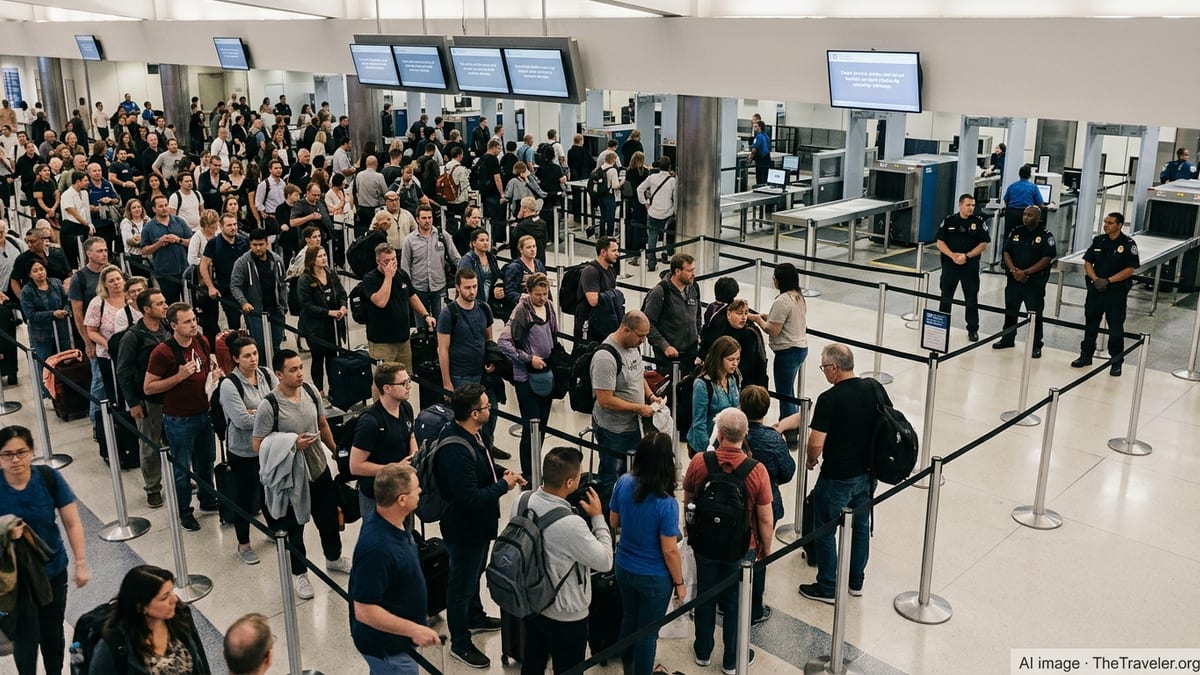
On days with widespread delays across multiple airlines, airport terminals typically see crowding at check-in desks, security checkpoints and gate areas. Accounts from similar disruption events at Philadelphia this spring describe passengers waiting in queues for rebooking assistance, meal vouchers and hotel information as schedules changed repeatedly.
Industry guidance suggests that when large numbers of flights are delayed rather than canceled outright, passengers can experience prolonged uncertainty. A departure may slip in 30- or 60-minute increments as airlines wait for clearance, crew or aircraft, leaving travelers unsure whether to stay at the gate, seek alternative routes or adjust ground transportation and accommodation plans at their destination.
Publicly available information on recent operational problems at several major carriers also highlights the challenges of crew scheduling technology and hotel logistics during periods of disruption. When crews time out under duty rules because of extended delays, airlines must locate replacement pilots and flight attendants, sometimes in cities where staffing is already tight. This can turn what began as a manageable weather delay into a multi-hour or overnight disruption.
Passengers connecting from long-haul international flights into shorter domestic segments are particularly exposed. If their onward flight from Philadelphia is significantly delayed or canceled, they may struggle to find remaining seats the same day, especially during busy summer travel periods when planes are already near capacity.
What Disrupted Passengers Can Do Next
For travelers affected by the June 18 disruptions at Philadelphia, consumer advocates recommend first checking real-time status tools offered by airlines and independent flight-tracking services before heading to the airport. These platforms typically reflect gate changes, revised departure times and cancellations more quickly than overhead terminal boards.
When a delay or cancellation appears likely, rebooking through airline apps or websites can sometimes be faster than waiting in an airport line. Many carriers now allow customers to select alternative flights without additional fees during significant irregular operations, particularly when disruptions are publicly acknowledged across the network.
Travelers on itineraries touching the United Kingdom, Ireland, the European Union or certain Caribbean countries may have additional rights to care or compensation under local or regional regulations, depending on the airline operating the flight and the exact cause of the disruption. Consumer groups advise passengers to keep boarding passes, receipts and written notices from airlines to support later claims.
As Philadelphia International Airport continues to function as a major connecting point for American, PSA, Frontier, Delta, British Airways, Aer Lingus, Aeroméxico and other carriers, passenger advocates say that building extra connection time, monitoring weather forecasts and using mobile alerts are increasingly important strategies for navigating an era of frequent delays and occasional cancellations.