


More news on this day
Severe storms sweeping across the Midwest have triggered a freight train derailment near Monmouth, Illinois, where powerful winds left multiple rail cars on the ground and damaged power infrastructure but caused no reported injuries, according to early regional coverage.
Get the latest news straight to your inbox!
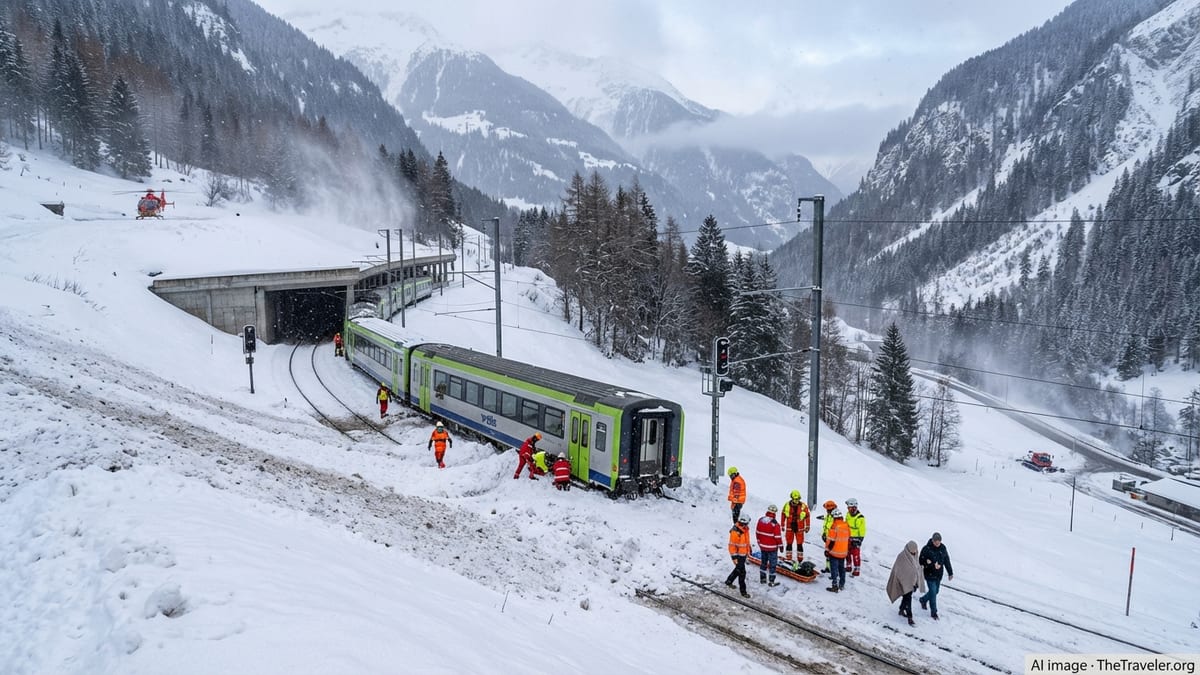
High winds blamed as freight train leaves the tracks
Reports from western Illinois indicate that a freight train traveling near Monmouth derailed amid intense storms on Wednesday morning, with video and photographs showing several cars off the rails and lying at angles along the right of way. Regional broadcasters describe the derailment site as just outside the city, in an area where open farmland left the line exposed to punishing gusts and driving rain.
Broadcasters in the region have linked the incident to the same severe weather system that has marched across the Midwest this week, delivering damaging winds, heavy rain and localized flooding. Initial accounts describe the train as a long freight consist, with several cars toppled or displaced, though no hazardous-materials release has been mentioned in early public reports.
Footage shared in news segments shows twisted metal, scattered ballast and workers inspecting the track as daylight broke over the scene. Nearby trees appear snapped or bent in a single direction, consistent with strong straight-line winds rather than a localized tornado, underscoring the role of the storm rather than any apparent mechanical failure.
As of Thursday morning, publicly available information continues to point to severe weather as the primary trigger, with investigators expected to examine whether saturated ground, crosswinds or debris on the line may have contributed to the train’s loss of stability.
Power lines down and local travel disrupted
The derailment coincided with widespread reports of downed power lines in and around Monmouth, where the same storm cells disrupted electricity service and littered streets with branches and other debris. Video from the area shows utility poles leaning at sharp angles and lines draped across roads, slowing traffic and complicating access for emergency and railroad response crews.
Travelers in the region experienced delays as authorities closed roads near the tracks and rerouted vehicles around the damaged area. Motorists were urged through public bulletins and on-air updates to avoid driving under sagging lines or attempting to navigate around barricades, a common risk when storms strike close to critical infrastructure.
Rail operations were also affected, with freight movements through this part of western Illinois expected to be temporarily reduced while crews clear the site and inspect adjacent track. For long-haul trains, the sudden closure of a busy corridor can create ripple effects that spread across multiple states, leading to delayed shipments and altered schedules for days after the physical cleanup ends.
Nearby communities, already coping with the overnight storms, faced an added layer of disruption as flashing lights, heavy equipment and utility trucks converged on the scene. For residents, the derailment served as a visible reminder of how quickly routine early-morning commutes can change when severe weather collides with transportation infrastructure.
Mother Nature’s growing footprint on rail safety
While investigators have not issued a formal cause, the Monmouth derailment is part of a broader pattern in which intense weather increasingly intersects with rail networks. In recent years, heavy rainfall has undermined track beds, flash flooding has washed away embankments and high winds have pushed at tall, lightly loaded railcars, especially on exposed stretches of line.
In the Midwest, long, flat corridors mean that crosswinds can build considerable force over open fields before striking trains. When those winds coincide with saturated ground or localized flooding, the ballast and subgrade that support the rails can weaken, leaving tracks more vulnerable to shifting under the weight and motion of passing freight.
Railroads and regulators have responded by refining inspection regimes and monitoring tools, including the use of trackside weather sensors and geotechnical surveys, particularly in known floodplains and along embankments. Even so, rapidly developing storm cells can overwhelm preparations, arriving with little warning and targeting stretches of track that appeared stable only hours before.
The Monmouth incident highlights the challenge of adapting a century-old rail network to a climate in which sudden, severe storms are becoming more common. For operators, the question is increasingly how to anticipate the compound effects of wind, water and soil conditions on rolling stock that can weigh thousands of tons.
Cleanup and recovery along a key Illinois corridor
Following the derailment, railroad response teams moved in to stabilize the site, using heavy cranes, excavators and specialized trucks to lift derailed cars, remove damaged track components and recover spilled cargo where necessary. Publicly available video shows workers moving cautiously among the wrecked cars, a standard practice when equipment remains under tension and ground conditions are soft from heavy rain.
The next phase typically involves cutting away damaged rail, tamping and rebuilding the ballast and then installing fresh track panels so that trains can resume at reduced speeds. Depending on the extent of the damage near Monmouth, that process can take anywhere from several hours to multiple days, especially if crews must also repair signaling systems or communication lines affected by the storm.
For local businesses and shippers that depend on timely freight movements, each hour of closure along this corridor carries economic costs. Grain, consumer goods and industrial products that normally flow through western Illinois may need to be rerouted over longer paths, increasing transit times and straining capacity on parallel lines.
Regional coverage suggests that, despite the visual scale of the derailment, the absence of injuries and the apparent lack of a hazardous-materials release allowed recovery efforts to focus on mechanical repairs and debris removal rather than large-scale evacuation or environmental remediation.
Communities weigh resilience as storms intensify
The derailment near Monmouth has also entered a broader conversation in Midwestern communities about how to live alongside both powerful storms and critical rail corridors. Towns across Illinois and neighboring states often grew up around the tracks, benefiting from the movement of agricultural products and manufactured goods while also sharing the risks when heavy weather arrives.
Local planning discussions in recent years have increasingly emphasized resilience, including the placement of substations, the hardening of poles and lines and the creation of alternative access routes when primary roads are blocked. Incidents such as this week’s derailment give city and county planners concrete examples to study as they refine emergency detour maps and prioritize infrastructure upgrades.
For travelers, the takeaway is that weather-related rail disruptions are likely to remain a recurring feature of life in the central United States, especially in late spring and early summer when storm systems are most active. Those planning long drives or rail journeys through the region may benefit from checking multiple forecast sources, monitoring local traffic alerts and allowing extra time when severe weather is in the outlook.
As cleanup progresses near Monmouth and freight traffic gradually resumes, attention is likely to shift from the overturned cars themselves to the broader question of how railroads and communities can coexist with a climate in which Mother Nature is increasingly an unpredictable and powerful player.