


More news on this day
British travellers planning trips through the Middle East are facing another round of changes to official guidance, as the United Kingdom updates its advice for key Gulf hubs while maintaining tougher warnings for countries still considered at higher risk.
Get the latest news straight to your inbox!
Key changes in UK guidance across the region
Publicly available Foreign, Commonwealth and Development Office (FCDO) information shows that the pattern of advice across the Middle East has been adjusted in recent days, reflecting a gradual shift from blanket warnings issued earlier in the year toward a more differentiated picture. Updates to pages for Gulf states such as Bahrain in mid June highlight an ongoing review process that now distinguishes between relatively stable transit hubs and countries where the security situation remains volatile.
According to recent summaries of government travel advice, several Gulf states that had previously been covered by broad cautions are now presented as accessible for essential or carefully planned travel, subject to heightened vigilance. Independent trackers of Middle East alerts report that the FCDO continues to advise against all travel or all but essential travel to specific border areas and regions within some of these countries, but no longer treats the entire Gulf as uniformly off limits.
By contrast, information collated from official notices and industry bulletins shows that the strongest warnings still apply to Iran, Iraq, Lebanon, Syria, Yemen and parts of the Palestinian territories, where conflict, political tension or the risk of further strikes remain elevated. In these destinations, guidance for British nationals continues to emphasise avoiding travel altogether, or leaving as soon as it is safe to do so, if already present.
The evolving advisory map follows months of military activity and diplomatic negotiations affecting airspace, maritime routes and critical infrastructure across the wider region. While a recent easing of some hostilities has reduced the likelihood of direct strikes on certain Gulf hubs, the underlying situation remains fragile, and that reality is reflected in the cautious language used in government-facing and industry-facing briefings.
Gulf transit hubs: from blanket warnings to managed risk
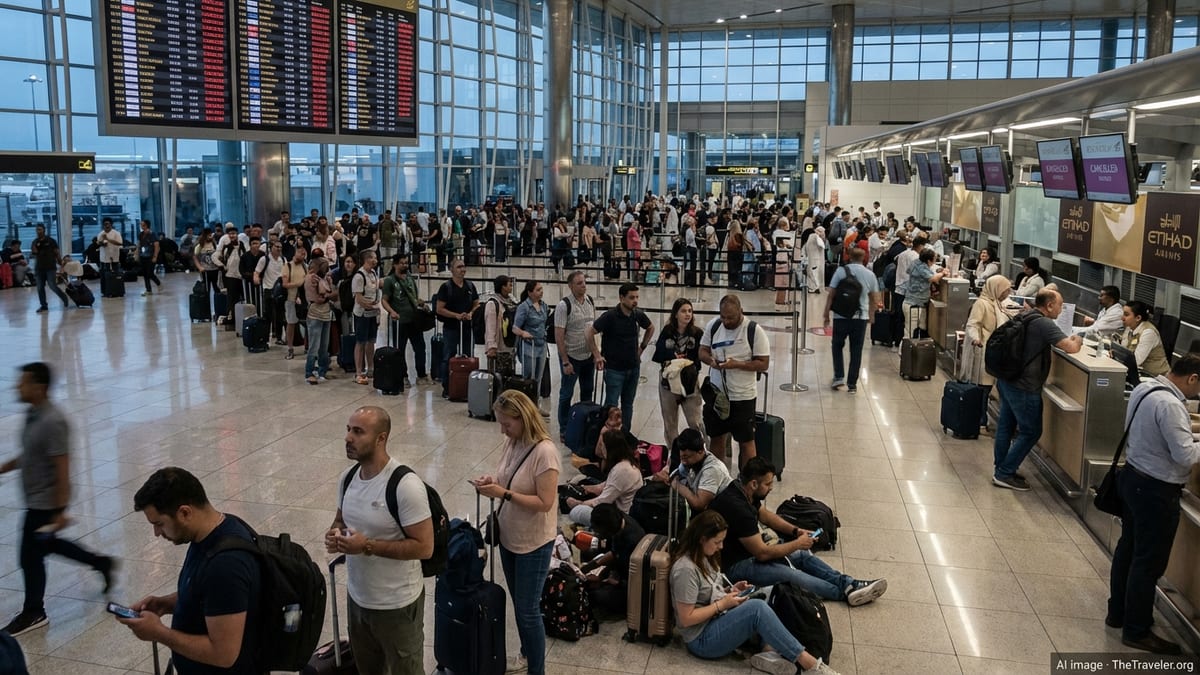
For many British holidaymakers and business travellers, the most immediate impact of the latest changes lies in the Gulf, where cities such as Dubai, Abu Dhabi, Doha and Manama function as major long haul transit points. Sector analyses note that airspace over Jordan, Saudi Arabia, Kuwait, Bahrain, Qatar, the United Arab Emirates and Oman is open, even as some routings and schedules continue to be adjusted in response to security assessments.
Travel security consultancies and airline partners indicate that UK guidance for several of these hubs has shifted away from broad prohibitions toward more targeted caution. In practice, that means point to point and connecting travel is generally possible, but passengers are urged to remain alert to the possibility of short notice operational changes, including diversions, cancellations or altered routings around sensitive airspace.
This more nuanced approach mirrors moves by other governments. Australia, for example, has publicly announced that it has lowered its advice for a number of Gulf states from the strictest level to a “reconsider your need to travel” category, while keeping higher levels for countries where the security outlook remains far more uncertain. Analysts suggest that the UK and several allies are now aligning their travel frameworks more closely following a period in which rapid escalation left limited room for differentiation.
For British travellers, the headline message is that major Gulf hubs are once again functioning as key connectors between Europe, Asia and Africa, but that they sit in a region still classed as high risk overall. Those planning to fly through these airports are urged by operators and insurers to build in flexibility, allow extra time for connections where possible and keep a close eye on airline and airport communications in the days before departure.
Persistent high risk in conflict-affected states
While parts of the Gulf are seeing a managed relaxation in advice, the picture remains starkly different for countries directly affected by recent conflict. Publicly available guidance collated by travel risk firms and media outlets shows that Iran, Iraq, Lebanon, Syria, Yemen and Gaza retain the toughest levels of warning in UK-aligned travel frameworks, with most trips strongly discouraged or effectively ruled out for leisure purposes.
These positions reflect continuing security incidents on the ground, including sporadic cross border fire, militia activity and infrastructure damage. Reports tracking official alerts across the Middle East point to ongoing Israeli military operations in southern Lebanon and repeated references by Iran to potential targeting of locations linked to Western or Israeli interests in the wider region. Such developments keep the risk of miscalculation or spillover elevated, even where frontline fighting is intermittent.
For British nationals who may already be present in higher risk locations, travel advisories consistently emphasise the importance of registering contact details with consular services, monitoring local media and being prepared to adjust plans quickly. Commercial operators often restrict or suspend services to these destinations altogether, meaning that exit routes may depend on limited charter or humanitarian flights, or land crossings that can also be subject to closure without notice.
Insurance considerations are another crucial factor. Many standard travel insurance policies exclude cover for destinations under “do not travel” style advisories, or require additional specialist cover at significantly higher cost. Industry bulletins advise travellers and employers to check policy wording carefully before committing to any itinerary that involves time in or near these high risk states.
What British travellers should do before booking
With the Middle East now divided between relatively open transit hubs and countries still considered extremely hazardous, travel experts stress the need for more thorough pre departure planning. Tour operators and large travel agencies in the UK are directing customers to check the latest FCDO country pages immediately before booking and again shortly before travel, noting that security assessments can change at short notice in response to new incidents.
Airlines and global distribution systems are also building advisory messages into booking flows for certain routes, flagging where overflight or transit involves countries under heightened caution. Some carriers continue to avoid particular air corridors altogether, even when they are technically open, preferring longer routings that keep aircraft further from recent flashpoints.
Corporate travel managers are responding with updated risk assessments and route approvals, especially for staff whose itineraries include overnight stays in Gulf states or onward travel to neighbouring countries. Many are quietly shifting meetings and conferences to locations perceived as more stable, or using virtual formats where face to face visits are considered non essential.
For individual travellers, practical steps include confirming ticket flexibility, ensuring contact details are correct with airlines and tour operators, and keeping digital copies of key documents in case of disruption. Advisory trackers recommend that those with complex multi stop itineraries build contingency plans, such as awareness of alternative routings via other regions should a connecting hub become temporarily constrained.
Industry impact and outlook for summer travel
The latest round of UK travel advice adjustments arrives just as airlines, cruise lines and tour operators finalise schedules for the peak European summer season. Industry digests suggest that carriers serving the Middle East are cautiously optimistic that a more differentiated advisory picture will support demand for routes that simply pass through Gulf hubs on the way to Asia, Australia and East Africa.
However, operators remain wary of further shocks. Recent months have seen sudden shifts in security alerts across the region, including advisories that encouraged foreign nationals to identify shelter locations or avoid certain airspace segments altogether. Even temporary measures of this kind can trigger network wide knock on effects, with aircraft and crew displaced from their usual rotations.
Travel risk firms note that while the easing of some warnings is a welcome development for airlines and airports that rely heavily on connecting traffic, the underlying diplomatic and military context remains fluid. Negotiations and ceasefire frameworks have reduced immediate tensions in some theatres, but reports from the ground still point to sporadic clashes and unresolved political disputes that could flare again.
For now, the practical outcome for British travellers is a more complex but somewhat more navigable advisory landscape. Trips that route through major Gulf hubs are once again broadly feasible, provided travellers accept a higher level of background risk and remain adaptable. Journeys into conflict affected states, meanwhile, remain strongly discouraged, underscoring how far the region still has to go before travel advice returns to the more predictable patterns seen before the latest crisis.