


More news on this day
Travelers at Seattle–Tacoma International Airport faced significant disruption on Friday as 117 flights were reported delayed and at least 4 canceled, snarling departures and arrivals across major domestic and international routes and leaving hundreds of passengers facing missed connections and overnight rebookings.
Get the latest news straight to your inbox!
Ripple Effects Across Major U.S. Hubs
Publicly available flight-tracking data for May 22 indicates that delays at Seattle–Tacoma International Airport, one of the West Coast’s busiest hubs, quickly cascaded to key destinations including New York, Los Angeles, Chicago and San Francisco. Airlines affected include Delta Air Lines, Alaska Airlines, United Airlines and several codeshare partners, disrupting both point-to-point journeys and complex connection itineraries.
Reports from live status boards show that many of the delayed services involve high-frequency business and leisure routes linking Seattle with coastal and Midwestern hubs. Flights bound for airports serving the New York City area, Southern California, the San Francisco Bay Area and Chicago experienced rolling departure pushes, in some cases accumulating delays of over an hour as operations struggled to stabilize.
International connectivity has also been affected where long-haul services rely on inbound aircraft and connecting passengers from the disrupted Seattle departures. Flights linking Asia and Europe via Seattle are particularly sensitive to late arrivals and missed domestic feeds, prompting same-day rebookings through alternative gateways when possible.
Seattle’s role as a primary hub for Alaska Airlines and a significant base for Delta means even a relatively contained disruption can reverberate widely through airline networks. As aircraft and crews fall out of position, later flights on unrelated routes can also see schedule changes, increasing uncertainty for travelers well beyond the Pacific Northwest.
Conditions on the Ground at Sea-Tac
Information from airport and aviation dashboards suggests that the disruption has not stemmed from a full ground stop, but rather from a combination of operational constraints that have slowed the pace of departures and arrivals. While federal airspace status pages at times list Seattle with no major traffic-management program in place, airline and passenger reports point to longer-than-normal turnaround times and gate bottlenecks.
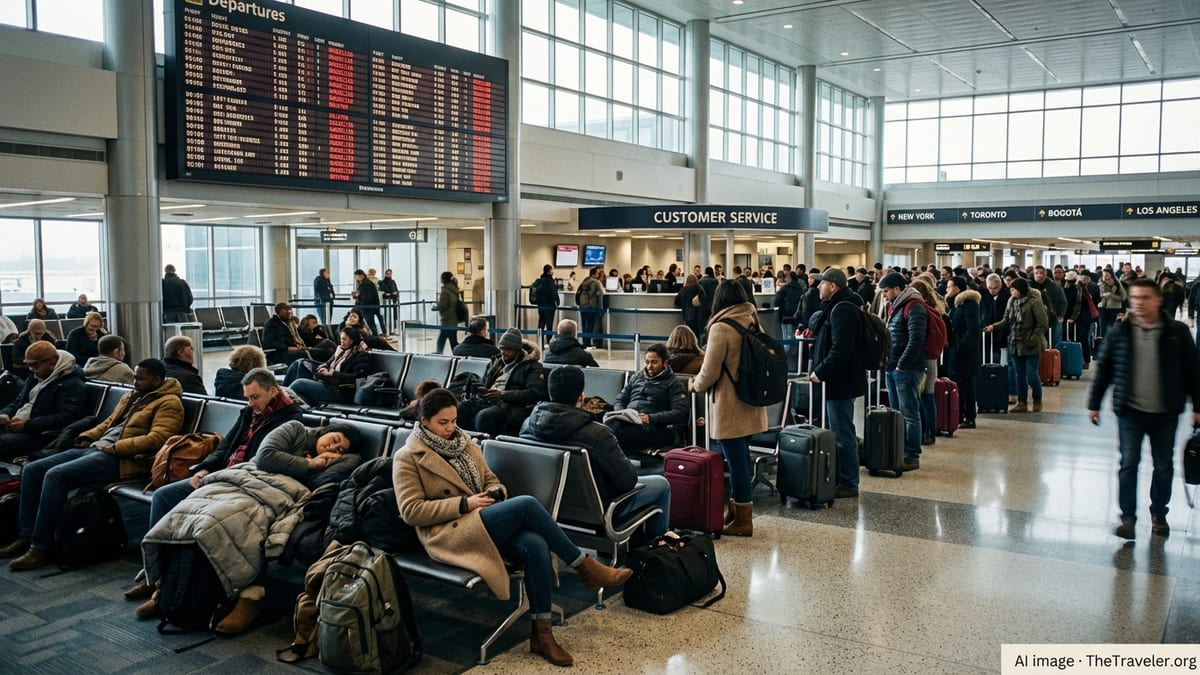
Inside the terminal, those delays translate into extended lines at check-in counters, self-service bag drops and customer service desks as travelers seek new routing options. Social media posts and traveler accounts describe crowded gate areas where departure times were repeatedly revised, with some passengers advised to monitor mobile apps rather than airport displays for the latest information.
Published tarmac plans for Seattle–Tacoma highlight how the airport prepares for surges and irregular operations, including provisions for deplaning, access to basic services and the handling of diversions. While those procedures are designed for extreme cases such as prolonged on-board holds, they underscore the logistical challenge of accommodating large numbers of delayed passengers when gate space, staff and equipment are already stretched.
For many stranded travelers, the most immediate concern has been lodging and ground transport. With delays pushing into late evening for certain routes, rebooked customers have needed last-minute hotel rooms or alternative connections through other West Coast airports, adding cost and uncertainty to already disrupted trips.
Impact on Airlines and Key Routes
Delta, Alaska and United, along with a range of partner carriers, appear prominently in the day’s affected departures and arrivals at Seattle. Flight-status portals show multiple delayed services on high-demand corridors such as Seattle to Los Angeles, San Francisco, Chicago and New York, with some individual flights canceled outright when late-running aircraft and crew scheduling limitations made operations impractical.
For airlines, even a handful of cancellations can be significant when cabins are nearly full. Once a flight is removed from the schedule, passengers must be rebooked on already busy services later in the day or on subsequent dates. In peak travel periods, that can mean limited same-day alternatives and longer disruptions for those with onward international connections or time-sensitive plans.
Operational data referenced in recent transportation reports illustrate how airlines serving Seattle have been working to manage congestion and prevent extended tarmac delays. Carriers must balance safety, crew duty-time rules and aircraft availability while facing pressure to keep itineraries intact. When delays accumulate across several waves of departures, route planners are often forced to consolidate flights or reroute aircraft to maintain the broader network.
Travel industry observers note that Seattle’s heavy concentration of flights to the West Coast, Midwest and transcontinental destinations creates particular susceptibility to knock-on impacts. A delay on a morning departure to California or the East Coast can return as an out-of-position aircraft for an evening departure from Seattle, compounding the effects felt by passengers later in the day.
What Travelers Can Expect Next
Based on patterns seen in previous irregular operations at major U.S. hubs, the immediate outlook for affected passengers at Seattle–Tacoma is likely to involve a slow unwinding rather than a swift resolution. As the day progresses, airlines typically prioritize restoring reliability on trunk routes and repositioning aircraft so that the following morning’s schedule can operate as close to normal as possible.
Publicly available guidance from aviation regulators and consumer watchdogs emphasizes that travelers should closely monitor their flight status through airline apps and airport displays, as departure times can change several times before boarding. Same-day standby options, alternative routings through secondary hubs and, in some cases, refunds or travel credits may be available depending on ticket type and the circumstances behind each delay or cancellation.
Consumer reports and prior case studies highlight the importance of documenting expenses such as meals, hotels and ground transportation when disruption stretches into an overnight stay. While compensation policies vary by airline and by cause of delay, having receipts and written confirmation of schedule changes can be helpful when seeking reimbursement through carriers or travel insurance providers.
For those planning to depart Seattle later in the weekend, published coverage suggests building additional time into itineraries, especially for tight connections through major hubs. As airlines work to clear backlogs and reposition aircraft, minor schedule adjustments can persist even after the most acute phase of the disruption has passed.
Broader Context for Air Travel Reliability
The turbulence at Seattle–Tacoma comes against a backdrop of heightened scrutiny of air travel reliability across the United States. Federal transportation data in recent months has documented notable spikes in delays and cancellations at large hubs tied to weather events, staffing constraints, technology issues and tightly wound schedules that leave little margin for recovery.
Seattle’s own traffic has grown significantly in recent years, with port and planning documents showing rising passenger numbers and busy peak periods that test runway, taxiway and gate capacity. Forecasts prepared for airport development projects anticipate continued growth in demand, which industry analysts say will require ongoing investment in facilities, staffing and technology to reduce the frequency and severity of disruption.
Travel advocacy groups point out that while most flights still operate broadly on time, the experience of passengers caught in large-scale delay events can be severe, ranging from missed family events to lost business opportunities. Episodes like the latest disruptions at Seattle–Tacoma are likely to fuel continued debate over scheduling practices, passenger rights and the resilience of U.S. air transport infrastructure.
As airlines and airport operators move to restore normal operations, the hundreds of travelers stranded at Sea-Tac on Friday join a growing cohort of passengers whose trips have been reshaped by the complex and occasionally fragile logistics underlying modern air travel.