


More news on this day
Memorial Day weekend air travel across the United States has been marred by more than 17,000 combined flight delays and cancellations, straining airports at the traditional start of the busy summer season.
Get the latest news straight to your inbox!
Stormy skies and packed schedules strain the system
Data compiled from flight-tracking services and industry reports for the holiday period indicate that severe thunderstorms, low clouds and heavy rain across multiple regions were the leading trigger for the widespread disruptions. Storm systems moving from Texas through the Midwest and into the Northeast repeatedly forced ground stops and reroutes at major hubs, quickly rippling through airline networks as the long weekend began.
Publicly available information from the Federal Aviation Administration highlights that weather remains the single largest cause of flight delays in the United States, even as air traffic volumes climb back to or above pre-pandemic levels. With nearly 54,000 flights expected on peak days around Memorial Day, relatively small weather-related slowdowns can cascade into extensive congestion when schedules are already operating with little margin.
Industry trackers show that in the run-up to Memorial Day and across the core holiday window, daily tallies often reached thousands of delayed flights and hundreds of cancellations. When aggregated, those disruptions surpass 17,000 affected departures and arrivals, reflecting how quickly busy holiday traffic can magnify localized storms into a national challenge for travelers.
Forecasts issued before the weekend had warned of a volatile pattern, and published coverage suggested that travelers heading out during the busiest periods faced heightened odds of encountering significant schedule changes. Many carriers entered the weekend advising customers to monitor flight status closely and to allow additional time for connections and airport procedures.
Major hubs bear the brunt of Memorial Day disruptions
Reports indicate that key connecting hubs including Atlanta, Dallas Fort Worth, Chicago O’Hare and major New York airports absorbed a substantial share of the disruptions. Heavy passenger volumes combined with intermittent ground delays and runway constraints meant that even brief weather interruptions quickly backed up departures and arrivals.
Local coverage from Atlanta noted that nearly 3 million passengers were expected to pass through Hartsfield Jackson International Airport over the Memorial Day period, with Friday projected as the single busiest day. When thunderstorms and low ceilings arrived, the high throughput left little room to recover, and delays spread to connecting flights throughout the country.
Similar patterns emerged at northeast gateways such as LaGuardia and Newark, where congestion and airspace complexity routinely make those airports vulnerable during holiday peaks. As departure banks slipped behind schedule, late-arriving aircraft and crews struggled to reset, contributing to cancellations as airlines sought to stabilize operations for the following day.
Secondary and leisure-focused airports did not escape the effects. With many carriers operating point to point networks, a delayed or canceled aircraft in one city often meant schedule reshuffles in far-flung destinations hours later. Passengers heading to beach and mountain destinations for the unofficial start of summer frequently encountered rolling schedule changes throughout the weekend.
Airlines juggle tight staffing and limited slack
According to aviation analysts and recent public briefings, airlines entered the 2026 summer season with fuller schedules and relatively tight staffing, particularly among pilots, maintenance technicians and air traffic control personnel. While staffing levels have recovered from the steep cuts of 2020, schedules have grown faster than the depth of spare capacity needed to absorb shocks.
Industry commentary describes the current environment as one of “tight tolerance,” in which carriers can operate efficiently in normal conditions but see delays escalate quickly when storms, equipment issues or congestion hit key nodes. Without abundant backup aircraft or reserve crews, a cluster of early day disruptions can translate into widespread evening cancellations, especially on peak holiday Fridays and Mondays.
Government and industry data from earlier holiday periods show that this structural fragility is not new. Previous Memorial Day weekends and other peak travel dates have also produced elevated levels of cancellations and delays, prompting ongoing debate over scheduling practices, staffing investments and accountability standards when service falters.
Travel advocates point out that even when most flights operate as planned, the concentration of thousands of disrupted flights within a few days can leave tens of thousands of passengers facing missed connections, unexpected overnights and additional expenses for food and lodging. For travelers, the aggregated figure of more than 17,000 delays and cancellations translates into a highly personal experience of frustration and uncertainty at the gate.
Passenger impact: long lines, missed events and rising costs
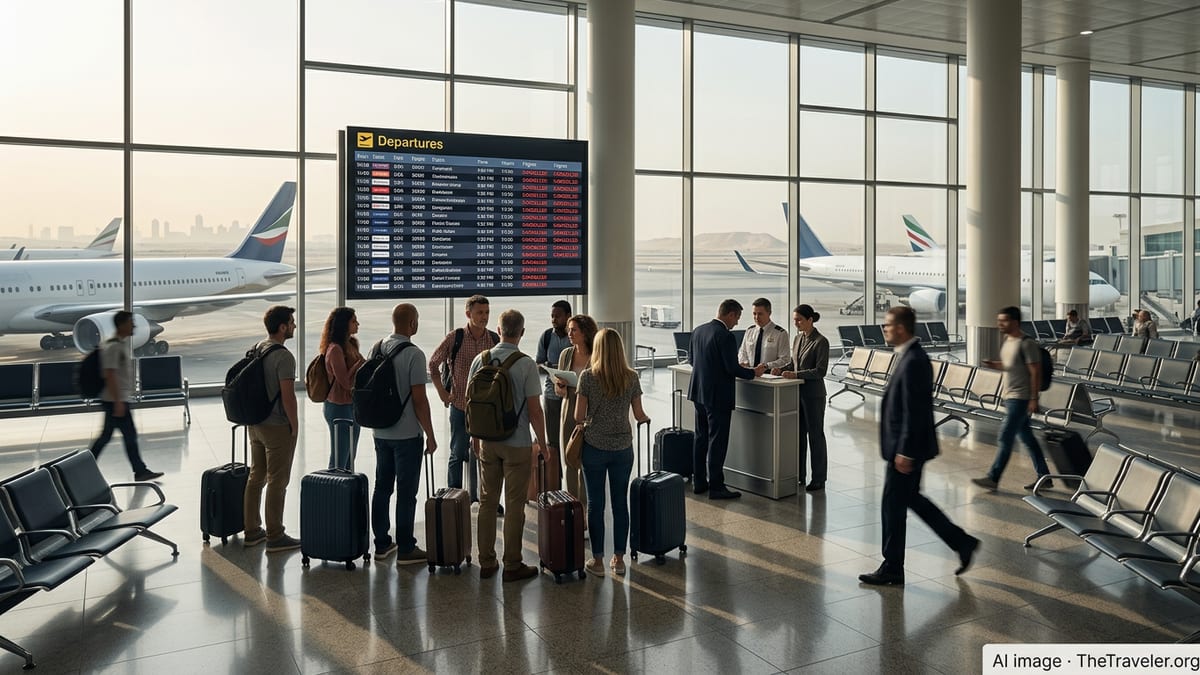
At airports across the country, the operational strain over Memorial Day manifested in crowded security checkpoints, lengthy rebooking lines and gate areas filled with travelers refreshing mobile apps for updates. Social media updates and local news coverage over the weekend showed passengers stuck waiting for crew, aircraft or new itineraries after original flights became unviable.
Missed family gatherings, graduations and vacation check ins are recurring themes whenever holiday disruptions reach this scale. When delays push into overnight territory or cancellations leave limited alternative options, travelers often incur additional costs for last minute hotel stays and ground transportation, adding financial stress to an already expensive peak travel weekend.
Consumer rights organizations note that compensation rules for delays and cancellations vary significantly by airline and by cause. In the United States, passengers have fewer automatic compensation guarantees than in some other regions, which places a premium on understanding individual carrier policies regarding meal vouchers, hotel coverage and rebooking assistance in cases where events are within the airline’s control.
With summer just beginning, the Memorial Day disruption figures are likely to inform traveler expectations and planning for upcoming peak dates such as Independence Day and Labor Day. For many passengers, the weekend served as a reminder that booking extra buffer time, choosing earlier departures and considering travel insurance can mitigate some of the risk when the system strains under holiday demand.
What the Memorial Day chaos signals for the summer ahead
Analysts following the aviation sector suggest that the scale of Memorial Day disruptions is an early signal for how the broader 2026 summer season may unfold. Projections from travel associations and booking platforms point to record or near record passenger volumes over the coming months, which means the mix of high demand and volatile weather is likely to persist.
Recent FAA materials on summer operations emphasize ongoing efforts to modernize air traffic management and improve coordination with airlines, but also acknowledge that weather patterns and airspace constraints will continue to limit throughput on the busiest days. That reality suggests that operational resilience and transparent communication will be critical in maintaining traveler confidence.
Some airlines have already trimmed marginal routes and adjusted schedules in anticipation of tight resources, a strategy intended to reduce the risk of large scale meltdowns. However, as Memorial Day showed, even modest schedule revisions may not fully prevent high disruption totals when several busy hubs are simultaneously affected by storms or other constraints.
For travelers planning flights later in the summer, the lessons from the more than 17,000 Memorial Day delays and cancellations are likely to resonate. Choosing less congested travel days where possible, building in longer connection times, and staying alert to changing forecasts can help reduce exposure to cascading disruptions in what is shaping up to be another intense season for U.S. air travel.