


More news on this day
Florida is entering 2026 with tourism at record highs, as new figures show 143.3 million visitors in 2025, drawn by the state’s mix of world-famous beaches, wild wetlands, historic towns, and increasingly conservation-focused attractions across the Sunshine State.
Get the latest news straight to your inbox!
Record Tourism Underscores Florida’s Scenic Pull
Recent estimates from Visit Florida indicate that the state welcomed about 143.3 million visitors in 2025, setting another annual record and reinforcing tourism as a central driver of Florida’s economy. Publicly available information shows that domestic travel led the surge, while international markets continued a slower recovery. The data reflects the enduring appeal of Florida’s coastlines, waterways, and natural parks even as travelers grow more selective about destinations.
Reports indicate that Florida’s state parks alone hosted more than 30 million visitors in 2025, supported by extensive volunteer engagement and a system that spans beaches, rivers, springs, and inland forests. At the national level, Gulf Islands National Seashore, which includes protected stretches along Florida’s Panhandle, counted around 7 million visits, placing it among the most-visited national park sites in the country. These numbers suggest that travelers are seeking out scenic, outdoor experiences alongside urban attractions and theme parks.
Analysts note that the push to highlight scenic byways, nature-based tourism, and heritage corridors is reshaping how visitors move around the state. Florida’s system of designated scenic highways links many of its best-known coastal and inland landscapes, encouraging road trips that combine beaches, small towns, and parks. As a result, lesser-known destinations along the Gulf and Atlantic coasts are seeing increased attention from travelers looking beyond the traditional resort hubs.
Emerald Coast and Panhandle: Sugar-White Beaches and Protected Shores
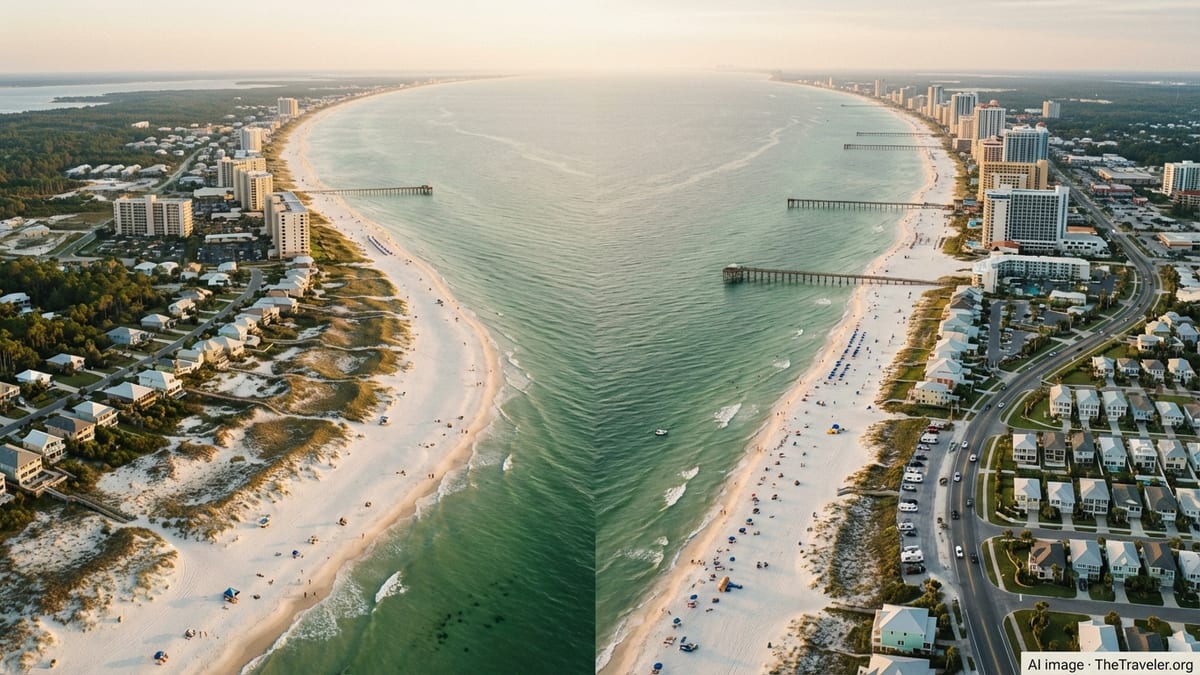
In Florida’s Panhandle, the Emerald Coast and nearby protected areas are benefiting from these trends. Communities along the Gulf of Mexico, from Pensacola Beach to Destin and Panama City Beach, are reporting strong visitation driven by clear water, sugar-white sand, and relative affordability compared with some South Florida resorts. Scenic stretches of highway provide access to state parks and quieter beach towns where development remains more low-rise and local in character.
Gulf Islands National Seashore has emerged as a particular focal point for nature-minded visitors. The park preserves barrier islands, maritime forests, and historic forts while offering swimming, paddling, and wildlife viewing. Park statistics show millions of annual visits, and tourism officials in the region promote the seashore as a way to balance sun-and-sand vacations with conservation-oriented experiences. The combination of protected land and nearby urban amenities in Pensacola and other Panhandle cities positions the area as a gateway to both culture and coast.
Elsewhere along the Panhandle, coastal state parks are drawing travelers seeking quieter alternatives to major resort strips. Campgrounds near dunes and pine forests, boardwalks that cross coastal marshes, and day-use areas with limited commercial development appeal to visitors interested in sunsets, fishing, and birdwatching rather than nightlife. Local tourism boards are leaning on this image of relaxed, small-town Gulf Florida to differentiate the region within a crowded state travel market.
South Florida’s Coasts: From Miami’s Art-Forward Shores to the Florida Keys
Farther south, Greater Miami and Miami Beach remain among Florida’s marquee gateways, combining a dense skyline with a tropical shoreline. Industry updates from local tourism organizations highlight solid hotel demand and international air connectivity, even as some traditional markets fluctuate. Authorities in Miami Beach have also emphasized resilience and design along the waterfront, with projects such as hybrid “living shoreline” parks receiving national recognition from coastal preservation groups for blending recreation, habitat restoration, and flood mitigation.
Miami Beach is also experimenting with attractions that link tourism and marine conservation. A new underwater sculpture and reef project off the city’s coast has begun rolling out installations designed to function as both public art and artificial reef structure. Cultural coverage describes the initiative as a way to relieve pressure on natural reefs while giving divers and snorkelers a new reason to explore offshore. For visitors, these efforts are reframing Miami as more than an urban party destination, presenting it instead as a starting point for art, ecology, and water-based recreation.
Beyond the metropolis, the Florida Keys continue to stand out as one of the state’s most scenic drives. Visitor profile studies show that the Keys still attract a mix of domestic and international travelers, with U.S. visitors forming the majority but overseas markets slowly rebuilding. The Overseas Highway, crossing a chain of islands linked by bridges, remains a signature experience: travelers stop in small communities, launch kayaks into mangrove creeks, and visit coral reef sites for snorkeling and diving. At the far end, Dry Tortugas National Park offers a remote combination of historic Fort Jefferson and turquoise shallows accessible by boat or seaplane from Key West.
Local data indicates that the Keys’ tourism economy has weathered shifting travel patterns, leaning on outdoor recreation and the region’s image as a laid-back, water-focused escape. Small-scale resorts, fishing charters, and marine tours position the islands as a contrast to more built-up sections of South Florida’s Atlantic coast. At the same time, crowd management and environmental pressures, particularly on reefs and nearshore habitats, remain ongoing challenges monitored by local and federal agencies.
Wild Wetlands and Springs: Everglades, Inland Rivers, and State Parks
Florida’s wild interior is playing a growing role in how visitors experience the state. The Everglades, long recognized as one of the most distinctive wetlands in North America, anchors a network of protected landscapes stretching from inland prairies to Florida Bay. The National Park Service has advanced infrastructure rehabilitation projects in Everglades and nearby parks, with recent environmental reviews finding no significant impact from planned upgrades to bulkheads and water and wastewater systems. These investments are intended to support both ecosystem protection and sustainable visitor services as more people seek airboat tours, paddling trips, and wildlife viewing.
To the north and west, Florida’s freshwater springs and rivers are another draw. Public information from the state park system notes that Florida manages more than 3,000 miles of trails and over 100 miles of sandy beaches, but the appeal of glass-clear springs has become especially prominent in recent years. Parks such as Silver Springs, Rainbow Springs, and Weeki Wachee are widely featured in travel coverage for their turquoise water, underwater vegetation, and opportunities for snorkeling, kayaking, and manatee viewing in cooler months.
Inland communities near these springs have seen increased tourism-related investment, from small lodges and rental cabins to outfitters specializing in paddle sports. Officials promote responsible recreation in order to protect delicate spring ecosystems, encouraging visitors to follow guidelines that limit damage to riverbanks and underwater vegetation. The combination of year-round warm weather and relatively quick access from major cities such as Orlando and Tampa keeps demand strong, particularly among repeat in-state visitors.
Historic Towns, Scenic Highways, and Evolving Travel Patterns
Beyond beaches and wetlands, many travelers are exploring Florida through its historic towns and designated scenic highways. The state’s scenic byway program, which includes coastal routes like State Road A1A and inland heritage corridors, is designed to highlight cultural landmarks, wildlife areas, and traditional main streets. Tourism materials show these routes being marketed as multi-day road trips that connect lighthouses, riverfronts, and preserved downtown districts from Fernandina Beach in the northeast to small Gulf communities in the Big Bend region.
Historic cities such as St. Augustine and Pensacola, along with smaller communities across the peninsula, benefit from this interest in slow travel. Cobblestone streets, colonial-era forts, and waterfront promenades provide a visual counterpoint to modern resort towers. Museums, festivals, and food tours add depth for visitors who might otherwise pass through quickly en route to beaches or theme parks. Local tourism agencies present these towns as ways to understand Florida’s layered history, from Indigenous cultures to Spanish and British colonial eras and the rise of modern tourism.
At the same time, travel patterns within Florida are shifting as visitors piece together multi-stop itineraries. Data from recent industry updates in Miami-Dade County and the Florida Keys points to travelers combining urban stays with side trips to national and state parks, inland springs, or smaller coastal towns. Road trips along scenic highways, excursions to all three of South Florida’s national parks, and loop itineraries that cross between the Gulf and Atlantic coasts are increasingly highlighted in travel coverage. As 2026 unfolds, tourism leaders and destination marketers across Florida are positioning the state’s most beautiful and scenic locations not as isolated attractions, but as interconnected experiences in a broader Sunshine State journey.