


More news on this day
Flight disruptions at Fort Lauderdale–Hollywood International Airport on June 18 are rippling across popular U.S., Caribbean and Latin American routes, with publicly available data showing at least 87 delays and three cancellations for services operated by major carriers including Delta Air Lines, JetBlue, Frontier and Southwest.
Get the latest news straight to your inbox!
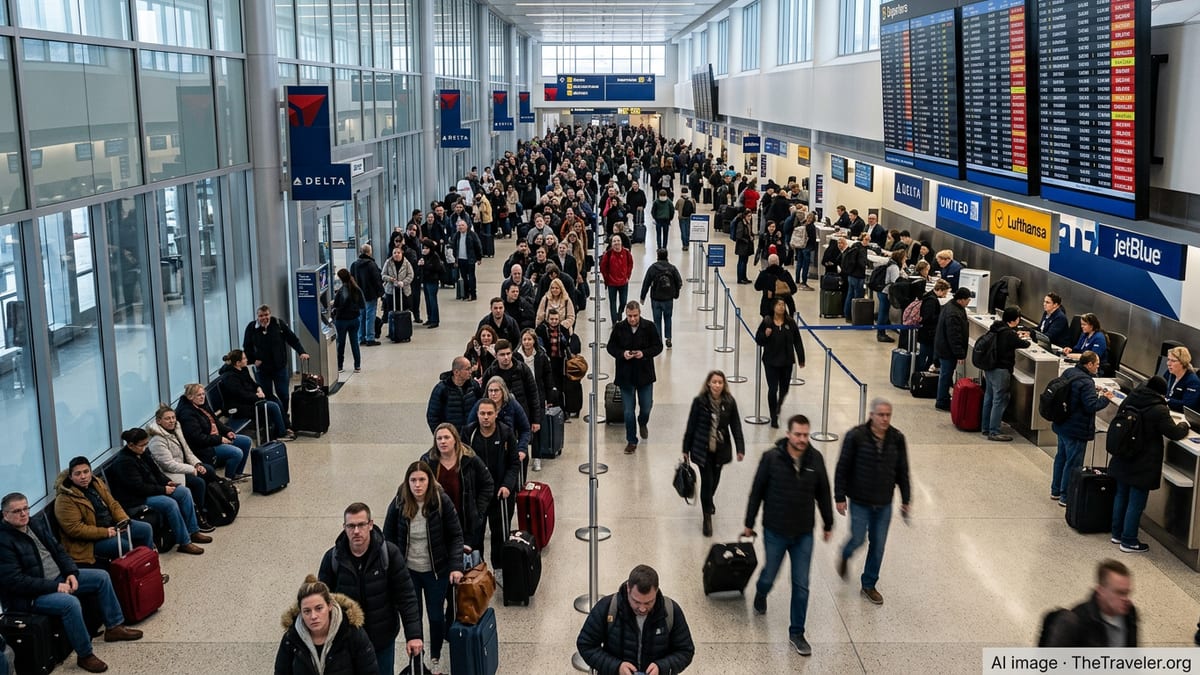
Delays Mount Across Fort Lauderdale Departures
Operational data compiled from real time tracking platforms on June 18 indicates an elevated level of disruption for flights into and out of Fort Lauderdale–Hollywood International Airport, one of South Florida’s busiest gateways. The figures point to at least 87 delayed flights and three outright cancellations affecting a mix of domestic and international departures and arrivals.
The disruptions are affecting services across several large network and low cost carriers. Delta Air Lines, JetBlue, Frontier Airlines and Southwest Airlines all appear among the flights reporting late departures or arrivals, alongside a smaller number of services from other operators. The delays range from modest schedule slippages of 30 to 45 minutes to more substantial setbacks exceeding two hours on selected routes.
While the airport itself continues to operate, the volume of late operations means tighter connections are at heightened risk, especially for travelers using Fort Lauderdale as a jumping off point for the Caribbean and Latin America. Passengers connecting through other hubs on the same ticket are being advised in publicly available guidance to monitor their itineraries closely and to allow additional time where possible.
Fort Lauderdale–Hollywood International functions as a key base for JetBlue and a significant station for several U.S. carriers, with an extensive network of services across the United States as well as to the Bahamas, the Dominican Republic and Colombia. The combination of high traffic levels and rolling schedule changes is amplifying the impact on day of travel plans.
Impact on Routes to Atlanta, Nassau, Santo Domingo and Bogotá
The disruption is being felt most acutely on several high demand corridors linking Fort Lauderdale with major hubs and leisure destinations. Flights serving Atlanta, Nassau, Santo Domingo and Bogotá count among the services reporting schedule changes, according to aggregated tracking information and published airport departure boards.
Links to Atlanta, one of Delta’s primary hubs, are particularly sensitive. Separate bulletins issued by the airline for June highlight weather related constraints around Atlanta, which can quickly cascade through connecting services when schedules are already tight. When operations at Fort Lauderdale encounter additional delays, the combined effect can lead to missed onward connections for travelers heading deeper into the domestic U.S. network or to secondary international destinations.
Caribbean services are also experiencing knock on effects. JetBlue and other operators run frequent flights from Fort Lauderdale to Nassau in the Bahamas and Santo Domingo in the Dominican Republic, while Bogotá and other Colombian cities form part of the broader Latin American network. Even relatively short delays on these departures can translate into late evening arrivals, complicating ground transport arrangements and same day regional connections.
Travel industry analysts note that Fort Lauderdale’s role as an alternative gateway to Miami for price sensitive leisure travelers means disruptions here can quickly ripple through popular holiday periods. With summer demand building, any spike in delays on trunk routes such as Nassau, Santo Domingo and Bogotá can leave aircraft and crews out of position for subsequent rotations.
Airlines Adjust Policies as Weather and Congestion Intersect
Carriers affected by the Fort Lauderdale disruptions are responding within the framework of existing irregular operations policies. Delta has recently published an advisory outlining relaxed change fee conditions for customers whose travel is impacted by weather related issues around Atlanta, indicating a broader operational challenge across parts of its network in mid June.
Industry data shows that weather remains one of the leading contributors to delays and cancellations across U.S. airlines, alongside airspace congestion and crew availability. When storms, low visibility or convective activity affect major hubs, knock on effects can manifest hundreds of miles away as aircraft and crews fall out of their planned rotations, even if local conditions at airports such as Fort Lauderdale appear relatively normal.
Low cost and leisure focused carriers can be particularly vulnerable to such ripple effects, as their tighter scheduling leaves less margin to absorb unexpected disruptions. Frontier and Southwest, which both run dense point to point networks with quick aircraft turnarounds, appear among the operators reporting late or disrupted operations in and out of Fort Lauderdale on June 18.
According to publicly available performance statistics compiled by transportation authorities, airlines such as Delta generally report strong on time performance over longer periods. However, concentrated disruption events tied to weather systems or air traffic constraints can still generate short bursts of significant delays, especially at busy transfer points like Atlanta that are closely linked to Fort Lauderdale’s schedule.
What Travelers Flying Through Fort Lauderdale Should Expect
For travelers departing Fort Lauderdale on June 18 or connecting through the airport later in the day, the elevated level of operational strain means it is prudent to anticipate longer than usual lines at check in and security, as well as potential gate changes as airlines work to recover their schedules. Real time tracking platforms and airline mobile applications remain the most immediate sources of departure and gate information.
Passengers booked on services to Atlanta, Nassau, Santo Domingo, Bogotá and other high demand destinations are particularly advised by publicly available guidance to recheck their flight status frequently. Where airlines have posted operational advisories or flexible travel policies, some customers may be able to move to alternate flights or adjust travel dates without additional change fees, subject to availability and fare rules.
Travel planning experts recommend that anyone with same day connections from Fort Lauderdale, or from onward hubs such as Atlanta, build in extra buffer time and consider earlier departures where schedules allow. For cruise passengers and those joining tour groups in the Caribbean, arriving at least a day before departure remains a widely endorsed strategy to reduce the risk of missed sailings or tours when flight operations are under pressure.
As summer schedules ramp up, the June 18 disruptions at Fort Lauderdale serve as a reminder that even a relatively small number of cancellations, combined with dozens of delayed departures, can significantly reshape travel days for hundreds of passengers across the United States, the Caribbean and Latin America.