


More news on this day
Dozens of flights operated by EasyJet and Air France have been cancelled at French airports, disrupting travel plans for hundreds of passengers as the busy summer season gathers pace and infrastructure work and staffing constraints squeeze capacity.
Get the latest news straight to your inbox!
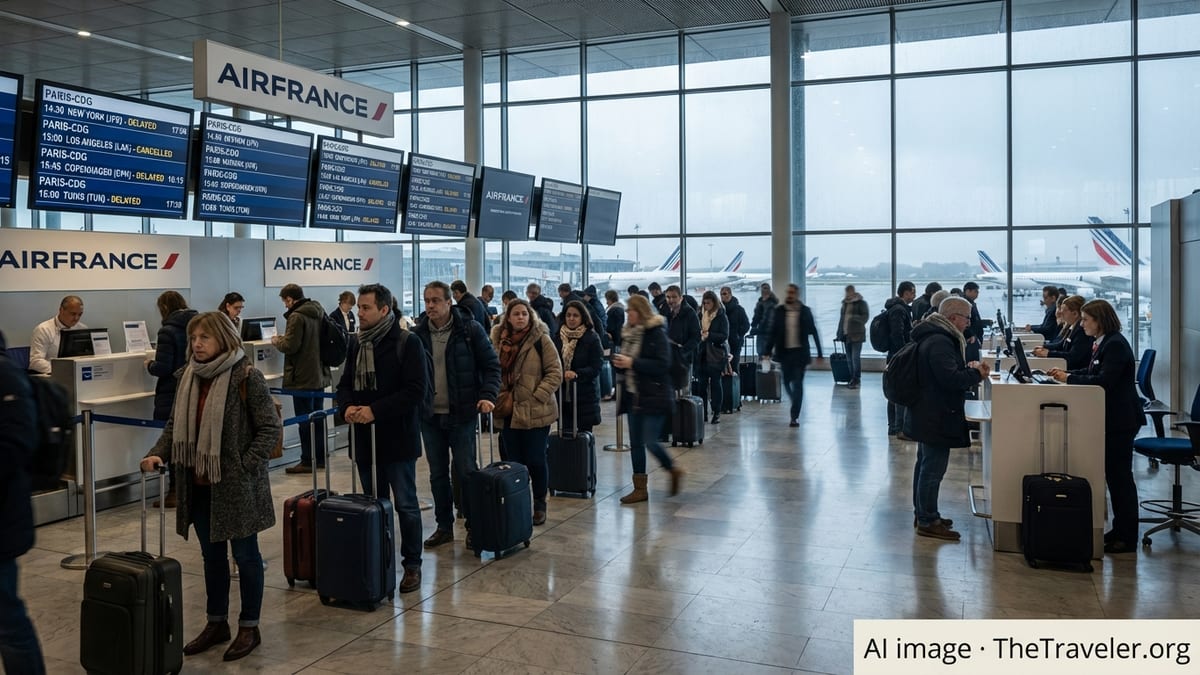
Sixty Cancellations Hit Key French Hubs
Published reports indicate that around sixty flights operated by EasyJet and Air France have been removed from schedules across several French airports within a short window, concentrating disruption at major hubs such as Paris Charles de Gaulle, Paris Orly and Nice Côte d’Azur. The cancellations affect both domestic links and popular short-haul holiday routes, leaving travelers facing last‑minute changes and longer journey times.
Publicly available airport departure boards show a cluster of grounded services on busy morning and evening banks, particularly on routes linking Paris with Mediterranean destinations and major European capitals. The pattern suggests airlines are trimming frequencies on high-density routes rather than withdrawing entire city pairs, a move that allows them to preserve core connectivity while absorbing operational pressures.
Capacity cuts follow a period in which both carriers have already been reworking their French networks. Air France has been shifting more activity from Paris Orly to its main Charles de Gaulle hub, while EasyJet has been reshaping its schedules from French regional airports. The latest cancellations add another layer of uncertainty to passengers planning peak-season trips.
Although sixty flights represent a small share of daily movements across France, the concentrated timing means the impact for individual travelers can be significant, particularly when alternative services on the same day are already heavily booked.
Runway Works, Staffing and Airspace Constraints
Recent coverage of French aviation highlights a mix of structural and short-term factors behind the latest wave of cancellations. At Paris Orly, runway maintenance scheduled for later this summer has already led to the pre-emptive cancellation or rerouting of thousands of flights throughout the season, while airlines have been asked to scale back operations during key closure periods. EasyJet, which has a strong presence at Orly, has been among the carriers adjusting capacity in response.
Beyond infrastructure works, staffing constraints and the risk of air traffic control disruption continue to shadow operations in French airspace. Earlier this year, a combination of strike action and shortages caused dozens of cancellations and widespread delays at Paris and Nice, and airlines have since signaled a more cautious approach to scheduling marginal flights that could easily be knocked off balance.
Operational resilience also plays a role. Reports on recent EasyJet disruption in other European markets show how a relatively small number of aircraft and crew rotations falling behind schedule can trigger a chain reaction, forcing carriers to consolidate flights and cancel less critical rotations to reset the network. For Air France, maintaining punctuality at its main Charles de Gaulle hub remains a priority, encouraging early tactical cancellation of low-yield services when resources are stretched.
In this context, the latest sixty-flight reduction appears to be part of a broader effort by both airlines to protect overall reliability by selectively pruning their timetables rather than risking widespread, same-day disruption across the board.
What Affected Passengers Can Expect
Under European regulations, travelers whose flights are cancelled are entitled to a choice between re-routing to their final destination at the earliest opportunity or a refund of the unused portion of their ticket. The precise level of financial compensation depends on the cause of the disruption and the notice period given, but passenger-rights specialists note that airlines must still provide care such as meals and accommodation when travelers are stranded overnight.
EasyJet and Air France both provide online tools and app notifications allowing customers to check flight status, accept rebooking options or request refunds. Publicly available guidance from consumer advocacy organisations recommends that passengers document all additional expenses, keep boarding passes and confirmation emails, and submit claims directly through airline channels before turning to third-party intermediaries.
Travel advisors also point out that some cancellations may be classed as resulting from extraordinary circumstances, such as air traffic control restrictions or airport-imposed capacity caps, which can limit eligibility for cash compensation even when flights are refunded or rebooked. However, operational or staffing issues directly within an airline’s control may still trigger compensation obligations.
With seat availability tightening during school holidays, rebooked itineraries may involve longer connections, alternative airports or travel a day earlier or later than planned. Passengers are being urged in public advisories to react quickly to schedule-change messages to secure the most convenient replacements.
Knock-on Effects Across the Summer Travel Season
Analysts following the European aviation sector suggest that the latest cancellations in France could foreshadow a more managed form of disruption over the wider summer period, with airlines quietly adjusting schedules weeks or days ahead rather than relying on last-minute decisions at the gate. This approach can reduce the number of travelers left queuing in terminals, but it also increases the need for close itinerary monitoring by passengers.
France’s air travel recovery has been strong, with demand for Mediterranean leisure routes, city breaks and visiting-friends-and-relatives traffic all pushing load factors higher. At the same time, airport renovation projects, sustainability-driven operating rules and a tight labor market across ground handling, security and air traffic services continue to constrain how many flights can realistically be operated each day.
Industry observers note that both EasyJet and Air France are under pressure to balance commercial ambitions with operational limits set by airports and regulators. Proactive cancellations of a limited number of flights, such as the sixty now removed from schedules, are increasingly seen as a tool to keep the remaining programme running more smoothly, even if individual travelers experience significant inconvenience.
For now, travelers heading to or from France are being advised in public information notices to build extra time into connections, consider earlier departures where possible and remain flexible about routing. As the peak summer season accelerates, the pattern of targeted cancellations at key French hubs is likely to remain a defining feature of the travel landscape.