


More news on this day
Travel across France and its overseas territories has been severely disrupted as a wave of delays and cancellations ripples from Paris Charles de Gaulle to remote island airports including Gustaf III in the Caribbean and Maupiti in French Polynesia, with at least 324 flights reportedly delayed and 34 cancelled, affecting operations for Air France, Air Tahiti, Air Caraïbes and several regional carriers.
Get the latest news straight to your inbox!
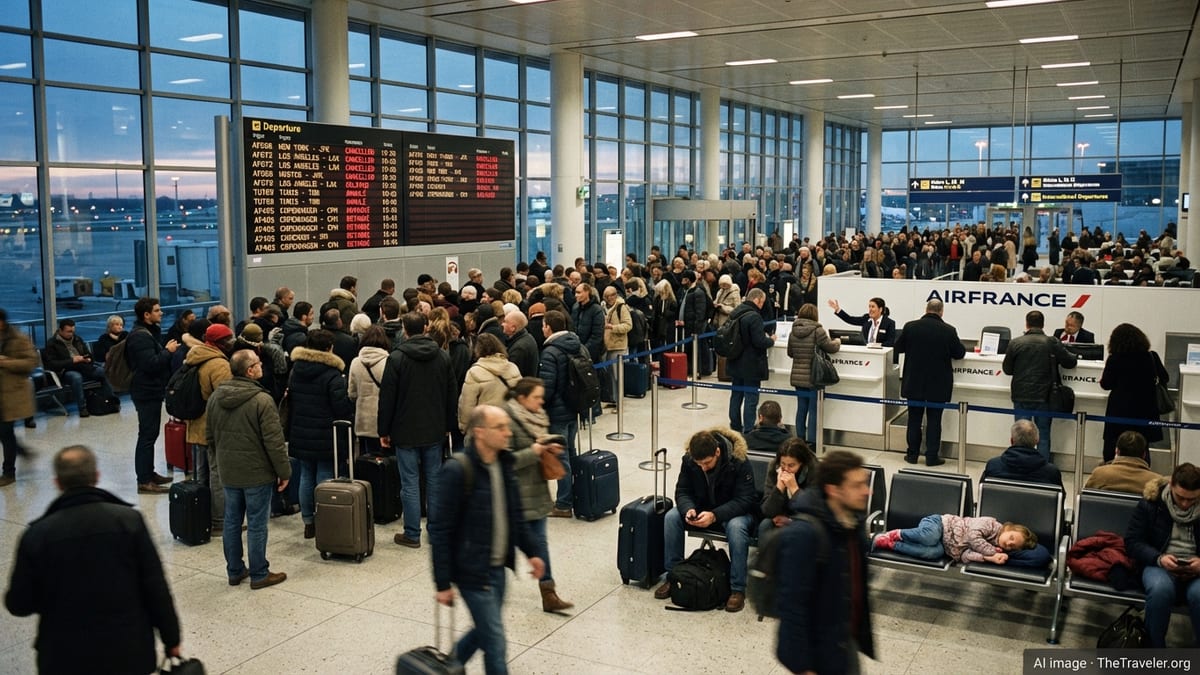
Major hubs and remote islands caught in same disruption
The latest disruption highlights how closely linked mainland France and its overseas networks have become, with problems in one part of the system quickly resonating through others. Paris Charles de Gaulle, the country’s primary long-haul hub, has seen rolling delays and cancellations compound existing congestion, spilling over into connections bound for the Caribbean and Pacific.
Publicly available flight-tracking data and airport information boards show significant knock-on effects on domestic and regional routes, where short-haul services depend on aircraft and crew arriving on time from Paris or other European gateways. When these upstream flights are held or rerouted, island destinations with limited daily services feel the impact almost immediately.
In the Caribbean, Gustaf III Airport on the island of Saint Barthélemy, a short-runway airfield reliant on turboprop feeders from nearby hubs, has reported disrupted schedules affecting services used by Air Caraïbes and partner regional operators. In the Pacific, Maupiti Airport in French Polynesia, which depends almost entirely on Air Tahiti’s inter-island network, has also experienced cancellations that leave travelers with few alternative options on the same day.
The combined effect is a patchwork of delays, missed connections and stranded passengers across multiple time zones, with regional routes bearing a disproportionate share of the disruption compared with larger airports that can more easily absorb schedule changes.
Paris Charles de Gaulle delays ripple through Air France network
At Paris Charles de Gaulle, one of Europe’s busiest hubs, live departure and arrival boards on Friday showed a dense pattern of late-running services across European and long-haul routes, alongside a smaller but notable number of outright cancellations. These interruptions are occurring during a period of elevated summer traffic, when even modest timetable changes can cascade into significant network disruption.
According to publicly available tracking platforms, multiple Air France and codeshare flights have departed later than scheduled or faced equipment changes, adding complexity to crew rotations and onward connections. Each late inbound aircraft arriving at Charles de Gaulle increases the risk of missed links, particularly for passengers connecting to long-haul services or onward flights to France’s overseas territories.
Travelers connecting through Paris to the Caribbean and Pacific are especially exposed. When late arrivals compress connection windows, airlines may need to rebook passengers onto later departures or reroute them via alternative airports, increasing pressure on already crowded services. This dynamic contributes to the growing tally of more than 300 delayed flights and several dozen cancellations affecting the broader French and overseas network.
The congestion at Charles de Gaulle also affects freight and mail carried in the belly of passenger aircraft, which can be critical for remote islands that rely on these shipments for time-sensitive goods and essential supplies.
Gustaf III and Maupiti show fragility of island air links
At smaller island airports such as Gustaf III in Saint Barthélemy and Maupiti in French Polynesia, the disruption underscores the vulnerability of communities that depend on a small number of daily flights. With short runways and limited operating hours, these airports have far less flexibility to accommodate delayed arrivals or added recovery services.
Operational information for Saint Barthélemy indicates that Gustaf III Airport remains confined to daylight operations, limiting the ability of carriers such as Air Caraïbes and partner airlines to operate late rescue flights once earlier services have been delayed beyond their slots. When one rotation is cancelled or significantly late, seats on the remaining flights quickly sell out, leaving visitors and residents facing overnight stays or multi-day rebookings via alternative islands.
In the South Pacific, Maupiti’s airfield serves a small island community where Air Tahiti operates short inter-island hops using turboprop aircraft. Recent real-time status updates have shown at least one Maupiti departure listed as cancelled, reflecting the strain on an inter-island network already coping with tighter crew availability and long-running industrial tensions at the carrier.
Because these islands are reachable only by boat or small aircraft, any aviation disruption has an outsized impact. Travellers can find themselves forced to reroute through secondary hubs, combine ferry and air segments, or extend stays at short notice while waiting for the next available seat.
Air France, Air Tahiti, Air Caraïbes and regional carriers under pressure
The current wave of delays and cancellations has created mounting operational pressure for airlines across the French sphere, from global player Air France to smaller regional carriers. Air France is navigating a combination of congested airspace, busy summer schedules and downstream effects from earlier operational issues, including scattered cancellations and missed connections reported by passengers in recent weeks.
In French Polynesia, Air Tahiti has been managing the lingering impact of a technical and flight crew dispute that flared earlier this year, temporarily reducing resilience across its network. While the carrier has maintained most of its planned schedule, public documents and local commentary indicate that even minor technical or weather-related setbacks can now lead more quickly to cancellations on lower-frequency routes such as those serving Maupiti.
For Air Caraïbes and partner airlines serving Saint Barthélemy, the constraints of Gustaf III’s short runway and slot-limited environment mean that irregular operations are more difficult to recover. Aircraft rotations are tightly choreographed around connections from long-haul flights arriving into nearby hubs, so extended delays upstream often require schedule reshuffles that leave certain island sectors delayed or dropped from the day’s program.
Smaller regional operators, which often run thin schedules with limited standby aircraft, have little room to absorb additional disruptions. Any technical issue, crew out-of-position problem or local weather event can trigger a cascade of rebookings on already constrained routes.
Travellers face missed connections, extended stays and complex reroutes
For passengers, the combined effect of these disruptions is increasingly visible in missed connections, extended layovers and unexpected hotel stays. Travellers who planned tight same-day itineraries from Europe to remote islands are among the hardest hit, as a delay of even one or two hours at Charles de Gaulle can be enough to break a carefully constructed chain of connections.
Reports from passenger forums and social media describe cases of travelers being rebooked one or more days later, or rerouted through alternative gateways in the Caribbean and Pacific. Some inter-island itineraries have required last-minute changes involving ferries, overnight stops on different islands or entirely new flight combinations purchased at short notice.
Standard passenger rights frameworks in Europe and French overseas territories offer some protection in cases of long delays or cancellations, including options for rerouting or reimbursement. However, the practical value of these protections is limited when there are few alternative seats available in peak season, especially to small islands served only a handful of times per week.
Travel organisations and consumer advocates typically urge passengers in such situations to keep all receipts for unexpected expenses, monitor airline communications closely and regularly check flight status tools, as published schedules can change multiple times in a single day during major disruption events.
Peak-season outlook remains uncertain for French and overseas routes
The latest wave of delays and cancellations arrives at the start of a peak holiday period for both mainland France and its overseas territories, raising concerns about the weeks ahead. With air traffic already close to capacity, any additional shock such as industrial action, technical outages or severe weather could significantly worsen congestion at Paris Charles de Gaulle and other key hubs.
For island destinations like Saint Barthélemy and Maupiti, the stakes are particularly high. Tourism is a central pillar of local economies, and reliable air links are critical not only for visitors but also for residents who rely on regular flights for medical appointments, education and business travel.
Publicly available planning documents show that infrastructure works and airside renovations are ongoing at several airports in French Polynesia, introducing temporary capacity constraints that may limit options for schedule recovery through the end of 2026. At the same time, carriers are working to rebuild financial strength after several challenging years, which can restrict their ability to maintain large spare fleets or crews on standby.
With no swift resolution in sight, travellers heading to or through France, the Caribbean and the Pacific in the coming days are being advised by travel industry observers to allow generous connection times, confirm inter-island segments well in advance and be prepared for last-minute changes as airlines and airports continue to manage a volatile operating environment.