


More news on this day
A minor freight train derailment in Morgan County has been reported only weeks after a separate crash in the same county released more than 100,000 gallons of alcohol-based cargo, drawing renewed attention to rail safety and environmental risks along this busy corridor in eastern Tennessee.
Get the latest news straight to your inbox!
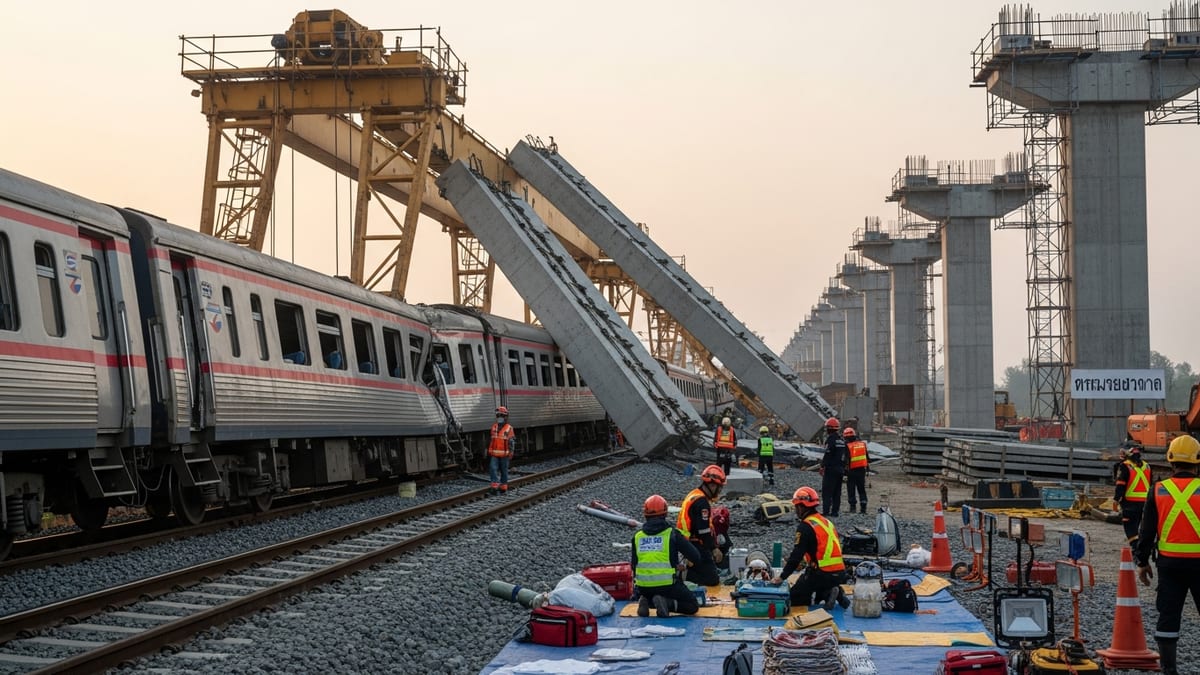
New Incident Raises Concerns Along Rural Rail Corridor
Reports from regional outlets and emergency management summaries describe the latest Morgan County derailment as a low-speed incident involving a small number of freight cars, with no significant injuries or large-scale hazardous release. Early descriptions indicate that the cars left the tracks on a rural stretch of line, away from dense residential areas, and were brought under control relatively quickly.
Preliminary information suggests the affected consist included mixed freight typical of the corridor, with crews and contractors dispatched to rerail the cars, inspect the track and restore service. The incident follows established protocols for minor derailments, which often involve temporary line closures, on-site damage assessments and short-term detours for freight traffic.
While the disruption to rail operations appears limited, the timing of the incident has amplified public sensitivity. Residents and travelers in the Cumberland Plateau region have only recently watched a far more serious accident unfold nearby, making any additional rail mishap a focus of local scrutiny.
Travelers using highways that parallel the line, as well as visitors headed to nearby outdoor destinations, may experience intermittent delays linked to cleanup equipment and railroad vehicles moving in and out of the corridor, even when the track itself remains passable.
Recent Major Spill Involved More Than 100,000 Gallons of Alcohol
The new derailment comes on the heels of a much larger rail accident in Morgan County on June 11, 2026, when a Norfolk Southern key train derailed near the community of Lancing along the Emory River. According to publicly available federal summaries and regional news coverage, 29 of 124 cars left the tracks, including multiple tank cars loaded with ethanol and other alcohols classified as Class 3 flammable liquids.
Those reports indicate that three tank cars were initially breached, releasing alcohol-based cargo that ignited and exposed additional cars to intense heat. Subsequent fire and structural damage led to further releases, with a National Transportation Safety Board preliminary update and follow-up coverage estimating that approximately 107,000 gallons of alcohols were ultimately spilled.
The June derailment produced a dramatic fire and a temporary evacuation zone roughly one mile in radius around the site. While no deaths were reported, the scale of the spill prompted an extensive environmental response, including river monitoring, air quality checks and soil assessments along the right-of-way bordering the Emory River.
The contrast between the recent minor derailment and the earlier large-scale spill underscores how varied rail incidents can be in both consequences and cleanup complexity. Even within the same county, one event can lead to regionwide headlines while another remains a localized operational challenge for the railroad involved.
Ongoing Cleanup and Monitoring Shape Local Travel Conditions
Cleanup and monitoring efforts from the June alcohol spill continue to shape conditions in parts of Morgan County popular with travelers, anglers and paddlers. Publicly available information from state environmental agencies describes a temporary contact advisory for portions of the Emory River near the derailment site, centered on concerns about elevated ethanol levels in the water immediately after the accident.
Subsequent updates reported that the most significant fire had been extinguished within days, but that shoreline and downstream sampling would continue until alcohol concentrations dropped to background levels. Groundwater testing of nearby wells, highlighted in local coverage, suggested that deeper aquifers had not been significantly affected, though officials emphasized the need for continued surveillance.
For visitors, the lingering impact is most visible in posted advisories, occasional access restrictions near the rail crossing and the presence of cleanup crews along riverbanks. Recreational traffic may be diverted away from specific put-in spots or river bends while equipment is staged, even as other stretches of the river remain open.
The latest minor derailment adds to this activity, with additional utility trucks, rail maintenance vehicles and heavy equipment moving through narrow county roads. Travelers headed to state parks, trailheads or campgrounds in the area are likely to encounter work zones and should allow extra time for slow-moving convoys or brief road closures connected to ongoing rail and environmental work.
Rail Safety, Hazardous Cargo and Perception of Risk
The two incidents in quick succession have reinforced broader debates over freight safety in rural communities, particularly where hazardous materials move alongside rivers, highways and small towns. Federal rail accident statistics show that derailments vary widely in cause and outcome, from slow-speed yard mishaps to high-consequence events involving flammable liquids or corrosive cargo.
In Morgan County, the June accident quickly became a regional case study because it involved a key train, multiple tank cars of ethanol and a significant fire directly adjacent to a waterway. The more recent minor derailment, by comparison, appears to fit the pattern of low-speed, limited-damage incidents that typically remain within the operational purview of the railroad and its contractors.
Yet for residents and visitors, the distinction between major and minor events can blur when they occur close together in time and geography. Travelers passing through the county by car or rail may register only the cumulative impression of repeated emergency responses and cleanup convoys, even when technical assessments categorize one event as a routine derailment and the other as a major environmental release.
Publicly available coverage of similar ethanol and alcohol-related derailments in other states has shown that even when acute risks to drinking water are contained, questions about long-term monitoring and infrastructure investment persist. For destination communities that rely on outdoor tourism, maintaining confidence in both environmental quality and transportation reliability is a critical part of recovery after a headline-making spill.
What Travelers Should Know When Crossing Morgan County
For now, available information indicates that rail traffic through Morgan County continues to operate, with freight movements adjusted around cleanup activity and infrastructure checks. Motorists on regional highways and local roads may encounter short delays near grade crossings, access roads and staging areas where rail companies and environmental contractors are working.
Visitors planning trips that involve paddling or fishing along the Emory River are encouraged, through state and county advisories, to check the latest recreational guidance before entering the water near the June derailment site. In many past incidents involving ethanol, environmental reviews have noted that the substance tends to dilute and biodegrade relatively quickly in moving water, but short-term precautions can still be in place even as concentrations decline.
Lodging, trail systems and scenic routes elsewhere on the Cumberland Plateau remain open, and regional tourism boards continue to promote outdoor activities across east Tennessee. At the same time, the combination of a high-profile alcohol spill and a subsequent minor derailment has placed renewed focus on how critical freight corridors intersect with natural and recreational landscapes.
As investigators finalize findings from the June accident and railroad inspectors evaluate track conditions following the more recent incident, Morgan County is likely to remain in the spotlight for advocates and analysts watching how railroads manage hazardous cargo, maintain infrastructure and communicate with communities that host their lines.