


More news on this day
A freight train derailed near downtown Neoga on Tuesday, sending multiple cars off the tracks close to the city’s core, disrupting traffic and drawing a large emergency response while rail crews worked to secure the scene and begin recovery operations.
Get the latest news straight to your inbox!
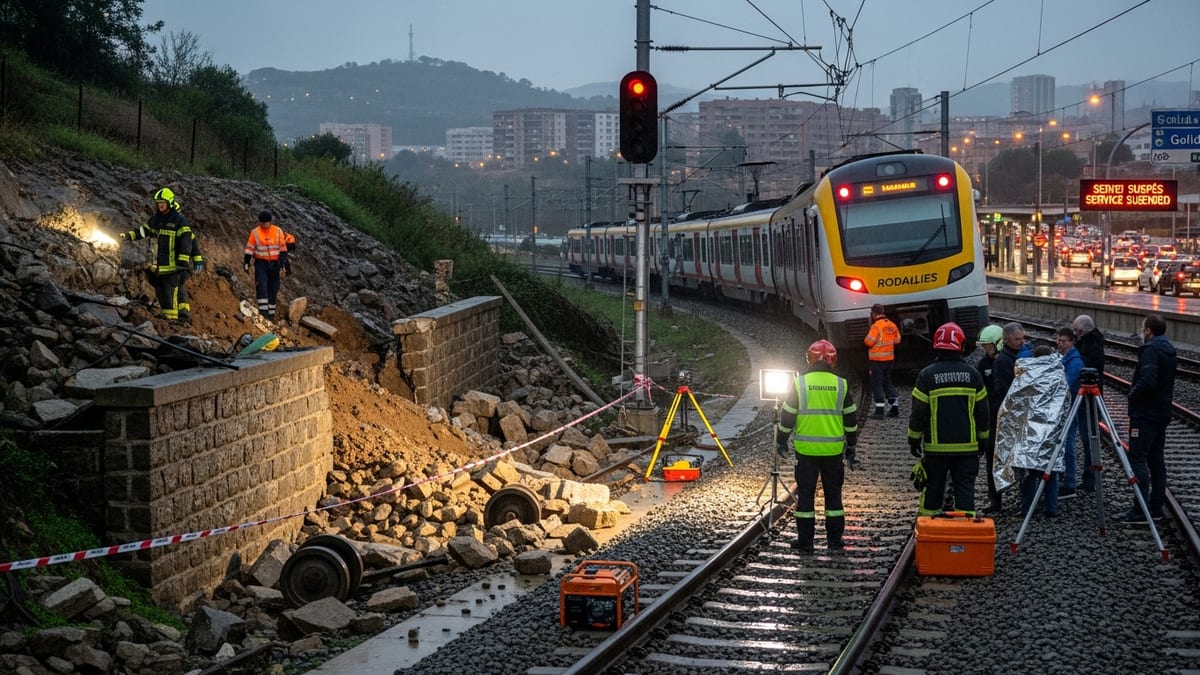
Derailment Near City Center Halts Rail and Road Traffic
Initial reports indicate that the derailment occurred on a busy freight corridor that runs just east of Neoga’s downtown streets, where trains regularly pass close to homes, small businesses, and local highways. Several railcars left the tracks in the incident, coming to rest at angles along the right of way and blocking nearby road crossings used by commuters and local residents.
Publicly available information shows that the train was a freight consist traveling through the region when the cars derailed, forcing dispatchers to halt rail traffic in both directions. Images shared by regional media and on social platforms show cars leaning and partially overturned, with rail ties and ballast disturbed along a curved section of track near the community’s central area.
Local emergency agencies established a perimeter around the scene while rail personnel began assessing the condition of the cars and track. Nearby streets were temporarily closed to keep vehicles and pedestrians away from heavy equipment as specialized contractors arrived to begin rerailing operations and clearing debris.
As of late Tuesday, reports suggested that rail traffic through Neoga remained restricted, with freight movements rerouted where possible while repairs to the line were planned and inspected.
Hazardous Materials Concerns and Public Safety Measures
In the immediate aftermath, attention focused on whether any of the derailed cars were carrying hazardous commodities, a recurring concern in U.S. rail incidents. Early coverage from regional outlets indicated that the train included a mix of freight cars, and that responders were reviewing manifests and visually checking each car to determine its contents.
According to published coverage, there were no immediate reports of injuries among rail workers or residents in the surrounding neighborhoods. Information released through official channels and local news suggested that, while responders were acting with caution, there were no confirmed large-scale releases of hazardous materials at the time initial details emerged.
Nearby residents reported hearing a loud noise and feeling vibrations as the cars left the tracks, but subsequent updates on Tuesday afternoon did not describe any mandatory wide-area evacuation. Instead, people in the closest blocks were advised through local alerts and broadcast reports to avoid the rail corridor while responders completed their assessments.
Fire and emergency medical units remained staged near the site for several hours as a precaution as rail crews checked tank cars and hoppers for any signs of leaks. Environmental officials monitored the situation, prepared to investigate soil or water impacts if damage to any hazardous-materials cars were later identified.
Community Disruption and Local Response
The derailment’s proximity to downtown Neoga quickly affected daily life in the community. Key crossings near the city center were blocked, forcing detours for school traffic, delivery trucks, and commuters traveling between residential areas and local employers. Motorists were redirected onto alternate routes until rail and public works crews could evaluate whether it was safe to reopen any of the intersecting streets.
Businesses near the tracks experienced intermittent disruptions as access routes shifted and customers encountered barricades and increased congestion on side streets. Some storefronts kept operating with limited foot traffic, while others opted to close early as heavy equipment moved into the area and parking became more difficult around the blocked rail line.
Publicly available information from local agencies described a coordinated response involving fire, law enforcement, and emergency management teams working with the railroad’s own incident specialists. Temporary command posts and staging areas were set up on nearby lots, with vehicles and personnel positioned to remain on scene into the evening hours.
Residents in surrounding neighborhoods followed developments through local news and community alerts, with many watching from a distance as cranes and maintenance-of-way equipment were brought in to begin the slow process of lifting damaged cars and repairing bent rail.
Ongoing Investigation Into Cause of the Derailment
As with similar incidents across the country, investigators are expected to examine a range of possible contributing factors, including track conditions, train speed, equipment maintenance, and any recent work in the area. Federal rail safety data and recent derailment histories show that broken rails, track geometry issues, and equipment defects are among the most common causes of freight derailments nationwide.
According to rail safety practices outlined by national regulators, investigators typically begin by securing event recorder data from the locomotive, reviewing inspection records for the track segment and train cars, and documenting the position of each derailed car before wreckage is moved. Those steps are often followed by lab analysis of failed components and interviews with personnel who operated or inspected the train before the incident.
Publicly available information about comparable derailments in recent months indicates that formal determinations of cause can take weeks or months to complete. During that period, railroads sometimes implement interim speed restrictions or additional inspections on similar track segments as a precaution, particularly where trains operate close to residential neighborhoods and downtown districts.
Any findings from the Neoga derailment investigation are likely to draw attention from regional planners and safety advocates, who have increasingly focused on the intersection of freight rail traffic and small-town cores, where tracks often run just a short distance from homes, schools, and main streets.
Renewed Focus on Rail Safety in Small Communities
The Neoga derailment adds to a recent series of freight train incidents across the United States that have renewed scrutiny of rail safety in smaller cities and rural towns. While large metropolitan derailments tend to draw national headlines, many events occur along lower-profile corridors that pass through communities with limited emergency resources.
Industry data and recent reporting show renewed interest in measures intended to reduce derailment risks, including expanded use of trackside detectors that can identify overheating bearings or dragging equipment, more frequent inspections on lines handling heavier or faster trains, and greater attention to the placement of hazardous-materials cars within long consists.
Advocacy groups and some local leaders have also highlighted the importance of emergency planning, encouraging communities to update response plans, conduct multi-agency drills, and ensure that first responders are familiar with railcar markings and standard rail incident protocols. Events such as the Neoga derailment are often cited as real-world tests of those preparations, revealing strengths in coordination as well as gaps in communication and resources.
For residents and travelers in and around Neoga, Tuesday’s derailment served as a reminder of the rail line’s close presence in daily life. As cleanup and repairs continue, attention will remain on how quickly service can safely resume and what future steps might be taken to reduce risks along the busy corridor that threads through the city’s downtown.