


More news on this day
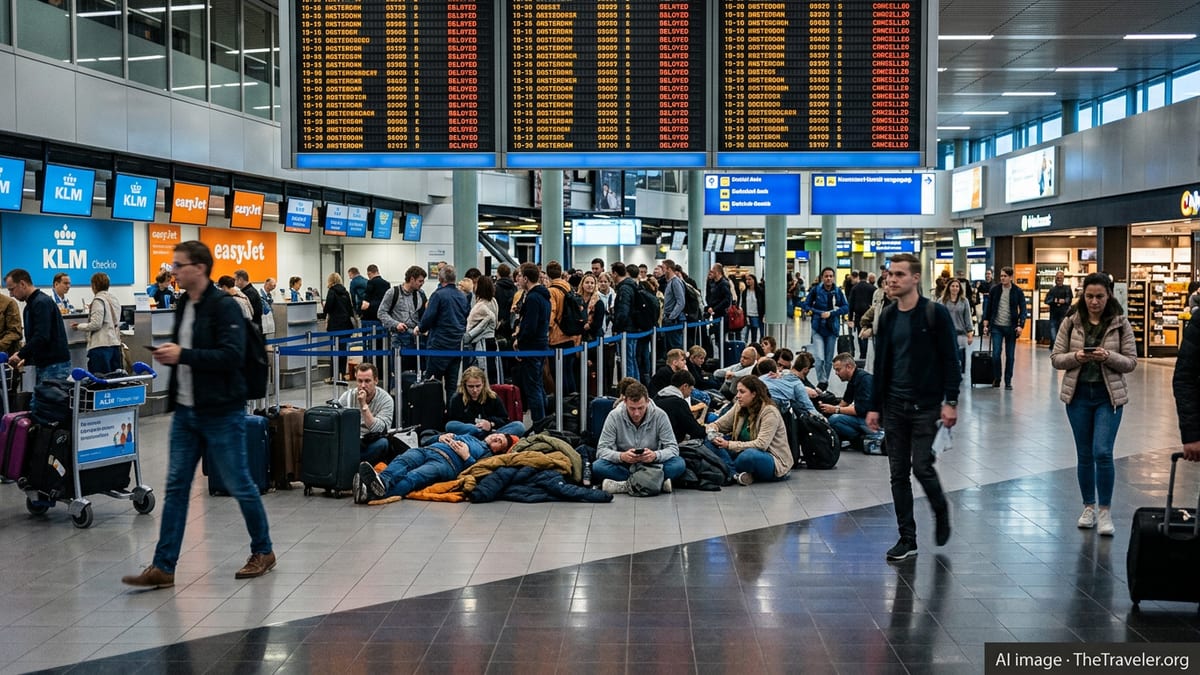
Amsterdam Schiphol Airport is facing another wave of operational disruption, with publicly available data indicating that airlines including KLM, Delta Air Lines and Air Baltic have grounded more than 20 flights and delayed dozens more, leaving passengers bound for the United States, United Kingdom, Italy, Ireland, Latvia, Türkiye, Taiwan and beyond facing missed connections and overnight stays.
Get the latest news straight to your inbox!
Fresh Wave of Cancellations and Delays at Key European Hub
Recent operational data and industry monitoring show that Amsterdam Schiphol has again become a pinch point for international travel, with a cluster of cancellations and delays affecting short and long haul services. In the latest episode, at least 23 flights operated or codeshared by carriers such as KLM, Delta Air Lines, Air Baltic and several European partners were reportedly grounded, while around 50 additional departures and arrivals experienced significant delays.
The disruptions are impacting a wide range of destinations, including major transatlantic routes to the United States and the United Kingdom as well as key European and Eurasian markets such as Italy, Ireland, Latvia, Türkiye and Taiwan. For many travelers using Schiphol as a transfer hub, relatively small schedule changes on feeder flights are translating into missed long haul connections and extended waits for rebooking.
The latest operational turbulence comes on top of a month marked by repeated schedule strains at the Dutch hub. Earlier in June, aviation and travel industry outlets recorded days with more than one hundred delayed flights and double digit cancellations at Schiphol, underscoring how quickly minor disruptions can cascade across tightly timed airline networks.
Travel-focused publications highlight that these patterns have become particularly visible during busy summer travel days, when aircraft and crew schedules leave little slack for weather, technical issues or airspace constraints. As a result, even a modest number of grounded aircraft can spill over into hundreds of delayed connections across Europe, North America and Asia.
Passengers Stranded Across U.S., U.K. and European Routes
The knock-on effects of the latest cancellations are being felt by passengers traveling to major hubs such as New York, Boston, Atlanta and other gateways in the United States, as well as London and regional airports in the United Kingdom. Disrupted flights on these routes can be especially challenging, as many long haul services operate only once per day, leaving travelers with limited same day alternatives.
Reports from recent disruption events at Schiphol describe departure boards dominated by delays and clusters of cancellations across airlines including KLM, Delta Air Lines, easyJet, British Airways and other European and transatlantic carriers. When a long haul service is grounded or heavily delayed, passengers with onward journeys to smaller U.S. and U.K. cities often face multi stop rebookings or overnight accommodation while they wait for open seats.
Travel media coverage also indicates notable disruption on routes to Italy and Ireland, popular with both leisure and business travelers during the summer period. Services to cities such as Rome and Dublin are heavily dependent on smooth connections from regional European feeders, meaning a delay of one to two hours on an inbound flight into Amsterdam can be enough to break an itinerary.
Across the Baltic and Eurasian region, flights to Latvia, Türkiye and Taiwan are similarly exposed to schedule shocks. Carriers such as Air Baltic use Schiphol as one of several key transfer points, and any cluster of delayed or cancelled services at the Dutch hub can temporarily weaken connectivity between Northern Europe and more distant destinations.
Operational and Structural Pressures Behind the Disruptions
Published aviation analysis points to a combination of structural and short term operational factors behind the recurring disruption patterns at Schiphol. Airlines including KLM have already been trimming flight schedules in 2026 in response to higher fuel costs and constrained aviation fuel supplies in parts of Europe, while also contending with crew planning challenges and ongoing maintenance demands on older aircraft.
Schiphol itself continues to operate as one of Europe’s busiest but spatially constrained hubs. Commentators note that its runway and taxiway configuration, combined with periods of low visibility or strong winds, can quickly reduce usable capacity. Even modest weather related slowdowns can therefore lead to queues for takeoff and landing that ripple through the day’s schedule.
Network design plays a further role. Many transatlantic and long haul flights from Amsterdam are fed by waves of short haul arrivals from across Europe, the U.K. and Scandinavia. When disruption affects one or two inbound banks of flights, airlines can struggle to align passengers, crews and aircraft in time for their long haul departures, increasing the likelihood that services will be delayed or, in some cases, proactively cancelled to contain wider operational risk.
Industry experts also highlight the broader airspace environment. Temporary restrictions in parts of the Middle East and congestion on alternative flight paths have, at times, required longer routings or schedule adjustments for services crossing the region. While not the sole cause of current issues at Schiphol, these factors add another layer of complexity to already tight operations.
Guidance for Travelers Passing Through Amsterdam Schiphol
Publicly available airline advisories recommend that travelers with itineraries to, from, or via Amsterdam Schiphol closely monitor flight status using official airline apps, booking portals or airport information pages, particularly in the days surrounding known disruption spikes. Some carriers, including KLM and its partners, encourage passengers to enable notifications so that automatic rebooking options can be communicated as soon as changes occur.
Passengers scheduled to connect through Schiphol on their way to destinations in the United States, United Kingdom, Italy, Ireland, Latvia, Türkiye or Taiwan may wish to allow additional buffer time between flights, especially during peak summer weekends and early morning or late afternoon bank periods. Where possible, selecting itineraries with slightly longer connection times can provide a margin of safety if inbound services experience moderate delays.
Consumer guidance from European travel bodies generally advises affected passengers to keep all boarding passes, booking confirmations and receipts for meals, transportation and accommodation incurred during disruption. Under European passenger protection rules, travelers on eligible flights who experience long delays or cancellations for non extraordinary reasons may be entitled to assistance and, in some cases, financial compensation.
Given the recurring nature of recent issues at Schiphol, observers suggest that travelers planning complex multi segment trips consider flexible tickets or travel insurance products that explicitly cover missed connections and extended delays. While the majority of flights at the Dutch hub continue to operate broadly on schedule, the latest round of 23 grounded services and nearly 50 delays demonstrates how quickly conditions can deteriorate during already busy periods.
Prospects for the Remainder of the Summer Travel Season
As the peak summer season progresses, Schiphol and its main hub carrier KLM remain under pressure to balance high demand with operational resilience. Recent announcements about schedule adjustments and fleet planning indicate that airlines are attempting to reduce vulnerability to cascading delays by trimming less profitable flights and concentrating resources on core routes.
Airport and airline performance in early June suggests that even with such measures, isolated weather systems, technical issues or regional airspace disruptions can still trigger large numbers of delays within a short window. Aviation analysts therefore expect intermittent disruption to remain a feature of the travel landscape through at least late August, particularly on popular transatlantic and Mediterranean routes.
For now, publicly available data shows that the overwhelming majority of flights at Amsterdam Schiphol continue to depart and arrive, albeit with punctuality that can vary considerably from day to day. Travelers to and from the United States, United Kingdom, Italy, Ireland, Latvia, Türkiye, Taiwan and other long haul destinations are being advised by industry observers to build in contingency time, stay informed, and be prepared for last minute gate or schedule changes as airlines work to keep their complex networks moving.