


More news on this day
Around 200 passengers who bought into a yearslong residential “cruise for life” concept have been left scrambling for flights and hotels in Cambodia after the US-operated MV Odyssey abruptly halted its global voyage over surging fuel costs.
Get the latest news straight to your inbox!
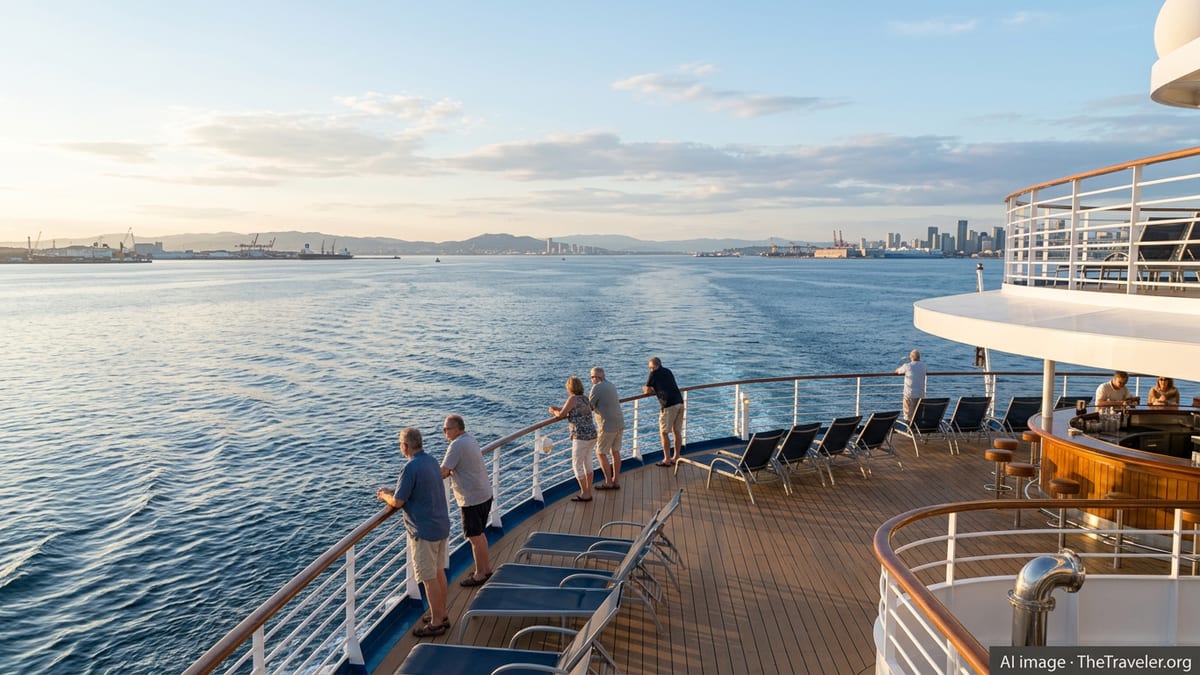
Yearslong residential cruise cut short in Sihanoukville
The MV Odyssey, operated by US-based Villa Vie Residences, was marketed as a floating residential community that would circle the globe for years at a time, allowing guests to buy or rent cabins as long-term homes at sea. Publicly available information indicates that the 200 meter ship, with a capacity of around 650 passengers, departed Northern Ireland in October 2024 on what was promoted as a continuous multi-year voyage touching all seven continents.
The journey came to an abrupt halt in late October 2026 when the vessel docked at Sihanoukville, a deep-water port on Cambodia’s southern coast. According to Associated Press and other published coverage, the company informed guests that operations were being suspended in Cambodia, citing “extraordinary increases” in fuel prices and related financial pressures.
Reports indicate that around 200 to just over 200 passengers, along with more than 150 crew members, were on board when the decision was announced. Many of those passengers had invested substantial sums upfront in cabins, some reportedly selling homes and other assets to finance what was billed as a lifestyle at sea rather than a conventional time-limited cruise holiday.
Local media and international outlets describe a hurried disembarkation process in Sihanoukville, with passengers transported into town and left to arrange accommodation and onward travel while the company worked to address its financial situation.
Fuel shock and financial strain in a volatile travel market
Villa Vie Residences has publicly attributed the suspension to sharp increases in marine fuel costs linked to the broader energy volatility that followed the US conflict with Iran earlier in 2026. Coverage in regional and international outlets notes that bunker fuel prices for large vessels have risen significantly this year, squeezing operators running long itineraries with few port days in low-cost regions.
The Odyssey’s business model, built around continuous global sailing and long ocean stretches between far-flung destinations, left relatively little room to offset those costs. Residential cruises also operate differently from mainstream cruise lines that can adjust itineraries seasonally, redeploy ships to more profitable routes, or fill cabins with short-term promotions. Passengers onboard Odyssey typically committed for years, or even for the expected remaining “life” of the ship.
Publicly available coverage indicates that the company had already faced a series of operational and financial challenges in its first two years at sea, including delays to the start of its global program and periods in port while work continued on the vessel. The fuel price spike appears to have tipped an already fragile operation into crisis.
Analysts quoted in industry-focused reporting suggest that residential cruising is especially exposed to shocks in operating costs, because revenue is heavily front-loaded through cabin sales while a large share of expenses, from crew salaries to insurance and fuel, continues month after month. When projections for those inputs change rapidly, companies have limited flexibility to recoup losses without imposing new charges or cutting service.
Stranded passengers navigate emergency plans on land
In Sihanoukville, images and reports from news agencies show Odyssey passengers gathering at local hotels and along the city’s beaches as they tried to piece together next steps. Many travelers had planned to be at sea for months or years and did not have immediate return tickets, comprehensive contingency plans, or easy access to stored belongings back home.
Cambodian officials have been photographed visiting guests at one of the city’s prominent seafront hotels, offering symbolic gifts and emphasizing the country’s interest in welcoming international visitors during an unexpected stay. Local authorities and tourism representatives have also highlighted Sihanoukville’s role as a gateway to nearby islands and coastal resorts, although for many passengers the priority is securing flights, insurance claims, and housing rather than sightseeing.
Several passengers have shared accounts with global media describing being brought by bus from the port into the city and then left to arrange their own lodging. Some said they were awaiting further clarification from Villa Vie Residences on potential refunds, future travel credits, or support with repatriation. As of early November, publicly available reporting does not indicate a comprehensive compensation plan, and the extent of insurance coverage for individual guests appears to vary based on how and when they purchased their cabins.
Travel industry commentators note that while cruise contracts often give operators wide latitude to alter itineraries, a mid-voyage suspension of this scale on a residential ship is unusual, leaving both consumers and regulators examining what protections apply when a long-term lifestyle product ends abruptly.
What the suspension signals for ‘live aboard’ cruising
The Odyssey case has drawn fresh attention to the emerging niche of residential and “cruise for life” products, in which customers buy cabins much like condominiums and pay ongoing fees for maintenance, fuel, staffing, and food. These offerings promise a rotating panorama of ports combined with a stable community and familiar onboard services.
In practice, the model depends on complex financial planning, long-term projections of operating costs, and robust demand from residents willing to commit for years. Travel trade publications had already highlighted the challenges of converting older ships into permanent residences, including the expense of refurbishing cabins for year-round living, updating environmental systems, and meeting evolving international safety standards.
The abrupt halt of a yearslong voyage in Cambodia illustrates how sensitive such projects can be to external shocks. Fuel prices, regional conflicts, shifting environmental regulations on emissions, and currency movements can all alter the economics of running a ship full time. When these factors move sharply against an operator that has already spent heavily on acquisition and refit, there may be limited buffers left to absorb losses.
Prospective residents considering similar concepts are likely to scrutinize financial disclosures, ship ownership structures, and contingency plans more closely in the wake of the Odyssey’s suspension. Consumer advocates interviewed in existing coverage have pointed to the importance of understanding refund policies, the legal jurisdiction of contracts, and whether funds from cabin sales are held in escrow or used immediately for capital and operating expenses.
Implications and evolving advice for long-term cruise travelers
For travelers attracted by the idea of living at sea, the events in Sihanoukville highlight both the appeal and the risk of committing to multi-year voyages. Passengers on Odyssey reportedly paid six-figure sums for cabins in some cases, along with monthly service charges, in exchange for the promise of a long-term home that would carry them around the world.
Travel advisors commenting on the situation in industry media are emphasizing more than ever the importance of robust travel insurance that explicitly covers cruise insolvency or supplier failure, not just medical issues and trip delays. They also recommend maintaining a financial cushion on land, including a viable housing plan and emergency funds, even when planning to be away for extended periods.
Regulators and maritime organizations are also expected to watch the fallout closely. While there is no immediate indication of new rules, previous incidents involving stranded cruise passengers have sometimes prompted reviews of consumer protection frameworks, disclosure rules for complex travel products, and guidelines for repatriation support when long-haul voyages are cut short.
In the meantime, the Odyssey remains docked in Cambodia while passengers navigate their way home or toward new plans. For many, the promise of a seamless, yearslong journey around the world has been replaced almost overnight by the more familiar travel challenges of rebooking flights, filing claims, and weighing how much faith to place in the next big idea in experiential cruising.