


More news on this day
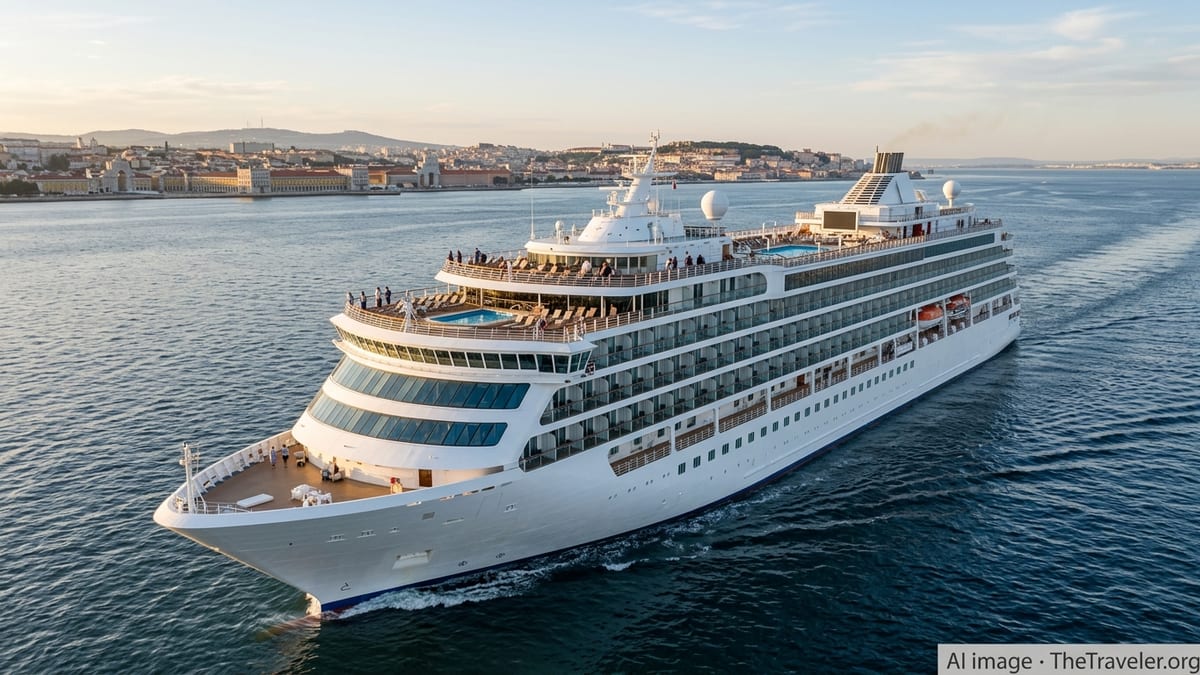
Around 200 long term passengers who bought into a life at sea on the residential cruise ship Villa Vie Odyssey have been left scrambling for housing and onward travel after the vessel’s Florida based operator abruptly suspended operations in Cambodia, citing a surge in fuel costs and mounting financial pressure.
Get the latest news straight to your inbox!
From perpetual voyage to sudden standstill
The Bahamas flagged Villa Vie Odyssey, operated by U.S. based Villa Vie Residences, had been marketed as a floating residential community offering multi year and permanent “live aboard” options. The ship departed Belfast on October 3, 2024 for a continuous three and a half year world itinerary calling at 425 destinations in 147 countries, according to company materials and trade coverage. Public information indicates that residents could purchase cabins outright or sign on for fixed multi year stays, treating the vessel as their primary home rather than a traditional cruise.
That promise effectively ended in late October 2026 in the Cambodian port of Sihanoukville. Reports from outlets including the Associated Press, ABC News and industry publications indicate that the company informed residents that operations were being suspended and that they would have to disembark within hours. Cambodian provincial officials and cruise industry reports state that 203 passengers of 15 nationalities and 156 crew members were on board when the decision was announced.
Villa Vie Residences described the move as a temporary lay up of the vessel following an inability to secure fuel and sustain operating losses. In a statement distributed via newswires and cited across cruise and business media, the company said it had already slowed the ship’s itinerary and extended port stays to cut fuel consumption, but those steps did not offset what it called extraordinary cost increases in parts of Asia.
According to that statement, monthly fuel expenses per cabin that had historically averaged about 1,800 dollars had risen to an estimated 6,000 to 8,000 dollars in some regions, a jump the company linked to the war involving Iran and wider instability in energy markets. The increase, Villa Vie said, pushed its residential cruising model into what it termed “unsustainable financial pressure.”
Residents who sold everything now face housing uncertainty
The shutdown has had outsized consequences because many passengers treated the Odyssey as a full time home. Travel and business reports describe retirees and remote workers who sold houses, businesses and most of their belongings to buy cabins costing from about 120,000 dollars for an entry level residence to more than 400,000 dollars for larger suites, plus monthly fees that in some cases exceeded 3,000 dollars. For those residents, disembarkation in Sihanoukville has meant an abrupt loss of housing, community and long term plans.
Australian and U.S. network coverage notes that some passengers were initially given only part of a day to vacate the ship, though later accounts from the ship’s captain in local media described a notice period of around 36 hours as the fuel situation became “critical.” Either way, accounts from affected travelers shared with international outlets describe a hurried packing process and a scramble to secure hotel rooms, flights and visas in a city that had not been planned as a final destination.
Cruise industry specialists report that Villa Vie has been coordinating with local authorities and travel partners to arrange temporary accommodation and local transportation for former residents. However, coverage from business and travel media indicates that the company is not funding international flights out of Cambodia, leaving many to pay for last minute long haul tickets or remain in the region while they search for more permanent living arrangements.
International newspapers and broadcasters have highlighted the emotional impact on passengers who had embraced the idea of a “cruise for life” and are now describing themselves as effectively homeless. Commentaries in those outlets note that beyond the immediate disruption, some residents may struggle to re enter conventional housing markets after committing significant capital to shipboard real estate that currently has uncertain resale value.
Fuel price shock and a fragile business model
The collapse of the Odyssey’s program is being closely watched across the travel industry because residential cruising has been promoted as a growing niche for affluent retirees and digital nomads. Analysts quoted in cruise trade journals say Villa Vie’s difficulties underscore how sensitive such concepts can be to operating costs that are largely outside a company’s control, particularly fuel.
According to a statement filed through news distribution services and summarized by multiple outlets, Villa Vie Residences estimates that its per cabin fuel bill rose by more than 300 percent after the outbreak of conflict involving Iran and a wider U.S. and Israel led campaign earlier in 2026. The company said it attempted to manage those costs by reducing speed and increasing port days, but that it was “unable to continue carrying the resulting operating losses” and did not view passing the full increase on to residents as realistic.
Separate coverage in cruise industry media details a series of financial steps that preceded the shutdown, including appeals to residents for additional fuel surcharges and what was described as an “emergency loan investment opportunity” earlier in the year that sought several million dollars in high interest funding. Reports also reference efforts to attract new outside investors and resident backed recapitalization plans, none of which appear to have stabilized the operation before the ship was placed into lay up in Cambodia.
Villa Vie had announced in mid 2026 that it planned to introduce a second residential ship, to be named Legacy, around 2029. The current suspension notice and subsequent media reports do not clarify whether that expansion plan remains active. Trade coverage notes that the Odyssey’s future employment is also uncertain, with the vessel currently alongside in Sihanoukville while a reduced crew maintains essential systems and awaits further instructions.
Bankruptcy plans and the question of passenger protection
As the company works through its next steps, business outlets report that Villa Vie Residences intends to seek Chapter 11 bankruptcy protection in the United States. Chapter 11 would allow the company to propose a reorganization plan while attempting to continue some form of business, but legal and financial specialists quoted in those reports caution that there is no assurance of a successful restructuring or of specific outcomes for residents who hold long term cabin contracts.
Unlike traditional cruise tickets, many of those contracts resemble real estate or membership style agreements, potentially placing them in a different category from typical passenger claims. Travel law commentators cited in media coverage suggest that the mix of ownership, lease and rent to own structures could complicate efforts by residents to recover funds or secure alternative accommodations through any eventual court supervised process.
The situation is also raising questions about consumer protections in the emerging residential cruise segment. Standard cruise vacations that begin or end in U.S. ports are generally covered by financial responsibility rules designed to protect passengers in the event of non performance. By contrast, a multiyear world voyage that embarks overseas and operates as a quasi residential community may not fit neatly into those frameworks, particularly when ownership shares or long term rights of use are involved.
Some travel advisors and industry observers quoted in published reports are urging would be residents on future “live at sea” concepts to scrutinize contract terms, ask detailed questions about fuel hedging and reserve accounts, and consider what contingency plans exist if an operator suspends service mid voyage. They note that in the case of the Odyssey, residents are currently reliant on the company’s voluntary efforts and any eventual court supervised process rather than on clearly defined statutory protections tailored to this type of product.
What it means for the future of life at sea
The abrupt halt of the Villa Vie Odyssey voyage comes at a time when several other companies are marketing long duration residential style cruises and ocean communities. Some operate more traditional world cruises with set end dates, while others promote multi year or even open ended itineraries with cabin ownership or membership options. Industry analysts say the events in Cambodia are likely to prompt closer scrutiny from both regulators and potential customers.
Published commentary from cruise and retirement planning experts suggests that the core appeal of residential cruising, including simplified living costs and an all inclusive lifestyle, remains strong for a subset of travelers. However, they emphasize that the Villa Vie case highlights key risks, including exposure to fuel price volatility, the importance of transparent financial management and the potential challenges of relocating if a vessel changes plans or ceases operation.
In the near term, the focus remains on the several hundred people whose plans for an extended life at sea have been cut short. News reports from Cambodia describe a mix of outcomes: some former residents have already booked flights back to home countries in North America, Europe and elsewhere, while others are still in temporary accommodation waiting for clearer guidance from the company and from any forthcoming court proceedings.
For now, Villa Vie Residences has indicated through public statements that it will spend the coming weeks evaluating restructuring and recapitalization options and assessing possible paths forward for the Odyssey. Until that process yields a definitive outcome, passengers who once considered themselves permanent residents of a world cruise are confronting an uncertain future on land.