


More news on this day
The United Kingdom has tightened its travel guidance for Turkey and Egypt as regional tensions in the Middle East remain high, warning British travelers of a greater risk of sudden escalation, security incidents and disruption to flights and airspace.
Get the latest news straight to your inbox!
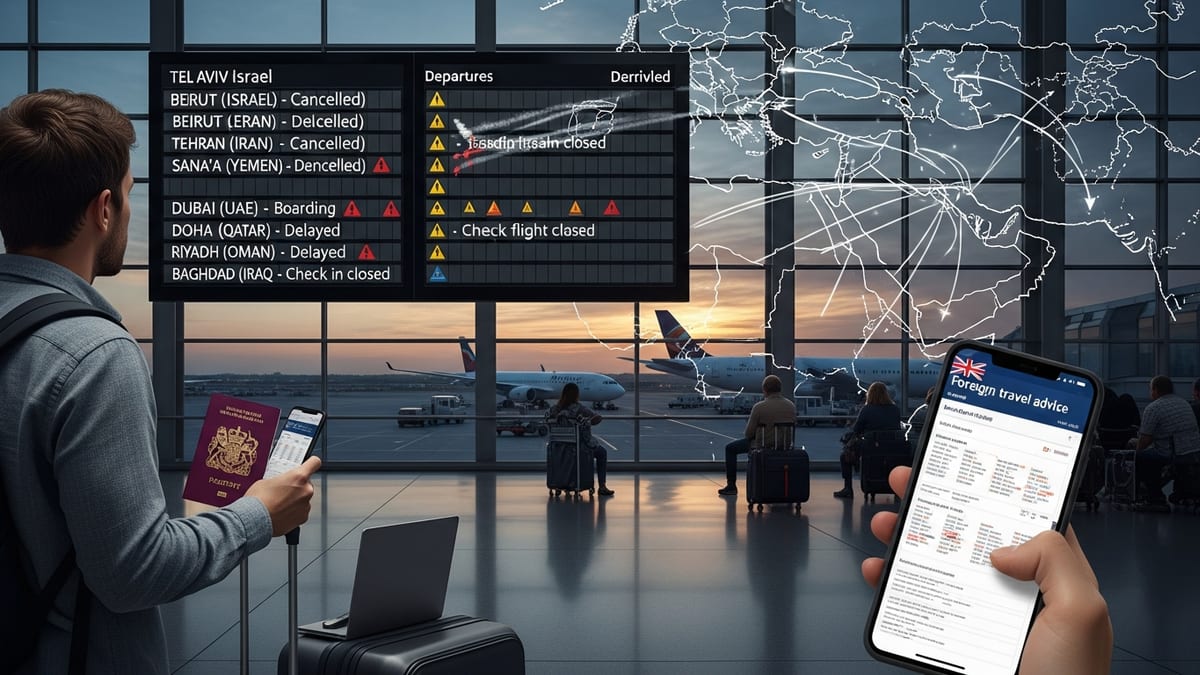
Fresh Warnings Reflect a More Volatile Middle East
The latest updates to the UK’s official travel pages for Egypt and Turkey emphasize that the broader Middle East security environment is highly unpredictable, with a risk that any escalation could be rapid and affect travel plans with little notice. Publicly available information highlights concerns about potential disruption to regional airspace, flight cancellations and re‑routing, especially for routes crossing conflict-affected areas.
According to published coverage summarizing the changes, the Foreign, Commonwealth and Development Office (FCDO) now places regional tensions prominently near the top of its Egypt advice, underscoring that conflict involving Iran, Israel and other actors could have knock-on effects for travelers far beyond immediate front lines. The advisory notes that the risk of escalation in the wider region is considered high and that sudden restrictions could affect both direct UK–Egypt services and onward connections.
For Turkey, recent reporting and traveler discussions indicate that the UK has shifted to a more restrictive posture than many other Western governments. While Canadian, US and Australian advisories currently focus on avoiding specific border regions, UK travelers have highlighted that the FCDO language now signals broader concern about the security outlook across the country, even in major urban centers that receive most leisure visitors.
The sharpened tone forms part of a wider pattern of government messaging on the Middle East. Separate global notices from other states already warn their citizens to expect possible airspace closures, delays and schedule changes on routes transiting the region, reflecting the potential for regional incidents to ripple quickly through airline networks.
Egypt: Targeted No-Go Zones and Emphasis on Regional Risk
On the FCDO’s Egypt page, the UK continues to distinguish between Egypt’s main tourist heartlands and more sensitive frontier regions, but with stronger language around the impact of regional tensions. The advisory maintains long-standing warnings against all travel to North Sinai governorate and to areas close to the Libyan border, and against all but essential travel along certain desert highways and remote border zones.
At the same time, publicly available information shows that the UK has recently updated a specific section on regional tensions, now stressing that the conflict elsewhere in the Middle East has created a high risk of sudden escalation. The text flags the possibility of disruption to flights or airspace, even for itineraries that focus on classic visitor routes such as Cairo, Luxor, Aswan and Red Sea resorts.
Other foreign ministries provide broadly similar, though sometimes less stringent, assessments. Canada currently advises travelers to exercise a high degree of caution in Egypt due to regional tensions, an unpredictable security situation and the threat of terrorism, while setting out higher risk levels for parts of North Sinai and the Western Desert. Australia and New Zealand also highlight the danger of terrorist attacks, potential civil unrest and possible knock-on effects from conflict elsewhere in the region.
For UK travelers, a key practical point is the link between official warnings and insurance cover. The FCDO clearly notes that travel insurance can be invalidated if a traveler heads into areas where the government advises against all travel or all but essential travel. That consideration has become more salient as regional risk language is strengthened, even though most popular tourist sites in Egypt remain outside the strict no-go zones.
Turkey: Stricter UK Stance Compared With Other Allies
In Turkey, the contrast between the UK’s stance and that of some partners has become a focus of traveler attention. Social media discussions among British travelers in recent months refer to an update in which the UK advice reportedly expanded beyond long-standing warnings on the Syrian border region to a broader caution on travel to Turkey as a whole, reflecting concern about terrorism and the repercussions of Middle East instability.
By comparison, the current United States travel advisory classifies Turkey at a level that calls for increased caution, highlighting terrorism, armed conflict and arbitrary detentions, but limiting its strongest “do not travel” language to within 10 kilometers of the borders with Syria and Iraq. Canada and New Zealand similarly urge a high degree of caution across Turkey overall, while advising against travel to the Syrian and Iraqi border areas and, in some cases, to specific southeastern provinces affected by security operations.
Recent guidance from Australia underlines many of the same patterns, with calls to exercise increased caution in Ankara, Istanbul and other major cities, while recommending against travel near conflict-affected borders. Alongside these, regional security analyses and travel-industry briefings point to the risk that incidents involving Iranian or other regional actors could prompt short-notice airspace restrictions that affect flights to and from Turkish hubs.
For British holidaymakers, the tighter UK wording means greater need to monitor the official travel page even for well-established destinations such as Istanbul, the Aegean coast and Cappadocia. Any future shift by the FCDO into more restrictive categories for additional regions could have immediate implications for package-tour operations and for independent travelers’ insurance validity.
Flight Disruption and Insurance Emerging as Key Concerns
The evolving UK guidance comes against a backdrop of travel-industry alerts about the practical impact of the Middle East crisis on aviation. Industry bulletins issued earlier in 2026 documented periods when airspace was partially or fully closed over several states in the region, with airlines forced to reroute or cancel services. More recent global notices from other governments warn travelers to be prepared for possible flight cancellations and periodic airspace closures as tensions ebb and flow.
For travelers from the UK to Turkey or Egypt, these dynamics can manifest as longer flight times due to detours, last‑minute schedule changes or altered routings that avoid certain flight information regions. Travel companies have advised clients to build in more generous connection times when itineraries involve same-day onward travel, particularly via Middle Eastern or eastern Mediterranean hubs.
Insurance has become another pressure point. Many UK-issued policies contain specific clauses that limit or exclude cover related to war, terrorism or travel undertaken contrary to official government advice. As a result, travelers heading to regions singled out by the FCDO as “against all travel” or “against all but essential travel” may find themselves without protection for cancellation, medical expenses or repatriation if an incident occurs.
Specialist risk consultancies have urged travelers to scrutinize policy wordings carefully, verify whether changes to official advice after booking are covered and keep records of the status of advisories on the date of purchase and the date of departure. Given the pace of developments in the Middle East since early 2026, those details can materially affect the outcome of any later claim.
What UK Travelers Should Do Before Booking
In light of the tightened language on Turkey and Egypt, travel experts recommend that UK residents planning trips to either destination prioritize careful pre‑departure checks. That includes reviewing the latest version of the FCDO travel pages immediately before booking and again in the days leading up to travel, as the official risk assessments are updated without fixed schedules in response to developments on the ground.
Travelers are also encouraged to compare UK guidance with that issued by other countries, not to override their own government’s advice but to gain a fuller picture of how the situation is being interpreted internationally. The fact that many partners currently retain more limited no-go areas in Turkey, for example, helps frame the UK’s stance as comparatively stringent, which may influence individual risk assessments and decisions on whether to proceed.
Once travel is booked, registering trip details with relevant consular tracking services, maintaining flexible itineraries and monitoring reputable news sources are all widely suggested as prudent measures. In Egypt, that might mean keeping an eye on developments affecting North Sinai, the Western Desert and border regions even if the planned trip is focused on the Nile Valley. In Turkey, it may involve staying informed about events in major cities as well as in the southeast.
Ultimately, the latest UK adjustments do not amount to a blanket prohibition on leisure travel to Turkey or Egypt. However, the stronger emphasis on regional tensions and the possibility of sudden escalation signals that British travelers should approach trips to both countries with heightened awareness, careful planning and a clear understanding of how official advice interacts with their travel insurance and risk tolerance.