


More news on this day
Germany’s regional rail network is facing a 14 billion euro funding shortfall for the years 2026 to 2031, as federal states and transport associations warn that without additional money, existing services and planned improvements may be scaled back despite rising passenger demand.
Get the latest news straight to your inbox!
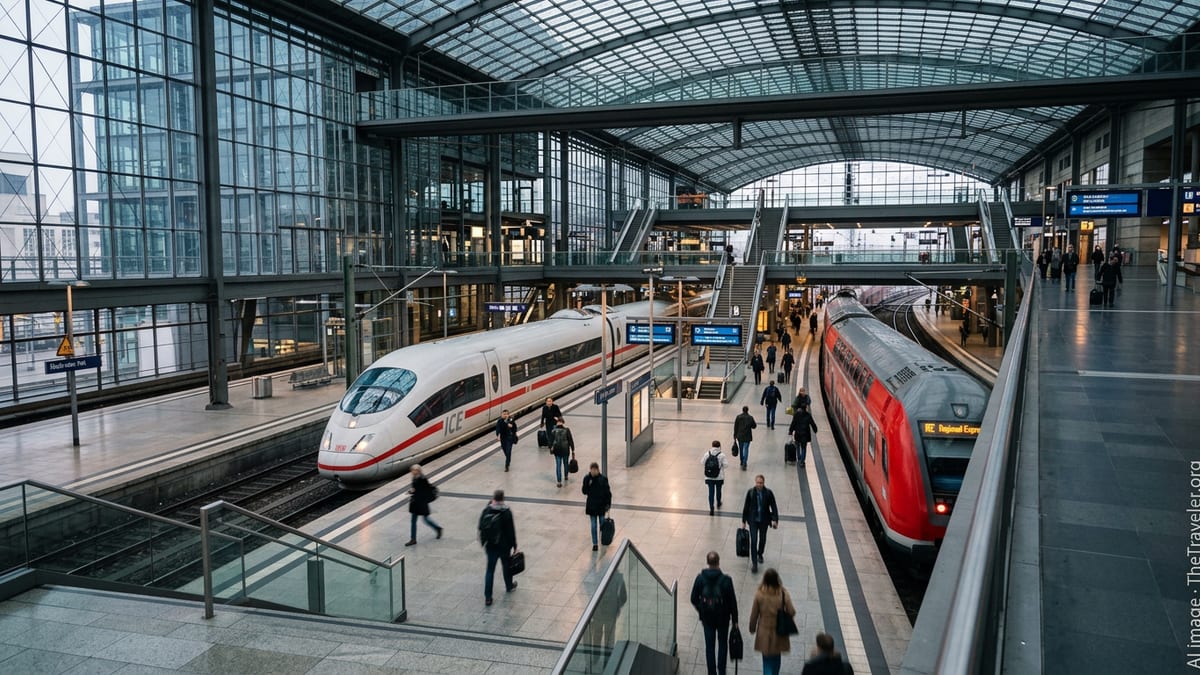
States Call for More Federal Support
Publicly available information indicates that Germany’s federal states, together with regional passenger transport authorities, are urging the federal government to increase funding for regional rail operations by 14 billion euros over the six-year period from 2026 to 2031. The requested amount would come on top of current regionalization funds, which are transferred from the federal budget to the Länder and used to order and finance local and regional train services.
According to published coverage, this appeal is motivated by a combination of higher operating costs, inflation, and growing passenger numbers. The states argue that existing budget plans will not be sufficient to maintain today’s level of service once energy prices, staff costs, and access charges for infrastructure are fully reflected in operator contracts.
Transport associations caution that without an agreement on additional money, contracts already tendered or under negotiation may have to be revised. In a worst-case scenario, routes with lower demand and evening or weekend frequencies could be reduced in order to keep core services running, particularly in rural regions that are already heavily dependent on a small number of rail links.
While the debate is focused on regional services, the funding question is closely linked to the overall condition of the German rail network. Observers note that the same constrained federal budget must also cover large-scale infrastructure renewals that are planned across the country in the coming years.
Rising Demand Driven by the Deutschlandticket
The pressure on regional rail finances comes at a time when demand for local and regional public transport has been boosted by the nationwide Deutschlandticket. Introduced as a successor to temporary discount schemes, the monthly pass offers travel on local and regional services across Germany for a fixed price and is widely credited with encouraging more people to shift from cars to public transport.
Information from transport policy reports shows that the Deutschlandticket is jointly funded by the federal government and the federal states, with several billion euros per year earmarked to compensate operators for lost revenue. However, the ticket has also increased the number of journeys on regional rail, placing additional strain on rolling stock capacity and infrastructure, and contributing to higher operating costs.
Industry analyses suggest that the combination of strong demand and limited infrastructure resilience has left many regional lines vulnerable to disruption. When heavily used main corridors are closed for construction or affected by delays, regional services are often the first to be curtailed or diverted, which can undermine public confidence in the system despite the popularity of the flat-fare ticket.
Debate is intensifying over how the Deutschlandticket should be financed in the longer term and how its costs relate to the 14 billion euro gap highlighted for regional rail operations. Some transport experts argue that stable multi-year agreements are needed so that states can plan services without recurring annual budget disputes.
Infrastructure Backlog Complicates Operational Funding
The call for 14 billion euros in additional regional funding takes place against the backdrop of a much larger infrastructure backlog on the German rail network. Official and independent assessments over recent years have described an extensive need for renewal, particularly on heavily used corridors and key junctions that handle both long-distance and regional trains.
Deutsche Bahn and federal planning documents refer to multi-decade investment programs worth well over 100 billion euros to modernize track, signalling, bridges, tunnels and stations. Large parts of this money are earmarked for projects intended to improve punctuality and capacity, but during construction phases, regional services often face temporary cuts or rerouting, which can have direct impacts on local passengers.
Observers highlight that infrastructure and operational funding are closely intertwined. When sections of track are renewed, operators frequently need more rolling stock, staff and replacement bus services to keep regional connections functioning. If regionalization funds do not grow in line with these needs, states may have to reduce planned improvements or postpone new services that were intended to accompany infrastructure upgrades.
Transport analysts also point out that improving punctuality on long-distance lines without adequately funding regional services can lead to imbalances, where flagship projects receive attention while everyday commuter routes lag behind. The 14 billion euro figure is therefore seen by many commentators as part of a broader discussion on how to share costs fairly between different segments of the rail system.
Regional Mobility and Climate Goals at Stake
The stakes of the current funding debate extend beyond rail operators and state budgets. Germany’s climate and transport strategies rely heavily on shifting more journeys from road to public transport, especially in metropolitan regions and along busy commuter corridors. Regional trains form the backbone of many of these corridors, linking smaller towns to larger urban centers and feeding into local transit networks.
Policy documents and academic studies underline that reliable regional rail is essential for reducing car dependence and achieving emissions targets. If services are cut or frequencies reduced due to budget constraints, there is a risk that passengers will revert to private cars, undermining years of progress on sustainable mobility and congesting roads around major cities.
In rural and structurally weaker regions, regional rail services are often described as a basic public service that supports social inclusion and economic development. Local leaders and transport planners argue that consistent funding for operations is just as important as headline investment in new lines or high-speed connections, because it determines how often trains run and how attractive they are for daily use.
The 14 billion euro appeal is therefore being interpreted by many observers as a warning signal. Without additional and predictable funding for regional operations, Germany may find it difficult to align its climate ambitions and regional development strategies with the reality on the ground, where passengers ultimately judge the system by whether trains run frequently, reliably and at affordable prices.
Next Steps in the Budget and Policy Debate
The outcome of the discussions around regional rail funding will be shaped by the federal budget process for the years after 2025. Negotiations between the federal government and the Länder typically define the growth path of regionalization funds, as well as special support programs tied to climate and modernization initiatives.
Transport policy coverage indicates that state governments are pushing for a binding agreement on higher annual allocations that would cumulatively close the 14 billion euro gap by 2031. At the same time, there is pressure to prioritize rail within overall transport spending, even as competing demands from road, waterways and other infrastructure continue to vie for limited resources.
Analysts expect that the debate will also touch on how responsibilities are divided between different levels of government and between infrastructure management and train operations. Some proposals focus on adjusting track access charges or creating new long-term funds specifically dedicated to rail, which could provide more planning security for regional services.
For passengers, the discussion may appear abstract, but its consequences are concrete. Decisions taken over the coming months and years will influence whether existing timetables can be maintained, whether new regional connections are launched, and how the benefits of major infrastructure investments translate into everyday travel across Germany’s diverse regions.