


More news on this day
The European Commission has raised fresh concerns about how the Netherlands manages access to its main rail network, warning that current rules may unfairly favour state-owned operator Nederlandse Spoorwegen (NS) and risk shutting out rivals on lucrative international passenger routes.
Get the latest news straight to your inbox!
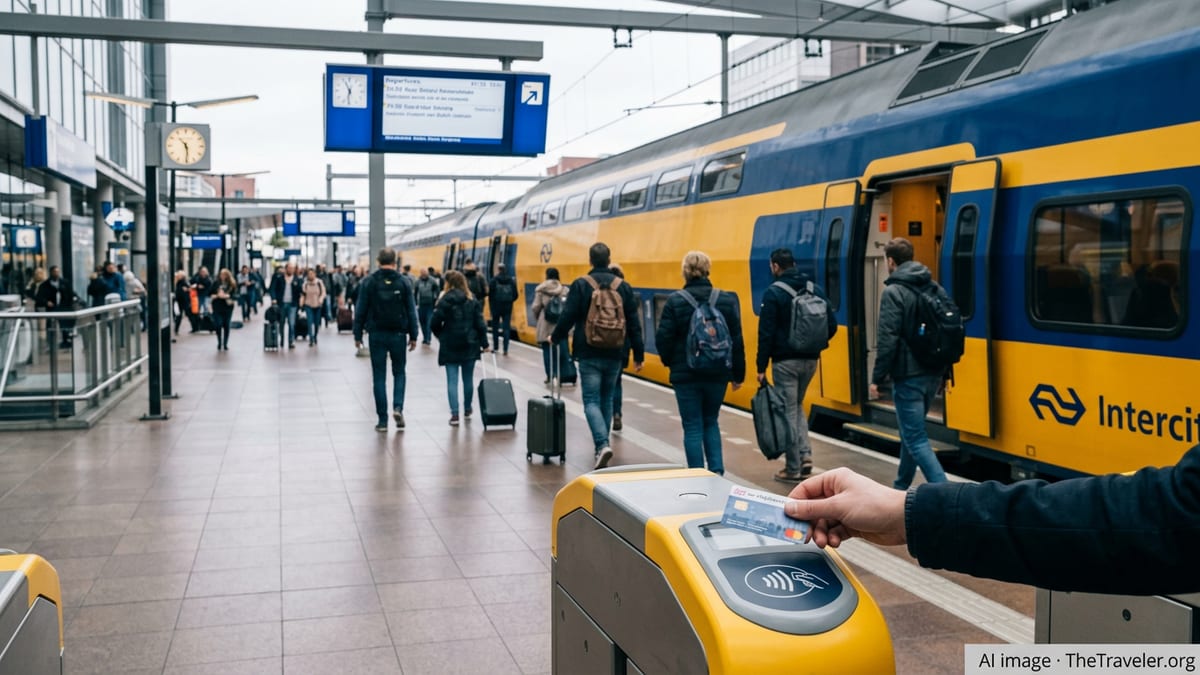
Commission questions Dutch rail slot rules
According to recently published information from Brussels, the European Commission has formally notified the Netherlands that the country’s framework for allocating train paths on the core rail network could breach European Union antitrust rules. The concern focuses on whether the existing system entrenches the position of NS, which is fully owned by the Dutch state and dominates domestic passenger services.
The notification highlights the way capacity is reserved on the so-called main rail network, a dense web of lines linking Dutch cities and forming the backbone of cross-border services to Belgium, Germany, France and beyond. Commission officials have scrutinised how long-term contracts and priority rules interact with EU requirements intended to guarantee open access and equal treatment for all railway undertakings.
Publicly available documents indicate that Brussels is particularly wary of measures that, in practice, make it difficult for new or smaller operators to obtain attractive departure and arrival slots. This can be especially critical for international trains, which must align their timetables with partner networks abroad and compete directly with short-haul flights on key city pairs.
The Commission’s preliminary view is that a combination of direct awards, capacity reservations and planning procedures may reinforce NS’s dominant position on the network, rather than enabling the level of competition foreseen under successive EU rail liberalisation packages.
International routes at the heart of competition concerns
A central element of the case is the role of NS International, a subsidiary of NS that operates and co-operates on cross-border services linking the Netherlands with Belgium, Germany, France, the United Kingdom, Austria and Switzerland. These include high-speed and intercity connections run together with other national incumbents and Eurostar.
Reports on the Commission’s assessment suggest that the inclusion of international lines within broader concessions for the main Dutch rail network may give NS an inbuilt advantage when it comes to slot allocation. If cross-border paths are bundled into a package effectively reserved for the incumbent, rival operators could find it difficult to launch competing or complementary services on key corridors.
Industry observers note that international rail has been singled out by EU policymakers as a priority for growth, both to support tourism and to shift passengers from air to rail on medium-distance journeys. In that context, regulators have become more attentive to whether long-standing commercial arrangements between national operators are compatible with newer competition rules.
The Dutch market already features a mix of domestic concessions and open-access initiatives on some routes, while international players cooperate with NS on others. The current investigation shines a spotlight on how these arrangements translate into day-to-day timetable decisions and whether there is sufficient room for new entrants or independent cross-border services.
Implications for travelers and tourism flows
For travelers, particularly those using trains as an alternative to flying between major European cities, the outcome of the Commission’s action could shape future options on routes in and out of the Netherlands. More competition on international lines typically brings a greater variety of timetables, fare structures and onboard products, which can be especially attractive for leisure and business tourism.
Consumer groups and rail advocacy organisations have long argued that fragmented rules and dominant national operators have slowed the development of seamless cross-border rail in Europe. In their view, opening markets and ensuring neutral capacity allocation would make it easier for new services such as night trains and high-frequency intercity connections to emerge.
At the same time, Dutch authorities and NS have historically emphasised the importance of continuity, network integration and long-term investment in rolling stock and infrastructure. They argue that a stable concession for the main network supports frequent, coordinated services, including those that extend over the border into neighbouring countries.
The current scrutiny highlights the tension between these objectives. If Brussels ultimately requires changes to the Dutch framework, travellers could see a gradual evolution of the international timetable, with potential new operators or brands appearing alongside existing NS-linked services on routes to Germany, Belgium and beyond.
Legal backdrop and next steps in the EU case
The dispute sits within a broader legal and policy debate over how member states implement EU rules on public passenger transport by rail. Over recent years, the Commission has stepped up enforcement against arrangements that grant long exclusive rights to single operators without competitive tendering, especially where those rights cover networks with clear potential for market entry.
In the Dutch case, the warning over capacity allocation comes on top of earlier friction about the direct award of a multi-year concession for the main rail network to NS. Judicial and regulatory documents show that rival operators and some regional authorities have challenged aspects of the award, claiming it clashes with the spirit of European rail liberalisation.
The current antitrust procedure gives the Netherlands an opportunity to respond to Brussels and, if needed, propose adjustments to its rules. Possible outcomes range from commitments to modify slot allocation and open certain international routes to a more protracted legal battle before the Court of Justice of the European Union.
For now, cross-border services continue to operate as planned, including existing high-speed and intercity trains linking Amsterdam with London, Paris, Brussels and major cities in Germany. Any structural changes resulting from the Commission’s concerns would likely be phased in over time, aligned with contract cycles and infrastructure planning.
Balancing national rail policy with the EU single market
The case illustrates the broader challenge of aligning national rail policies with the European Union’s ambition to create a single, competitive rail market. Member states often see their main rail operators as strategic assets responsible for social connectivity and regional development, while EU law increasingly treats cross-border and long-distance services as commercial markets open to multiple providers.
In the Netherlands, this debate is sharpened by the country’s dense rail network and high levels of train usage, which make timetable stability and network cohesion particularly sensitive political issues. At the same time, its central position in northwest Europe means Dutch lines are a natural gateway for cross-border services linking major population centres.
Travel industry analysts point out that the demand for sustainable travel options is growing, especially among younger tourists and business travellers looking to avoid short-haul flights. Ensuring that international rail capacity is allocated in a transparent and non-discriminatory way is seen as a key condition for meeting this demand.
As Brussels and The Hague work through the latest antitrust concerns, rail passengers and the wider tourism sector will be watching closely. The eventual settlement is likely to influence not only the balance of power between NS and potential competitors, but also the broader trajectory of cross-border rail development across northwest Europe.