


More news on this day
Passengers across Germany faced extensive disruption today as publicly available flight-tracking data indicated 228 delays and two cancellations impacting services operated by Lufthansa, easyJet, KLM and British Airways at major hubs in Berlin, Munich, Frankfurt, Hamburg and Stuttgart.
Get the latest news straight to your inbox!
Major German Hubs Grapple With Fresh Wave of Disruptions
The latest operational turbulence added a new chapter to a difficult year for air travel in Germany, with flights at Berlin Brandenburg, Munich, Frankfurt, Hamburg and Stuttgart again experiencing knock-on delays and schedule changes. Aviation monitoring platforms showed delays stacking up through the morning peak and into the afternoon, with medium haul European services particularly affected.
Frankfurt and Munich, the country’s two largest international gateways, saw some of the heaviest disruption as their role as transfer hubs amplified the impact of late-arriving aircraft. When short-haul feeder flights landed behind schedule, onward departures to other European cities and long-haul destinations were pushed back, widening the number of passengers affected across the network.
Hamburg, Berlin Brandenburg and Stuttgart also reported a rising number of delayed departures and arrivals, underscoring how pressure at one or two national hubs can quickly spread through Germany’s interconnected aviation system. Publicly available data and recent industry reports highlight that Lufthansa remains the biggest operator at these airports, with easyJet, KLM and British Airways all maintaining significant point-to-point services on key city pairs.
While only two cancellations were recorded in the current disruption episode, the volume of late-running flights meant many travelers still faced missed connections, rebookings and extended waits at departure gates and transfer desks.
Lufthansa at the Center of Germany’s Network Strain
Lufthansa’s status as Germany’s primary network carrier and hub operator left many of its passengers at the forefront of the latest delays. The airline’s operations at Frankfurt and Munich have already been under scrutiny in recent months following several rounds of strikes by pilots and cabin crew, which led to hundreds of cancellations and left tens of thousands of travelers stranded or rebooked on alternative dates.
Recent travel-rights analyses describe how even limited schedule changes at these hubs can quickly ripple outward. When rotations between German cities are disrupted, flights linking Frankfurt and Munich with secondary airports such as Berlin, Hamburg and Stuttgart often depart late or are temporarily held to accommodate connecting passengers. This creates a domino effect, with aircraft and crews out of position for subsequent legs.
Advisories issued for previous disruption days have urged Lufthansa customers to monitor their bookings closely, make use of self-service tools to adjust itineraries, and consider rail alternatives on domestic routes where air services have been unreliable. The current pattern of delays has again highlighted how dependent Germany’s aviation system is on the smooth functioning of its two central hubs.
Travel industry commentary also notes that staffing constraints, congested airspace and lingering schedule tightness following the post-pandemic rebuild are continuing to weigh on punctuality, even on days without major industrial action or extreme weather.
Impact on easyJet, KLM and British Airways Services
The disruption has not been confined to Germany’s flag carrier. Low-cost and full-service airlines that rely on German airports for key European links have also experienced a rise in delayed services. easyJet, which has built up a strong presence on routes from Berlin and other major German cities, recorded a series of late departures and arrivals as aircraft arriving from elsewhere in Europe turned around more slowly than planned.
KLM’s operations linking Amsterdam with German cities such as Frankfurt, Hamburg and Stuttgart were similarly affected by congestion and schedule slippage. When hub airports experience even modest departure holds, aircraft can arrive late into Germany and subsequently depart behind schedule back to the Netherlands, leading to further connection risks at Amsterdam.
British Airways services between London and German hubs have faced comparable challenges. Previous schedule adjustments in the carrier’s German network, combined with busy morning and evening peaks, have left little flexibility when airspace or ground operations slow down. As a result, today’s delays included several departures leaving London or German airports later than timetabled, tightening connection windows for onward long-haul flights.
Travel disruption trackers and consumer-rights outlets have emphasized that while only a small number of flights were fully cancelled in this latest episode, multi-hour delays on popular business and leisure routes have a similar practical impact for many passengers, especially those with onward connections or time-sensitive plans.
Passengers Confront Missed Connections and Crowded Terminals
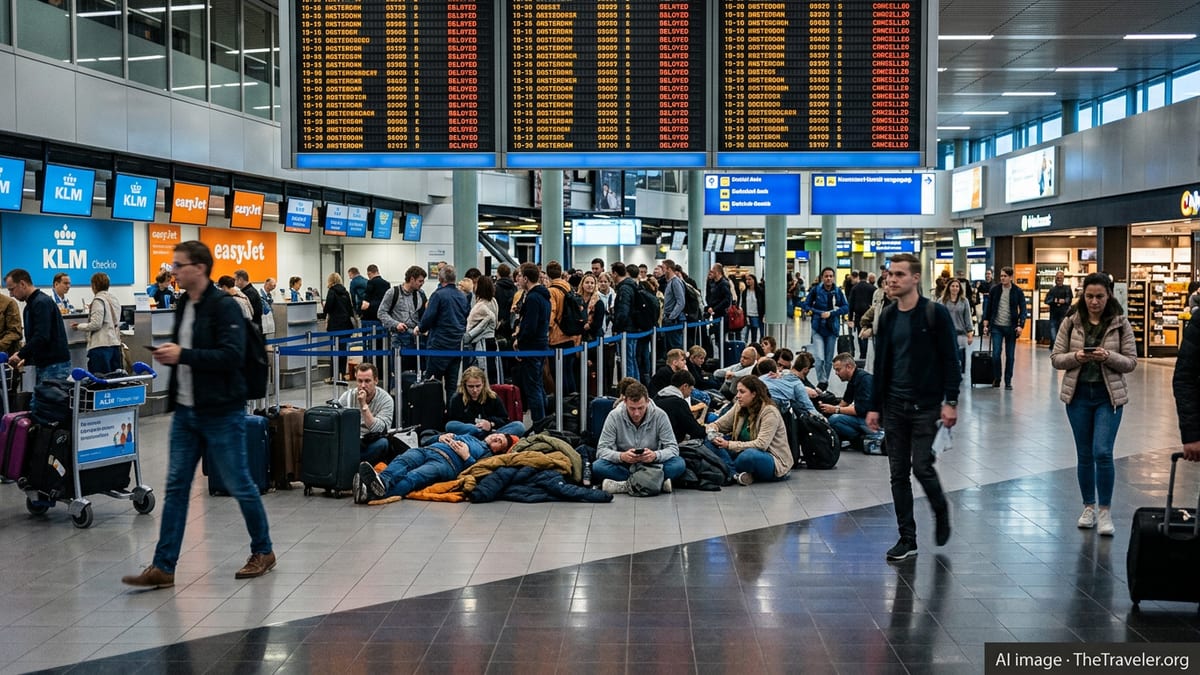
For travelers on the ground, the operational issues translated into long queues at check-in, security and customer service counters across affected airports. Images shared via social media and described in public forums in recent disruption events have shown departure halls filling with waiting passengers as information screens updated repeatedly with revised departure times.
Passengers connecting through Frankfurt and Munich faced some of the toughest decisions. Tight schedules designed to offer convenient transfer times became a liability when inbound flights landed behind schedule, forcing travelers to jog between distant gates or accept rebookings onto later services. Some journey plans were extended by many hours as travelers were moved to the next available flight on their original airline or, in some cases, on partner carriers.
At secondary hubs such as Hamburg, Berlin Brandenburg and Stuttgart, late arrivals and departures disrupted local ground transport plans, with travelers needing to adjust hotel check-in times, rail connections and car rentals. Publicly available guidance from airlines and travel-rights organizations encourages passengers in such situations to keep receipts for unexpected expenses and to document delay durations for any potential claims under European air passenger rules.
Consumer advocates have reiterated that travelers should avoid leaving the secure transit area until they have confirmed rebooking options, particularly when connecting onto scarce long-haul seats. With load factors on many European routes running high, same-day alternatives can be limited once multiple flights fall significantly behind schedule.
What Travelers Flying Through Germany Should Do Next
Given the recent pattern of recurrent disruptions in the German market, aviation analysts suggest that passengers with upcoming itineraries through Berlin, Munich, Frankfurt, Hamburg or Stuttgart build extra resilience into their plans. This can include allowing longer connection times, avoiding the last flight of the day on critical legs, and monitoring flight-status tools closely in the 24 hours before departure.
Publicly available information from airline and airport channels typically provides live departure and arrival data, as well as notices about schedule changes or anticipated congestion. Experienced travelers are increasingly checking not only their own flight but also the inbound aircraft operating it, which can offer an early signal of potential delays.
For those facing significant holdups or cancellations, European passenger-protection rules may apply, depending on the cause and length of the disruption. Travel-rights organizations recommend that affected passengers review the conditions for compensation and assistance, including eligibility thresholds related to delay duration, distance flown and the reasons behind the operational problems.
While today’s disruption episode involved relatively few outright cancellations compared with recent strike days, the scale of delayed flights across Lufthansa, easyJet, KLM and British Airways at major German airports underlined the fragility that still exists in European aviation schedules. For travelers planning to pass through Germany’s key hubs in the coming days, flexibility and advance preparation remain essential.