


More news on this day
Air travelers across Europe and Mexico faced another bruising start to the week on June 9, as operational data showed at least 66 flight cancellations and 564 delays affecting services operated by KLM, Volaris, easyJet, British Airways, Air France, Norwegian Air Sweden and Austrian Airlines, leaving hundreds of passengers stranded from Amsterdam and London to Mexico City and Vienna.
Get the latest news straight to your inbox!
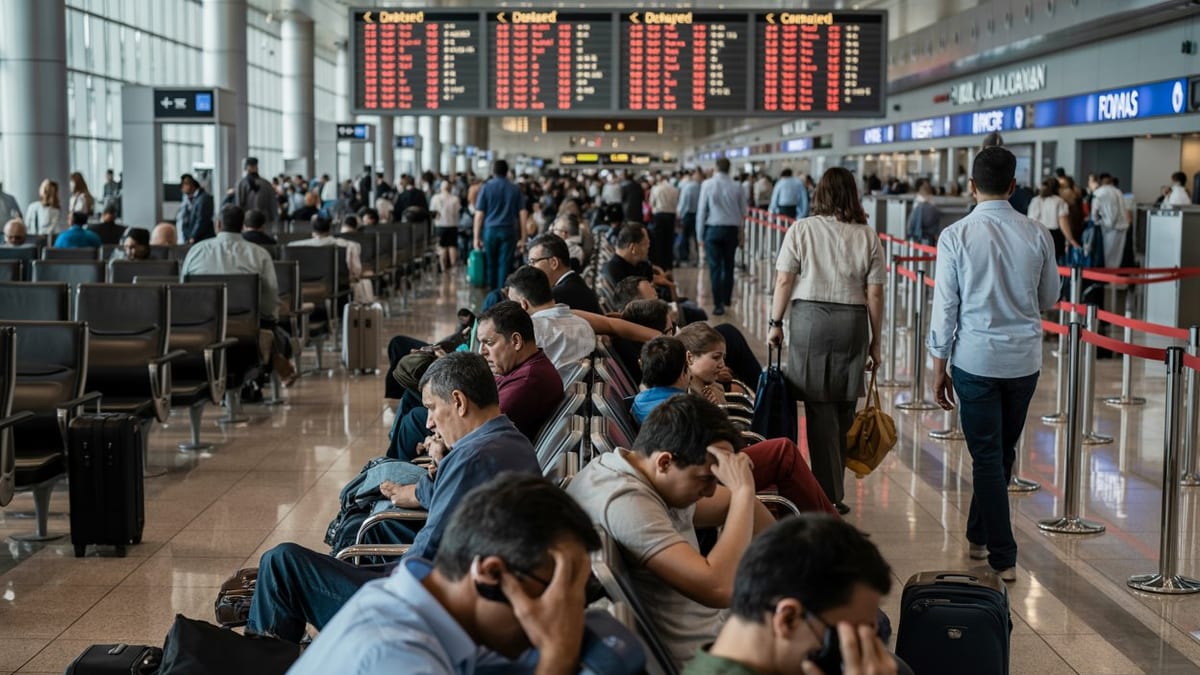
Major Hubs From Amsterdam to Mexico City Hit by Disruption
Published coverage and live tracking data indicate that the latest wave of disruption has concentrated around some of the busiest hubs in Europe and Latin America, including Amsterdam Schiphol, London Gatwick and Heathrow, Paris Charles de Gaulle, Vienna International, and Mexico City. These airports reported clusters of cancellations and rolling delays through Monday, with knock‑on effects reaching secondary cities in the Netherlands, the United Kingdom, France, Austria and beyond.
Amsterdam Schiphol, where KLM is the dominant carrier, has again emerged as one of the most heavily affected airports. Reports describe departure boards thick with delayed services and cancelled intra‑European sectors, along with disrupted long‑haul connections to North America, Asia and the Middle East. Travelers transiting through Schiphol have faced missed connections, last‑minute rebookings and overnight stays as airlines attempted to rebuild disrupted rotations.
In the United Kingdom, data and local media coverage show easyJet and British Airways bearing much of the burden at London Gatwick and Heathrow. Short‑haul flights to popular summer destinations in France, Austria, Spain and Italy have experienced extended delays, which in turn have affected inbound sectors returning to British hubs. Similar scenes have been reported in France, where Air France schedules at Paris Charles de Gaulle and Orly have seen a mix of delayed departures and tactical cancellations.
In Mexico, flight‑tracking information points to Volaris as one of the carriers dealing with timetable pressure at Mexico City and other domestic bases. Congestion at key times of day has contributed to late‑running services on busy domestic routes, compounding the wider pattern of disruption documented across the transatlantic and European networks.
Airlines Balance Tight Schedules With Operational Constraints
Operational data published in recent European aviation overviews highlight a sustained increase in traffic across the continent in 2026, with major airline groups such as KLM, Air France, easyJet and British Airways flying near or above pre‑pandemic volumes on many days. Industry analysis suggests that carriers are operating tight schedules to maximise aircraft and crew utilisation at the start of the peak summer season, which leaves limited buffer when weather, airspace restrictions or technical issues arise.
Eurocontrol trend reports have repeatedly pointed to capacity constraints in European airspace and at certain airports, as well as to reactionary delays that ripple through the system when a single flight runs late. When multiple hubs are affected on the same day, delays often cascade quickly, forcing airlines to make short‑notice decisions to cancel individual sectors to restore some reliability to the remainder of the schedule.
Recent commentary in trade and consumer publications has also focused on the role of jet fuel costs and supply concerns, which have led some European and British carriers to adjust parts of their summer plans. While fuel availability is not cited as the direct cause of every cancellation, it tightens the operating margin for airlines already dealing with congested airspace, high demand and limited spare aircraft.
For passengers caught in the middle, the result is a familiar pattern of missed connections, long queues at customer‑service desks and scrambled accommodation plans. The mix of affected carriers in this latest episode, spanning Europe and Mexico, underscores how quickly a disturbance at a handful of hubs can affect itineraries across multiple continents.
Passenger Rights Under European and UK Rules
Consumer organisations and travel‑rights groups continue to highlight protections available to travellers whose flights are cancelled or heavily delayed at European and UK airports. Under EU261 and the parallel UK261 framework, passengers on eligible flights may be entitled to a full refund or re‑routing, as well as care such as meals and hotel accommodation when disruption forces an overnight stay, depending on the length and cause of the delay.
Legal guidance circulated by regulators and passenger‑rights agencies notes that compensation in cash is available in many cases where cancellations or long delays are within an airline’s control, such as certain technical or crew‑scheduling issues. By contrast, severe weather, air traffic control restrictions or broader security events are typically treated as extraordinary circumstances, which may limit compensation even though passengers must still be offered a choice between re‑routing and a refund.
Specialist publications advise travellers to keep boarding passes, booking confirmations and receipts for meals or hotels purchased during a disruption, as these documents may support later reimbursement claims. They also recommend that passengers check whether their flight falls under EU or UK rules by verifying the origin, destination and operating carrier, as the combination of these factors determines which regime applies.
Some airlines, including KLM and others named in the latest disruption, have dedicated online portals for refund and compensation requests. Publicly available information on these sites generally encourages passengers to submit claims once their travel is complete, rather than queuing at airport counters, which can be overwhelmed during major irregular operations.
How Travellers Can Navigate Ongoing Summer Turbulence
With aviation bodies forecasting high traffic levels through the rest of June and into July, travel analysts expect further pockets of disruption across European and transatlantic networks. The combination of busy holiday demand, evolving geopolitical pressures that alter flight paths, and localised staffing challenges at airports and air navigation providers continues to generate an unpredictable operating environment.
Industry guidance compiled in recent weeks stresses the importance of monitoring flight status before leaving for the airport, using airline apps and airport information pages for the most current updates. When cancellations or long delays occur, passengers who respond quickly to rebooking options appearing in apps or email notifications may secure earlier alternatives than those who rely solely on in‑person queues.
Travel advisors also point to the value of building longer connection times where possible, especially when connecting through congestion‑prone hubs such as Amsterdam, London or Paris. For trips involving separate tickets on different airlines, experts caution that missed onward flights are usually treated as a new purchase responsibility rather than as part of a protected connection.
As airlines including KLM, Volaris, easyJet, British Airways, Air France, Norwegian Air Sweden and Austrian Airlines work to stabilise their operations after the latest round of cancellations and delays, passengers planning journeys in the coming days are being urged by consumer advocates to remain flexible, allow extra time, and familiarise themselves with their rights in case schedules change at short notice.