


If you are tracing the spine of Tuscany between Pisa and Florence, two relatively modestly sized museums compete quietly for your time: Pisa’s Sinopie Museum beside the Leaning Tower and Florence’s Opera del Duomo Museum next to Santa Maria del Fiore. Both are deeply tied to their city’s cathedral complex, both are overshadowed by the monuments outside their doors, and both promise a concentrated hit of Italian art and history. Yet the cultural experience they offer is strikingly different. This comparison looks at what each museum actually feels like to visit so you can decide which one deserves a precious slot in your itinerary.
Get the latest updates straight to your inbox!
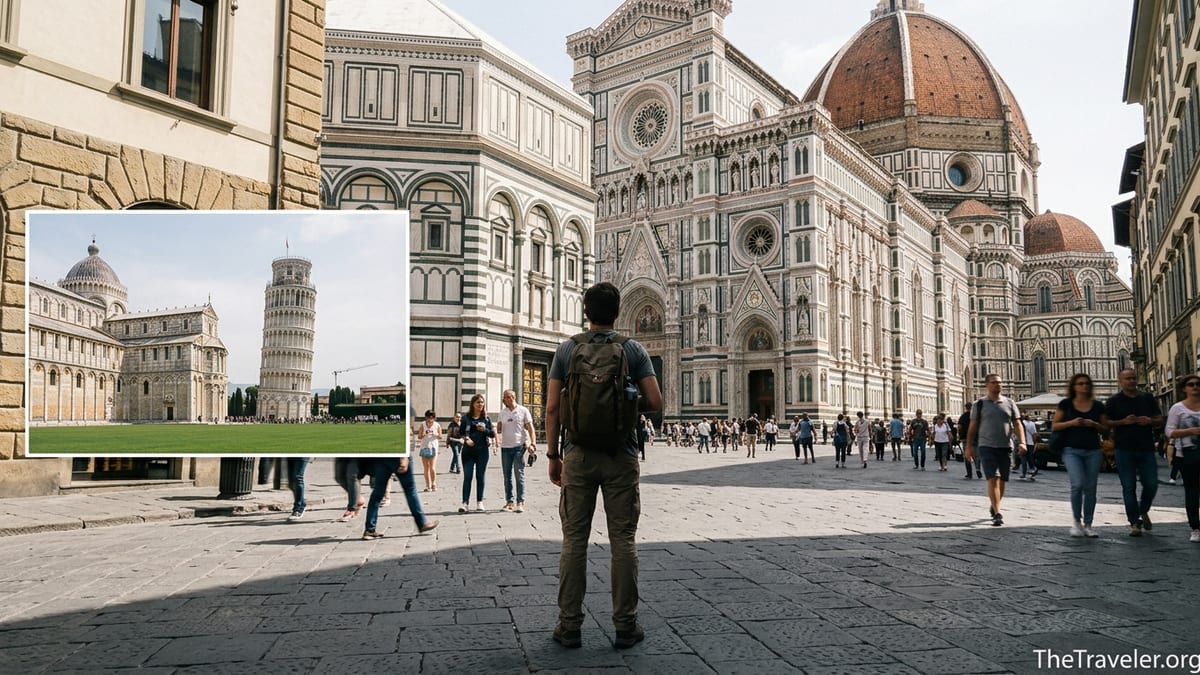
What Each Museum Actually Is
The Sinopie Museum in Pisa occupies a former medieval hospital building on the south side of Piazza dei Miracoli, a minute’s walk from the Leaning Tower and the Camposanto cemetery. Inside, you do not see polished Renaissance masterpieces. Instead, you walk through long, subdued galleries lined with reddish-brown drawings on plaster: the sinopie, or underdrawings, for the monumental frescoes that once covered the walls of the Camposanto. Many of the frescoes were badly damaged during a bombing in 1944, and the restoration process peeled off their preparatory drawings, which are now preserved here as fragile survivors from the 14th and 15th centuries.
The Opera del Duomo Museum in Florence, officially the Museo dell’Opera del Duomo, sits just behind the cathedral’s apse, facing the back of the Duomo. It was created to house the original sculptures, doors, and decorative elements from the cathedral, Baptistery of San Giovanni, and Giotto’s bell tower, protecting them from weather and pollution. Over time it has grown into a sprawling, three-level museum of about 6,000 square meters, with 28 rooms packed with marble and bronze by artists such as Michelangelo, Donatello, Lorenzo Ghiberti, Arnolfo di Cambio, and Luca della Robbia. Today it is considered one of the densest concentrations of Florentine sculpture in the world.
In short, Pisa’s Sinopie Museum is a specialist’s archive of working drawings from a single site, while Florence’s Opera del Duomo Museum is a blockbuster collection of finished masterpieces from an entire cathedral complex. That difference in scope shapes almost every aspect of your experience.
Collections and Cultural Depth
The Sinopie Museum’s collection is narrowly focused on the making of frescoes in the Camposanto Monumentale. You see life-size outlines of saints, prophets, horses, and cityscapes traced in red pigment on plaster, often annotated with grid marks or corrections. Panels relate these drawings to the finished fresco cycles they once underpinned, including themes like the Triumph of Death and the Last Judgment. This gives you a rare chance to understand the creative process of artists such as Benozzo Gozzoli, whose Camposanto frescoes were among the great narrative cycles of the 15th century. You are essentially walking through the workshop phase of medieval and early Renaissance mural painting.
Culturally, this is rich but quite specialized. You gain insight into how large-scale religious images were planned, how assistants transferred compositions, and how visual storytelling evolved before full perspective took hold. If you also visit the restored Camposanto across the square, you can connect the ghostly sinopie with the surviving frescoes and tombs, seeing how the drawings became painted reality. For travelers interested in the craft of painting or conservation history, this can be a revelation.
The Opera del Duomo Museum, by contrast, tells a broad story about faith, civic pride, and artistic innovation in Florence over seven centuries. In the vast “Sala del Paradiso” you stand before the original bronze doors of the Baptistery, including Ghiberti’s celebrated Gates of Paradise, now gleaming after decades of restoration. Nearby are monumental statues that once occupied the cathedral’s façade or campanile, removed for safekeeping. Upper galleries contain Donatello’s haunting wooden Mary Magdalene, Luca della Robbia’s elegant singing galleries, and the original marble choir lofts that set the standard for Renaissance relief sculpture.
Whole rooms are dedicated to Brunelleschi’s dome, displaying wooden models, engineering tools, and explanatory diagrams that unpack how a 15th-century architect solved the problem of raising a masonry shell more than 100 meters above Florence without modern scaffolding. Other sections explore liturgical silverwork and the evolving façade designs for the Duomo, situating the cathedral within the politics and piety of the city. Taken together, the Opera del Duomo Museum gives you both a crash course in Florentine art and a deep dive into how a medieval building site became a symbol of the Renaissance.
Visitor Experience: Space, Atmosphere, and Crowds
Step into the Sinopie Museum and one of the first sensations is quiet. Even in high season, many Pisa day-trippers focus on climbing the Leaning Tower or taking photos in the grass, leaving the museum surprisingly tranquil. The galleries are relatively small and linear, and the lighting is kept soft to protect the fragile drawings. Labels tend to be straightforward and factual, with panels in Italian and English that situate each sinopia in its original wall context. It is a space that encourages slow, close looking and tends to attract travelers who value contemplation over checklists.
For many visitors the experience feels almost meditative, especially if you have just navigated the selfie crowds outside. You may find yourself alone in front of a sequence of mounted sinopie, following the flow of a prophet’s robe or the curve of an angel’s wing across several meters of wall. It is easier here to imagine the artist standing on a wooden scaffold, charcoal in hand, mapping out a narrative program across the cemetery’s cloister.
The Opera del Duomo Museum offers a very different ambience. Its entrance area can be busy with tour groups, particularly in late morning and mid-afternoon when Duomo passes are most commonly timed. Inside, however, the space is large enough that the crowd often disperses. The main “Paradise” hall, where the Baptistery doors and reconstructed medieval façade are displayed, has towering ceilings and dramatic natural light from clerestory windows. Wide balconies and staircases lead to upper floors, and many visitors instinctively linger here, taking photos and following audio guides.
Because the museum is part of the broader Duomo ticket system, you are likely sharing it with everyone from first-time art viewers to dedicated scholars. Some rooms, such as the more intimate sculpture galleries or the upper-level spaces devoted to Brunelleschi, can be relatively calm even when the museum is generally busy. Nonetheless, expect a more dynamic, sometimes crowded environment than in Pisa, with more frequent guided tours and multi-language audio devices in use.
Practicalities: Tickets, Time, and Itineraries
In Pisa, the Sinopie Museum is one of several sites you can access with the local ticketing system that covers the Baptistery, Camposanto, cathedral museum, and individual monuments in Piazza dei Miracoli. As of 2026, a single-monument ticket for one of these sites, including the Sinopie Museum, is typically around the cost of a modest café snack, and combination tickets group two, three, or four monuments at a reduced per-site rate. This makes it easy to add the museum onto a half-day Pisa visit without straining your budget.
Most travelers can explore the Sinopie Museum in 30 to 45 minutes at an unhurried pace. A classic sequence is to book a Leaning Tower climb in the morning, step into the cathedral afterward, then cross into the Camposanto and finish with the Sinopie Museum, using the drawings to decode what you have just seen on the cemetery walls. Because crowding is generally light, you rarely need to worry about pre-booking specifically for this museum; you can buy your tickets at onsite kiosks, adjusting your schedule based on weather or your energy level.
Florence’s Opera del Duomo Museum works differently. Rather than standalone museum tickets, you generally purchase one of several passes that cover the cathedral complex, such as a Brunelleschi Pass or Giotto Pass. As of 2026, comprehensive passes that include the museum, cathedral dome or bell tower climb, Baptistery, and archaeological area beneath the Duomo are typically in the 25 to 30 euro range for adults, valid over multiple days. This system encourages you to treat the museum as one stop within a broader Duomo-focused itinerary.
Because access to the dome and sometimes the bell tower requires timed reservations, many travelers schedule the museum strategically, for example visiting in the late afternoon of one day when the sun is softer and the crowds are thinning, or using it as an indoor backup if rain disrupts a planned climb. Plan at least 90 minutes for the Opera del Duomo Museum, and two hours if you want to engage properly with the Brunelleschi rooms and watch the multimedia explanations. Pre-booking passes online is strongly recommended during peak periods, as same-day availability for climbs often sells out.
Who Will Appreciate Each Museum Most
The Sinopie Museum is ideal if you are fascinated by artistic process and enjoy quieter, less saturated experiences. Architecture students, painters, and anyone who has ever sketched from life will appreciate seeing the corrections, overlaps, and construction lines that never appear in finished frescoes. If your interests lean toward medieval spirituality and funerary art, pairing the sinopie with the tombs and sarcophagi in the Camposanto creates a nuanced portrait of how Pisa visualized death and salvation over centuries.
It is also a good choice for repeat visitors who have already done the classic Leaning Tower photo and want something deeper but not overwhelming. Parents traveling with older children who draw or paint may find the sinopie surprisingly engaging: the reddish outlines read almost like giant comic-book storyboards, and you can literally trace how an idea grows along the wall. That said, if someone in your group expects glittering gold or recognizable “famous names,” they may feel underwhelmed by what can initially look like rows of faint, monochrome scribbles.
The Opera del Duomo Museum, on the other hand, suits travelers seeking an “only in Florence” moment, even if they are not seasoned museum-goers. The Baptistery doors alone, seen up close at eye level, deliver a visceral sense of Renaissance ambition: biblical scenes rendered in deep, gleaming relief that once framed every baptism of Florence’s citizens. Visitors who know Michelangelo or Donatello mostly from reproductions will be struck by the presence and physicality of their original works here.
Because the museum integrates architectural history, sculpture, and religious practice, it rewards curiosity on several levels. A design professional might be drawn to Brunelleschi’s dome models and the explanation of double-shell construction, while a literature or theology enthusiast might focus on how the sculptures translated Christian narratives into public art. Families can navigate the museum by focusing on a few key highlights, such as the doors, the reconstructed medieval façade, and the evocative Mary Magdalene, without needing to analyze every label.
Educational and Emotional Impact
Educationally, the Sinopie Museum excels at revealing how large-scale fresco cycles were conceived, adjusted, and transferred to walls. Panels often include diagrams showing the relationship between a fragmentary sinopia and the surviving section of fresco in the Camposanto, encouraging you to compare and mentally reconstruct the lost original. You come away with a more technical understanding of mural painting: why artists used red earth pigment, how preliminary drawings were incised or pricked, and how changes in composition reveal shifting theological or narrative priorities.
Emotionally, the experience can be unexpectedly moving. Many of the sinopie exist precisely because of wartime destruction. Knowing that the original frescoes were damaged by a bomb during the Second World War lends poignancy to the delicate lines in front of you. You are looking at both the birth of images, in the form of first sketches, and their partial afterlife, rescued from rubble. That layered history may resonate strongly if you are sensitive to themes of loss, restoration, and the fragility of cultural heritage.
The Opera del Duomo Museum offers a different blend of learning and feeling. Carefully curated sequences lead you from medieval sobriety to Renaissance confidence, using sculpture and architectural models to trace changing ideas about humanity, divinity, and the city itself. Interactive screens and short films in the Brunelleschi area illustrate the logistics of raising stone and brick, the introduction of herringbone brick patterns, and the use of hoisting machines, grounding the cathedral’s dome in practical engineering rather than pure legend.
On an emotional level, the museum often overwhelms through sheer beauty and scale. Standing in the great hall with the Baptistery doors glowing on one side and a full-size reconstruction of the cathedral’s old façade on the other, you get a compressed but powerful sense of how Florence projected itself to the world. For many visitors this generates a mix of awe and intimacy: you are closer to these works than you ever would be outdoors, yet they still carry the psychological weight of civic monuments and sacred objects.
The Takeaway
So which museum offers a better cultural experience: Pisa’s Sinopie Museum or Florence’s Opera del Duomo Museum? For most travelers seeking a single, high-impact encounter with Italian art and history, the Opera del Duomo Museum in Florence has the edge. Its range of masterpieces, clear storytelling, and integration with the larger Duomo complex make it one of the most rewarding museum visits in Tuscany, capable of reshaping how you understand the Renaissance in just a couple of hours.
That said, “better” depends on what you are looking for. The Sinopie Museum offers a narrower but deeply meaningful experience, especially when paired with the Camposanto. It invites you behind the scenes of medieval fresco painting and provides a quiet refuge from Pisa’s surface-level spectacle. If your itinerary already includes the Leaning Tower and you have a genuine interest in artistic process or conservation, it can deliver a subtle but memorable cultural moment at relatively low cost and time investment.
If you are choosing strictly between the two on a typical first-time itinerary, prioritize the Opera del Duomo Museum and plan at least 90 minutes there, ideally combined with a dome or bell-tower climb. If you have extra time in Pisa, or you are a returning visitor keen to move beyond postcard views, treat the Sinopie Museum as your insider’s choice: a modest space where faint red lines hold centuries of faith, labor, and loss.
FAQ
Q1. Which museum is better for a first-time visitor to Italy?
For a first-time visitor, the Opera del Duomo Museum in Florence usually offers the stronger cultural experience, with major works by Michelangelo, Donatello, and Ghiberti plus comprehensive context about the Duomo and the Renaissance.
Q2. How much time should I plan for each museum?
Most travelers need about 30 to 45 minutes for the Sinopie Museum in Pisa, while the Opera del Duomo Museum in Florence deserves at least 90 minutes and ideally up to two hours.
Q3. Are the museums suitable for children?
Both can work for children, but the Opera del Duomo Museum tends to be more engaging thanks to large sculptures, dramatic spaces, and dome exhibits. The Sinopie Museum may appeal particularly to kids who enjoy drawing, since the sinopie resemble giant sketches.
Q4. Do I need to book tickets in advance?
For the Sinopie Museum you can usually buy tickets on the spot as part of Pisa’s monument combinations. For the Opera del Duomo Museum it is wise to purchase a Duomo pass online in advance, especially if you also want a timed dome or bell-tower climb.
Q5. Which museum is less crowded?
The Sinopie Museum is typically much quieter, even in peak season, offering a calm environment. The Opera del Duomo Museum can be busy, though its large rooms help disperse crowds, and visiting early or late in the day can reduce congestion.
Q6. Is prior art knowledge necessary to enjoy these museums?
No prior expertise is required for either museum, but some curiosity helps. The Opera del Duomo Museum offers more explanatory displays and recognizable names, while the Sinopie Museum rewards visitors who are interested in the process behind fresco painting.
Q7. Can I see the artworks in their original outdoor locations?
In Florence, most original sculptures and Baptistery doors have been moved indoors to the Opera del Duomo Museum, with replicas outside. In Pisa, the Sinopie Museum preserves preparatory drawings, while many of the related frescoes remain, in restored form, on the walls of the Camposanto.
Q8. Which museum fits better into a quick day trip?
On a Florence day trip, the Opera del Duomo Museum pairs naturally with a Duomo pass and a cathedral or dome visit. On a Pisa day trip focused on the Leaning Tower and cathedral, the Sinopie Museum is an easy, low-commitment add-on that deepens your understanding of the Camposanto.
Q9. How do accessibility and comfort compare?
The Opera del Duomo Museum has elevators, ramps, and a relatively modern layout, making it more accessible for many visitors. The Sinopie Museum is smaller and generally easy to navigate, but details such as entrance steps or specific facilities can vary, so it is sensible to check current accessibility information before visiting.
Q10. If I love architecture and engineering, which should I choose?
If you are passionate about architecture and engineering, the Opera del Duomo Museum is the stronger choice, thanks to its detailed sections on Brunelleschi’s dome, historical construction models, and tools used to build one of the most influential structures of the Renaissance.