

More news on this day
Germany’s spring travel season has been thrown into turmoil as a wave of Lufthansa strikes triggers mass flight cancellations, strands tens of thousands of passengers and sends shockwaves through the country’s tourism industry.
Get the latest news straight to your inbox!
Successive Walkouts Paralyze Key German Hubs
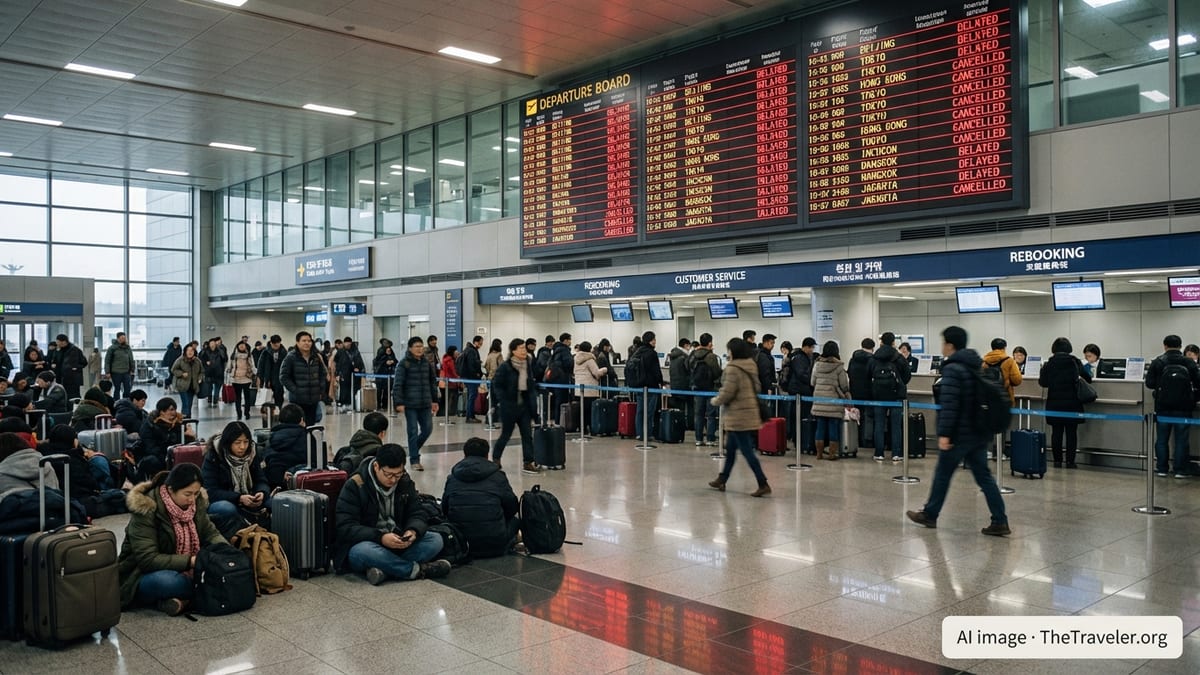
The latest disruption centers on a two day pilots’ strike on April 13 and 14, 2026, affecting Lufthansa, Lufthansa Cargo, CityLine and Eurowings. Reports from aviation tracking services and travel industry outlets indicate that between 80 and 90 percent of scheduled flights from the airline’s main hubs in Frankfurt and Munich have been cancelled, with at least 50,000 passengers stranded at airports or forced to abandon travel plans.
The pilots’ action follows a high impact 24 hour cabin crew strike on April 10 that led to hundreds of cancellations at Frankfurt, Munich, Berlin, Stuttgart and Leipzig/Halle. Earlier coverage from airline rights platforms and travel media estimated that around 90,000 to 100,000 passengers were affected that day, many of them holidaymakers attempting to return home at the end of the Easter school break.
Operational data compiled by travel news services for April 12, the eve of the pilots’ walkout, already showed severe strain across the German network, with nearly 180 flights cancelled and more than 400 delayed at major airports including Frankfurt, Munich, Berlin, Düsseldorf and Hamburg. Cancellations and missed connections in the days leading up to the main strike period left aircraft out of position and magnified the disruption once pilots stopped work.
Lufthansa’s own travel information pages confirm a wide ranging special schedule for April 13 and 14, with passengers on tickets issued on or before April 11 offered rebooking and, where flights have been cancelled, refunds on affected segments with Lufthansa Group carriers.
Passengers Stranded, Rebooked and Rerouted Across Europe
Scenes described in public posts from passengers and travel advocates depict crowded terminals, long queues at service desks and travelers camping overnight on airport floors in Frankfurt and Munich. Some passengers recount being rebooked at short notice onto remaining Lufthansa Group services or partner airlines via Vienna, Zurich or Brussels, while others report waiting many hours for new itineraries or being offered departures several days later.
Capacity on rival carriers has tightened rapidly. Industry monitoring sites note that competitors such as Turkish Airlines and Condor are reporting sold out seats on popular long haul and European routes from Germany as stranded Lufthansa customers look for alternatives. Regional carriers and rail operators are also absorbing additional demand as travelers switch to trains or secondary airports to salvage their trips.
Travel rights organizations point out that under European passenger protection rules, strikes by an airline’s own staff are generally considered within the carrier’s control. This classification means that many affected Lufthansa passengers are likely to be entitled not only to rebooking and care such as meals and hotels, but also to financial compensation, depending on route length and delay or cancellation notice periods.
However, consumer advocates caution that the volume of claims from multiple actions in February, March and now April is expected to be substantial. Processing times for compensation and refunds may therefore lengthen, especially for travelers who booked via online intermediaries or tour operators instead of directly with the airline.
Tourism Industry Counts the Cost of a Chaotic Spring
The timing of the latest strikes is particularly painful for Germany’s tourism sector, which relies on the Easter holidays and early spring to kick off the main travel season. Tourism boards and city marketing agencies have spent recent years promoting city breaks, cultural events and river cruises, aiming to rebuild international arrivals after the pandemic period and earlier economic uncertainty.
Publicly available policy briefs and industry commentary had already highlighted concerns that repeated aviation labor disputes could tarnish Germany’s reputation as a reliable gateway to Europe. The current wave of cancellations disrupts not only point to point trips to and from Germany, but also a large volume of connecting traffic that uses Frankfurt and Munich as transfer hubs to destinations across Europe, the Middle East, Africa and Asia.
Hotel associations and local tourism representatives warn that last minute no shows and shortened stays are becoming more frequent as a result of the flight chaos. In some cases, travelers are arriving one or two days late for pre booked city visits or river cruises, compressing itineraries and reducing on the ground spending in restaurants, museums and shops.
Travel agents report that corporate and leisure clients are increasingly asking about contingency plans, such as flexible tickets on multiple carriers or backup rail options inside Europe, to guard against further disruption. Some agencies indicate that high yielding business travelers in particular are shifting at least part of their premium long haul bookings to non German hubs when tight schedules leave little room for error.
Roots of the Dispute and the Risk of Further Action
The current pilots’ strike is the latest chapter in a series of wage and conditions disputes between Lufthansa and multiple staff groups, including cockpit crews, cabin crew and ground workers. Pilot union representatives have described the stoppage as a response to what they view as inadequate offers on pay scales and proposed changes to pension arrangements, set against the backdrop of Lufthansa’s financial recovery and renewed investment plans.
Earlier in 2026, pilots and cabin crew mounted separate 24 hour walkouts in February and mid March, each leading to the cancellation of hundreds of flights. Labor coverage notes that unions are seeking multi year agreements that would protect real wages against inflation and preserve elements of long standing retirement schemes, while the airline argues that it must balance staff demands with competitiveness and fleet modernization.
Analysts observing the dispute suggest that the rapid sequence of strikes reflects deep frustration on both sides after months of talks. While mediators and labor experts have urged compromise, the escalation from single day actions to a two day pilots’ stoppage this week underscores the risk that further strikes could follow if no breakthrough is reached.
For Germany as a destination, the prospect of recurring industrial action at its largest airline raises strategic questions. Tourism strategists are increasingly discussing how to diversify access via other carriers and hubs, strengthen rail and intercity bus links and encourage visitors to consider more flexible itineraries that are less vulnerable to single airline disruptions.
What Travelers Need to Know Right Now
For passengers with upcoming bookings on April 13 and 14, airline advisories recommend checking flight status frequently and using digital tools or apps for rebooking where possible, rather than queuing at airport counters. Those whose flights are cancelled are generally being offered free rebooking to a later date or a refund on unused segments, according to publicly available Lufthansa customer information.
Travel law specialists emphasize the importance of keeping all documentation, including booking confirmations, boarding passes, meal receipts and hotel invoices, to support later claims for reimbursement or compensation. Passengers are also encouraged to familiarize themselves with the specific terms of European passenger rights rules, which can differ depending on whether a flight is cancelled outright or subject to a long delay.
Tourism boards and travel advisors are urging visitors who can still reach Germany to proceed with their trips, but to allow extra time for connections and domestic transfers. Many cultural institutions, events and attractions remain open and are attempting to accommodate visitors whose schedules have been reshuffled by the strikes.
With talks between management and unions ongoing, the situation remains fluid. For now, the strikes have turned Germany’s usually efficient aviation system into a patchwork of cancellations, standby lists and improvised itineraries, leaving travelers and the tourism industry hoping for a durable settlement before the peak summer season arrives.