

More news on this day
Germany is entering 2026 with its tourism engine humming again, as record overnight stays, a powerful domestic travel market and changing holiday habits signal a mature, resilient recovery that is shifting from rebound to long-term renewal.
Get the latest news straight to your inbox!
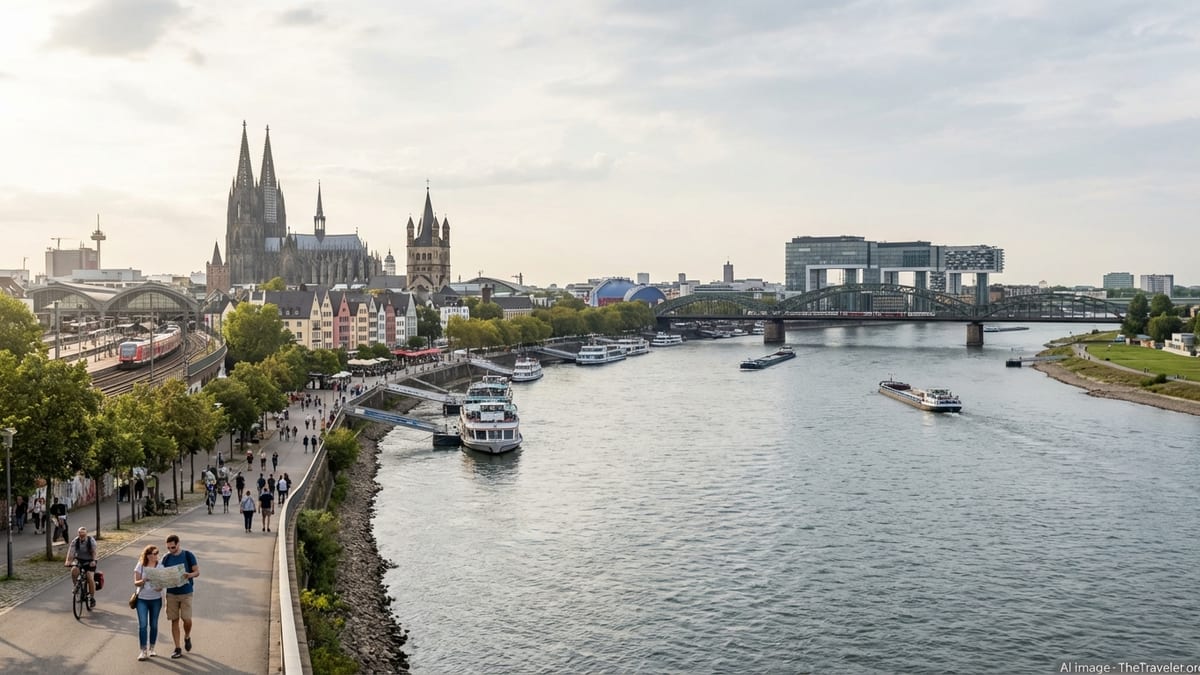
Record Overnight Stays Mark a New Phase of Recovery
Recent data from Germany’s federal statistics office and European monitoring bodies indicate that 2024 was a record year for overnight stays in German tourist accommodation, surpassing pre-pandemic peaks and setting the tone for continued strength into 2025 and 2026. Industry analyses report around 496 million guest nights in 2024, edging above the previous high recorded in 2019 and underscoring how thoroughly the sector has moved beyond crisis mode.
These gains are distributed across a broad spectrum of accommodation types. Hotels, inns and guest houses are still marginally below their 2019 volume, but they have logged steady year on year increases, while campsites and holiday parks have pushed well ahead of pre-pandemic benchmarks. Reports highlight especially strong figures in peak travel months, with August 2024 overnight volumes setting new records and December showing accelerated growth, reflecting both festive city tourism and winter countryside breaks.
Analysts describe this trajectory as a transition from a short, pent-up rebound to a more stable expansion cycle. Industry briefings from real estate and hospitality consultancies note that hotel performance indicators such as occupancy and revenue per available room continued to rise through 2024, with early 2025 data pointing to further incremental growth rather than volatile surges. This pattern suggests that Germany’s tourism revival is broad based, fuelled by both domestic and international demand, and increasingly anchored in structural shifts in how and where people choose to travel.
Domestic Travel Underpins a Resilient Tourism Backbone
Domestic tourism remains the backbone of Germany’s recovery story. Eurostat and Organisation for Economic Co operation and Development reporting show that residents of Germany account for some of the highest numbers of tourism trips within Europe, with hundreds of millions of domestic journeys annually and a particularly strong propensity for overnight leisure stays inside the country’s borders.
By 2023, Germany had already recorded domestic overnight visitor numbers in commercial accommodation that were only marginally below 2019 levels. Subsequent figures for 2024 show domestic guests contributing the majority of nights spent in German establishments, with published datasets indicating around 355 million domestic nights out of total volumes in excess of 440 million recorded by European statistics. National figures compiled from accommodation providers present an even larger overall tally when smaller and more seasonal properties are included.
Tourism satellite accounts and economic analyses emphasize the weight of domestic travel in overall spending. Publicly available summaries indicate that resident travellers account for a substantial share of tourism related expenditure on accommodation, food services, transport and leisure activities. The balance between private leisure trips and business travel has shifted, but overnight leisure stays inside Germany have proven especially durable, cushioning the sector when international flows fluctuated and providing a reliable base for continued investment in 2025 and 2026.
Hotel Markets Recover as Guests Seek Flexibility and Experience
Germany’s hotel sector illustrates the nuanced nature of the revival. Market beat reports from international property consultancies show that key performance indicators for German hotels improved strongly in 2024, with revenue per available room surpassing the previous year and overall overnight volumes in the first half of 2024 surpassing both 2023 and, on some metrics, 2019. Occupancy levels have continued to inch upward, helped by the gradual return of international visitors and the persistence of domestic business and leisure travel.
Despite this positive momentum, hotel stays are evolving rather than simply reverting to pre-pandemic patterns. Industry dashboards and investor briefings describe a more diversified landscape, with branded limited service properties, extended stay concepts and lifestyle hotels gaining ground in major cities and secondary destinations. Flexible booking conditions, integrated work and leisure amenities and stronger local experiences have become central to how properties position themselves in a competitive field.
At the same time, the growth of alternative and outdoor accommodation is reshaping the competitive environment. Campsites, holiday villages and nature oriented resorts reported some of the strongest percentage growth in overnight stays compared with 2019, reflecting travellers’ willingness to trade traditional hotel formats for scenic, lower density escapes. For investors and operators, the result is a market where hotels must differentiate through design, service and location, while also benefiting from the broader surge in Germany as a holiday destination.
Scenic Holiday Escapes Drive Shifts in Destination Demand
The recovery has also changed the map of where visitors choose to go within Germany. Tourism statistics broken down by type of establishment show robust gains for rural regions, coastal areas and mountain destinations, alongside the enduring pull of major cities such as Berlin, Munich and Hamburg. The popularity of camping and holiday parks points to strong demand for lakeside, forest and Alpine escapes, particularly from domestic travellers seeking short breaks throughout the year.
National and regional tourism organizations report that nature based experiences, cycling routes, wine regions and historic small towns have all benefited from this trend. The surge in overnight stays at campsites, which has climbed well above pre pandemic levels according to sector summaries, reflects a wider preference for outdoor, slower travel styles that emerged during the health crisis and have persisted into the mid 2020s.
International markets are reinforcing these patterns. Promotional and sentiment tracking by Germany’s national tourism board suggests that prospective visitors perceive the country as a safe, attractive destination with strong cultural offerings and high quality infrastructure. For long haul travellers in particular, the combination of iconic city experiences and easy access to countryside landscapes adds to Germany’s appeal as a multi stop holiday base for 2025 and 2026 itineraries.
An Evolving outlook for 2026 and Beyond
Looking ahead, regional and international monitoring bodies expect European tourism overall to continue setting new records in 2025, with Germany retaining its position as one of the continent’s most visited destinations by total nights spent. Early data for 2025 show that nights in EU tourist accommodation have continued to rise, with Germany consistently ranking among the top four markets by volume, supported by both domestic and inbound flows.
At the same time, sector analyses highlight emerging pressures that will shape how Germany’s revival evolves. Capacity constraints in some urban hotspots, ongoing labour shortages in hospitality and the need to balance growth with climate and sustainability targets are all featuring more prominently in policy debates and industry planning. Public strategies increasingly point to dispersing visitors more evenly across regions, extending travel seasons and promoting low impact transport options to keep growth manageable.
For now, the numbers underline a tourism sector that has not only rebounded but also adapted. Domestic travel habits, surging overnight stays and the pull of scenic holiday escapes have combined to produce a robust, if more complex, market environment. As 2026 unfolds, Germany’s challenge will be to channel this enchanting revival into a tourism model that remains competitive, resilient and aligned with broader economic and environmental goals.