


More news on this day
United has become the latest major airline to retrench services and recalibrate its 2026 network as the conflict in West Asia and a historic spike in jet fuel costs force carriers worldwide into sweeping flight reductions and rapid operational overhauls.
Get the latest news straight to your inbox!
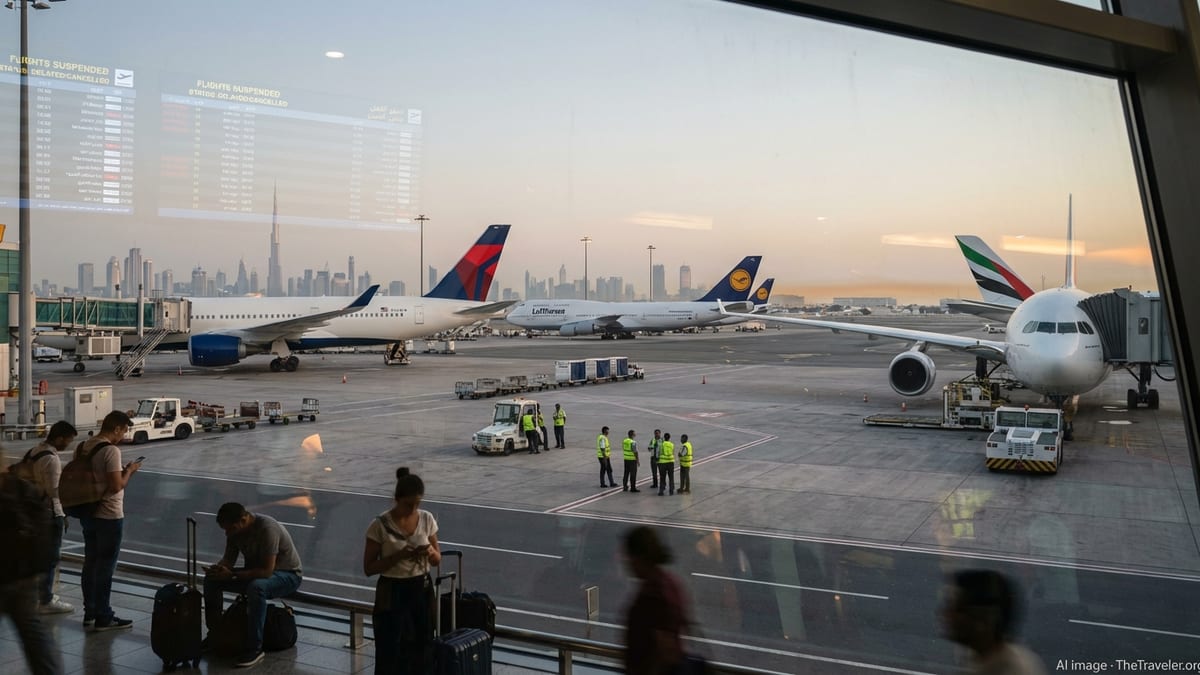
United Aligns With Global Peers In Capacity Pullback
Publicly available schedule data and industry reporting indicate that United Airlines is now joining Delta, Lufthansa, British Airways, Air France KLM, Air India and other large carriers in trimming capacity and reworking long haul patterns for the rest of 2026. The moves are concentrated on routes touching the wider West Asia region and on ultra long haul sectors most exposed to extended detours and fuel burn.
Network tracking services show that United has reduced frequencies on select services to India and Southeast Asia that previously transited airspace now affected by closures or war risk premiums. These changes follow similar cuts by European and Gulf competitors in recent weeks as airlines recalculate the economics of flights that are suddenly several hours longer and significantly more expensive to operate.
Financial commentary on the US airline sector highlights that United is prioritising high yielding corporate and connecting traffic while pruning marginal capacity, a pattern echoed across the industry. The carrier is reported to be using aircraft more flexibly across its hubs, trading some international flying for domestic and transatlantic routes where demand remains robust and routing remains comparatively straightforward.
United has also been adjusting fare structures and ancillary fees as fuel costs rise. Analysts note that the airline, like its peers, is seeking to protect margins through higher yields and selective capacity reductions rather than broad based growth, marking a shift from the expansion focus that dominated much of the post pandemic recovery period.
Delta, Lufthansa And European Giants Accelerate Overhauls
Delta Air Lines has already signalled a meaningful capacity reduction for the current quarter, linking the move directly to elevated fuel prices and disruption linked to the war in the Middle East. According to earnings coverage and sector analysis, Delta expects its jet fuel bill in the second quarter of 2026 to be roughly double the level of a year earlier, prompting a review of underperforming routes and tighter control of overall seat supply.
Across the Atlantic, Lufthansa Group has announced a series of schedule adjustments and structural changes as it copes with both the fuel shock and repeated airspace closures around the Gulf and Levant. Company updates show that the group has removed thousands of flights from its summer timetable, suspended or extended suspensions on multiple Middle East destinations and accelerated parts of its wider cost and fleet strategy to improve resilience.
Recent financial disclosures indicate that Lufthansa faces a projected multibillion euro increase in fuel costs this year, even after hedging. To offset the impact, the group is leaning on higher average fares, more tightly curated networks and capacity reductions in markets where detours, crew constraints or security concerns have eroded profitability.
Other European heavyweights are following a similar playbook. Industry coverage of International Airlines Group, parent of British Airways and Iberia, shows that the conglomerate has cut its profit expectations for 2026 after identifying a substantial fuel cost overrun tied to the crisis in West Asia and the bottleneck around the Strait of Hormuz. Air France KLM has likewise extended suspensions or reductions on multiple routes into the conflict zone and neighbouring hubs while emphasising yield management and cost discipline.
British Airways, Air France KLM And Air India Reshape West Asia Links
British Airways has been among the most visible European carriers scaling back service into West Asia. Travel industry reporting describes the near standstill of the airline’s direct operations from London to key Gulf and Levant cities after a series of airspace closures and security assessments. Many services to Dubai, Abu Dhabi, Doha, Bahrain, Amman and Tel Aviv remain suspended deep into the northern summer season, forcing travellers to rely on alternative routings or other carriers.
Air France and KLM have also pared back flying to the region and adjusted their routings to avoid sensitive airspace. Publicly available updates from the Franco Dutch group outline prolonged pauses on flights to destinations such as Dubai, Riyadh, Tel Aviv and Beirut, along with more circuitous paths on services that do continue. The changes add time to journeys and increase fuel burn, eroding the economics of routes that were previously among Europe’s busiest eastbound corridors.
In Asia, Air India and several Gulf and South Asian airlines are reported to be consolidating frequencies, swapping aircraft types and prioritising key trunk routes linking India, Europe and North America. The heightened risk environment around parts of the Gulf and Iran, combined with constrained access to some traditional overflight paths, has pushed carriers to upgauge select services while cancelling thinner routes, in an effort to preserve connectivity with fewer but fuller flights.
For passengers, the combined effect is a sharp reduction in non stop options between Europe, North America and parts of West and South Asia. Travel advisories and corporate travel guidance increasingly recommend allowing significant buffers for connections, considering alternative hubs and expecting last minute timetable changes as airlines continue to tweak schedules in response to evolving restrictions and cost pressures.
Record Fuel Costs And The Strait Of Hormuz Bottleneck
At the core of the industry wide retrenchment lies a fuel market shock tied closely to the conflict in West Asia and the crisis around the Strait of Hormuz. Energy market analysis and multilateral agency reporting describe one of the largest supply disruptions in the history of the global oil market, with restrictions on tanker traffic through the narrow waterway and damaged export infrastructure sending crude and refined product prices sharply higher.
The resulting surge in jet fuel prices has been felt across airline income statements. Sector commentary suggests that fuel, already one of the largest operating expenses, is now consuming a far greater share of revenue than anticipated when 2026 budgets were set. Some European airline groups are facing additional fuel costs measured in the low billions of euros for the year, even after hedging strategies, while US carriers are guiding investors to higher unit costs and tighter capacity growth.
Insurers and risk modellers have also increased premiums for flights that traverse or approach high risk airspace, adding a further layer of cost to certain city pairs. In some cases, airlines have decided that the combined impact of higher fuel burn from detours, additional crew requirements, and war risk surcharges makes particular routes temporarily uneconomic, leading to suspensions rather than limited reductions.
These dynamics have turned what might otherwise have been short term operational disruptions into a catalyst for more structural network reviews. Airlines are reassessing the balance of capacity between long haul and short haul, reconsidering the role of secondary destinations in high risk regions and exploring opportunities to reposition aircraft to markets with more predictable operating conditions and fuel consumption.
Operational Overhauls And What Travelers Can Expect Next
Beyond outright flight cuts, the 2026 crisis is prompting airlines to accelerate broader operational overhauls. Industry analysis points to an increased focus on fleet simplification, tighter coordination between network planning and fuel procurement teams, and more dynamic use of revenue management tools to align capacity with demand in near real time.
Carriers are also revisiting contingency planning for airspace disruptions, developing playbooks that can be activated quickly when conflict zones expand or new restrictions appear. This includes pre approved diversion routes, standby crew arrangements and closer integration between operational control centres and commercial teams that manage schedules and fares.
For travellers, the immediate implication is a less predictable long haul environment on routes connected to or reliant on West Asia overflight corridors. Experts advising corporate travel buyers recommend monitoring airline communications closely, booking with flexible conditions where possible and preparing for longer journey times on itineraries that previously followed more direct paths across the region.
Looking ahead to the second half of 2026, the pace and extent of any recovery in capacity will largely depend on security developments around West Asia and stability in global fuel markets. Until there is clearer visibility on both, airlines including United, Delta, Lufthansa, British Airways, Air France KLM and Air India appear set to continue prioritising resilience and profitability over aggressive growth, reshaping global aviation flows for at least the current travel season.