

More news on this day
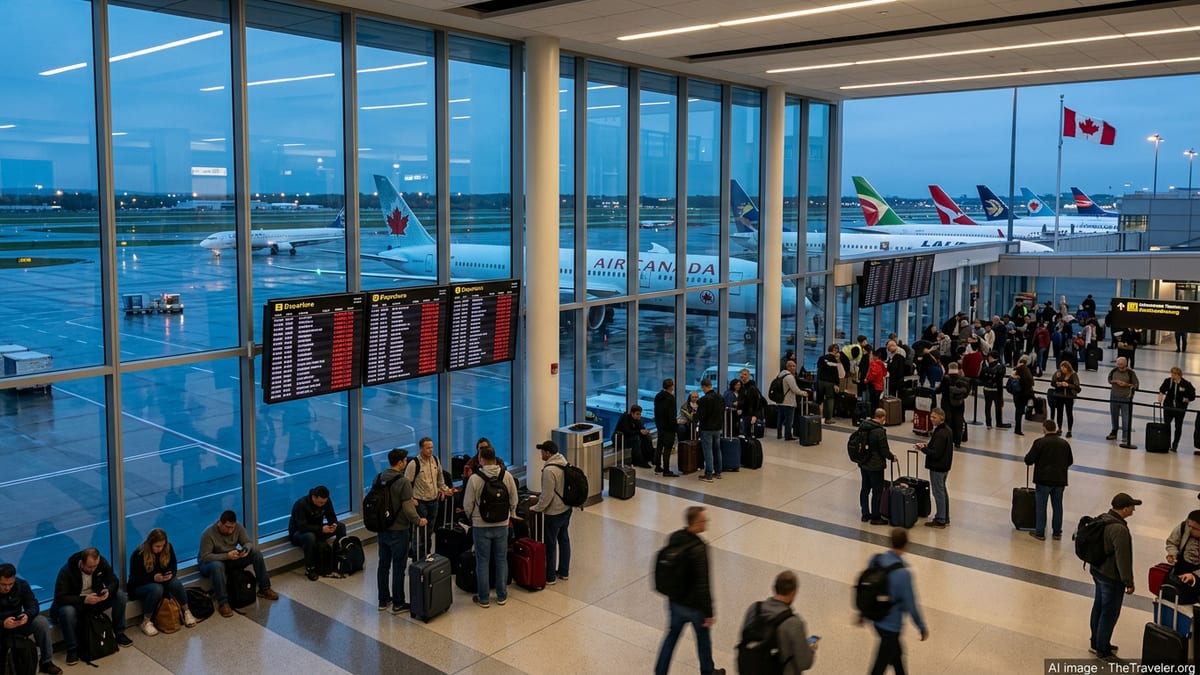
Air Canada has joined a growing list of global airlines in cancelling and rerouting flights across Israel, Jordan, Saudi Arabia, the United Arab Emirates, Qatar and other destinations, as the fast‑escalating war involving Iran, Israel and the United States triggers sweeping airspace closures and severe disruption across some of the world’s busiest long‑haul corridors.
Get the latest news straight to your inbox!
Escalating Conflict Triggers Widespread Airspace Closures
The latest wave of cancellations follows coordinated strikes by the United States and Israel on Iran on 28 February 2026, and subsequent retaliatory missile and drone attacks that have led multiple Middle Eastern countries to close or heavily restrict their airspace. Publicly available aviation and security briefings indicate that Israel, Qatar, Bahrain, Kuwait and the United Arab Emirates, among others, have either shut their skies entirely or imposed tight limitations on overflights and arrivals.
Specialist airspace monitoring platforms describe the Middle East as one of the most complex regions for civil aviation, with elevated risk linked to missile activity, air defence responses and shifting no‑fly zones. Safe‑routing advisories now highlight conflict‑adjacent airspace around Iran, Iraq, Israel, Jordan, the Gulf and parts of Syria, leading carriers to divert long‑haul services away from traditional east‑west corridors.
These closures have immediate knock‑on effects for global connectivity. Major hubs such as Dubai, Abu Dhabi and Doha normally act as essential bridges between Europe, North America, Asia and Africa; when they operate under restriction or partial closure, tens of thousands of passengers can be affected in a single day through cancellations, missed connections and extended diversions.
Air Canada and European Carriers Cut Middle East Services
Against this backdrop, Air Canada has suspended services to Tel Aviv and is limiting operations on routings that would ordinarily cross affected airspace, according to airline updates and international travel advisories. The carrier, which relies on Middle East overflight paths for parts of its network to India and Southeast Asia, is re‑evaluating schedules as routings are pushed north or south to avoid conflict zones, adding extra time and cost to select long‑haul journeys.
In Europe, Air Europa, Air France, British Airways and Aegean Airlines are among the carriers implementing series of cancellations to Israel and nearby destinations. Travel industry briefings and flight‑tracking data show that many of these airlines initially halted Tel Aviv flights following the first strikes, then extended suspensions or cut additional frequencies as regional airspace restrictions widened into Jordan, parts of Saudi Arabia, Qatar and the wider Gulf.
Operational updates indicate that some European airlines are operating limited services into certain Gulf hubs when local conditions permit, but schedules remain volatile. Timetables are being adjusted day by day, with aircraft redeployed to other routes, and passengers offered rebooking options or refunds where flights cannot operate safely or legally under current overflight constraints.
US Airlines Adjust Transatlantic and Middle East Routings
Delta Air Lines and other large US carriers have also responded to the deteriorating security picture, cancelling flights to Tel Aviv and adjusting routings on select services that would normally cross affected Middle Eastern airspace. Industry reports describe a patchwork of travel waivers that allow customers to change itineraries without penalties when flying to or via the region through March 2026.
Operational bulletins and passenger communications show that some long‑haul flights between North America and destinations in the Gulf or South Asia are being rerouted via alternative corridors to the north of the conflict area. In some cases, aircraft are making additional technical stops for refuelling outside the region in order to maintain safe distances from restricted zones, increasing overall journey times and complicating crew scheduling.
Within the United States, there is growing interaction between international disruption and domestic networks. Airlines are reallocating capacity away from suspended Middle East routes into North American and transatlantic markets, while also monitoring localized airspace restrictions in parts of the US, including temporary security‑driven limitations affecting segments of New York State airspace at various times. For travellers, this combination translates into changing aircraft types, altered departure times and, in some cases, last‑minute cancellations on routes far from the Middle East.
Impact on Gulf Hubs, Jordan and Saudi Arabia
The Gulf region, normally one of the most reliable transit zones for long‑haul connections, has been hit particularly hard. Publicly available operational updates from airports and cargo operators describe partial or temporary closures at major hubs in the United Arab Emirates and Qatar in the days following the initial strikes, with hundreds of flights cancelled or delayed as airspace corridors were shut for security reasons.
While some flights have recently resumed on a limited basis to cities such as Dubai and Abu Dhabi, schedules remain irregular and subject to short‑notice change as missile and drone activity continues in the wider region. Travel advisories aimed at leisure and business passengers alike now highlight the risk of extended layovers, forced overnight stays and short‑term visa and accommodation pressures when hubs experience sudden restrictions.
In Jordan and Saudi Arabia, flight operations are described as open but constrained. Advisories updated in early March 2026 reference limited schedules in and out of Amman and major Saudi gateways including Riyadh, Jeddah and Dammam. Several international airlines have temporarily reduced frequencies or switched to smaller aircraft, while others are avoiding routings that would require prolonged flight time near active conflict areas.
What Travellers Should Expect in the Weeks Ahead
For travellers heading to or transiting through Israel, Jordan, Saudi Arabia, the UAE, Qatar and neighbouring countries, the situation remains fluid. Travel and insurance briefings published in recent days emphasise that many standard policies treat war‑related disruption as an exclusion, meaning compensation and coverage often depend on the specific terms offered by airlines and tour operators rather than by insurers.
Industry experts expect cancellations and reroutings to continue as long as ballistic missile and drone activity persists in proximity to major aviation corridors. Airlines are conducting rolling risk assessments, updating flight plans daily and coordinating with aviation safety bodies to determine which routes can operate. Even when local airspace reopens, backlog effects and crew positioning challenges may prolong irregular operations for some time.
Passengers booked on Air Canada, Air Europa, Air France, British Airways, Aegean Airlines, Delta and other carriers with exposure to the region are being advised, via public communications and travel advisories, to monitor their booking status closely, enable airline app notifications and avoid travelling to the airport without confirmed departure information. Flexible booking policies, where available, are becoming an essential tool for mitigating the impact of sudden schedule changes as the conflict continues to reshape global air travel patterns.