


More news on this day
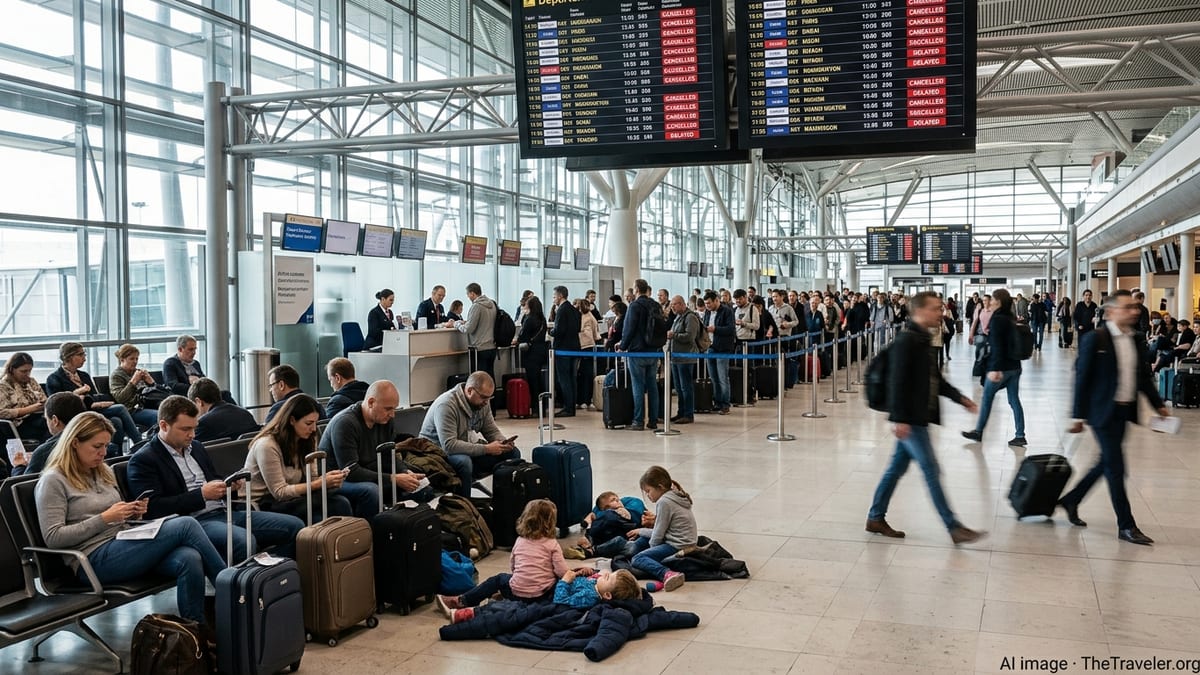
Greece and France are ramping up aviation capacity, contingency planning and regional coordination across the Mediterranean as they race to keep a record summer tourism boom insulated from wider European travel disruption.
Get the latest news straight to your inbox!
Record Mediterranean Demand Meets a More Prepared Network
Across Europe, air traffic is now at or above pre-pandemic levels, with demand concentrated on leisure routes into the Mediterranean. Forecasts from Eurocontrol show summer schedules in 2025 and 2026 pushing daily movements close to historic records, yet with lower average delays than in previous peak seasons, reflecting deliberate efforts to better match capacity with demand.
Traffic growth has been particularly strong over southern Europe, where air navigation service providers in the Southwest and Southeast handle significantly more movements than in 2019. This pressure has repeatedly exposed weak points in the European network, from staff shortages to weather-related bottlenecks, prompting a shift toward more active traffic management and scenario planning before each summer.
Reports from industry bodies indicate that coordinated planning between airlines, airports and Eurocontrol has already led to fewer en route flow-management delays and improved arrival punctuality, even as overall volumes continue to climb. For Mediterranean destinations, where tourism is a key economic pillar, smoothing out delays and cancellations has become a strategic priority rather than a seasonal afterthought.
Within this context, Greece and France are emerging as testbeds for how targeted investment and tighter coordination can sustain tourism growth while shielding travelers from the worst of Europe’s travel chaos.
Greece Bets on Capacity to Keep the Tourism Boom on Track
Greece continues to lean into aviation as the backbone of its tourism-driven recovery. For the 2025 summer season, publicly available data on airline schedules show more than 28 million international seats programmed to Greek airports, an increase of around 5 percent compared with the previous year. Industry coverage indicates that July alone offered over 5 million seats, underlining how concentrated demand has become in the core holiday weeks.
Passenger statistics from Greek airports point to steady year-on-year growth through 2025, with both international arrivals and domestic movements rising. Major gateways such as Athens and regional hubs operated under concession arrangements have reported mid-single to high-single-digit gains in both flights and passengers, underscoring Greece’s resilience as a leisure destination even as other European markets face more volatile conditions.
Greek carriers and international airlines are responding by thickening frequencies on trunk routes and adding new point-to-point links from secondary European cities direct to the islands. Aviation reports highlight network expansions from AEGEAN and other operators to both well-known destinations and emerging regional airports, distributing traffic more evenly across the archipelago and mainland resorts.
At the same time, Greek aviation stakeholders are seeking to reduce disruption risk through incremental operational changes rather than headline-grabbing measures. These include schedule adjustments on constrained domestic routes, use of larger aircraft on peak services to cut the number of rotations, and closer coordination with the European network manager on flow-management scenarios for days of anticipated congestion or extreme weather.
France Balances Hub Pressures With Mediterranean Connectivity
France, one of Europe’s largest aviation markets, faces its own pressures as Paris Charles de Gaulle and Orly absorb heavy long-haul and intra-European flows while also serving as transfer points for Mediterranean leisure traffic. In recent summers, strikes and staffing gaps across the French air traffic control system have contributed to knock-on delays across the continent, particularly on north-south corridors to Spain, Italy and Greece.
To reduce the risk of repeat disruption, French aviation authorities and service providers have adopted more explicit capacity declarations and seasonal staffing plans. Industry briefings suggest that for the recent and upcoming peak seasons, traffic-management measures were agreed earlier and in closer coordination with Eurocontrol, allowing airlines to adjust schedules and routings before the busiest weeks rather than reacting on the day of operations.
On the tourism front, France has moved to protect high-value Mediterranean flows into destinations such as Nice, Marseille and Corsica, as well as outbound leisure traffic toward Greece and other southern markets. Carriers have added capacity on key holiday routes from regional French airports, seeking to bypass the most congested hubs and provide more direct options for travelers.
Network planners indicate that French airlines are also increasing their use of alternative routings and flexible flight-level strategies to mitigate potential airspace bottlenecks. These tactics, while largely invisible to passengers, are intended to keep average delays lower and reduce the likelihood of large-scale cancellations affecting Mediterranean leisure itineraries.
Eurocontrol’s Playbook: More Traffic, Fewer Cancellations
Behind the national efforts in Greece and France is a broader strategy led by Eurocontrol, which has framed recent summers as a test of whether Europe can manage more traffic with fewer disruptions. The network manager has implemented daily coordination briefings, seasonal capacity and weather-based operating plans, and specific traffic orientation measures to route flows around constrained sectors.
Analyses of the 2025 peak season show that, although total traffic rose several percentage points compared with the previous year, en route air traffic flow management delays per flight fell significantly. Arrival punctuality improved by several points, suggesting that earlier interventions, more realistic scheduling and coordinated use of airspace can blunt the impact of local issues before they cascade across the network.
These improvements are critical for tourism-reliant markets. When delays do occur, they are increasingly concentrated into a smaller set of known bottlenecks, allowing airports and airlines in Greece, France and neighboring Mediterranean states to prepare contingency plans for rebooking, crew rotation and aircraft swaps. Publicly available information indicates that the lessons learned from summer 2025 are already being embedded into scenario planning for the 2026 and 2027 seasons.
Eurocontrol’s latest multi-year forecast projects further traffic growth across southern Europe, driven largely by leisure demand and the enduring appeal of Mediterranean destinations. That outlook has reinforced the urgency for continued investment in air traffic management systems, digital tools for capacity forecasting and cross-border cooperation on contingency planning.
What Travelers Can Expect in the Next Peak Seasons
For travelers heading to the Mediterranean in the coming summers, the combination of booming demand and tighter coordination yields a mixed but generally improving picture. High load factors and full flights into Greek islands and French coastal cities are likely to persist, but the probability of widespread, network-wide disruption appears lower than in the immediate post-pandemic years, according to sector briefings.
In Greece, expanded seat capacity, diversified routes and a stronger year-round schedule help reduce dependence on a small number of peak-day flights, giving airlines more flexibility to rebook passengers in the event of localized disruption. Travelers may encounter occasional schedule changes on thinner domestic routes as carriers fine-tune operations, yet the overall connectivity web to and within the country continues to thicken.
From France, the growth of direct leisure services from regional airports to Mediterranean destinations, including Greece, offers an alternative to transiting the largest hubs, which remain more exposed to ripple effects from staffing or industrial-relations issues. Industry observers suggest that these secondary gateways can act as pressure valves, supporting more resilient tourism flows even when primary nodes are under strain.
Across the wider European network, the emphasis on proactive planning over reactive crisis management is reshaping how summer travel is organized. While no strategy can completely eliminate delays or cancellations, Greece and France are at the forefront of efforts to use capacity planning, diversified routing and regional coordination to ensure that the Mediterranean tourism boom is not derailed by the very travel chaos it has helped to create.