


More news on this day
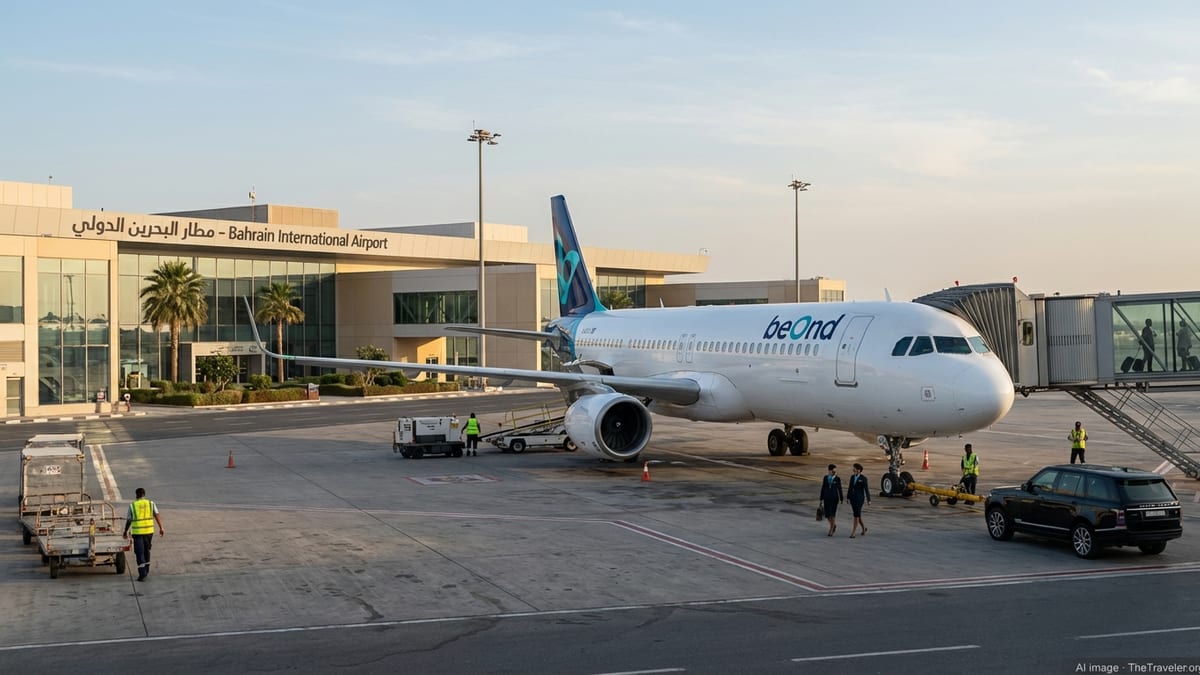
Bahrain’s Gulf Air is turning to its Airbus A321neo fleet as a strategic buffer against the Gulf region’s ongoing airspace restrictions and airport disruption, positioning the single-aisle jets as a way to keep passengers moving while rival carriers struggle with cancellations and rolling schedule changes.
Get the latest news straight to your inbox!
Regional Turbulence Forces Rethink of Gulf Networks
Intermittent airspace closures and shifting no-fly zones across the Gulf since late February 2026 have exposed how vulnerable hub-focused airline networks can be to even short-notice disruptions. Published analyses of the current crisis describe a patchwork of restrictions that has repeatedly squeezed capacity through Bahrain, Doha, Dubai and Abu Dhabi, triggering missed connections, last-minute diversions and complex re-routing for travelers across Europe, Asia and Africa.
Travel and aviation reports highlight how Bahrain International Airport, Gulf Air’s home hub, has been particularly affected during peak periods of military tension, with April seeing clusters of cancellations and ground delays as traffic was rescheduled or held to accommodate changing routings. The disruptions have coincided with already tight aircraft availability and crew schedules, increasing the likelihood that relatively small adjustments cascade into large-scale timetable chaos.
Against this backdrop, regional carriers have been reassessing how much of their traffic can rely on a single mega-hub, and how much should be spread across point-to-point links using more flexible, fuel-efficient aircraft. It is within this shift that Gulf Air’s Airbus A321neo strategy has taken on new prominence, with the airline framing the type as central to stabilizing its network.
Industry commentary notes that airlines able to rapidly redeploy narrowbody jets onto secondary routes, or to pop-up temporary rotations around constrained airspace, are faring better than those dependent on high-density long-haul operations through a limited number of hub airports.
A321neo Positioned as “Disruption-Resistant” Workhorse
Publicly available fleet data shows that Gulf Air operates a mixed single-aisle and widebody lineup built around Airbus A320 and A321 family aircraft, alongside Boeing 787-9 long-haul jets. Within that mix, the A321neo has been highlighted in recent coverage as the airline’s key regional workhorse, combining longer range with lower fuel burn and the ability to serve thinner routes that might not justify a widebody.
Industry briefings on the A321neo emphasize its suitability for operations that must frequently adjust to fast-changing geopolitical risks. The jet’s range allows it to bypass certain airspace blocks while still flying nonstop on many intra-Gulf, Middle East, Indian Subcontinent and near-Europe sectors. Its lower trip costs, compared with widebody aircraft, make it viable to protect connectivity on routes where demand has temporarily dipped but strategic presence remains important.
Analysts point out that, when airspace corridors narrow or flight levels are restricted, the flexibility to upgauge or downgauge quickly on a route is essential. A321neo aircraft can be rotated between trunk routes and secondary destinations in ways that help an airline maintain schedule integrity, even if individual flight times increase due to detours. For travelers, that can mean the difference between a delayed flight and a cancelled one.
Aviation specialists also underline that newer-generation aircraft such as the A321neo tend to integrate more seamlessly with advanced crew-rostering and disruption-management systems, enabling faster re-planning when airports or airways close at short notice.
Gulf Air Restores Capacity While Rivals Struggle
Recent network updates indicate that Gulf Air has now restored roughly three-quarters of its pre-crisis global schedule and is targeting full operational recovery in the coming months. Services have been progressively reinstated across Europe, the Middle East and Asia as airspace restrictions are refined and more predictable operating patterns return.
By leaning on the A321neo to rebuild frequency where widebodies were temporarily pulled back, the carrier is aiming to present a more stable timetable than some regional competitors that remain heavily reliant on long-haul connecting waves. Shorter turnaround times and lower operating costs for the narrowbody fleet allow Gulf Air to plug gaps in the schedule with additional rotations, helping to clear backlogs and reduce the risk of stranded passengers.
Network planners across the region are closely watching how this approach plays out. Commentators suggest that Gulf Air’s deployment of the A321neo on key routes linking Bahrain to secondary cities in India, the Caucasus and Eastern Europe could provide a template for a more resilient Gulf network model that does not rely solely on funneling passengers through congested super-hubs.
For travelers, the practical impact is beginning to show in more consistent departure boards and fewer last-minute cancellations on certain Bahrain-linked routes, even as other carriers continue to publish rolling schedule changes in response to operational uncertainty.
Passenger Experience Aims to Offset Months of Disruption
Alongside its operational strategy, Gulf Air has emphasized the passenger experience on its A321neo jets as part of efforts to restore confidence after months of disruption. Independent reviews and traveler reports describe updated cabins with modern seating, inflight entertainment and a refreshed version of the airline’s Falcon Gold business class product on selected aircraft.
Cabin configurations on the A321neo allow the airline to adjust the mix between premium and economy seating according to route demand, a flexibility that can help protect yields on shorter flights where travelers still expect a full-service offering. Industry observers note that this has become particularly important as corporate and leisure travelers reassess their loyalty in light of recent cancellations and missed connections across the region.
Travel commentary also highlights that, for passengers wary of transiting the most heavily disrupted hubs, the ability to fly on smaller, more frequently scheduled aircraft can be reassuring. A321neo operations often support multiple daily frequencies on popular routes, giving travelers more options to rebook themselves if an individual rotation is delayed or rerouted.
Airline product analysts suggest that delivering a consistent onboard experience on the A321neo fleet, even as routings are adjusted around airspace restrictions, will be critical to Gulf Air’s efforts to differentiate itself amid wider regional travel chaos.
Single-Aisle Strategy Signals Broader Shift in Gulf Aviation
The growing centrality of the A321neo to Gulf Air’s recovery reflects a wider trend across global aviation, in which long-range single-aisle aircraft are taking on roles once reserved for widebodies. Industry features in regional business media describe the type as a bridge between traditional short-haul jets and long-haul aircraft, enabling airlines to pursue more diversified networks that are less exposed to any one geopolitical flashpoint.
In the Gulf context, this shift is particularly significant. Recent airspace crises have shown that even a brief closure affecting a single flight information region can ripple through the tightly synchronized banks of arrivals and departures that underpin hub-and-spoke operations. By building more point-to-point capacity with aircraft like the A321neo, airlines such as Gulf Air can maintain a baseline of connectivity even when their main hub is constrained.
Aviation analysts argue that this may mark the beginning of a more permanent recalibration of Gulf airline strategy, in which flexible single-aisle fleets are valued as much for their disruption-mitigation potential as for their economics. For Gulf Air, the current focus on A321neo deployment is being watched as an early test of whether such an approach can truly shield passengers from the worst effects of regional travel upheaval.
If the experiment succeeds, the airline’s use of the A321neo as a disruption-resilient backbone could influence fleet and network decisions far beyond Bahrain, as carriers across the Middle East look for ways to keep their operations running smoothly in an increasingly unpredictable environment.