

More news on this day
Travelers passing through Green Bay Austin Straubel International Airport on Sunday faced significant disruption as 37 regional and mainline flights operated by SkyWest, Delta, and Envoy were canceled, triggering a ripple effect of delays and missed connections at major hubs including Chicago, Minneapolis, and Detroit.
Get the latest news straight to your inbox!
Chain Reaction From a Regional Airport
The cancellations at Green Bay Austin Straubel International Airport involved a mix of regional connections and mainline services, according to publicly available schedule and status data. The affected flights linked northeastern Wisconsin with key domestic hubs, amplifying the impact far beyond the local market.
Regional carriers SkyWest and Envoy, which operate flights on behalf of larger network airlines, accounted for a substantial share of the disruption. Their role in feeding passengers into major hubs meant that even a relatively small number of canceled departures quickly translated into missed onward connections and last-minute rebookings across the country.
Industry trackers and airline status boards showed passengers bound for Chicago, Minneapolis, Detroit, and other cities scrambling to secure alternative routings. Some travelers were rebooked through different hubs, while others faced overnight stays as limited evening capacity and crew availability constrained recovery options.
Pressure on Hubs in Chicago, Minneapolis, and Detroit
The cancellations from Green Bay added pressure at large connecting airports already managing busy mid-March traffic. In Chicago, reports from airline operations dashboards showed crowded customer service queues as passengers arriving from or scheduled to depart to Green Bay sought new itineraries.
Minneapolis and Detroit, both major connecting points for Delta’s network and its regional partners, also experienced knock-on effects. Disrupted feed from Green Bay translated into lighter passenger loads on some departures and oversold conditions on others as rebooked travelers were consolidated onto fewer remaining flights.
Travel data circulating among aviation enthusiasts and passenger communities indicated that some itineraries involving Green Bay required multiple reissues as rolling schedule changes continued throughout the day. With aircraft and flight crews positioned for the original timetable, realigning resources on short notice left limited flexibility to absorb additional demand.
Operational Strain on Regional Airlines
The situation highlighted the vulnerability of regional carriers such as SkyWest and Envoy, which operate under capacity and performance agreements with major airlines. These operators run high-frequency schedules with smaller aircraft, and even a modest disruption can quickly cascade when spare aircraft and crews are already tightly utilized.
Publicly available performance reports for regional airlines in recent seasons show that these carriers often bear the brunt of schedule adjustments when networks come under strain. When cancellations are concentrated on regional routes, communities relying on smaller airports can temporarily lose multiple daily connections to national hubs.
For passengers originating in Green Bay, the concentration of cancellations across regional operators significantly narrowed options. With limited alternative nonstop services and few remaining seats on later flights, some travelers faced long delays before the next available departure, particularly on routes that operate only a handful of times each day.
Passengers Confront Long Lines and Limited Alternatives
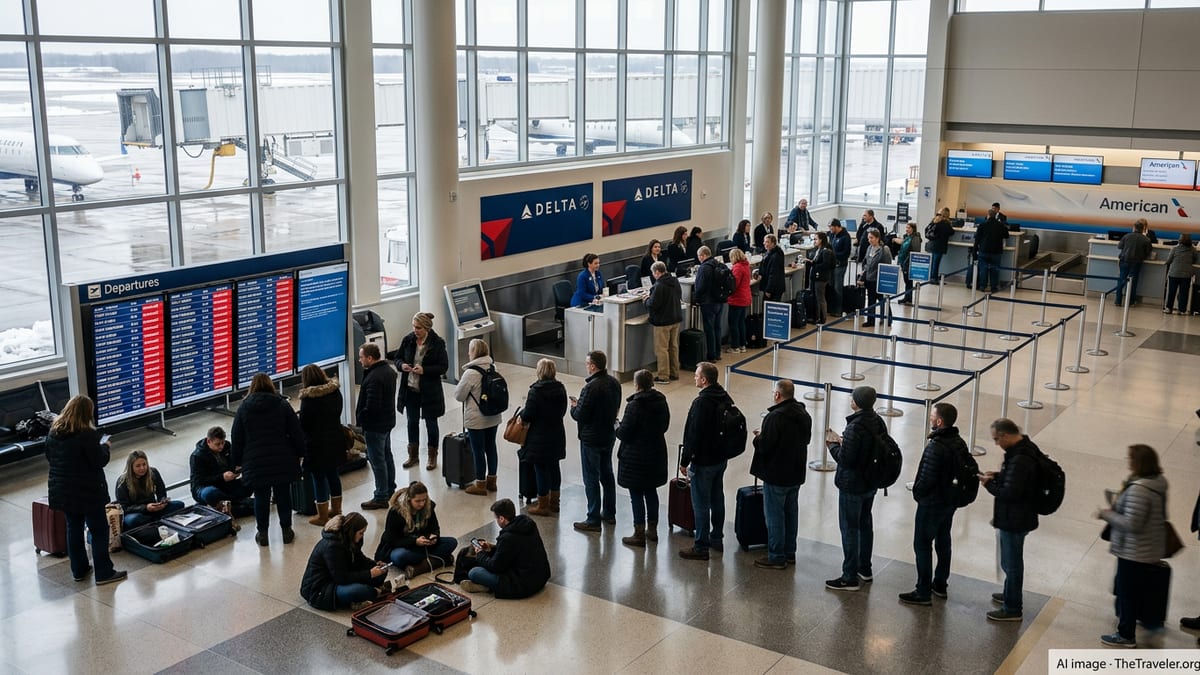
Travelers caught in the disruption reported crowded gate areas, lengthy ticket counter waits, and difficulty securing timely replacement flights. According to published coverage and real-time updates shared by passenger tracking platforms, rebooking options became increasingly scarce as the day progressed and remaining flights filled.
At major hubs, some passengers arriving from unaffected origins discovered that their connecting leg to Green Bay had been canceled, forcing them to choose between overnight stays, lengthy ground transportation to Wisconsin, or rerouting to other regional airports. Rental car availability and last-minute hotel prices in several hub markets reportedly tightened as the disruption unfolded.
Basic passenger rights information published by airlines indicates that travelers affected by cancellations are typically offered rebooking on the next available flight, and in some cases meal or hotel assistance depending on the cause of the disruption and the carrier’s policies. However, when numerous flights are canceled in quick succession, the practical availability of those remedies can be limited.
Broader Implications for Spring Travel
The wave of cancellations at Green Bay Austin Straubel International Airport arrives as airlines move into a busier spring travel period, when schedules are already tightly packed and spare capacity is constrained. Network planners seek to optimize aircraft utilization, leaving little room to recover when events force sudden schedule changes.
Aviation analysts have frequently noted that secondary and regional airports can act as early pressure points in broader operational challenges. When flights at smaller fields are canceled or consolidated, the impact spreads quickly to larger hubs that depend on a steady flow of connecting traffic to maintain smooth operations.
For travelers, the episode serves as a reminder of the interconnected nature of the U.S. air network. A cluster of cancellations involving 37 flights at a single regional airport can reverberate across Chicago, Minneapolis, Detroit, and beyond, underscoring the importance of monitoring flight status closely, building extra time into connections, and having contingency plans when traveling during peak periods.