


Antigua Guatemala is one of Central America’s most popular colonial cities, yet it does not have its own commercial airport. Almost all international visitors land at La Aurora International Airport in Guatemala City and then continue by road to Antigua, a journey of roughly 40 to 45 kilometers that usually takes about 45 to 90 minutes in moderate traffic, but can stretch well beyond that during rush hour or road incidents. Planning this transfer in advance saves time, reduces stress and can significantly improve your first day in Guatemala.
Get the latest updates straight to your inbox!
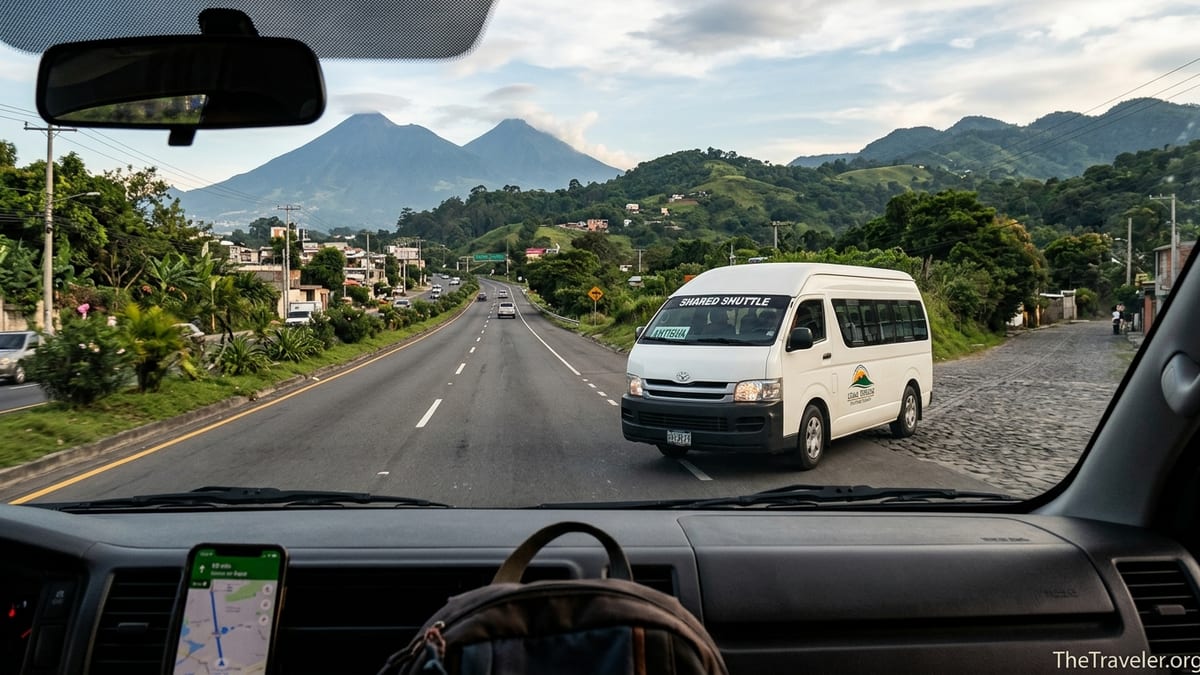
Understanding the Route and Travel Time
The road from La Aurora International Airport to Antigua follows main city avenues out of southern Guatemala City before climbing into the hills toward Sacatepéquez Department. Guides and transport operators generally describe the distance as around 40 to 45 kilometers, depending on the precise route and final address in Antigua. In light traffic, private vehicles and shuttles commonly complete the trip in about 55 to 70 minutes, but this should always be treated as a best-case estimate rather than a guarantee.
Traffic bottlenecks are frequent as you leave Guatemala City. Morning rush hour outbound traffic between roughly 06:30 and 09:00 and evening congestion from about 16:30 to 20:00 can add 30 to 60 minutes to the journey. Road works, minor accidents and weather-related slowdowns in the hills can create further delays. Travelers should avoid scheduling time-sensitive activities in Antigua, such as guided tours or restaurant reservations with strict seating times, within two to three hours of their scheduled landing time.
Antigua’s historic center is built on cobblestone streets arranged in a grid around Parque Central. Vehicles may be required to take indirect routes or brief detours because several streets are one-way or periodically closed for markets, religious processions or construction. This means that the final 5 to 10 minutes of a transfer can involve looping around the blocks, especially at busy times or during holiday weeks such as Semana Santa around Easter.
Because of these variables, many experienced visitors treat the airport-to-Antigua journey as a flexible half-day window rather than a quick hop. This mindset helps reduce stress if the luggage carousel moves slowly, immigration queues are long, or the highway out of the capital is unusually congested.
Shared Shuttles: Cheapest Structured Option
Shared tourist shuttles are one of the most popular and economical ways to travel from La Aurora to Antigua, especially for solo travelers or couples on a budget. Several Guatemala-based operators publish airport-to-Antigua prices that start around 15 to 20 US dollars per person, with some agencies in late 2026 advertising standard shared shuttle fares in the 18 to 25 dollar range per passenger, depending on the time of day and whether you book directly or via a reseller.
Most shared shuttles use 10 to 16-seat vans with limited luggage space. A common allowance is one medium or large checked suitcase plus one small backpack or daypack per traveler. Passengers carrying bulky items such as surfboards, very large suitcases or multiple backpacks should confirm in writing with the shuttle company before booking, as some operators charge a modest supplement or may require upgrading to a private transfer when space is tight.
Shuttles generally operate on fixed timetables tied to popular arrival windows rather than on-demand departures. For example, some companies schedule several daily airport departures co-ordinated with mid-morning, afternoon and early evening flights, and will hold the van for a short period, often around 30 to 45 minutes, if notified that a flight is slightly delayed. Prolonged delays can result in rebooking onto a later service or, late at night, switching to a private car at a higher cost. It is important to read the waiting policy before purchase and to provide flight details so dispatchers can track your arrival.
Shared vans are usually door-to-door in Antigua, dropping passengers at central hotels, guesthouses and hostels. However, multiple hotel stops can add 15 to 30 minutes to the overall journey time, especially during busy seasons when every seat is sold. Travelers staying on narrow or heavily cobbled side streets might be dropped on the nearest accessible corner, a short walk from the door, to avoid blocking traffic or damaging the vehicle suspension.
Private Transfers and Authorized Airport Taxis
Pre-booked private transfers are the most straightforward option for many visitors, particularly those arriving with family, carrying significant luggage or landing late at night. Reputable local agencies and tour operators that focus on airport transport frequently quote per-vehicle prices rather than per-passenger fares. In the second half of 2026, published online rates for a private car or minivan from La Aurora to Antigua often fall in the approximate 45 to 70 US dollar range for up to three or four passengers, rising for larger vans that can seat five to ten travelers.
Authorized tourist transport and taxi providers registered with airport authorities operate desks inside or just outside the arrivals hall. These counters typically display standard fare ranges to key destinations such as Antigua and Panajachel in Guatemalan quetzales and sometimes US dollars. Official sources and airport-focused information services note that these authorized operators are allowed to serve the terminal and that rates are periodically updated to reflect fuel and toll costs. While exact tariffs can change, visitors should expect a one-way authorized taxi to Antigua to cost noticeably more than a shared shuttle but in a similar band to a pre-booked private transfer.
Payment methods vary. Some private transfer companies accept credit and debit cards at the time of online booking and charge a small fee for card processing, while drivers on the ground may prefer cash in quetzales or US dollars. Authorized airport taxis are more likely to charge in quetzales based on an official rate card, although many drivers will accept dollars at a pre-agreed conversion rate. To avoid misunderstandings, travelers should confirm the total fare and currency before leaving the airport and should request a printed or written note showing the agreed price whenever possible.
Private cars and authorized taxis usually include reasonable luggage handling at no extra cost and provide genuinely door-to-door service, which is especially helpful if your hotel is located on a quieter residential street or up a slight hill. Families can often request child seats in advance, though availability is not universal. Parents who require a specific standard or size of car seat should strongly consider bringing their own and informing the transfer company during booking so they can allocate a suitable vehicle.
Uber and Ride-hailing: Flexibility with Caveats
Uber operates legally in Guatemala City and is widely used by residents and visitors alike. As of 2026, Uber lists Guatemala City, Escuintla, Guastatoya and Quetzaltenango as active service areas, while Antigua itself is not officially listed, even though many drivers informally accept trips between the two cities. Riders ordering a car at La Aurora airport commonly report one-way fares to Antigua in the region of 30 to 45 US dollars equivalent, depending on time of day, demand surcharges and the specific Uber category selected.
Availability at the airport is generally good from early morning into the late evening. Travelers posting recent experiences describe obtaining an Uber around 22:00 or 23:00 without difficulty on normal weekdays and weekends. However, surge pricing around major holidays, large events or severe weather can temporarily push fares higher, and there is always a small possibility that drivers near the airport may decline a relatively long trip to Antigua if they prefer to stay inside the city.
For very late-night arrivals, close to or after midnight, ride-hailing becomes less predictable. Drivers may be less numerous, and travelers who are unfamiliar with the airport layout or who arrive without mobile data can find the pickup experience confusing. In such cases, a pre-booked private transfer with a confirmed meet-and-greet inside the arrivals hall often provides more peace of mind, even at a higher price.
When using Uber or similar apps, travelers should connect to airport Wi-Fi or activate roaming before leaving the secure area, verify the car’s license plate, model and driver photo inside the app, and wait at the designated ride-hailing zone rather than following any unsolicited offers. It is sensible to send the vehicle details and driver name to a trusted contact before departure and to keep valuables such as passports and electronics within arm’s reach rather than in the trunk.
Where to Meet Your Driver and How to Stay Safe
After clearing immigration and customs at La Aurora, arriving passengers enter the public arrivals hall where friends, family and drivers wait behind barriers. Reputable shuttle companies and private transfer firms often hold a sign displaying either the passenger’s name or the company’s logo. Some arrange a specific meeting point such as near the main exit doors or beside a recognizable café or currency exchange counter inside the terminal. Exact arrangements are typically confirmed in your booking voucher or follow-up email.
Authorized taxi desks and some shuttle counters are located inside or just outside arrivals. Staff at these stands can arrange an immediate transfer, issue a ticket or receipt and direct you to a marked vehicle in a designated pickup lane. Vehicles partnering with the airport are usually identifiable by official stickers, a company name on the door or roof and, for taxis, a distinctive paint scheme. Travelers should make a habit of checking the license plate number on their voucher against the actual vehicle and asking the driver to confirm their name and destination before boarding.
Unsolicited offers of transport in the forecourt and on the sidewalk immediately outside the terminal should be treated with caution. Both the United States and United Kingdom issue travel advisories for Guatemala that specifically warn against using informal buses and unregistered street taxis, noting a history of robberies and occasional armed incidents on some intercity routes. Official security guidance recommends using airport-vetted taxis, hotel-arranged cars or established tourist transport companies, and avoiding public “chicken buses” directly from the city when carrying luggage and valuables.
At night, travelers are advised not to linger unnecessarily outside the terminal while checking phones or counting cash. It is safer to move promptly to your confirmed driver, shuttle counter or hotel representative, keep your small bags zipped and close to your body, and store passports and spare credit cards in a money belt or concealed pouch once seated in the vehicle. These simple steps align with the recommendations of multiple government and road safety organizations and can greatly reduce your exposure to petty crime.
Late-night Arrival Strategy and Holiday Considerations
Arrivals after 20:00 require more planning because traffic patterns, driver availability and fatigue all come into play. While evening traffic leaving Guatemala City often eases slightly after 20:00, spontaneous transport options thin out. Travelers scheduled to land between roughly 20:00 and 23:30 should strongly consider booking either a shared shuttle with a confirmed late departure or a private driver. Those arriving close to midnight or in the early hours typically benefit from a pre-booked private transfer or from arranging a reputable hotel near the airport for the first night.
A practical plan for late-night arrivals usually includes booking transport before travel, saving driver or company contact details in both your phone and on paper, and ensuring you will have mobile data on arrival, either through roaming, an eSIM or a local SIM card purchased earlier in your trip. Many transfer companies track flights and adjust pickup times in case of moderate delays, but passengers should send a quick message via WhatsApp or similar when the plane pushes back or when they reach the immigration queue to help drivers plan their wait time.
Carrying a reasonable amount of cash is important because ATMs and card terminals occasionally experience outages. Many visitors withdraw an initial amount of Guatemalan quetzales from an airport ATM sufficient for ground transport, a meal and minor tips. While some drivers accept US dollars for Antigua transfers, paying in quetzales normally yields a fairer conversion rate. Small bills are especially useful for tips and small purchases. If an ATM seems damaged or if the lobby feels insecure at night, it is better to use a different machine or rely temporarily on card payments and later withdraw cash in Antigua’s central area during daylight.
Arrivals during busy holiday periods such as Christmas and New Year, Semana Santa around Easter and some national holidays can be more complicated. Road closures for processions in Antigua, higher demand for drivers and occasional political demonstrations on the highways may lengthen journey times considerably. During these peak periods, travelers are wise to allow several extra hours between landing and any onward plans, to monitor local news and airline communications, and to stay flexible with check-in times or tour departures.
Money, Payment, Tipping and Luggage Security
Guatemala’s currency is the quetzal, and ground transport providers departing from the airport frequently quote prices in both quetzales and US dollars. Shared shuttle companies sometimes list fixed-dollar fares when selling to international travelers, for example 18 or 20 dollars per seat to Antigua, and then convert to quetzales at the day’s rate if you pay in local currency. Authorized taxis and private transfer firms may specify quetzal amounts first, with an approximate dollar conversion for reference.
Credit and debit card acceptance is most common for pre-paid bookings through company websites or travel agencies. In-person card payments at the airport are improving but are not yet universal, and card terminals may occasionally fail due to connectivity issues. Many travelers therefore plan to pay for their actual ride in cash, keeping a mix of small and medium denominations. When paying in US dollars, it is useful to carry notes in good condition, as heavily worn or damaged bills are sometimes refused.
Tipping practices are moderate. For a smooth, incident-free shuttle or private transfer from the airport to Antigua, many visitors add around 10 percent of the fare as a tip, or round up to the nearest convenient note. Extra assistance with heavy bags, additional stops or help locating an Airbnb or guesthouse on a dark side street can justify a slightly higher tip. Tips are not usually required for pre-paid transfers where the driver has no control over the fare, but they remain appreciated.
Luggage should remain within sight whenever possible. At the airport, keep your main bags close while waiting for your driver, and do not allow anyone other than clearly identified staff to take your suitcase. In shuttles and private cars, luggage is normally placed in the rear compartment and the door closed before departure. Travelers carrying valuable items such as cameras or laptops are advised to keep them in a small carry-on bag at their feet rather than in the trunk, and to use locks on larger suitcases mainly as a deterrent.
Where to Stay in Antigua After Your Transfer
On arrival in Antigua, where you choose to stay will influence how easy it is for a vehicle to drop you off and how much you need to walk with luggage on cobblestones. The most convenient and atmospheric area is around Parque Central, Antigua’s main square, where many restored colonial hotels, boutique properties and stylish hostels cluster within a few blocks. While the streets here can be busy and sometimes noisy, especially on weekends, shuttles and private cars usually have clear routes for quick drop-offs at hotel doors during permitted hours.
Travelers seeking quieter nights often look toward residential streets a few blocks beyond Parque Central, for example in zones that local hoteliers describe as near La Merced church, around San Francisco church or on the edges of the historic grid. These neighborhoods still allow relatively straightforward vehicle access yet tend to be calmer after dark. Some guesthouses on narrow or steep streets may ask drivers to stop at the nearest intersection, after which staff can often help with luggage for the final short walk.
Those planning excursions, such as volcano hikes or trips to Lake Atitlán, sometimes choose accommodations on streets with easier vehicle maneuvering and nearby parking, even if they are a little farther from the central square. Cobblestones, one-way systems and periodic closures for events can complicate early-morning pick-ups, so it is helpful to mention your hotel’s exact address when booking tours or return transfers and ask local staff for the best pickup point.
For travelers arriving late at night, hotels and guesthouses that offer 24-hour reception or at least guaranteed late check-in are worth prioritizing. Many Antigua properties operate with locked front doors after dark, requiring guests to ring a bell or call a number for entry. Confirming these arrangements in advance and sharing your approximate arrival time with both your driver and your accommodation can make the final stage of your journey smoother.
Sample Itineraries and Realistic Cost Scenarios
To understand how transfer choices affect your budget, it helps to compare a few real-world scenarios. A solo traveler arriving midday who books a shared shuttle at around 18 to 20 US dollars would typically pay only the per-seat fare plus a modest tip. Adding one or two nights in a mid-range guesthouse near Parque Central at a price that many properties currently list in the roughly 40 to 70 dollar range per night, this traveler might spend around 100 to 160 dollars on transport and lodging for the first two days, excluding meals.
A couple arriving in the evening and opting for a private transfer priced near 55 dollars per vehicle could find that the door-to-door convenience costs only a little more than two separate shuttle seats. Factoring in two nights in a comfortable hotel in a central but quiet street, the combined airport transfer and accommodation outlay for their initial 48 hours may sit in the ballpark of 200 to 260 dollars. This arrangement suits travelers who value comfort after a long-haul flight and do not want to share a van or wait for other passengers’ hotel stops.
Families with two children might book a larger private van for around 60 to 70 dollars from the airport, prioritizing space for luggage and the possibility of using their own child seats. If they choose a family room or small apartment-style accommodation with basic kitchen facilities, often advertised in the 70 to 100 dollar per night range depending on season and proximity to the center, their combined transfer and first two nights might reasonably reach 200 to 270 dollars before food and activities. Travel insurance that covers delayed flights, missed connections and baggage issues is especially recommended for families, as it can offset unexpected costs if they are forced to overnight near the airport due to a missed connection or major delay.
In terms of activities, a realistic two-day Antigua plan following arrival might keep the first afternoon light: a gentle walk around Parque Central, visits to nearby churches and a relaxed dinner close to your hotel. The next day could include a guided city walking tour in the morning, a visit to a viewpoint such as Cerro de la Cruz in the afternoon and a coffee or chocolate workshop. A three-day alternative with one manageable excursion might add a half-day visit to a nearby coffee farm or a relatively short volcano hike organized with a reputable tour company that includes door-to-door transport from your hotel.
Special Considerations: Children, Accessibility and Risk Management
Traveling with children or passengers with reduced mobility calls for additional planning. Not all shuttles are equipped to secure child seats or mobility aids, and vehicle steps can be high on some older vans. Families who bring their own car seats should verify that the assigned vehicle has three-point seat belts in the appropriate positions and enough space to install them safely. For wheelchair users or those with walking difficulties, advance communication with the transfer company can enable allocation of a van with wider doors or a lower step, though purpose-built accessible vehicles remain limited.
Travel safety advisories for Guatemala point out that intercity routes, including those between Guatemala City and major tourist centers like Antigua and Lake Atitlán, have seen incidents of robbery and roadside crime over the years. While many thousands of visitors complete the journey each year without problems, travelers are advised to use only well-regarded transport providers, to avoid public chicken buses on this route, and to travel during daylight hours when possible, especially if they are unfamiliar with local conditions.
Political protests, roadblocks and weather events occasionally disrupt travel. Demonstrators have on some occasions blocked highways and access roads, and authorities note that even access to the international airport can be affected for limited periods. Monitoring local news, staying in contact with your accommodation and keeping a flexible schedule are the best defenses against these disruptions. If you are scheduled to fly out of Guatemala City on a particular day, spending the preceding night in the capital or near the airport is often the safest strategy.
Finally, keeping copies of passports, insurance details and key contact numbers separate from your main wallet is a simple but effective risk-management step. Storing digital photographs of these documents in a secure cloud service or on a password-protected device can greatly speed up replacement processes in the unlikely event of theft or loss during your transfer.
Transport Comparison and Clear Recommendations
When comparing options for the Guatemala City to Antigua transfer, it helps to summarize them side by side. Shared shuttles offer structured schedules, fixed per-passenger prices starting in the high teens in US dollars, basic luggage allowances and hotel drop-offs with several stops. They suit budget-conscious solo travelers and couples arriving during the day who do not mind riding with others and accepting slightly longer travel times due to multiple drop-offs.
Pre-booked private transfers and authorized airport taxis command higher total fares but provide the most predictable and comfortable experience, especially for families, small groups and travelers arriving late at night. Prices often fall in the 45 to 70 dollar per-vehicle band for standard cars and small vans, with luggage included and the option to request specific pick-up arrangements, extra waiting time and, in some cases, child seats. For flights landing after about 21:00, this is usually the best and safest choice.
Ride-hailing services like Uber sit somewhere in between, often slightly cheaper than a pre-booked private car for one or two passengers and widely available through the evening. Their main advantages are flexibility and transparent pricing inside the app; the main drawbacks are occasional surges, potential scarcity of drivers late at night and less formal oversight than airport-vetted services. Experienced travelers who already use Uber comfortably in other countries may find it an excellent option for daytime and early-evening arrivals, provided they have mobile data and are confident about navigating airport pickup zones.
For first-time visitors to Guatemala, particularly those unfamiliar with Spanish or nervous about arrival logistics, the most reliable approach is usually to pre-book a reputable private transfer timed to your flight, carry enough quetzales or dollars for backup, and schedule only light, flexible activities for your first afternoon or evening in Antigua. Families and late-night arrivals benefit from the same strategy, while budget solo travelers arriving in daylight can safely choose shared shuttles as long as they book through established operators and follow basic safety routines.