

More news on this day
Spring break disruptions at Las Vegas’s Harry Reid International Airport are colliding with broader travel and market turbulence, amplifying flight delays for tourists and stoking fresh volatility in already battered airline stocks.
Get the latest news straight to your inbox!
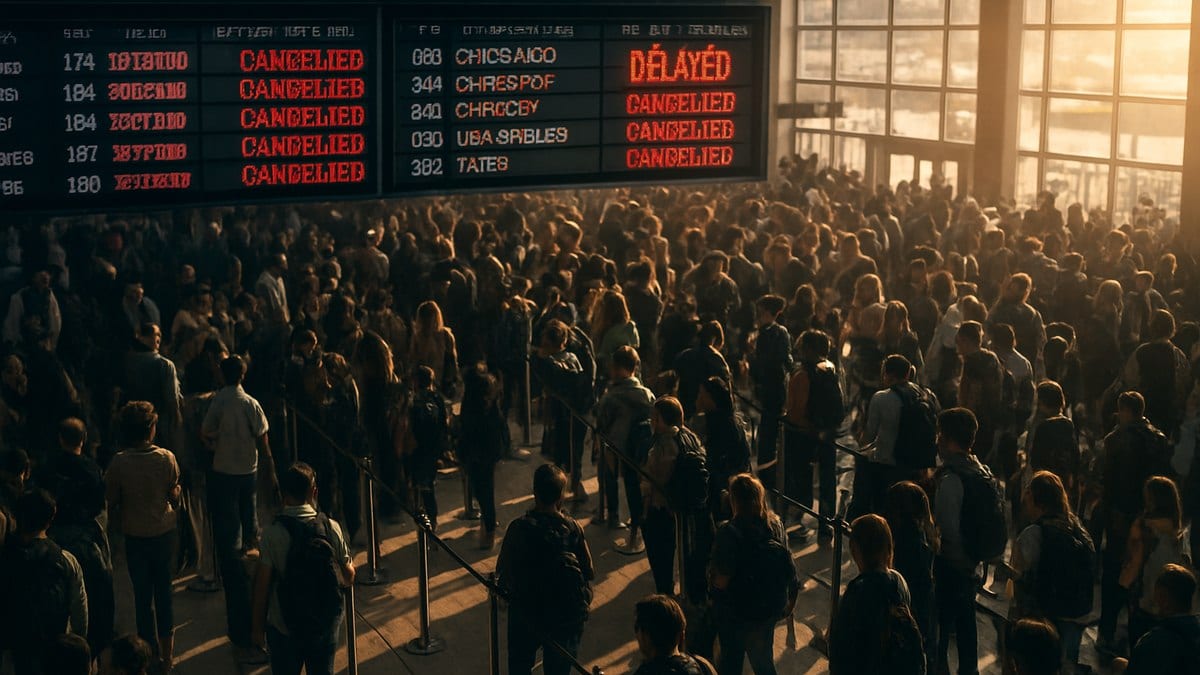
Spring Break Crowds Converge on a Strained Las Vegas Hub
Harry Reid International Airport, the primary gateway to Las Vegas, has faced mounting operational pressure through March 2026 as spring break crowds converge with a record seasonal travel surge across the United States. Industry forecasts cited by national outlets indicate that U.S. airlines are transporting well over 2 million passengers a day during the March to April period, with leisure destinations such as Las Vegas drawing a disproportionate share of that demand.
Local and national coverage over recent weeks has described checkpoint bottlenecks, lengthening queues and pockets of congestion at the Las Vegas airport on peak days, even as some travelers continue to report relatively smooth experiences during off-peak windows. The uneven conditions reflect the sensitivity of Harry Reid’s operations to timing, with early-morning and late-week departures more likely to see crowding as college students, convention visitors and weekend gamblers cycle through.
The airport’s own traffic data from recent years underscores how heavily it depends on discretionary travel. Pre-pandemic and post-pandemic figures show Harry Reid handling several million passengers each March, placing it among the busiest leisure-focused airports in the country. That concentration makes the facility particularly vulnerable when seasonal spikes intersect with broader system shocks such as weather or staffing disruptions.
In 2026, those vulnerabilities have been on display as spring break volumes push the airport’s infrastructure and its airline partners closer to their limits during compressed travel windows. Even when the airport remains technically open and runways are operational, modest slowdowns at security, gate operations or air traffic control can cascade quickly into rolling delays for outbound and inbound flights.
Weather, Ground Delays and TSA Staffing Combine to Snarl Flights
Operational strain at Harry Reid this spring has not been driven by crowds alone. A sequence of adverse weather events in February and early March, including periods of strong winds and low clouds over the Las Vegas Valley, triggered ground delay programs that slowed the rate of arrivals into the airport and forced airlines to hold departures on the tarmac or at gates. Aviation advisories issued for Las Vegas in mid-February described extended metering of inbound traffic through late evening as controllers managed wind and rain moving across the region.
Such ground delay programs can ripple through schedules for hours, particularly during high-demand travel periods. Flights arriving late from other hubs compress turnaround times, while aircraft and crews scheduled to operate later segments may miss their assigned slots. Reports from travel rights organizations and passenger advocacy groups note that when those disruptions overlap with peak leisure periods, rebooking options quickly become limited, leaving travelers facing long waits at service counters and crowded gate areas.
Security staffing challenges have added another layer of complexity. Trade and travel media have highlighted nationwide Transportation Security Administration shortages in early 2026, linked in part to an extended federal funding dispute that has affected compensation and overtime. Coverage specific to Las Vegas has pointed to fluctuating checkpoint wait times at Harry Reid, with some days marked by long early-morning lines and other days seeing surprisingly short waits as staffing levels and flight banks shift.
Publicly available flight-tracking data shows that these combined pressures have translated into elevated rates of delays and cancellations across the network during key March weekends. While Harry Reid is only one node in a larger web of disruptions that includes severe weather in the Midwest and East, its role as a spring break and convention hub means that any local slowdown can strand thousands of passengers at once and reverberate across multiple airlines’ systems.
Airline Stocks Already on Edge From Fuel Costs and Geopolitics
The turbulence in Las Vegas coincides with a period of heightened anxiety for airline investors. In late February and early March, major U.S. carriers including United, Delta and American posted some of their steepest single-day share declines in months as surging oil prices and war-related route disruptions in the Middle East weighed on earnings expectations. Financial news outlets have documented jet fuel prices climbing sharply since late 2025, squeezing profit margins just as airlines ramp up capacity for peak travel season.
Market coverage indicates that airline stocks have also been buffeted by broader geopolitical uncertainty linked to the conflict involving Iran, which has prompted airspace closures, rerouting of long-haul flights and the cancellation of some international services. Sector analyses published in recent weeks describe multi-session drops for marquee carriers and elevated volatility in airline-focused exchange-traded funds as traders attempt to price in both higher operating costs and the risk of demand softening on certain overseas routes.
Against that backdrop, operational headlines from key leisure markets like Las Vegas carry outsized psychological weight. When investors see images and reports of long lines and stranded passengers at airports that typically symbolize discretionary spending strength, they often interpret them as warning signs that the system is stretched and that unexpected costs, such as overtime pay, passenger compensation and repositioning of aircraft, may climb.
Analysts cited in recent commentaries have emphasized that the underlying demand picture for U.S. air travel remains solid heading into the summer, but they acknowledge that the combination of higher fuel costs, labor pressures and episodic disruption events makes earnings outcomes more sensitive to operational miscues. In that environment, highly visible choke points at hubs like Harry Reid can quickly feed into risk-off sentiment toward the entire sector, even if the direct financial hit from any single day of delays is limited.
Las Vegas Disruptions Feed a Volatile Trading Pattern
In recent trading sessions, airline stocks have exhibited wide intraday swings that reflect both macro drivers and reaction to travel disruption coverage. When spring break crowds collided with the aftershocks of winter storms and ground delays in mid-March, several large carriers saw their shares initially sell off in morning trading before partially recovering as the broader market stabilized. Market reports tie these moves to algorithmic strategies that respond to headlines about flight cancellations, airport bottlenecks and customer complaints on social media.
Investors watching Harry Reid’s performance view the airport as a bellwether for domestic leisure demand as well as operational resilience. Las Vegas routes are heavily trafficked by carriers known for point-to-point and low-fare models, meaning that schedule irregularities can have immediate revenue implications if planes depart with more empty seats or if last-minute discounting is required to backfill disrupted itineraries. Trading desks track these indicators alongside forward-looking data such as bookings, fare trends and ancillary revenue to gauge whether episodic chaos is deterring travelers or simply shifting demand into different time slots.
Recent sector commentary suggests that the market is struggling to separate structural issues from short-lived shocks. On one hand, weather-related snarls at Harry Reid and other airports may fade quickly once conditions normalize, especially if staffing levels continue to stabilize. On the other hand, the cluster of disruptions around a critical leisure period accentuates concerns that airlines are operating with limited buffer capacity, leaving them exposed to further volatility if additional storms, labor disputes or security bottlenecks emerge later in the year.
This uncertainty has encouraged some fund managers to adopt a trading rather than investing stance toward airline stocks, leaning into volatility around news-driven dips and rebounds. In that context, every new report of extended delays at a destination as high profile as Las Vegas becomes part of the narrative that drives short-term moves, even when longer-term travel demand remains intact.
Travelers Adjust Plans as Airlines Weigh Longer Term Risks
The disruptions at Harry Reid during spring break have practical consequences far beyond the trading floor. Travel industry coverage notes that passengers connecting through Las Vegas or departing after weekend events are building in additional buffer time at security, adjusting flight times toward earlier departures and in some cases choosing alternative airports in the region when schedules allow. Hotel and convention planners are likewise monitoring air reliability as they finalize dates for future events that depend on a steady flow of arrivals.
For airlines, the Las Vegas experience serves as both a stress test and a warning. Carriers that emerged from the pandemic with lean workforces and tightly optimized schedules now face a landscape in which external shocks are more frequent and fuel costs more volatile. Industry analysts argue that maintaining greater operational slack, whether through additional reserve crews or more conservative scheduling at vulnerable hubs, may be necessary to protect brand reputation and contain irregular operations costs.
Financial commentary points out, however, that building that resilience carries its own price. Higher staffing levels, increased training, and spare aircraft capacity all weigh on margins, particularly if demand growth moderates after the current surge. Airline management teams must therefore balance investor pressure for cost control with the reputational and financial risks exposed when scenes of crowded terminals and lengthy delays at places like Harry Reid dominate the news cycle during peak seasons.
As the spring break wave recedes and Las Vegas transitions into its summer travel pattern, market participants will be watching to see whether airline stocks can decouple from the latest bout of airport chaos or whether Harry Reid’s recent turbulence will remain a symbol of the fragile equilibrium between booming demand and a stretched global aviation system.