


The British Airways Visa Signature Card from Chase promises aspirational trips to London, generous Avios bonuses, and companion tickets that sound almost too good to be true. For many travelers, they are. When you look past the glossy marketing and do the math on fees, surcharges, and limited sweet spots, the harsh truth is that this card is far from a slam-dunk. It can be powerful in the right hands, but for the average U.S. traveler, its real-world value is far more nuanced than the advertisements suggest.
Get the latest updates straight to your inbox!
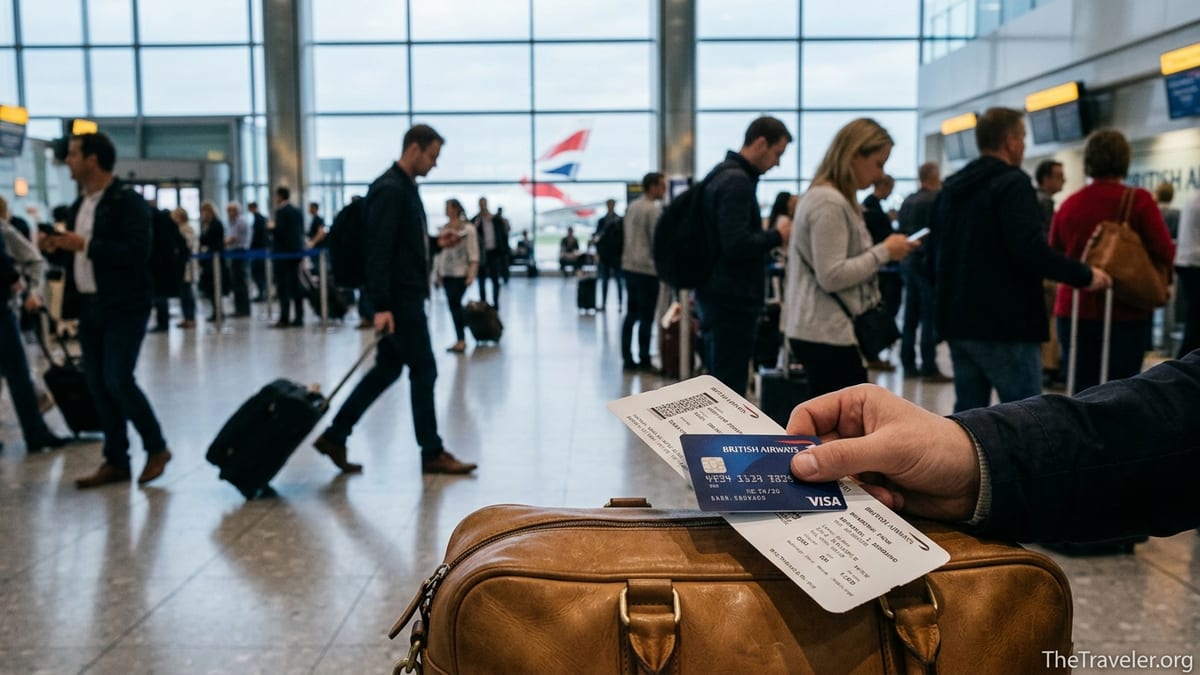
The Marketing Pitch vs Reality
On paper, the British Airways Visa Signature Card looks compelling. As of mid 2026, new cardholders are typically enticed with a bonus of around 75,000 Avios after spending several thousand dollars in the first three months, a 3x earning rate on British Airways, Aer Lingus, Iberia and Level purchases, 2x on hotel stays booked directly with the hotel, and 1x on everything else, plus no foreign transaction fees and an annual fee of about 95 dollars. That pitch is simple: put your travel spend here, earn Avios quickly, and use them for long haul flights to Europe.
In practice, the value story is more complicated. British Airways operates a distance based award chart with carrier surcharges that can easily run to several hundred dollars per ticket in addition to taxes. A typical off peak economy award from New York to London might cost roughly 26,000 Avios one way but still saddle you with fees in the 150 to 250 dollar range. A business class ticket on the same route can require 50,000 to 62,500 Avios off peak plus 500 dollars or more in surcharges each way. The headline mileage pricing can look attractive, yet the true out of pocket cost is often not far off discounted cash fares.
There is also a mismatch between the broad sounding Visa Signature branding and the actual benefits tied to this specific card product. Many travelers assume Visa Signature automatically means trip delay insurance, baggage coverage, or robust purchase protections. In reality, issuers can choose which benefits to turn on, and recent cardholder reports and benefit guides show that this particular card is relatively light on strong travel protections compared with leading U.S. travel cards. That gap matters when flights get delayed or bags go missing.
None of this makes the card useless. It simply means that a traveler must understand that the British Airways Visa Signature Card is not a general purpose premium travel card. It is a niche tool for Avios focused flyers, and for many others it will be an expensive way to chase rewards that fail to live up to expectations.
The Real Cost of “Free” British Airways Flights
The harshest truth about this card is that the phrase “free flights” rarely applies when you redeem Avios on British Airways metal. The airline is notorious among frequent flyers for imposing substantial carrier surcharges on award tickets, especially in premium cabins. These charges are often called “fuel surcharges,” even though they now function more like revenue supplements than direct reflections of fuel costs.
Take a concrete example. A round trip New York JFK to London Heathrow in business class during an off peak period might be priced around 100,000 to 120,000 Avios plus 1,000 to 1,400 dollars in taxes and carrier surcharges per person. The same route in economy could run 52,000 Avios plus roughly 350 to 450 dollars in fees. During peak periods, the Avios cost and the surcharges can both climb higher. When travelers expect to pay only the government taxes, as is common with some other airline programs, the British Airways totals can come as a rude surprise at checkout.
Now compare that with a discounted cash fare sale. It is not unusual to find economy cash tickets between major U.S. gateways like New York, Boston, or Washington and London in the 500 to 700 dollar range round trip, occasionally less in aggressive sales. Business class sale fares can sometimes be found for 2,000 to 2,500 dollars round trip. In those cases, the award tickets funded by Avios from this card might save only a few hundred dollars while tying up well over one hundred thousand points. That amounts to barely one or two cents per Avios and often less.
For a traveler who uses the card heavily for everyday spend, earning mostly 1 Avios per dollar, this can feel deflating. Spending 75,000 to 100,000 dollars over time to earn enough Avios for a transatlantic business class ticket that still costs over 1,000 dollars out of pocket is not the outcome many people anticipate when they first apply for an airline cobrand card. Without careful route selection and an understanding of British Airways pricing, the “free flight” can turn into a costly redemption.
Where Avios From This Card Actually Shine
Despite the pain of long haul surcharges, there are scenarios where Avios earned from the British Airways Visa Signature Card provide excellent value. The distance based structure can be highly advantageous on shorter flights, particularly when used on oneworld partners that do not levy such steep fees. For example, U.S. based travelers can redeem Avios for American Airlines flights within North America, often avoiding the heavy carrier surcharges seen on British Airways operated routes.
A real world illustration is a short hop like Miami to the Bahamas or Dallas to Mexico City on American Airlines. Cash fares on these routes can easily hover around 250 to 400 dollars round trip during busy periods. Avios pricing might be around 9,000 to 11,000 points each way in economy with only modest government taxes, sometimes under 100 dollars total round trip. Redeeming Avios in these cases can yield more than two cents per point in value, which is far more compelling than many transatlantic business class redemptions.
Avios can also work well for positioning flights in Europe. Suppose you snag a cheap cash ticket from New York to Madrid on another carrier, then need a separate one way from Madrid to London or Paris. These short European hops may be priced attractively in Avios, often under 10,000 points plus roughly 30 to 60 dollars in taxes. For travelers who combine low cost long haul fares with short Avios funded add ons, the British Airways Visa Signature Card can quietly add a lot of flexibility.
The card’s 3x earning on British Airways, Aer Lingus, Iberia and Level flights and 2x on hotel stays booked directly can accelerate balances quickly for those who already allocate substantial spend to these categories. A business traveler who regularly flies Iberia between New York and Madrid and books independent hotels via direct websites might earn several tens of thousands of Avios per quarter using this card, enough to cover multiple short haul awards or to top up for a transatlantic flight when cash prices spike.
The Companion Ticket and Credits: Powerful but Hard to Use Well
The British Airways Visa Signature Card offers a Travel Together Ticket, commonly referred to as a companion voucher, after you spend a substantial amount on the card within a calendar or cardmember year. Recent versions of the product have set this spending threshold around 30,000 dollars. On the surface, this perk sounds incredible: redeem Avios for one ticket and bring a partner on the same itinerary for only the additional taxes, fees, and carrier surcharges.
In reality, the companion voucher is both the card’s most powerful benefit and its biggest trap. To unlock serious value, you need to combine a large pile of Avios with a flexible schedule and a willingness to accept British Airways surcharges out of major U.S. gateways. For example, if you live near Los Angeles and want two business class seats to London in peak summer, you could theoretically use one Travel Together Ticket and enough Avios for a round trip to cover both passengers. However, you might still be asked to pay around 2,000 to 2,500 dollars in total fees for the pair, and award seat availability at those times can be extremely limited.
For a couple who would normally pay 6,000 to 8,000 dollars for that same itinerary in cash, this is an outstanding deal. For someone who is used to shopping for sale fares and routing through lower cost carriers, the savings shrink dramatically. The harsh truth is that many cardholders never use their Travel Together Ticket before it expires, often because they cannot find award space that fits their schedule or they balk at the surcharges once they price out the trip.
The card has introduced additional statement credits on reward flights that can reduce costs by up to several hundred dollars per year when you use Avios for eligible itineraries departing the United States. As an example, a family booking an off peak economy reward from Chicago to London for two adults and a teenager might receive separate credits applied to each qualifying ticket, trimming perhaps 100 dollars or more off each. These credits soften the blow of surcharges but usually do not eliminate them. For occasional travelers, they are pleasant rebates, not game changers that transform Avios into truly free travel.
What You Give Up Compared with Flexible Travel Cards
Another uncomfortable reality is that carrying the British Airways Visa Signature Card as a primary travel card usually means giving up the versatility offered by leading transferable points products. Cards like Chase Sapphire Preferred, Capital One Venture and some popular American Express products earn flexible currencies that can be moved into British Airways Avios when needed, but also into a long list of alternative airline and hotel programs.
Consider two travelers with identical spending patterns. One places 20,000 dollars a year in general purchases on the British Airways Visa Signature Card, earning 20,000 Avios. The other uses a flexible travel card earning 2x points across broad categories, generating 40,000 transferable points. When it comes time to book a trip, the flexible cardholder can convert those points to Avios if British Airways offers the best option, but can just as easily send them to other partners for a more competitive redemption. The British Airways cardholder is locked in.
This inflexibility matters when airline loyalty programs devalue their charts, add peak pricing bands, or quietly increase surcharges. History suggests that programs evolve over time, often in ways that dilute point value for consumers. With a flexible currency, you can pivot to another partner if one becomes more favorable. With Avios earned from the British Airways Visa Signature Card, your choices are narrowed, even though the broader Avios ecosystem does allow some pooling and moving between British Airways, Iberia and Aer Lingus programs.
There is also the issue of missing or reduced travel protections relative to other cards with similar or even lower annual fees. Several mid tier travel cards in the market offer built in trip delay coverage, lost baggage reimbursement, primary rental car coverage and emergency evacuation benefits when you use the card to pay for your trip. Many reviews and cardholder experiences indicate that the British Airways Visa Signature Card is notably weaker in these areas, relegating it to a pure rewards tool rather than a comprehensive travel safety net.
Who Should Actually Consider This Card
Given the trade offs, the British Airways Visa Signature Card is not for everyone. The travelers who can extract real value from it typically fall into a few clear categories. First are those who already fly British Airways, Iberia, Aer Lingus or Level several times a year and have a genuine preference or obligation to stick with this family of airlines. A consultant who regularly commutes between New York and London on British Airways or an executive based in Boston who frequently travels to Dublin on Aer Lingus might easily spend enough on flights to justify a dedicated Avios earning card.
A second group includes Avios enthusiasts who understand the program’s quirks and know where the sweet spots lie. These are travelers who routinely book short haul partner awards, off peak transatlantic flights in economy, and strategic mixed cabin itineraries, and who can plan eleven to twelve months in advance to grab scarce premium cabin award seats. For them, the combination of 3x earnings on select airlines, occasional award credits, and the possibility of a Travel Together Ticket can add up.
The card can also make sense for couples or families who are laser focused on a specific dream trip that plays to the card’s strengths. For example, a family in Seattle might set a goal of taking two business class trips to London over four years, timing their spending so they earn a Travel Together Ticket twice, and amassing Avios through both card spend and flying. If they are comfortable paying several thousand dollars in surcharges across those trips, yet still come out ahead versus full cash fares, the card can be a useful part of the strategy.
On the other hand, casual travelers who take one overseas trip every few years, or who are not tied to British Airways and its partners, usually have better options. For them, a versatile travel card that allows simple redemptions through a bank travel portal at a fixed value or that offers statement credits against any travel purchase may provide a more predictable and often more generous return without the complexity of Avios charts and surcharges.
The Takeaway
The British Airways Visa Signature Card is a classic example of a product whose marketing story oversimplifies a complex underlying value proposition. Yes, the welcome bonus can be lucrative, and yes, the card offers a path to aspirational travel in British Airways premium cabins, especially when paired with a Travel Together Ticket. For a narrow slice of travelers who understand the Avios ecosystem and are willing to work within its constraints, the card can deliver outsized value.
For many others, the reality looks different. High carrier surcharges turn so called free tickets into expensive redemptions, limited travel protections leave you exposed when things go wrong, and the inflexibility of Avios compared with broader bank point currencies can feel restrictive. Everyday spending at 1x Avios per dollar is mediocre in a landscape where 2x or higher on wide categories has become the norm, and many cardholders struggle to actually use companion benefits before they expire.
If you live near a British Airways, Iberia, Aer Lingus or Level gateway, regularly fly those airlines, and are willing to learn the nuances of Avios, the card deserves a serious look. If you simply want an easy to use, all purpose travel credit card that makes your trips cheaper and simpler without a lot of homework, you may find the British Airways Visa Signature Card more frustrating than freeing.
The harsh truth is not that this card is bad. It is that its true value is highly conditional. Treat it as a specialized tool in a well thought out travel rewards strategy, not as a default choice for your everyday spending, and you will be far less likely to be disappointed.
FAQ
Q1. Is the British Airways Visa Signature Card worth it for most U.S. travelers?
The card can be worth it for frequent British Airways and Avios users, but most casual U.S. travelers will get better value from more flexible travel rewards cards.
Q2. How bad are the surcharges on British Airways award tickets booked with Avios?
Surcharges on long haul British Airways flights can easily run from a few hundred dollars in economy to over one thousand dollars per person in business class round trip.
Q3. Can I avoid high fees by using Avios on partner airlines instead of British Airways?
Yes, using Avios on partners like American Airlines or short haul European flights often results in much lower out of pocket fees compared with British Airways operated flights.
Q4. How valuable is the Travel Together Ticket that comes with the card?
The Travel Together Ticket can be very valuable for couples booking premium cabin awards, but it requires high annual spend, ample Avios and flexibility to find suitable award space.
Q5. Does the British Airways Visa Signature Card include strong travel insurance benefits?
Compared with leading travel cards, its built in travel protections are relatively limited, so many cardholders rely on other cards or separate insurance for robust coverage.
Q6. How does this card compare to flexible points cards like Chase Sapphire Preferred?
Flexible points cards earn transferable currencies, often at higher base rates, and allow redemptions through multiple airline and hotel partners, not just Avios.
Q7. Is it a good idea to put all my everyday spending on this card?
For most people, no. The 1 Avios per dollar base earn rate is uncompetitive compared with cards that offer at least 1.5x or 2x on broad everyday categories.
Q8. Do I need to live in a British Airways hub city to benefit from this card?
Living near a British Airways or Avios partner gateway helps, but you can still extract value through short haul partner flights and strategic redemptions even from non hub cities.
Q9. Can I combine Avios earned from this card with Avios from other programs?
Yes, Avios can generally be moved between British Airways, Iberia and Aer Lingus programs, which allows you to consolidate balances for specific redemptions.
Q10. Who is the ideal candidate for the British Airways Visa Signature Card?
The ideal candidate is a traveler who flies British Airways or its Avios partners regularly, understands award charts and surcharges, and can plan trips well in advance.