


More news on this day
American Airlines is preparing a sweeping overhaul of its fleet that combines a sharp increase in premium seating with a surprise reversal on in flight entertainment, as the carrier moves to compete more aggressively for high spending travelers on both long haul and domestic routes.
Get the latest news straight to your inbox!
Multi year fleet plan centers on premium capacity
Public filings and company statements indicate that American Airlines is reshaping its order book and cabin layouts around higher yielding seats at the front of the aircraft. A major aircraft order disclosed in March 2024 covered 260 new planes from Airbus, Boeing and Embraer, structured to allow the airline to upgauge aircraft on domestic and short haul international routes while adding more premium seats than any other United States carrier in those markets.
According to those disclosures, a combination of new deliveries and cabin refreshes is expected to lift the number of premium seats in American’s fleet by more than 20 percent by 2026, with longer term planning documents pointing to targeted premium growth of roughly 50 percent by the end of the decade on long haul and widebody aircraft. Industry analysis has linked that strategy to continued strong demand for business class, premium economy and extra legroom products, particularly among leisure travelers willing to pay more for comfort.
The push is not limited to new jets. Retrofit programs for existing Airbus A319 and A320 aircraft are already under way, with American reporting that these narrowbodies will emerge with larger domestic first class cabins, additional power at every seat, modernized interiors and expanded overhead bin space. Updated layouts published in 2026 show the A319 fleet moving to 12 seats in the premium cabin and the A320 fleet to 16, a clear signal that the airline sees more revenue potential at the front of the cabin than in dense all economy layouts.
Regional flying is part of the premium strategy as well. American has been shifting its feeder network toward dual class regional jets, phasing out many smaller single cabin aircraft in favor of larger regional types offering first class seating, in seat power and high speed satellite Wi Fi. Company materials describe a goal of providing a more consistent experience between mainline and regional operations, particularly for frequent flyers who connect through large hubs.
Flagship Suite and premium economy anchor long haul upgrades
On international routes, American is centering its fleet renewal on new business class suites and an expanded premium economy cabin. Plans initially unveiled in 2022 introduced the Flagship Suite concept for upcoming Airbus A321XLR and Boeing 787 9 deliveries, describing a fully lie flat, all aisle access product with privacy doors, larger screens and added personal storage. These aircraft are being delivered with reimagined interiors that also update seats and finishes in premium economy and the main cabin.
American has emphasized that premium economy will grow alongside business class on the updated widebody fleet. The airline was an early adopter of the cabin and is now adding more of these seats on long haul aircraft as part of the same retrofit and delivery wave. Official descriptions highlight wider leather seats with leg rests, larger headrests, increased recline and dedicated power outlets and USB ports at each seat, positioned as a step up from extra legroom economy without the price of business class.
Additional long haul enhancements are being layered on top of the new seats. Recent news releases describe refreshed bedding and amenity kits in the premium cabins, as well as upgraded dining options designed to better match the more upmarket hard product. American has also been expanding the network of routes operated with its newest interiors, including more transatlantic and long haul flights featuring Flagship Suite seating during peak seasonal periods.
Industry observers note that these changes collectively move American further into the premium travel segment after several years in which the carrier focused more heavily on cost control and densification. The strategy aligns American more closely with rivals that have already invested heavily in suites, premium economy and upgraded lounges on key international routes.
Reversal on seatback screens reshapes narrowbody experience
One of the most notable elements of the latest fleet plans is a shift in American’s approach to in flight entertainment. For years, the carrier emphasized streaming content to personal devices and removed seatback monitors from many domestic aircraft as cabins were reconfigured with slimmer seats and higher densities. Executives repeatedly suggested that most passengers preferred to use their own phones and tablets, and the airline invested instead in high speed Wi Fi and a proprietary streaming platform.
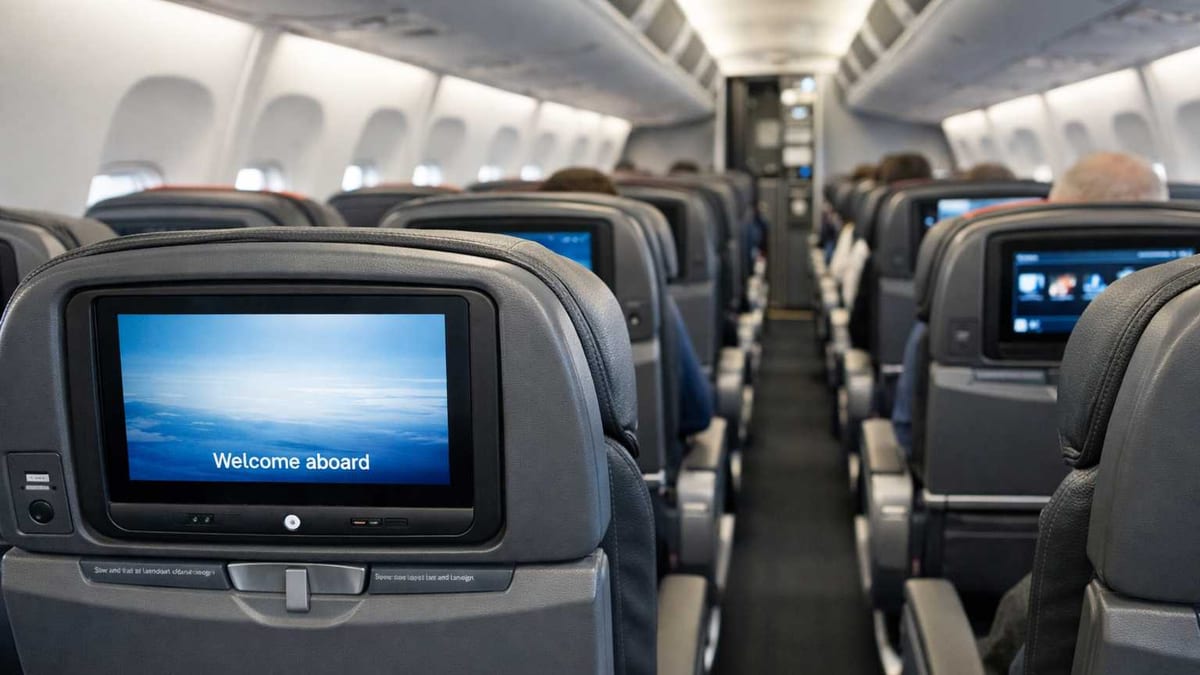
Fresh communications and leaked internal materials now indicate that American is preparing to reintroduce seatback screens across a large portion of its narrowbody fleet. A recent announcement described a sweeping transformation focused on installing new generation monitors at every seat on future Airbus and Boeing narrowbody deliveries starting later in the decade, alongside retrofits of existing aircraft. The new hardware is described as featuring large format 4K displays, Bluetooth audio connectivity and integration with in seat power to support longer streaming sessions.
This pivot aligns American more closely with competitors that have spent years touting ubiquitous seatback entertainment as a differentiator, especially on high profile domestic routes. Consumer commentary on social platforms suggests significant pent up demand among travelers who prefer not to rely on their own devices or who value a dedicated screen for children, moving maps and curated content. By pairing upgraded entertainment with more premium seats, American is attempting to shift perceptions of its domestic product from a no frills model toward a more full service offering.
The timing of the rollout is expected to stretch over several years, reflecting both the size of American’s narrowbody fleet and the complexity of integrating new wiring, screens and power systems into existing cabins. Publicly available information suggests that aircraft arriving from the late 2020s onward will debut with the new entertainment system installed, while retrofit schedules for older jets are likely to be phased in alongside other interior work such as new seats and larger overhead bins.
Network and loyalty strategy built around premiumization
The physical upgrades on board are being matched by changes in how American structures its network and loyalty offerings. Company materials describing hub growth highlight a deliberate focus on routes and schedules that can sustain a higher proportion of premium seats, including more business heavy frequencies between major corporate centers and increased long haul flying from key gateways. At Chicago O Hare, for example, recent expansion plans emphasize that every departure will offer a premium cabin after smaller aircraft are replaced with larger dual class jets.
On the loyalty side, updates to the AAdvantage program are gradually incorporating premium economy into the upgrade and recognition framework. Beginning in August 2026, published program changes will allow certain elite members booked in the main cabin to be upgraded into premium economy on select long haul and transcontinental routes when seats are available, adding another tier to the traditional hierarchy of complimentary and instrument based upgrades. That shift reflects both the growing size of the premium economy cabin and its emerging role as a core product rather than a niche add on.
Analysts following the airline sector describe American’s approach as a response to broader trends in passenger demand. Corporate travel has not fully returned to pre pandemic patterns in every market, but higher yielding leisure and blended business leisure trips have remained robust, particularly for carriers offering more comfortable seating and better onboard amenities. By committing to more premium seats on both domestic and international aircraft, American is positioning itself to capture more of that revenue even if total passenger volumes grow more slowly.
The success of the strategy will depend on execution. Delivering new aircraft on schedule, coordinating multiple retrofit programs, training crews on upgraded products and maintaining reliability as cabins are taken out of service for work are all significant operational challenges. Nevertheless, the combined push into premium seating and renewed investment in seatback entertainment marks one of the most visible shifts in American Airlines’ product philosophy in years, signaling to travelers that comfort and amenities are once again central to its competitive play.