


More news on this day
A sudden surge in jet fuel prices driven by conflict in the Middle East is testing the resilience of Asia-Pacific airlines, exposing how sharply different hedging strategies and balance sheets can shape fortunes when energy markets turn hostile.
Get the latest news straight to your inbox!
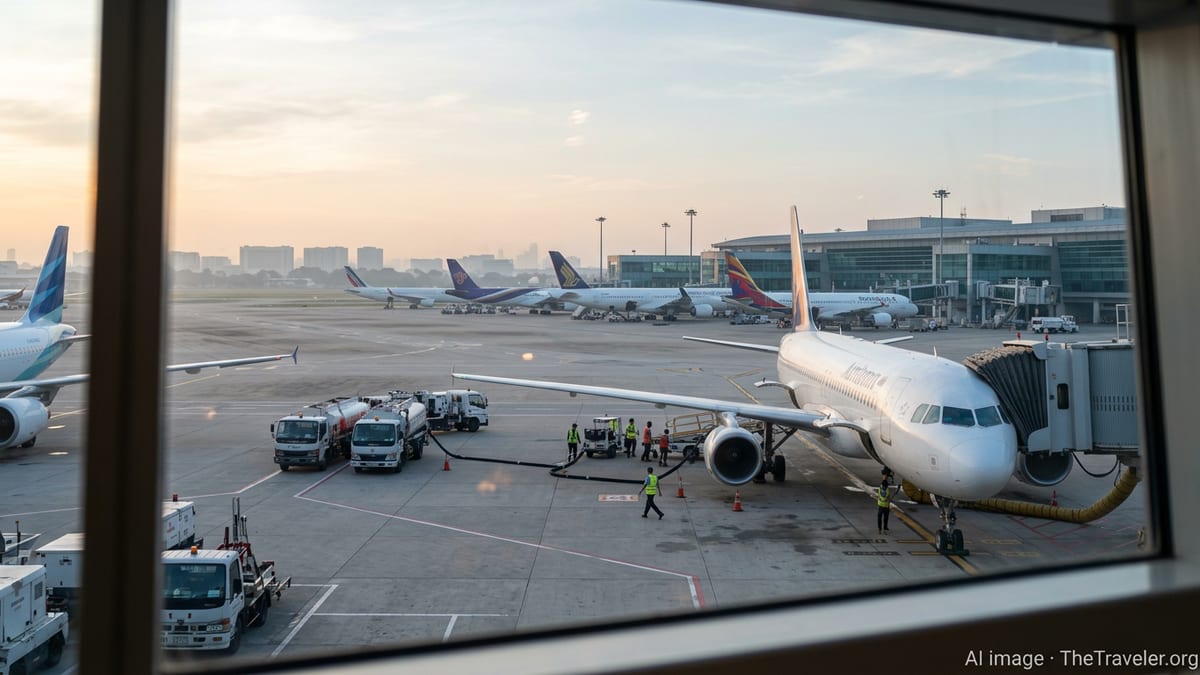
A Region Hit Hard by a Sudden Jet Fuel Spike
Jet fuel has more than doubled in price since the latest disruption to oil flows through the Middle East, pushing fuel back toward 30 percent or more of airline operating costs across Asia-Pacific. Industry assessments indicate that refining bottlenecks and the closure of key shipping lanes have made jet fuel prices in Asian markets several dollars per barrel higher than the global average, intensifying the shock for regional carriers.
Analysts note that this spike is landing just as many airlines had relaxed or scaled back hedging programs during the relatively calmer fuel environment of 2024 and 2025. Publicly available industry data shows that Asia-Pacific carriers entered 2026 with a patchwork of fuel protection: some had locked in large portions of their consumption, while others relied on spot purchases in the belief that prices would stay contained.
The result is a fragmented landscape in which the same external shock is producing dramatically different financial and operational outcomes. From premium full-service flag carriers to low-cost operators, the region’s airlines are now demonstrating how fuel policy can either cushion or magnify a crisis.
Singapore Airlines: Strong Hedging, New Pressures
Singapore Airlines is widely viewed as one of the more sophisticated fuel risk managers in the region, with a history of actively hedging a substantial share of its fuel needs. Investor materials and market commentary suggest that the group has locked in prices for a significant portion of its consumption into late 2026, softening the immediate blow from the latest jet fuel spike.
However, recent financial results illustrate that hedging is not a complete shield. Publicly available information shows that the airline has reported higher net fuel costs as hedges roll off and as the gap widens between Brent crude and refined jet fuel, a differential that many contracts do not fully capture. Added losses tied to its strategic investment in India’s Air India group have further pressured profitability just as fuel bills rise.
For passengers, the impact is likely to appear less in dramatic network cuts and more in pricing and yield management. Analysts tracking the carrier say that premium positioning, strong demand on long-haul routes and Changi’s role as a major transfer hub give Singapore Airlines more room than many rivals to pass on higher costs through fares and surcharges, at least in the near term.
Cathay Pacific: Partial Hedging Meets a Price Shock
Cathay Pacific has faced a more mixed outcome. Disclosures cited in regional business coverage describe a partial hedging strategy that covers only part of its fuel exposure and, in some cases, focuses on crude benchmarks rather than the full refinery margin for jet fuel. That approach offered flexibility when markets were stable, but it has left the airline vulnerable as the crack spread between crude and jet fuel has widened sharply.
Reports from Hong Kong indicate that fuel accounted for close to 30 percent of Cathay’s operating costs in 2025. With jet fuel prices surging, the carrier has already announced significant increases in fuel surcharges on tickets, signaling that it is leaning heavily on passengers to offset the spike.
The current episode revives memories in the local market of Cathay’s earlier hedging missteps, when the airline locked in high fuel prices before a downturn and booked substantial losses as oil fell. This history has made the airline cautious about over-hedging, but the latest surge is now testing how sustainable a more moderate strategy can be in an extreme price environment.
Qantas and Japan Airlines: Higher Coverage, Different Buffers
Qantas entered the latest fuel shock with one of the highest hedge ratios among major Asia-Pacific carriers. Industry surveys compiled from airline investor relations data show that the Australian group had hedged around 80 percent of its fuel needs for the second half of 2024, with rolling coverage extending into 2025 and 2026. That leaves it relatively well protected in the near term, even as domestic and international demand remains robust.
This extensive hedging program, combined with strong post-pandemic earnings and a substantial loyalty business, gives Qantas notable flexibility. Analysts suggest that the group can absorb elevated fuel costs for longer without drastic capacity cuts, relying instead on selective fare increases and schedule adjustments on lower-margin routes.
Japan Airlines, by contrast, entered the period with more modest but still meaningful fuel protection. Survey data points to coverage of roughly one-third of its fuel consumption for recent fiscal periods. The airline’s large exposure to international long-haul flying means that the fuel shock is material, but a combination of hedges, disciplined capacity management and a recovering travel market is so far containing the financial damage.
In both cases, financial markets appear to view extensive and clearly communicated hedging programs as a stabilizing factor. Equity research commentary across the region highlights Qantas and Japan Airlines as examples of carriers where the fuel spike may compress margins but is unlikely to trigger an immediate solvency or liquidity crisis.
AirAsia and Asiana: Limited Hedging, Immediate Strain
At the other end of the spectrum sit carriers such as Malaysia-based AirAsia and South Korea’s Asiana Airlines, which industry documents list among Asia-Pacific operators with little or no fuel hedging in place. For these airlines, the doubling of jet fuel prices has flowed straight into unit costs, with few financial buffers.
Reports from South Korea describe how rising fuel bills have pushed Asiana into what it terms emergency management, prompting cuts to long-haul routes and reductions in capacity on price-sensitive leisure markets. Local coverage notes that while larger competitors can use their scale to secure hedged volumes or more favorable supply terms, smaller and low-cost carriers lack both the financial capacity and the balance sheet strength to post the collateral that extensive hedging requires.
For AirAsia and similar low-cost operators, the shock comes on top of thin margins and intense competition on regional routes. With limited ability to raise fares without losing price-conscious passengers, these airlines face a difficult trade-off between profitability and market share. Network rationalization, aircraft delivery deferrals and aggressive cost-cutting are emerging as common responses.
One Shock, Five Lessons for Asia-Pacific Aviation
Taken together, the experiences of Singapore Airlines, Cathay Pacific, Qantas, Japan Airlines and AirAsia or Asiana underline how unevenly a single fuel shock can land. The immediate driver is the mix of hedging coverage, but broader factors such as pricing power, network structure and balance sheet strength are proving just as important.
Industry groups warn that jet fuel prices are likely to remain elevated for months, even if shipping routes normalize, because refining capacity and inventories cannot be adjusted quickly. That outlook suggests the current divergence among Asia-Pacific carriers could widen: airlines with stronger protection and financial reserves may consolidate their positions, while weaker and unhedged operators confront difficult choices about scale, ownership and long-term strategy.
For travelers across the region, the implications will be visible in higher surcharges, shifting schedules and the possible retreat of some low-cost competitors from marginal routes. For airlines and investors, the message from this episode is clearer still: in an age of energy volatility, fuel policy is once again a central strategic choice, not a technical detail buried in the footnotes of financial reports.