


More news on this day
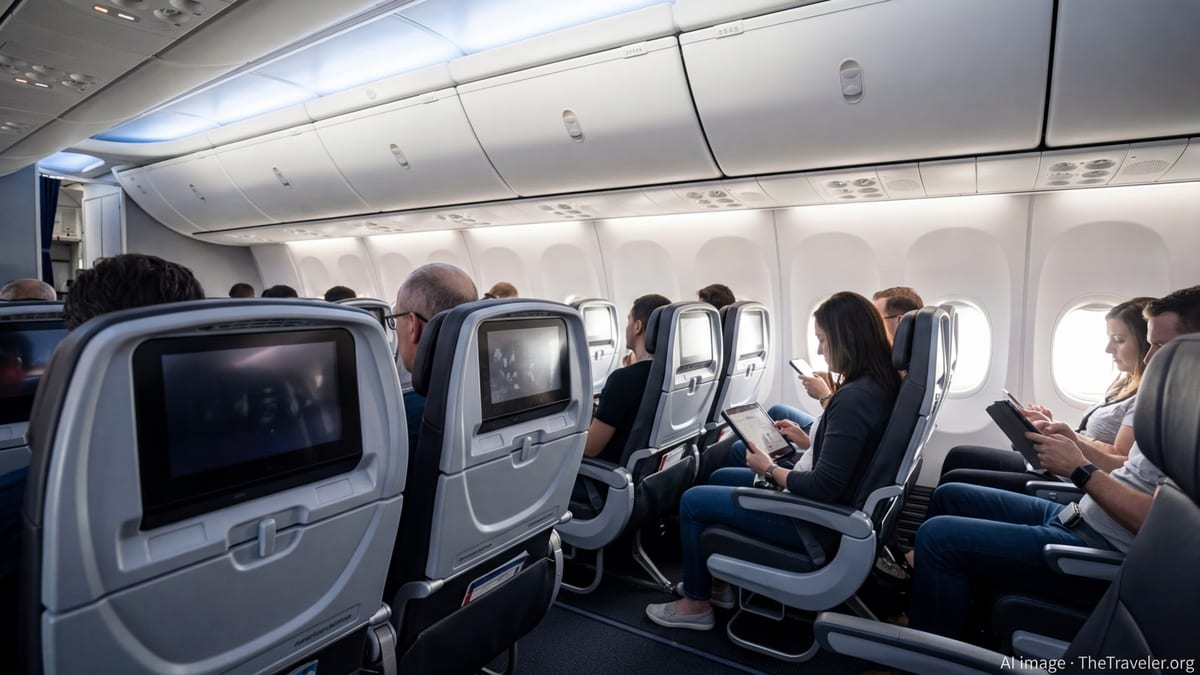
American Airlines is preparing a formal request for proposals to bring seatback entertainment screens back to a large portion of its narrowbody fleet, according to recent industry reporting, marking a potential reversal of the carrier’s decade-long bet on a “bring your own device” inflight entertainment model.
Get the latest news straight to your inbox!
From ripping out screens to rethinking strategy
American spent much of the past decade removing seatback entertainment from Boeing 737s and Airbus A321s as part of its Project Oasis retrofit program, arguing that passengers preferred to stream content to their own phones and tablets. Publicly available information from that period shows the airline focused its investment on high-speed Wi-Fi and personal device holders while leaving only a small subfleet of Airbus A319s and premium A321T transcontinental jets with built-in screens.
That strategy set American apart from its largest rivals. Delta Air Lines and United Airlines have spent recent years moving in the opposite direction by standardizing high-definition displays and power at every seat across mainline narrowbody aircraft. Industry coverage has frequently contrasted those investments with American’s cabin retrofits, noting that some customers perceived the lack of screens as a sign of a less premium product.
In parallel, American continued to roll out streaming entertainment and connectivity upgrades. Company materials highlight that all mainline aircraft can now support video streaming over Wi-Fi, with a rotating slate of hundreds of movies, television shows and audio programs available through the airline’s portal. Yet the absence of an embedded screen on most domestic narrowbodies remained a recurring point of criticism among frequent flyers.
As feedback accumulated, analysts began to question whether the cost savings from removing screens outweighed the competitive and branding impact, especially on longer domestic flights where customers compare cabin features closely among the big three U.S. carriers.
New Wi-Fi partnerships and an RFP-driven pivot
In recent months, reports have indicated that American is working on a broad refresh of its inflight connectivity and entertainment strategy for single-aisle aircraft. Coverage of internal discussions and investor commentary points to active talks with satellite connectivity providers, including Starlink and Amazon’s Kuiper project, as the airline evaluates future high-bandwidth Wi-Fi options.
Within that broader review, American is now understood to be readying a formal request for proposals to major inflight entertainment and connectivity suppliers covering both new narrowbody deliveries and retrofits. The RFP is expected to solicit detailed bids for integrated systems that combine next-generation seatback screens with high-speed satellite connectivity and power at every seat.
Industry reports suggest the request would encompass Boeing 737 MAX aircraft and Airbus A321neo jets on order, along with a significant portion of the existing 737 and A321 fleets. While the exact scope has not been publicly disclosed, suppliers and analysts anticipate a multi-year program that could eventually standardize a screen-and-stream model across much of American’s domestic mainline operation.
Vendors are expected to compete on screen weight, power efficiency, and the ability to support 4K displays, Bluetooth audio pairing and personalized content recommendations. The use of thinner, lighter hardware is seen as critical to mitigating the fuel-burn penalties that originally motivated some airlines to abandon heavy legacy entertainment systems.
Aligning narrowbody cabins with premium long-haul product
American has already committed to seatback entertainment on its future long-haul aircraft. The carrier’s upcoming Boeing 787-9 and Airbus A321XLR deliveries are being marketed with new Flagship Suite premium cabins and 4K seatback screens throughout the main cabin, along with universal power ports and Bluetooth connectivity. Company communications describe these aircraft as the foundation of a reimagined international experience.
Extending similar technology to narrowbody jets would bring American’s domestic product closer to that long-haul standard. Analysts note that many of American’s most lucrative routes, including transcontinental and medium-haul trunk markets, are now flown almost entirely with single-aisle aircraft, making the onboard experience on those jets a key differentiator.
A move to equip narrowbodies with modern displays would also help close the perception gap with competitors. Delta and United already promote large seatback screens, live television and interactive maps as core elements of their brand promise. Matching or exceeding those features on domestic flights could strengthen American’s case to high-yield corporate travelers who value a consistent and premium cabin environment.
Fleet planning documents show American has hundreds of new 737 MAX 10 and A321neo aircraft on order through the next decade. Embedding a unified entertainment and connectivity platform into those deliveries, rather than retrofitting later, would give the airline a cleaner baseline from which to standardize the experience for customers.
Customer expectations and competitive pressure
Public reaction on traveler forums and social media has underscored the importance many passengers place on embedded screens, particularly on flights of three hours or longer. While some travelers are comfortable relying solely on their phones or tablets, others point to benefits such as conserving device battery life, being able to watch while using a second screen, and accessing detailed moving maps and flight information without juggling apps.
Industry commentary notes that American’s earlier move away from seatback systems coincided with rapid improvements in personal devices and streaming technology, but that competitive dynamics have shifted as other carriers reinvest in embedded hardware. The result has been a kind of arms race in which the combination of fast, reliable Wi-Fi and high-quality seatback displays is increasingly seen as table stakes for a full-service network airline.
Analysts say an RFP for a new narrowbody entertainment platform would signal that American now views screens and connectivity as complementary rather than mutually exclusive. The goal, according to recent coverage, is not only to entertain but also to enable more personalized interactions, such as curated content recommendations, destination guides and eventually retail or loyalty integrations through the seatback interface.
At the same time, airlines face rising expectations for reliability. Any solution American selects will need to support rapid content updates, real-time troubleshooting and robust cybersecurity, all while integrating with the carrier’s existing mobile app and loyalty ecosystem.
Next steps and implementation timelines
Formal RFP processes in the aviation industry typically unfold over many months, involving technical evaluations, certification planning and detailed financial modeling. Suppliers expect that once American issues its narrowbody entertainment and connectivity RFP, there will be a period of design refinement and testing before any large-scale installations begin.
Given certification and supply-chain lead times, sector analysts suggest that new-build narrowbodies could begin arriving with the chosen system in the late 2020s, with retrofits of existing aircraft following in phased waves. Early deployments would likely focus on key hub-to-hub and transcontinental routes where customer expectations and competitive pressure are highest.
For now, American continues to promote its streaming library and Wi-Fi coverage as the backbone of its inflight experience. However, the emerging RFP and reported talks with major connectivity and hardware providers indicate that the airline is preparing for a more screen-centric future on its single-aisle jets.
As proposals are drafted and evaluated, the outcome will help determine how quickly American can reshape perceptions of its domestic product and how closely it can align its narrowbody cabins with the premium image it is building on new long-haul aircraft.