


More news on this day
Heathrow Airport is entering the peak booking window for summer with passenger numbers near record territory, even as conflict and airspace closures in the Middle East disrupt traditional flight corridors and force airlines to rethink how and where they fly.
Get the latest news straight to your inbox!
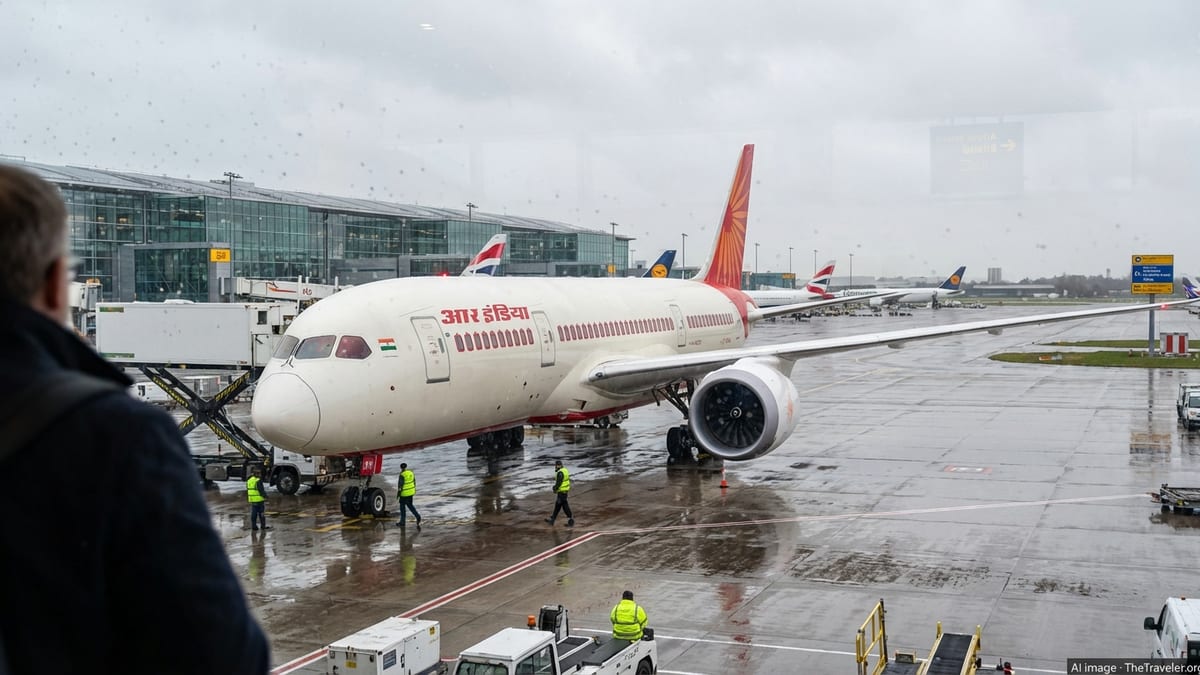
Passenger Growth Holds Up Despite Regional Shock
Recent operational data indicates that Heathrow remains broadly resilient, even as tensions in the Middle East unsettle a key slice of its network. Publicly available figures for early 2026 show the airport handling around 6.6 million passengers in March, higher than a year earlier, despite widespread rerouting linked to airspace restrictions in and around the Gulf region. Earlier this year, February traffic was reported as the busiest on record for that month, underscoring how overall demand is still pushing upward.
At the same time, more detailed breakdowns of traffic patterns point to a steep fall in direct flows between Heathrow and the Middle East. Industry coverage citing airport data suggests that passenger volumes on those routes dropped by more than half in March compared with the previous year, as airlines trimmed schedules and travelers weighed the risks of flying near conflict areas. The contrast between robust headline numbers and a deep slump in one region highlights how traffic is being reshuffled rather than disappearing.
Heathrow’s own long term outlook remains cautiously positive. Investor presentations and regulatory filings for 2024 and 2025 reference expectations of annual traffic in the mid 80 million range, slightly above pre pandemic peaks, reflecting pent up leisure demand, resilient premium travel and a solid pipeline of transatlantic and short haul European bookings. This broader base of demand is helping offset the sharp but localized shock from the Middle East.
For travelers, the key message is that Heathrow as a whole is functioning close to normal capacity, even as certain corridors face repeated schedule changes. Seats are still available, and airlines are actively adjusting fleets to keep popular summer destinations served, but the mix of routes and timings is shifting in ways that may be less visible from headline passenger totals.
How Middle East Tensions Are Reshaping Routes
The escalation of conflict involving Iran and its regional adversaries has changed the aviation map between Europe, the Middle East, Africa and Asia almost overnight. Airspace closures and risk advisories covering parts of the Gulf and surrounding regions have forced many carriers to suspend flights entirely to certain cities, while others are diverting around affected zones on longer, more fuel intensive routings. Industry monitoring of schedules shows that several European and Asian airlines, including major UK operators, have paused or severely reduced services to hubs such as Tel Aviv, Dubai and Bahrain.
Analysts tracking global aviation capacity estimate that airports in the Middle East collectively account for a significant share of international connecting traffic, particularly for journeys that link Europe with South and Southeast Asia, Australasia and parts of Africa. With some of these hubs now operating at reduced capacity or facing intermittent shutdowns, routings that once relied on a single connection in the Gulf are being stitched together via multiple stops in Europe or further north across Central Asia.
For Heathrow, this upheaval is feeding through in several ways. Published commentary on recent traffic patterns notes a double digit rise in transfer passengers, as airlines steer more connecting itineraries through London when Middle Eastern hubs are less reliable. At the same time, long haul services to Asia are sometimes flying extended paths that bypass closed airspace, adding flight time and compressing aircraft availability for other routes. The result is a network that appears busy, but is under strain from added complexity.
Travelers heading to or from the Middle East face the most visible disruption, with schedule changes, last minute cancellations and longer journey times now common on affected routes. However, even passengers whose destinations are far from the conflict zone can experience knock on effects when an aircraft arriving late from a detoured long haul flight cascades delays through the day’s schedule.
Preparing for a Crowded, Complicated Summer Peak
Ahead of the main summer holiday season, Heathrow’s traffic forecasts and industry commentary converge on the expectation of another very strong peak, even with the Middle East turmoil ongoing. Data from 2024 and 2025 already showed record or near record summer months at the airport, with July and August passenger totals approaching or exceeding 8 million each. Continuation of that trend, combined with rerouted flows away from Middle Eastern hubs, suggests that terminals and runways could remain close to saturation during the busiest weeks of 2026.
Airlines have been signaling confidence about European leisure demand, the North Atlantic and many short and medium haul resort markets, even as they scale back exposure to certain parts of the Middle East. Booking data cited in trade publications points to strong interest in Mediterranean destinations, North America and popular long haul holiday spots reachable without passing near conflict affected airspace. This is encouraging Heathrow and its partners to prioritize capacity in those directions, sometimes at the expense of thinner or lower yield services.
Operationally, airport management is emphasizing punctuality and resilience after reporting that 2025 was one of the strongest years on record for on time performance among major European hubs. Industry reports describe ongoing investments in security screening lanes, baggage systems and airfield operations, aimed at keeping queues manageable and turnarounds tight even as aircraft movements climb. However, the added complexity of longer routings and tight aircraft rotations means that even small disruptions can ripple quickly through peak day schedules.
Travelers using Heathrow in July and August should therefore anticipate very busy terminals but broadly stable operations, punctuated by localized disruption when events in the Middle East force sudden changes. Early arrival at the airport, monitoring of airline notifications and willingness to accept rebookings via alternative hubs remain prudent steps, especially for trips that involve long haul connections.
What This Means for Fares, Connections and Reliability
The combination of high seasonal demand and geopolitical disruption is already feeding into higher operating costs for airlines at Heathrow. Longer flight paths around conflict zones require more fuel, while disrupted rotations can leave aircraft and crews out of position. Publicly available airline disclosures and analyst commentary suggest that these factors, on top of elevated jet fuel prices, are putting pressure on margins just as carriers attempt to keep fares attractive.
For passengers, that may translate into less generous last minute deals on certain long haul routes and fewer ultra cheap fares at peak times, especially on journeys that previously relied on Middle Eastern hubs for competitive pricing. However, intense competition on core transatlantic and intra European markets, where the impact of the conflict is more indirect, is likely to keep a wide range of price points in play for early bookers.
Connections are also shifting. As more itineraries are retimed or rerouted away from the Gulf, Heathrow is absorbing additional transfer traffic between Europe, North America and parts of Asia and Africa. Aviation data providers report a measurable uptick in connecting passengers at London, which can be positive for route viability but may also mean busier security checkpoints and tighter minimum connection times for travelers changing flights in peak periods.
Reliability remains the central concern for many passengers. While Heathrow’s overall punctuality has improved compared with the immediate post pandemic years, the system surrounding it is under unusual stress. Airlines and regulators continue to watch developments in the Middle East closely, and published travel advisories emphasize that airspace restrictions or further escalations could prompt rapid changes to schedules. Flexibility in travel plans, awareness of passenger rights and careful planning of connection windows are becoming as important as price when choosing flights for the coming summer.
Key Takeaways for Summer Travelers Using Heathrow
For those planning to pass through Heathrow in the months ahead, the emerging picture is one of strength with caveats. Overall traffic is high and rising, supported by strong leisure and business demand across Europe and the North Atlantic, and by London’s enduring role as a global hub. At the same time, Middle East tensions and airspace closures are removing capacity, shifting connecting flows and adding complexity that can surface as delays and occasional cancellations.
Travelers whose itineraries involve the Middle East or onward connections via Gulf hubs should pay particular attention to airline communications and schedule changes in the weeks before departure. Where possible, building in extra connection time, considering flexible tickets and checking alternative routings that avoid the most disrupted areas can reduce the risk of missed flights or extended layovers.
Those flying on more typical summer routes, such as European beach destinations, North American cities or long haul holiday spots served directly from London, are likely to encounter crowded but generally stable operations, provided no sudden deterioration in the regional security environment occurs. Even so, earlier arrivals at the airport, advance online check in and careful review of baggage and security rules can help smooth the journey through terminals operating close to capacity.
Heathrow’s resilience in the face of Middle East tensions is setting the stage for what could be another record breaking summer. Whether that translates into a smooth travel experience will depend not only on the airport and airlines, but also on how passengers prepare for a season shaped as much by geopolitics as by school holidays and sunshine.