


More news on this day
From Rwanda’s gorilla parks to Kenya’s community conservancies and rewilded reserves across Southern Africa, responsible travel is rapidly moving from niche product to economic pillar, reshaping how tourism supports people, wildlife and climate goals on the continent.
Get the latest news straight to your inbox!
Eco-Tourism Becomes a Strategic Growth Engine
Governments, conservation groups and private operators across Africa are placing eco-tourism at the center of long-term development strategies, tying nature-based travel directly to jobs, revenue and climate resilience. World Travel & Tourism Council data indicates that tourism already accounts for a double-digit share of GDP in several African destinations, with nature-based experiences representing a large part of this contribution.
In Rwanda, publicly available information shows that tourism accounts for more than 10 percent of national output and supports hundreds of thousands of jobs, with nature-focused trips centered on national parks playing an outsized role. Gorilla trekking in Volcanoes National Park remains one of the world’s most prominent examples of high-value, low-volume tourism, where strict visitor caps and premium permit prices are designed to limit environmental impact while maximizing funds for conservation and surrounding communities.
Across the continent, protected areas managed through public–private partnerships are reporting steady increases in visitor numbers and revenues. African Parks, which manages a portfolio of national parks and reserves in partnership with governments, recorded a rise in tourism receipts in its latest annual reporting, with several parks covering a substantial share of operating costs through visitor fees, concession income and related commercial activities. This trend is viewed as a key indicator that well-managed eco-tourism can reduce reliance on donor funding while maintaining strong biodiversity outcomes.
Analysts note that this growth is not simply about more tourists, but about a deliberate shift toward higher-yield, lower-impact models. Investment plans increasingly prioritize small camps, guided nature experiences and cultural encounters that generate significant local employment without the mass footprint associated with large coastal resorts or cruise tourism.
Community Conservancies Put Local People at the Center
Kenya’s expanding network of community and private wildlife conservancies has become one of Africa’s flagship experiments in locally anchored eco-tourism. Research published in conservation journals shows that around 70 percent of Kenya’s tourism revenue is linked to wildlife-related experiences, and community conservancies now provide critical habitat and migration corridors beyond state-owned parks.
These landscapes, from well-known conservancies bordering the Maasai Mara to lesser-known initiatives in Laikipia and the Rift Valley, rely on a mix of bed-night fees, wildlife viewing charges and long-term leases to channel tourism income directly to landholders and neighboring villages. Publicly available analyses describe how conservancies such as Ol Pejeta have built business models that combine photo tourism with livestock, education programs and ranger training to sustain both livelihoods and wildlife.
Independent economic reviews indicate that these models generate significant cash transfers, jobs and contracts for local suppliers. At the same time, they help reduce poaching by creating a financial incentive for communities to protect wildlife rather than convert land to intensive agriculture or fencing. In several conservancies, community-owned guiding schools and training centers prepare young people for skilled roles in tourism, from rangers and trackers to lodge managers and naturalists.
The approach is not without challenges. Studies and media coverage point to concerns over benefit-sharing, gender equity and land tenure in some areas, with criticisms that older male landowners sometimes capture a disproportionate share of lease payments. In response, conservation organizations and community associations are working to strengthen governance, improve transparency and ensure that women, youth and landless households have a stake in decision-making around tourism projects.
Revenue Sharing in Parks Links Conservation and Public Services
In Central and East Africa, structured tourism revenue-sharing schemes are emerging as a key tool to bind local communities to protected areas. Rwanda’s Tourism Revenue Sharing Programme, reviewed in academic and policy literature, allocates a fixed percentage of national park tourism receipts to development projects in villages bordering parks such as Volcanoes, Akagera and Nyungwe.
Over a 15-year period, this mechanism has directed funds into schools, healthcare facilities, water supply schemes and small enterprise grants. Government reports and independent evaluations highlight that increases in gorilla permit fees and visitor numbers have translated into higher community investments, following a policy decision to double the share of revenue earmarked for surrounding areas. Recent budget announcements show that hundreds of projects have been financed, from classroom construction to cooperative start-up capital.
The model appears to be contributing to more positive attitudes toward wildlife and park authorities, even in densely populated regions where land pressures are high. Published studies note a decline in reported human–wildlife conflict incidents in some buffer zones, attributed partly to community patrols and infrastructure improvements funded by tourism income.
Elsewhere, African Parks’ partnership agreements include commitments to local procurement and social investment as tourism grows. Annual reporting by the organization outlines multimillion-dollar spending on schools, health clinics and livelihoods initiatives around parks in countries such as Malawi, Zambia and the Democratic Republic of Congo, much of it underpinned by revenue from visitors and concessionaires.
Climate Finance and Nature-Based Tourism Converge
As climate impacts intensify across the continent, African destinations are increasingly aligning eco-tourism with broader nature-based climate solutions. Conservation groups managing large protected landscapes are exploring how revenue from tourism can blend with carbon markets, biodiversity credits and resilience funds to create more stable, long-term financing.
African Parks announced a multiyear initiative to mobilize around one billion dollars for expanding and securing protected areas before the end of the decade, framing well-run parks as natural infrastructure that underpins carbon storage, water security and climate adaptation. Public information from the organization and its partners describes a diversified revenue strategy in which park fees and high-end tourism concessions sit alongside carbon projects, philanthropic capital and impact investment.
On the ground, this convergence is visible in restoration and rewilding programs that double as visitor attractions. Rhino translocations, savanna restoration and wetland rehabilitation projects are presented to tourists as part of a narrative of ecological recovery, with visitor spending helping to cover monitoring, ranger patrols and community co-management. In some landscapes, tourism-funded ranger networks also play a role in reducing deforestation and illegal grazing, further strengthening climate outcomes.
Destination marketing materials show that travelers are responding to experiences that explicitly connect their spending with measurable conservation gains. Lodge operators and tour companies are increasingly publishing impact reports detailing contributions to anti-poaching efforts, carbon sequestration projects and community enterprises, reflecting a growing expectation from international visitors that their holidays should support tangible environmental benefits.
Balancing Growth, Equity and Authentic Experiences
The rapid expansion of responsible travel opportunities across Africa also raises complex questions about carrying capacity, cultural authenticity and social justice. Academic and policy discussions caution that even well-intentioned eco-tourism can exacerbate inequalities if benefits are not widely shared or if communities lose control over land and decision-making.
In Kenya, recent commentary has highlighted tensions where conservancy revenues appear to favor specific groups, while in Rwanda, some residents near gorilla parks have voiced calls for greater compensation and more direct involvement in tourism planning. These concerns are prompting a new generation of projects that place equity and participation at the heart of eco-tourism design, from inclusive revenue-distribution formulas to quotas for local ownership of lodges and guiding businesses.
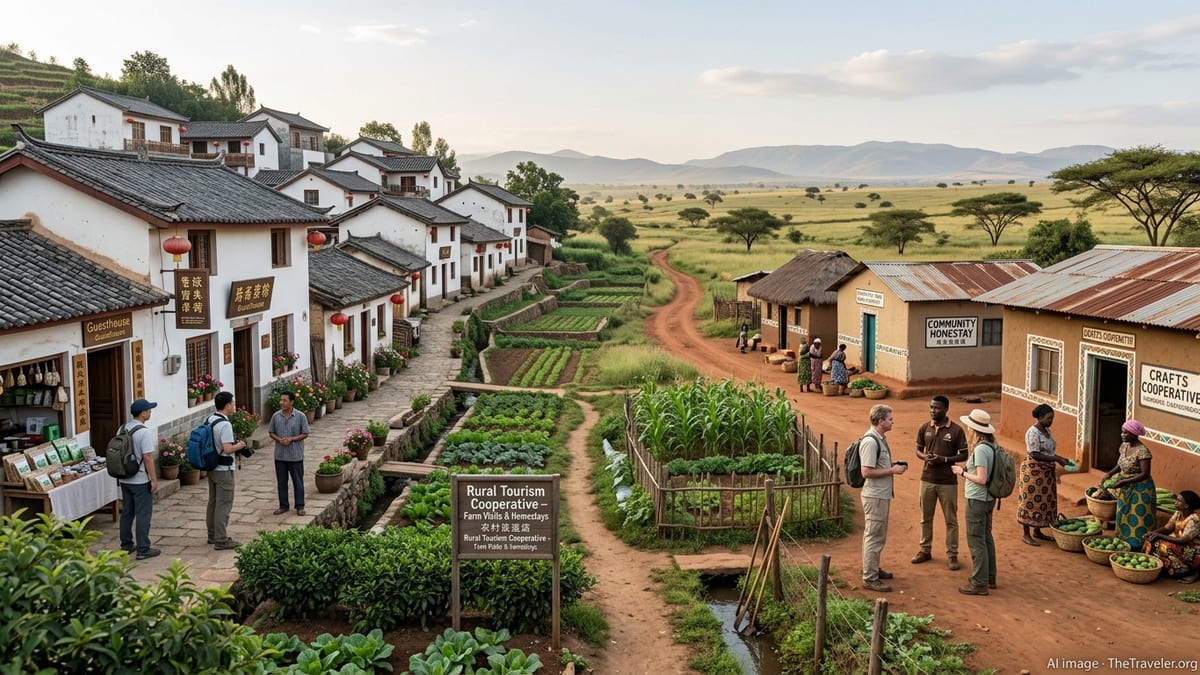
Travel industry observers note that Africa’s most successful responsible tourism experiences tend to be those that remain small in scale, deeply rooted in local culture and transparent about their impacts. Walking safaris with community rangers, homestay-style cultural visits and conservation volunteering programs are gaining traction among travelers seeking closer connections with host communities and a clearer understanding of where their money goes.
As international arrivals continue to recover and diversify, the choices made today about how eco-tourism is structured will shape livelihoods, landscapes and climate resilience for decades. The emerging consensus in policy papers, conservation strategies and industry briefings is that Africa’s competitive edge in global tourism lies not in volume, but in safeguarding its natural and cultural heritage through models that reward both residents and visitors for choosing a more responsible path.