


More news on this day
Passengers connecting through London Heathrow to Europe are being urged to prepare for longer queues and possible missed connections as the airport flags growing disruption risks linked to new EU digital border controls across the Schengen area, now covering Belgium, Sweden, Czech Republic, Hungary, Iceland, Spain, Latvia and other participating states.
Get the latest news straight to your inbox!
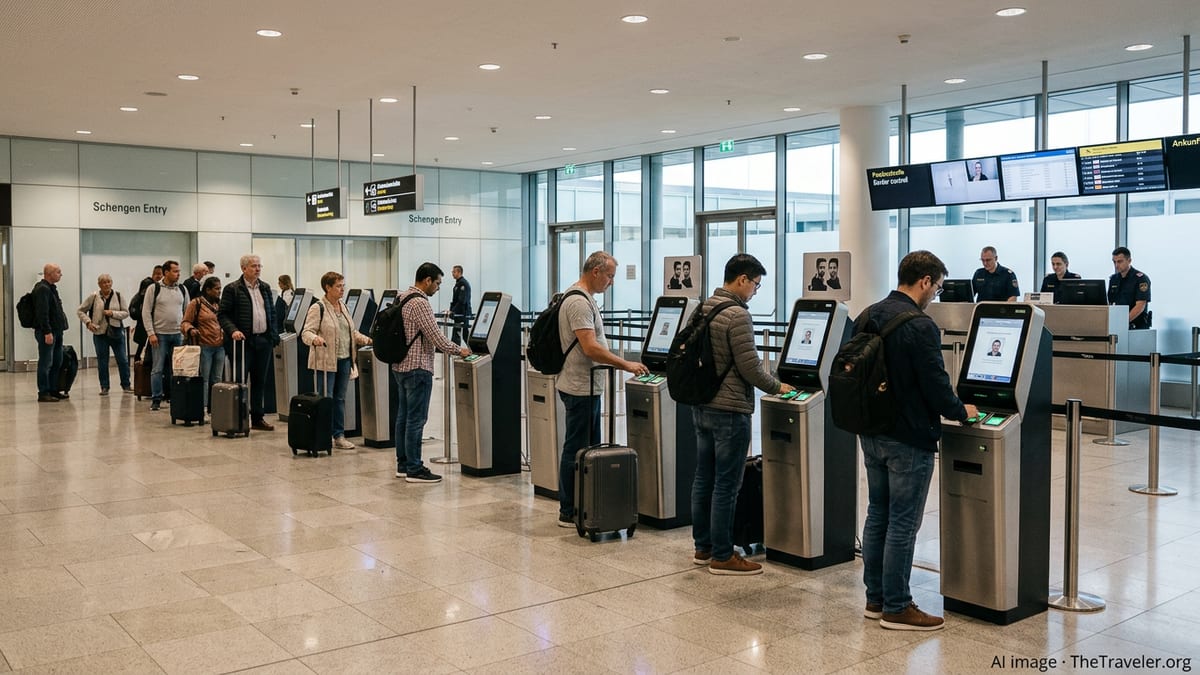
High-Alert Advisory Targets Schengen-Bound Travellers
Recent travel updates from Heathrow Airport highlight a sustained period of strain on flights heading from the United Kingdom into the Schengen zone, as carriers and airports adapt to impending digital border checks for non-EU nationals. The advisory draws attention to the risk of extended processing times at immigration for passengers whose journeys originate in the UK and connect onward to destinations such as Brussels, Stockholm, Prague, Budapest, Reykjavik, Madrid and Riga.
Heathrow’s warning reflects growing concern that the combination of peak-season traffic and the phased rollout of new European border technology could result in bottlenecks at already busy passport control points. Publicly available information about passenger flows shows that some continental hubs have experienced multi-hour waits during earlier, smaller-scale deployments of upgraded control systems, prompting pre-emptive messaging from airports and airlines about the need for additional time.
The advisory is particularly relevant to travellers from visa-exempt countries such as the United States, Canada and the United Kingdom, who are accustomed to relatively quick processing on arrival in Europe. Reports indicate that while existing e-gates and manual booths will remain in operation, new biometric capture and database checks are expected to slow first-time entries under the updated regime.
Travel industry briefings suggest that passengers using London as a gateway into Europe may be especially exposed if they are booked on tight connections into the Schengen area. Even modest delays on the UK side, combined with lengthier checks on arrival at major hubs, can quickly cascade into missed onward flights or disrupted itineraries.
Schengen Digital Border Overhaul Nears Implementation
The disruption risk is closely tied to the European Union’s broader move toward fully digital external border management. Under the Entry/Exit System, non-EU nationals entering the Schengen area for short stays will have their biometric data and travel details registered in a shared database, replacing the longstanding practice of stamping passports at each crossing.
According to open EU documentation and national data-protection guidance, the new system will apply across nearly all Schengen states, including Belgium, Sweden, the Czech Republic, Hungary, Iceland, Spain and Latvia, as well as other EU and associated countries participating in the common travel area. These states are preparing local infrastructure at airports, ports and land crossings to accommodate biometric kiosks and upgraded inspection booths.
Publicly available guidance explains that the digital Entry/Exit System is designed to tighten monitoring of overstays and strengthen security screening, while eventually supporting the separate European Travel Information and Authorisation System, or ETIAS. That scheme will require travellers from many visa-exempt countries to obtain electronic approval before departure, adding another pre-travel step once it enters into force.
Industry analyses note that officials expect the new systems to speed up border crossings over the long term, especially for repeat travellers whose data are already registered. In the near term, however, airports across the Schengen area are preparing for the opposite effect as passengers and staff adjust to new procedures, creating the conditions that underpin Heathrow’s high-alert messaging.
Belgium and Other Schengen States Brace for Congestion
Belgium’s inclusion alongside Sweden, the Czech Republic, Hungary, Iceland, Spain and Latvia underscores how widely the new digital border regime will apply once fully operational. Reference material on Schengen participation lists these countries among the core members of the passport-free travel area, meaning they share common external border rules while maintaining individual control over their own entry points.
At Brussels Airport and other Belgian gateways, passengers arriving from the UK already pass through non-EU immigration channels, which routinely experience heavier peaks than EU or European Economic Area lines. Traveller reports from recent months describe crowded non-EU queues at busy times, even before the full rollout of new digital systems, suggesting limited spare capacity to absorb additional processing steps without careful planning.
Similar patterns have been reported at other Schengen hubs that serve large volumes of connecting traffic from the UK, North America and the Middle East into continental Europe. Spain’s major airports, Scandinavian hubs serving Sweden and Iceland, and central European gateways in the Czech Republic and Hungary are all preparing to integrate biometric capture into existing flows, with varying degrees of space and staffing available for new equipment.
Operational updates from several European airport operators indicate that infrastructure work is under way to expand border-control zones, add self-service kiosks and reconfigure queues. While these projects are intended to reduce long-term congestion, they can also produce temporary pinch points as construction, testing and phased openings overlap with everyday passenger surges.
What Heathrow-Connecting Passengers Should Expect
For travellers routing through Heathrow on their way to Schengen destinations, the key impact of the advisory is the heightened risk of delays at the first point of entry into the digital border area. Passengers connecting from the UK into Belgium, Spain, Sweden, Iceland, Latvia, the Czech Republic, Hungary or other participating states are likely to complete most new checks on arrival at their initial EU or Schengen hub, even if their final destination lies elsewhere within the zone.
Travel guidance from airlines and global mobility specialists increasingly recommends leaving a wider buffer between flights, particularly for passengers who must clear immigration before boarding a Schengen-internal connection. Suggested measures include avoiding the tightest legal minimum connection times, planning for potential queues at self-service kiosks and manual inspection booths, and ensuring that passports are in good condition for biometric scanning.
Published analyses of the EU’s digital border plans also highlight that first-time entrants under the new system can expect the longest processing times, as their biometric and personal data need to be captured and verified from scratch. Subsequent trips should be faster, but only once the system is fully bedded in and staff are accustomed to handling exceptions such as failed scans or data mismatches.
Heathrow’s warning effectively signals that connecting passengers should treat any journey into the Schengen area over the coming implementation period as potentially subject to additional delay. Those with time-sensitive commitments on arrival, such as onward rail connections or scheduled events, may wish to build extra margin into their itineraries.
Airlines and Airports Race to Adjust Ahead of Peak Seasons
The timing of Heathrow’s heightened advisory coincides with a broader push across the aviation industry to prepare for the European border transition before future peak travel seasons. Airlines selling itineraries into Schengen gateways are reassessing standard connection times, while airports are reviewing staffing levels at border-control points and revising passenger-flow forecasts.
Industry briefings distributed to travel-management companies stress that the impact will not be uniform across all airports. Facilities with more generous terminal space, higher proportions of EU or Schengen-resident passengers, or more advanced e-gate installations may be better positioned to absorb the extra steps. Others, particularly those already operating near capacity during busy periods, could see more frequent and longer queues.
Travel commentators note that, for now, the main certainty is uncertainty. While the digital border systems are expected to be switched on across a set list of Schengen and associated countries, the real-world experience for passengers will vary according to local implementation, staffing, technical performance and seasonal traffic volumes. Heathrow’s decision to issue an explicit high-alert style warning reflects an industry-wide effort to set expectations early, rather than risk widespread surprise when queues materialise.
As Belgium joins Sweden, the Czech Republic, Hungary, Iceland, Spain, Latvia and other Schengen participants in preparing for the new digital border architecture, passengers connecting through London are being urged to stay alert to changing entry rules, allow more time than usual, and monitor airline and airport communications closely in the weeks and months ahead.