


The Garden State Parkway is one of those roads that can lull you into a sense of calm before snapping you back to reality in an instant. On my most recent northbound run, I went from a relaxed cruise past salt marshes and service areas named for New Jersey legends to a dead stop outside the Driscoll Bridge, watching taillights stack up to the horizon. It was the kind of trip that reminds you how quickly conditions can change on one of the busiest corridors in the Northeast, and why a little preparation and a lot of patience matter when you set your wheels on this highway.
Get the latest updates straight to your inbox!
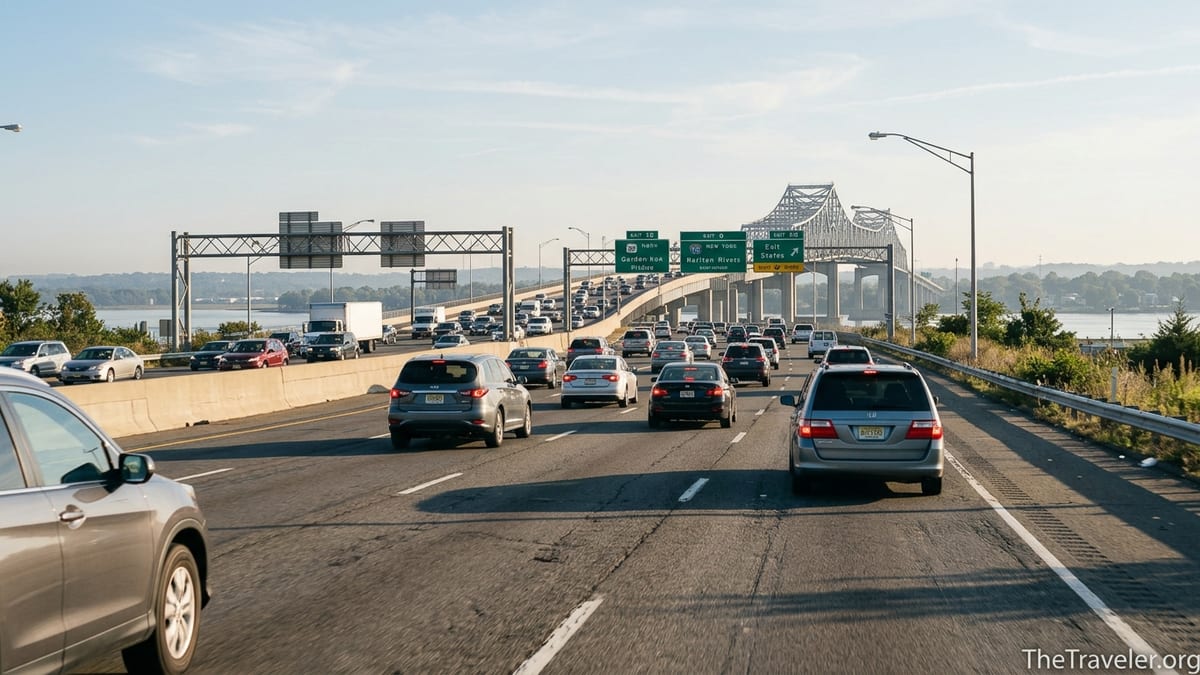
Slipping Onto the Parkway on a Perfect Morning
I joined the Garden State Parkway near Exit 63, close to Manahawkin, early on a clear Saturday in late spring. The sky had that pale blue you only see before the day heats up, and traffic looked reassuringly light. As I passed the marshes feeding into Barnegat Bay, the northbound lanes felt almost uncharacteristically open, a four lane ribbon of asphalt that made it easy to set the cruise control a shade below the posted limit and relax.
This stretch of the Parkway can be deceptively peaceful. You move past family SUVs loaded with coolers heading home from Long Beach Island, construction pickups from Ocean County towns, and the occasional New York plate clearly aiming for a weekend at the shore. The hum of the tires blends with the view of low pines and billboards advertising beach motels and diners. It is the side of the Parkway that convinces you this road really was designed as a parkway, meant for scenic driving instead of sprinting from one obligation to the next.
Traffic data from the New Jersey Turnpike Authority shows that while overall toll transactions on the Parkway remain high, volumes ebb and flow by corridor and season. Early morning south of the Driscoll Bridge often buys you an hour or two of relative quiet before the day’s beach traffic builds toward midday. On this particular morning, it felt like I had threaded that needle perfectly.
By the time the odometer ticked near milepost 76, the Celia Cruz Service Area, still often called Forked River by longtime locals, appeared on the horizon. The sun was high enough that the parking lot shimmered with heat already, but the flows on and off the ramps were still smooth, a good sign for what I hoped would be an uneventful run toward North Jersey.
Service Areas Named for New Jersey Icons
One of the charms of driving the Garden State Parkway today is how its service areas double as a roll call of New Jersey Hall of Fame inductees. The Forked River Service Area, officially renamed for salsa legend Celia Cruz, is typical of the modern plazas along the road. Inside you will find national fast food brands, coffee counters, convenience shelves, and restrooms that, while not glamorous, are usually clean and heavily used by families refueling between exit ramps.
Farther north, the Cheesequake Service Area in Middlesex County carries the name of rock star Jon Bon Jovi. For a lot of drivers, it is the unofficial halfway mark between the lower Shore and the northern suburbs, and the parking lot proves it on summer weekends. Minivans from Bergen County line up for gas, and beach chairs stick out of open trunks as parents negotiate ice cream for the kids and caffeine for themselves before pushing on through the inevitable choke points ahead.
Continue past the Raritan River and the Parkway’s Bergen County stretch brings you to the Montvale plaza near milepost 171, renamed the James Gandolfini Service Area in honor of the late actor associated with The Sopranos. Regular commuters know the Dunkin lines there as well as they know the traffic patterns around Exit 172. Although each plaza offers slightly different food options, the essentials remain the same: fuel pumps, restrooms, basic groceries, and a moment to reset before rejoining a flow of traffic that can change quickly with a single fender bender or lane closure miles ahead.
On my drive, I skipped Forked River and Cheesequake, relying on a full tank and a travel mug of coffee. That decision would matter later, as a planned quick stop in North Jersey evaporated into a long wait in stationary traffic, reminding me why an early restroom break at a service area can save a lot of stress when the Parkway stops being cooperative.
From Free Flow to Slow Crawl Near the Driscoll Bridge
The first hint that my smooth run was about to change came somewhere around the approach to Exit 98 for Belmar and Route 34. The wide open gaps between cars had shrunk to a more typical three second following distance, and overhead message signs began flashing “Congestion Ahead” in plain orange text. This is a region where northbound beach traffic from Monmouth and Ocean counties converges, and the Parkway’s multiple lanes funnel ever more vehicles toward the Raritan Bay.
By the time I passed the Monmouth Service Area, named for author Judy Blume, the tempo of the drive had shifted completely. Brake lights began to sparkle like a continuous red ribbon in front of me as we closed in on the Driscoll Bridge, the massive span that carries the Parkway over the Raritan River between Sayreville and Woodbridge. On summer weekends and holiday eves, this bridge is a notorious pinch point. Even minor incidents or a disabled vehicle on the shoulder can amplify the natural bottleneck into miles of stop and go traffic.
On this particular day, a combination of late morning shore departures and routine lane work north of the bridge created the perfect recipe for congestion. What had been a steady 65 mile per hour cruise dropped to 35, then 15, and then to a standstill as the northbound lanes pinched tight. Signs warned of “Left Lane Closed Ahead,” and traffic from the inner and outer roadway sections began a complicated dance of merging that brought out the full range of driver behavior, from courteous zipper merges to aggressive lane dives at the last second.
Watching the clock on the dashboard, I saw an extra fifteen minutes added to my estimated arrival in a matter of miles. This is the reality of driving a road that can carry hundreds of thousands of vehicles on the busiest days. The smooth parkway of the southern stretches gives way to a heavily engineered urban corridor where bridges, interchanges, and work zones limit how fast traffic can clear, regardless of how impatient drivers might be.
Real-Time Traffic Tools and Local Knowledge
Once traffic slowed to a crawl approaching the Driscoll Bridge, my phone lit up with notifications from navigation apps warning of delays. Services like Google Maps, Apple Maps, and Waze tend to flag Garden State Parkway backups early, especially near notorious choke points such as the Driscoll Bridge, the Union toll plaza area, and the merge zones near the New Jersey Turnpike connections. On days when traffic is expected to spike, the New Jersey Turnpike Authority also posts active alerts, including lane closures and major incidents, which can help drivers decide whether to stick with the Parkway or divert to parallel routes.
In my case, the apps offered a few alternatives. One option suggested exiting around 98 and threading local roads toward Route 18 and ultimately the Turnpike. Another recommended bailing out near 123, cutting across to Route 9, and reconnecting later. Both promised to save nine to fifteen minutes, but only with the caveat that local traffic remained light. Anyone familiar with New Jersey knows how quickly Route 9 or Route 1 can seize up once too many Parkway refugees make the same decision.
This is where local knowledge matters almost as much as real time data. Regulars who commute from towns like Toms River, Brick, or Old Bridge often maintain mental maps of back roads, park and ride lots, and unofficial “escape valves” that are not obvious to a casual visitor. They know that on Friday afternoons in summer it might be smarter to leave early, accept a slightly longer but more predictable route on the New Jersey Turnpike, or even plan a meal break at a service area just before a known bottleneck to let the worst of the surge pass.
On that day, I chose to stay on the Parkway, trading theoretical savings for the certainty of remaining on a fully controlled access highway. The delay turned into almost forty minutes by the time we cleared the bridge and passed the cluster of exits between Woodbridge and Clark. It was not the most efficient choice, but it was predictable, and sometimes predictability is as important as speed when you are balancing fuel, fatigue, and the patience of any passengers sharing the ride.
How Quickly Driver Behavior Shifts in Heavy Traffic
As the drive transformed from a smooth cruise into congested stop and go, what struck me most was how quickly the personality of the road changed. In the open stretches near the Shore, drivers seemed content to hold steady speeds, maintain safe following distances, and drift between lanes only when necessary. Once the congestion set in near the Driscoll Bridge, the atmosphere hardened. A few impatient drivers darted between lanes hunting for microscopic advantages, while others clung stubbornly to a chosen lane, ignoring zipper merge etiquette and forcing abrupt braking behind them.
This shift is not unique to the Garden State Parkway, but the Parkway amplifies it because of its design. Limited shoulders in some sections, frequent entrances and exits, and the separation of car and truck traffic south of certain interchanges all shape how drivers respond when space tightens. When a left lane closure is posted, for example, there is always a faction that moves over early and another that rides the soon to be closed lane to the last possible moment. The merge area then becomes a negotiation, sometimes polite, sometimes aggressive, that can either keep traffic flowing or lead to sudden snarls.
On my trip, I saw a classic sequence play out. A line of brake lights rippled backward when a driver ahead of me cut across two lanes to reach an exit ramp at the last second, startling the cars behind them. Horns followed, and the average speed in our lane dropped ten miles per hour for a full minute as everyone reset their spacing. It was a real time illustration of how a single decision, made in a split second, can multiply into a small shockwave, extending the delay for dozens of unseen drivers behind.
For travelers, recognizing these dynamics is more than an academic exercise. Staying calm, signaling early, and resisting the urge to make sudden moves can be the difference between gliding through a tightening corridor and contributing to a chain reaction of braking that turns a minor slowdown into a full stop. On high volume roads like the Garden State Parkway, courtesy and predictability are not just social niceties. They are tools for keeping the entire system moving.
Practical Tips for Navigating the Parkway When Traffic Hits
The lesson from this drive is not that you can avoid traffic on the Garden State Parkway altogether. What you can do is reduce how much that traffic disrupts your plans. Start by checking conditions before you pull onto the ramps. The New Jersey Turnpike Authority posts traffic alerts, and most navigation apps now incorporate historical data that can warn you, for example, that late Sunday afternoons in July between Exits 80 and 130 are likely to be slow because of outbound beach traffic.
Planning your stops matters too. If you know you will be passing the Monmouth or Cheesequake service areas close to midday on a summer Saturday, consider building in an intentional rest break there. Grabbing a meal, stretching your legs, and topping off your tank before you enter known choke points like the Driscoll Bridge or the approach to the Bergen County exits can turn what might have been stressful time spent trapped in a car into a more relaxed, predictable pause.
In the car, simple habits can keep delays from feeling worse than they are. Keep a realistic buffer of fuel, avoiding the temptation to run the tank down to the last few miles before stopping. Pack water and light snacks so that an unplanned forty minute crawl does not turn into a grumpy ordeal, especially with children in the back seat. If you travel with pets, assume you may not reach the next planned exit on time and plan pet breaks around service areas with green space and safe walking routes.
Finally, maintain a flexible mindset. On my drive, that meant accepting that my schedule would slip by close to an hour once the congestion around the Driscoll Bridge and the thick band of traffic in Union and Essex counties became unavoidable. For another traveler, it might mean choosing a different departure time, perhaps leaving the Shore after dinner instead of at midday, or returning home early on a Monday morning instead of joining the Sunday rush. The Parkway rewards those who respect its patterns, even if those patterns are not always obvious at first glance.
The Takeaway
My latest run up the Garden State Parkway began as the kind of drive every traveler hopes for: light traffic, clear weather, and a quiet lane stretching ahead through the pines. It ended with a familiar scene: taillights glowing in the midday sun, message signs warning of congestion, and a slow, patient march across the Driscoll Bridge toward the denser web of North Jersey interchanges. The shift from ease to gridlock happened over the course of just a few exits, a reminder of how fragile free flowing traffic can be on such a heavily used route.
Yet the experience did not turn the trip into a failure. It turned it into a lesson. Service areas named for New Jersey icons provided natural checkpoints and safety nets. Real time navigation data, even when I chose not to act on it, framed my expectations and made the delay less mysterious. Most of all, accepting that the Parkway’s character changes from open coastal corridor to urban artery allowed me to approach the slowdown as an expected phase of the journey rather than an unfair surprise.
If you are planning your own drive on the Garden State Parkway, recognize that a smooth start does not guarantee a smooth finish. Study the likely problem spots, plan your stops with a bit of strategy, and pack the patience you will need if traffic changes everything a few miles before your exit. The Parkway remains a vital and often beautiful route through New Jersey, but it demands respect, preparation, and flexibility from every traveler who joins its flow.
FAQ
Q1. When is traffic heaviest on the Garden State Parkway?
Traffic is typically heaviest on summer weekends, especially Friday afternoons heading south toward the Shore and Sunday afternoons and evenings heading north.
Q2. Which spots on the Parkway are most likely to back up?
Common choke points include the approaches to the Driscoll Bridge over the Raritan River, the area near the Union toll plaza, and busy beach exits in Monmouth and Ocean counties.
Q3. Are the Garden State Parkway service areas open 24 hours?
Fuel stations and restrooms at major service areas are generally open 24 hours, while some food vendors keep shorter hours, especially late at night or off season.
Q4. How can I check traffic conditions before I get on the Parkway?
You can use navigation apps with live traffic, local radio traffic reports, and the New Jersey Turnpike Authority’s official traffic alerts for current conditions and incidents.
Q5. Is it better to stay on the Parkway or divert to local roads during a backup?
It depends on the situation. Local roads like Route 9 or Route 1 can also clog, so leaving the Parkway only helps if delays on alternate routes are clearly shorter and manageable.
Q6. What should I do if I get stuck in a long traffic jam with kids in the car?
Keep snacks, water, and entertainment handy, and plan regular rest stops at service areas so children can move around and use restrooms before major bottlenecks.
Q7. Are there specific rules about trucks on the Garden State Parkway?
Yes. Heavy trucks are restricted on certain northern sections, and elsewhere they may be directed to specific lanes, so always follow posted signs and lane markings.
Q8. How much extra time should I plan for on busy travel days?
On peak summer weekends or holiday periods, it is wise to add at least 30 to 60 minutes of buffer time for a long trip, more if you are crossing multiple known choke points.
Q9. Are the service areas good places to wait out bad traffic?
Yes. Service areas offer food, restrooms, and fuel, and taking a short break there can be more relaxing than inching forward in heavy congestion just ahead.
Q10. What is the single best way to reduce stress when driving the Parkway?
Combine realistic timing, advance planning of stops, and a willingness to accept delays when they happen. A flexible mindset often matters more than the exact route you choose.