


Kiwi.com has built a global business on a simple promise: cheaper, smarter routes that mainstream airlines and online travel agencies often cannot see. Its search engine pieces together separate tickets across low-cost and full-service carriers, sometimes shaving hundreds of dollars off a long-haul trip. Yet buried beneath those headline prices are layers of fees, restrictions and practical risks that many travelers only discover when a flight is delayed, a bag goes missing or a refund does not arrive. Understanding how Kiwi.com works, and where the pitfalls lie, is essential before you trust it with a complex itinerary.
Get the latest updates straight to your inbox!
How Kiwi.com Actually Works Behind the Cheap Prices
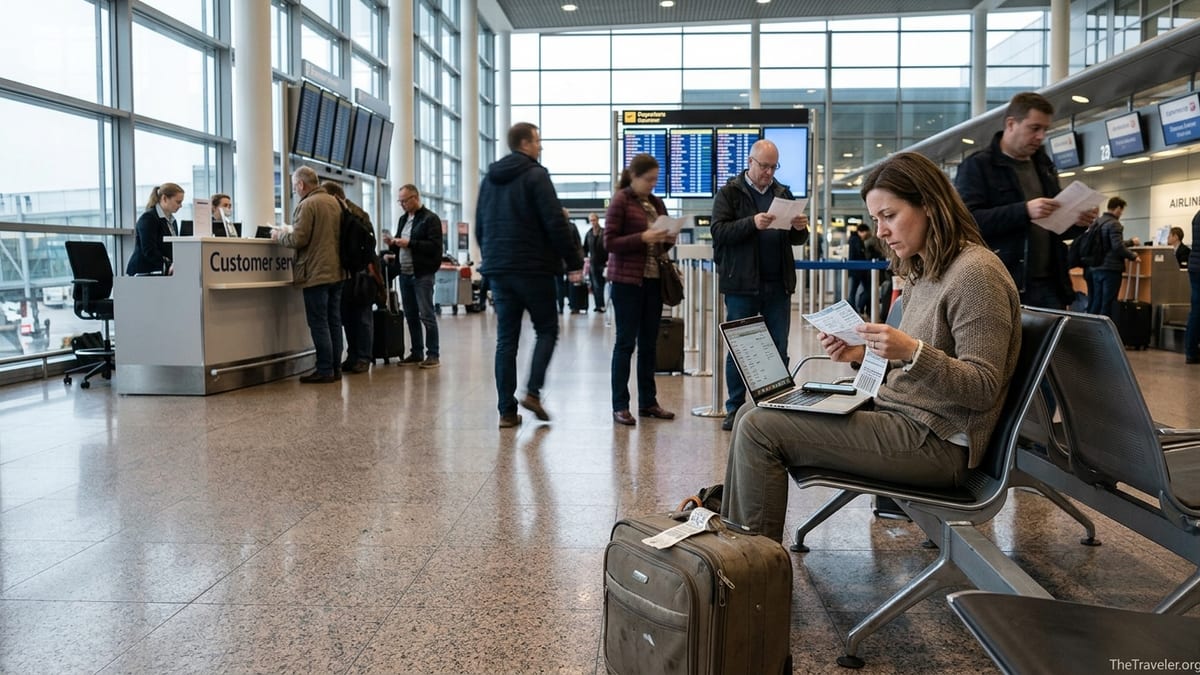
Kiwi.com is not an airline. It is an online travel agency based in the Czech Republic that specializes in what it calls virtual interlining. Instead of selling you a single through-ticket on, say, Lufthansa from New York to Athens, it might stitch together a New York to London leg on a low-cost carrier, followed by a separate London to Athens ticket on another airline. On the Kiwi.com website and app, this appears as one itinerary, but in reality you hold separate contracts with each airline. That distinction is crucial when something goes wrong.
On standard airline itineraries with a proper connection, all segments sit on one ticket. If your first flight is delayed and you misconnect, the airline that issued the ticket is generally responsible for rebooking you to your destination at no extra fare. With a virtual interline sold through Kiwi.com, each segment is a stand-alone booking. If your first leg is late and you miss the second, the second airline can treat you as a no-show. Many disappointed Kiwi.com customers report only discovering this at the airport when a check-in agent explains that they have no obligation to help.
Kiwi.com itself acknowledges these risks in its own material on self-connecting flights. The company’s magazine explains that you must often collect your checked luggage, clear immigration, and check in again, and that delays can leave you responsible for buying a new ticket if you do not have extra protection. That reality sits in stark contrast to the seamless, single-itinerary impression many travelers get when they see a cheap, multi-leg route presented in one price box on a search results page.
This model is not inherently illegitimate. In theory, informed travelers willing to accept extra risk can save money by piecing together their own tickets. The problem arises when the interface and marketing gloss over those risks, and when critical protections, such as Kiwi.com’s own Guarantee, are locked behind optional fees and strict conditions that most people do not read in detail.
Self-Transfer Connections: Tight Layovers and Missed Flights
Among the most common complaints about Kiwi.com are missed connections caused by tight self-transfer windows that would be considered high-risk even for seasoned travelers. On consumer forums, you can find examples such as a Manchester to Podgorica journey sold with only about 50 minutes to connect in Krakow on separate Ryanair tickets. That is barely enough time to disembark, navigate the terminal, clear passport control if applicable, and line up again at security, let alone collect and re-check any baggage.
Because these are not protected connections under a single airline ticket, a 30-minute delay on the first leg can cascade into a complete collapse of the itinerary. Travelers report arriving at the transfer airport to find their onward flight closed, only to be told by the second airline that they are classified as no-shows and must purchase a new ticket at day-of-departure prices. A one-way fare that originally looked like a 200-dollar bargain can quickly balloon into 600 dollars or more once last-minute rebooking costs and an unplanned hotel night are added.
Kiwi.com argues that it uses technology to calculate “low risk” transfer times and that its Guarantee is designed to protect customers from many disruptions. Yet real-world experiences suggest that what Kiwi considers acceptable can still feel extremely tight, especially when you factor in busy airports, long security lines and the extra steps involved in self-transfer. The company’s own content notes that self-connecting is riskier when you do not have generous layovers, checked luggage adds complexity, or you are unfamiliar with the airport. Many itineraries visible on major flight search engines through Kiwi.com arguably ignore that advice.
For a practical benchmark, experienced frequent flyers often aim for at least two to three hours on a normal protected connection involving checked bags, and more if a terminal or airport change is required. With Kiwi-style self-transfers you may need even longer, because you are effectively starting a new trip at each stop. A connection that looks reasonable on paper can become unrealistic once you factor in the need to queue for immigration, baggage belts, airline check-in counters and security a second time.
Ancillary Services, Baggage and Seat Fees That Add Up Fast
Headline prices on Kiwi.com are typically bare-bones. Like many online travel agencies, Kiwi keeps the initial fare low to win the click, then offers a series of optional add-ons during checkout. Some are airline services, such as checked baggage or seat selection, while others are Kiwi-branded products like service packages and Guarantees. In practice, it can be difficult for travelers to distinguish which fees are mandatory for their situation and which can safely be declined.
One area that repeatedly causes confusion is baggage. Kiwi.com’s terms describe so-called No-Checked-Bag itineraries where it may not be possible to add checked luggage through Kiwi at all, and warn customers not to add bags directly with the airline in some cases. At the same time, many airlines rely heavily on baggage fees for revenue, and a cheap Kiwi fare that includes only a small personal item can become considerably more expensive once you pay for cabin bags and checked suitcases on each separate ticket. Passengers have reported paying Kiwi for baggage, only to find that the airline has no record of the purchase and demands payment again at the airport.
Seat selection is another friction point. A traveler might accept a Kiwi upsell for preferred seats on a long-haul leg, imagining a specific row or extra legroom, only to discover that the underlying airline has assigned them at random or placed them apart from their companions. Because Kiwi.com acts as an intermediary, sorting out who is responsible can be time-consuming. Some airlines will only deal with the agency that made the booking, leaving customers stuck in a loop between Kiwi support and the carrier’s front-line staff.
Even when the add-ons work exactly as advertised, they can erode the value of the deal. For example, imagine a 350-dollar multi-stop itinerary from Chicago to Barcelona on Kiwi.com that undercuts a 480-dollar one-stop ticket sold directly by a major airline. Once you add one checked bag on each of three separate tickets, plus basic seat selection for a family trying to sit together, the Kiwi route can easily surpass the price of the simpler, protected itinerary. Many travelers only see this clearly when standing at a check-in desk being told that an extra bag will cost another 60 or 80 dollars per segment.
The Kiwi.com Guarantee: Protection With Strict Fine Print
The centerpiece of Kiwi.com’s risk management pitch is the Kiwi.com Guarantee, which it describes as extra protection in case of disruptions for at least a portion of bookings. The Guarantee is offered in several flavors, such as Standard, Flexi and bundled “Benefits” tiers, each with different rules about when and how you can change or cancel. Recent versions of Kiwi’s terms of service, updated for 2026, spell out these conditions in dense legal language that many customers never read until after they encounter a problem.
In broad terms, the Guarantee is designed to substitute Kiwi’s own rebooking and refund promises for the protection you would normally enjoy when all your flights sit on a single airline ticket. If a carrier cancels or significantly changes a leg, Kiwi may offer to rebook you, provide alternative transportation, or refund a portion of the ticket price. However, the conditions matter. For some Flexi cancellations, Kiwi keeps around 20 percent of the carrier’s ticket price as a fee for its service. In other scenarios, reports from travelers suggest that Kiwi has offered only minimal refunds when itineraries became impossible due to schedule changes.
Concrete examples are easy to find in online discussions. One traveler who paid extra for Kiwi’s protection reported that when their Madrid to Bogota leg changed in a way that made the self-transfer impossible, Kiwi treated the situation as a routine cancellation and initially offered only about ten percent of the original cost as a refund. Another complained that when an airline canceled a flight outright, Kiwi retained roughly a quarter of the total payment as fees when processing the refund rather than passing back the full amount that the airline itself would have returned if booked directly.
It is also important to understand that the Guarantee is not automatically included on every ticket. Some of the cheapest “Saver” fares on Kiwi.com come with limited or no unique cancellation and disruption benefits beyond what airlines provide, and may rely entirely on standard carrier refunds and your own travel insurance. To add more protection, travelers are prompted to upgrade to Flexi-style or Benefits packages at extra cost, often while navigating a complex matrix of options that can feel more like buying insurance than simply reserving a seat on a plane.
Customer Service Tiers and the Cost of Getting Help
Inexpensive fares and complex itineraries inevitably generate customer service demands, especially when disruptions and refunds are involved. Kiwi.com has attracted criticism for introducing what amounts to tiered access to support. Reports in international media have highlighted that customers who pay extra for premium service receive faster phone assistance and more channels of contact, while those on basic bookings may face long waits and limited options for speaking with a human agent.
This structure can create a hidden cost of its own. Saving 40 or 50 dollars on a ticket is of little comfort if you spend hours in an overseas airport queue while a chat bot loops you through scripted options. Travelers on forums describe situations where a flight was showing as canceled in Kiwi’s app, even as the airline’s own website still displayed it as operating, leaving them unsure whether to proceed to the airport. In some cases customers were told by airline agents that their best option was to contact Kiwi, only to find Kiwi saying that they were waiting for confirmation from the carrier before taking action.
In one widely discussed scenario, a traveler discovered at check-in that an airline could not find their reservation number, even though Kiwi.com had shown the flights as confirmed. After an anxious call and back-and-forth between the airline and Kiwi via the traveler’s phone, the ticket was finally issued and they boarded at the last minute. The journey was ultimately completed, but the stress underlined how dependent Kiwi customers can become on responsive support, especially when something in the chain of communications breaks down.
When you combine self-transfer itineraries, optional Guarantees, and a reliance on an intermediary to deal with airlines, the quality and speed of support becomes more than a convenience. In practice it can determine whether you get home the same day or spend an unplanned night in an airport hotel at your own expense. Before accepting the cheapest Kiwi fare, consider the value of having a direct relationship with the airline, where you can walk up to a ticket desk or call an established customer service center without an extra layer in the middle.
Refunds, Schedule Changes and Who Holds Your Money
Another recurring theme in Kiwi.com complaints involves refunds when airlines cancel or significantly reschedule flights. When you book directly with a carrier and they cancel a service, you usually have a clear line of recourse to vouchers or cash refunds, depending on jurisdiction and fare rules. When you book through Kiwi.com, the money for your ticket first flows to the agency, which then pays the airline. In disruption scenarios, the airline typically returns funds to Kiwi, and Kiwi in turn processes whatever refund it believes applies under its own terms.
Real-world examples show how this can create friction. Travelers describe situations where an airline confirmed that it had refunded the full ticket amount to Kiwi weeks earlier, while Kiwi’s support team maintained that it was still “waiting for the airline” or that only a partial refund was possible. In some of the more frustrating reports, customers eventually confirmed with the carrier that the full fare had been returned, but Kiwi’s own calculation of service fees and Guarantee conditions meant that only a fraction was passed back to the traveler.
The complexity multiplies on itineraries that involve three or four separate airlines. If one carrier makes a minor schedule change that breaks the legal minimum connection time, the entire route can become unworkable. In a point-to-point booking world, you might simply accept a slightly earlier or later flight, or cancel that leg. With Kiwi.com, a small shift on one segment can force a complete reconfiguration of the trip. Some customers have reported being offered only limited alternative options at higher prices, or cash refunds that fall short of what they expected given the scale of the disruption.
There is nothing inherently improper about an intermediary charging service fees to handle multi-airline bookings and complex refund processes. The risk for travelers lies in not realizing how much power Kiwi.com holds over the flow of funds, and how tightly the outcome is governed by Kiwi’s own terms rather than airline policies or consumer protection regulations that might apply if you had booked directly. When a middleman keeps a significant cut after an airline cancellation, the theoretical savings of that clever multi-stop itinerary disappear.
Real-World Booking Scenarios: When Kiwi.com Makes Sense and When It Does Not
Not every Kiwi.com booking is a horror story. Many travelers use the platform successfully to reach secondary airports or assemble unusual routes that traditional carriers rarely offer on one ticket. For example, a backpacker planning a multi-city swing from Lisbon to Marrakech to Naples might legitimately save money and time by combining several low-cost airlines on separate tickets. In such a case, the traveler knows they will be traveling light, with no checked bags, and may be comfortable staying overnight in a hub if something goes wrong.
Problems escalate when people use Kiwi.com to book long, intricate itineraries with short self-transfers, multiple checked bags, and non-flexible commitments at the destination. Consider a family of four flying from Los Angeles to a small city in Southeast Asia, piecing together three airlines on a Kiwi virtual interline to save 250 dollars over a more conventional two-stop route sold by a major carrier. If a single delay leads to a missed connection in the Middle East, they could face overnight accommodation costs, new tickets at peak-season prices, and the risk of missing a cruise departure or wedding. The modest upfront saving looks far less attractive in that light.
Kiwi.com can sometimes be a useful research tool rather than the final booking channel. When you see an intriguing route, you can often replicate something similar by booking the underlying airlines directly, especially if you are willing to manually recreate the self-transfer structure. That way you keep control over your reservations, deal directly with carriers for changes and refunds, and avoid some of the compounded fees that emerge when Kiwi acts as intermediary. Several experienced travelers advise using Kiwi to discover what is theoretically possible, then purchasing tickets either from the airlines themselves or from more traditional online travel agencies with straightforward support policies.
Ultimately, the question is not whether Kiwi.com is “legit” in the sense of being a real company, but whether its business model aligns with your risk tolerance. For high-stakes trips, tight work schedules, family travel, or any situation where a missed flight creates serious consequences, the extra uncertainty and potential hidden costs can outweigh the benefit of a cheaper headline fare.
The Takeaway
Kiwi.com’s promise of surfacing hidden routes and discounted combinations taps into a real desire among travelers to beat the system and fly for less. The company’s virtual interlining technology and aggressive pricing can indeed produce impressive-looking deals, particularly on obscure routes or between low-cost carriers that do not traditionally connect. However, these advantages come bundled with a web of risks that are easy to underestimate, especially when presented through sleek mobile apps and simplified booking flows.
The hidden costs fall into two broad categories. First are the explicit fees: service charges, Guarantee premiums, baggage and seat add-ons, and refund deductions that can quietly erode the value of a cheap fare. Second are the implicit risks: unprotected self-transfers with tight layovers, fragmented customer service responsibilities, and a refund process where Kiwi, not the airline, often controls how and when your money comes back. When disruptions occur, these elements interact in ways that can leave customers paying far more than they expected or stranded without clear support.
For some travelers, particularly those who pack light, build generous layovers and treat disruptions as part of the adventure, Kiwi.com can still be a useful tool. For others, especially families, infrequent fliers and anyone on a tight schedule, booking directly with airlines or established agencies that sell protected connections is often the safer and ultimately more economical choice. The key is to understand what you are buying: separate tickets stitched together by an intermediary, governed by that intermediary’s terms. Go in with eyes open, read the fine print, and always compare the total cost and risk, not just the first price you see on the screen.
FAQ
Q1. Is Kiwi.com a scam or a legitimate travel agency?
Kiwi.com is a legitimate online travel agency based in Europe, but its virtual interlining model and fee structure create risks and frustrations that can feel like a scam to travelers who do not understand how it works.
Q2. Why are flights on Kiwi.com sometimes much cheaper than on airline websites?
Kiwi.com often combines separate tickets across different airlines, including low-cost carriers, into one itinerary. This can undercut traditional through-tickets, but you lose standard protections if something goes wrong.
Q3. What exactly is a self-transfer on Kiwi.com?
A self-transfer means each flight segment is on its own ticket. You may need to collect and re-check bags, clear security and immigration again, and if one leg is delayed, the next airline has no obligation to rebook you for free.
Q4. How does the Kiwi.com Guarantee work, and is it worth buying?
The Kiwi.com Guarantee is an extra layer of disruption protection that may cover rebooking or partial refunds when flights change or are canceled. It can help in some cases, but it costs extra and its benefits are tightly defined by Kiwi’s own terms, so it is not a universal safety net.
Q5. Why do some travelers say Kiwi.com kept part of their refund after an airline cancellation?
When you book through Kiwi.com, refunds typically flow from the airline to Kiwi first. Kiwi then applies its own service and Guarantee rules, which can result in only a partial amount being passed back to you, even if the airline refunded the full fare.
Q6. Are baggage and seat fees higher on Kiwi.com than booking directly?
They can be. Kiwi often sells very basic fares and then charges separately for baggage and seats, sometimes as Kiwi-managed services. By the time you add these for each segment, the total can exceed a more inclusive fare booked directly with an airline.
Q7. What are the main risks of using Kiwi.com for long or complex itineraries?
The biggest risks are unprotected self-transfers, tight layovers, complicated multi-airline refunds, and the need to rely on Kiwi’s customer service during disruptions. These factors can lead to extra costs, delays and stress.
Q8. How responsive is Kiwi.com customer support in an emergency?
Experiences vary. Some travelers report timely help, especially if they paid for higher service tiers, while others describe long waits, difficulty reaching a human agent and being bounced between Kiwi and airlines during critical moments.
Q9. When does it make sense to book with Kiwi.com instead of directly with an airline?
Kiwi.com can be useful if you are an experienced traveler, comfortable with self-transfers, traveling without checked bags, and flexible about delays or overnight stops. It is generally less suitable for tight schedules, important events or trips with young children.
Q10. How can I reduce the risks if I decide to book through Kiwi.com?
Build long layovers, avoid checking bags when possible, read Kiwi’s terms and Guarantee conditions carefully, keep independent confirmation from airlines, and consider travel insurance that does not depend on Kiwi’s own policies.