


Kiwi.com has built its reputation on finding clever, often dramatically cheaper flight combinations than you will see on airline websites or even major comparison tools. It does this by stitching together separate tickets, mixing low cost and full service carriers, and routing you through secondary airports. For some travelers, that creativity leads to impressive savings. For many others, it leads to confusion, unexpected costs at the airport, and stressful trips when things go wrong. Understanding how Kiwi.com works, and the mistakes people routinely make when booking through it, is essential if you are going to use the platform safely.
Get the latest updates straight to your inbox!
Not Realizing You Are Booking Separate Tickets, Not Protected Connections
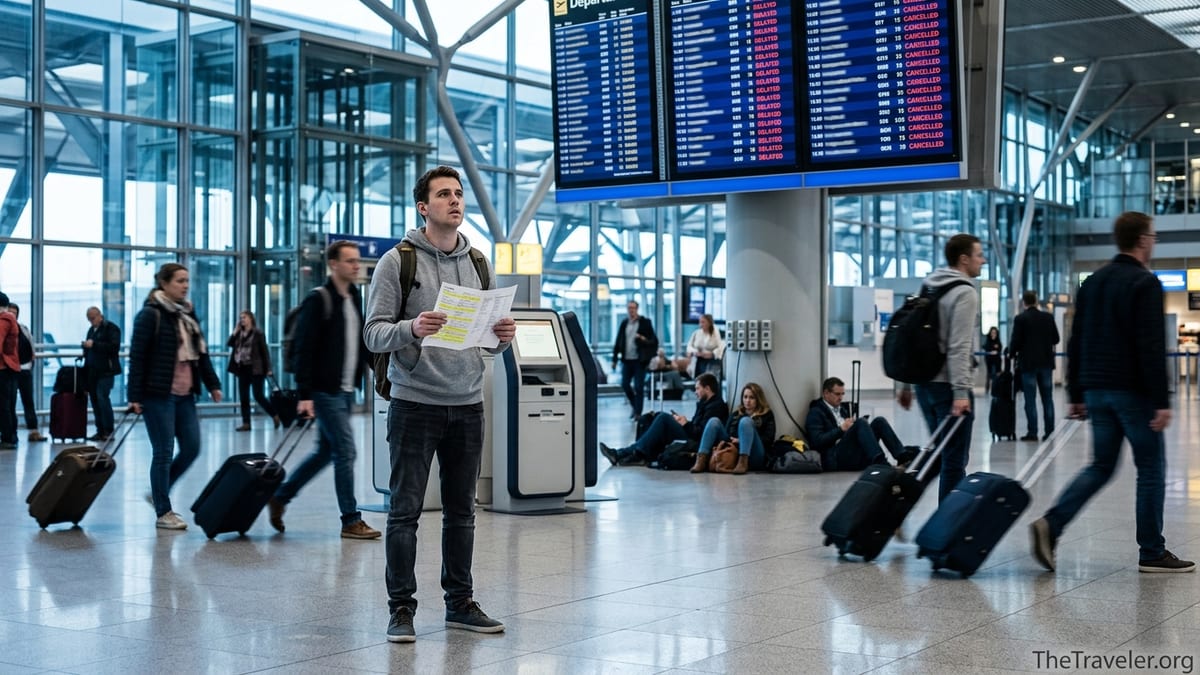
One of the biggest misunderstandings with Kiwi.com is the nature of the itineraries it sells. In many cases, the platform is not selling you a single through-ticket on one airline alliance but a string of separate tickets with different carriers. Kiwi.com markets this as self-transfer or virtual interlining. On screen it may look like a normal connection in Istanbul, Frankfurt, or Kuala Lumpur, but in airline systems those segments are unrelated. If your inbound flight is delayed and you miss the second one, the second airline treats you as a no-show rather than a misconnected passenger.
This difference matters most when something goes wrong. With a single through-ticket bought directly from, say, United or Singapore Airlines, the airline is usually responsible for rebooking you if a delay causes a missed connection. With separate tickets, each airline sees only its own flight. Travelers routinely discover this the hard way when a low cost carrier from Barcelona arrives late in Milan and the onward legacy airline simply tells them to buy a new ticket at last-minute prices. In recent complaints shared on consumer forums in 2025 and 2026, passengers reported having to purchase entirely new one-way tickets costing several hundred euros because Kiwi’s original combination involved unrelated carriers and airports.
The interface adds to the confusion. On Kiwi.com, segments can be presented in a single timeline with one total price, which many casual users interpret as a standard connected itinerary. In reality, you might be holding three different booking references on three unrelated airlines. If you are not already familiar with the concept of self-transfer, it is easy to assume you have the same protections you would get from booking directly with an airline or a full-service travel agent, when in fact you do not.
The safest approach is to treat every Kiwi.com itinerary as a bundle of separate tickets unless you have explicitly confirmed otherwise with the airlines involved. If you are not comfortable absorbing the cost of a brand-new last-minute ticket should one leg fail, a conventional through-ticket is usually the better option, even if the upfront price is higher.
Underestimating Self-Transfer Risks: Short Layovers and Airport Changes
A second common mistake is accepting tight self-transfer times that look acceptable in the app but are wildly optimistic in real life. Kiwi.com’s algorithms sometimes propose 90-minute or even shorter connections that require you to deplane, clear immigration, collect your bags, potentially change terminals or even airports, check in again, and pass security a second time. In 2024 and 2025, multiple travelers reported self-transfer itineraries involving, for example, a late-night arrival on a low cost carrier at London Stansted followed by a very early morning departure on another airline from London Luton, with less than three hours to make the entire airport-to-airport journey.
Even within a single airport, the risk is easy to misjudge. At major hubs like Paris Charles de Gaulle or Istanbul, a 2-hour self-transfer with checked baggage can be risky in normal conditions and disastrous if the inbound flight is even 30 minutes late. Kiwi.com’s own guidance pages mention allowing several hours for such transfers, yet plenty of itineraries sold through the platform in recent years left passengers with far less buffer. Public complaints from 2025 describe situations where a schedule change moved an arrival time by an hour, leaving travelers with barely more than an hour to clear immigration and recheck bags for the next leg.
These risks compound for travelers who need visas or who are not familiar with specific airports. For example, a traveler connecting through the United States on separate tickets may need a transit visa or full admission, even if simply moving from one international flight to another. Travelers who accepted a seemingly simple self-transfer through New York or Los Angeles via Kiwi.com later discovered they had to clear US immigration, collect luggage, and recheck, all while racing the clock. Some missed flights, lost the value of the onward ticket, and then faced walk-up fares several times higher than what Kiwi originally showed.
When evaluating a Kiwi.com itinerary, mentally reconstruct the transfer as if you had booked each segment yourself. Ask whether you would ever voluntarily schedule only 75 or 90 minutes to arrive on a low cost carrier at a busy summer hub, clear immigration and customs, change terminals, and check in again from scratch. If the answer is no, decline that itinerary and look for options with very conservative connection times, often 4 to 6 hours for complex international self-transfers.
Misunderstanding Baggage, Seat, and Ancillary Fees
Many of the most frustrating Kiwi.com stories revolve around baggage and add-on services. Because Kiwi sells itineraries built from multiple airlines, each with their own baggage policies, travelers often assume the allowance shown in Kiwi’s interface applies across the entire journey. In reality, you may have a cabin bag included on one airline, no free cabin bag on the next, and a small checked baggage allowance on a third. Travelers regularly arrive at check-in counters to discover their bag is not included on that particular segment, and airport staff demand an additional fee that is often higher than what the airline would have charged online.
There are many recent examples of this pattern. One passenger in 2025 reported paying around 74 euros for a Milan to Barcelona ticket on Kiwi.com, then adding roughly 50 euros for a 10-kilogram bag. At the airport, the airline had no record of prepaid baggage, leaving the traveler to pay again at a higher counter rate. In other widely shared cases in 2024 and 2026, travelers discovered that seat reservations or extra legroom purchased through Kiwi.com had not been transmitted to the airline, or that the airline’s own fare already included checked baggage while Kiwi.com charged an additional fee that did not appear on the airline’s side.
The same confusion applies to basic cabin baggage. Some low cost carriers now sell the right to bring anything more than a small personal item into the cabin. If your Kiwi.com itinerary pairs such an airline with a full service carrier that includes a standard cabin bag, it is easy to assume you can take the same carry-on suitcase on both segments. Instead, you might be required to pay an extra fee at the gate on the low cost segment because Kiwi’s generic cabin bag icon did not spell out the strict size and weight limits.
The most reliable way to avoid surprise fees is to cross-check every segment on the operating airline’s own website as soon as you receive your Kiwi.com confirmation and individual booking references. Log in or retrieve the booking directly with the carrier, verify baggage allowances for each leg, and purchase any needed extras straight from the airline. If you cannot locate the booking on the airline site at all, that is a red flag that requires immediate clarification with Kiwi.com long before departure day.
Overestimating What Kiwi’s Protection and Guarantees Actually Cover
Kiwi.com promotes various disruption protection options and its proprietary guarantee products, which promise help if flights are delayed, canceled, or rescheduled. Travelers often assume this means Kiwi will automatically provide equivalent replacement flights or immediate refunds in almost any disruption scenario. The reality is more complicated. The specific protections depend on the package you chose at booking and on detailed terms that many people never read. Online complaints from 2023 through 2026 are filled with travelers who purchased Kiwi’s protection, only to find that the replacement flights offered were for the next day, involved extremely long waits at the airport, or required significant out-of-pocket payments that were later only partially reimbursed.
One typical pattern shows up when there is a major schedule change. A traveler buys a multi-leg itinerary with Kiwi protection, only to have an airline cancel one segment weeks before departure. Kiwi may offer Kiwi.com credit or a limited refund instead of a straightforward rebooking on the next available flight, especially if the original fare was unusually low or part of a promotional sale. In some 2024 and 2025 cases, travelers reported that Kiwi kept a service fee of 20 to 30 percent when passing on airline refunds after cancellations, prompting disputes and chargeback attempts.
Another point of friction is what Kiwi defines as a reasonable alternative. There are instances where travelers expected to be rebooked on same-day flights when a disruption occurred, only to be offered an itinerary that arrived a full day later or required an overnight airport stay. In one 2023 case discussed widely among frequent travelers, Kiwi proposed a replacement flight that departed a day later than the original return, essentially cutting into the traveler’s limited vacation time. That technically fulfilled Kiwi’s obligation under its own guarantee, but it was a far cry from the seamless rescue many people imagine when they see marketing phrases such as “travel with confidence.”
Before paying extra for any Kiwi protection bundle, read the current terms and conditions carefully and assume they will be interpreted narrowly. Ask yourself whether you would still be comfortable with the itinerary if Kiwi’s assistance turned out to be limited or slow. In many cases, pairing a Kiwi.com booking with a robust, independent travel insurance policy that explicitly covers missed connections on separate tickets will give you more predictable protection than relying solely on Kiwi’s own guarantees.
Ignoring the Limitations of Customer Service and Refund Handling
Another recurring mistake is assuming that Kiwi.com will be as responsive as a traditional travel agency or as flexible as dealing directly with an airline. Public reviews across several platforms over the last few years highlight a pattern: automated chatbots as the first and often only line of support, long response times for urgent issues, and a complicated path to refunds when airlines cancel flights or make major schedule changes. In 2024, for example, a traveler who had a return flight canceled waited months while the airline processed a refund to Kiwi, only to find that Kiwi retained a significant portion as a service fee before passing on the remainder.
Communication gaps can compound stress in real time. Several travelers in 2025 and 2026 described trying to reach Kiwi.com from airports during cascading disruptions, only to loop through scripts with little ability to speak to a decision-maker. In one case, a family whose self-transfer connection was jeopardized by a one-hour delay received contradictory information from different Kiwi agents about whether they were covered under their protection plan and what replacement flights might be offered. By the time a clear answer arrived, the feasible alternatives had become more expensive or sold out.
These experiences are not universal. Many travelers complete complex trips booked through Kiwi.com without ever needing support, and some recent reviews mention faster handling of simple post-sale changes. But the pattern is consistent: when things go seriously wrong, Kiwi’s position as an intermediary can slow down refunds or rebookings, especially if multiple airlines and ticket types are involved. If you book a bare-bones or saver option, Kiwi may have limited contractual obligations beyond forwarding what the airline eventually pays back, minus its own nonrefundable service fee.
To reduce your exposure, avoid using Kiwi.com for trips that are financially or emotionally critical, such as a once-in-a-lifetime honeymoon or an international journey tied to a fixed event date. If you do book, keep screenshots of all key pages at purchase time, including any promises about protection or fees, and monitor your bookings through both Kiwi and the airlines so that you can react quickly if a schedule change is announced.
Chasing the Lowest Headline Price Without Checking the Full Picture
Kiwi.com’s main attraction is price. It often shows fares that undercut other search engines or the airlines themselves, particularly on complicated itineraries through secondary airports. In recent comparisons published by independent travel sites, Kiwi’s creative self-transfer routes sometimes appeared 15 to 30 percent cheaper than the most straightforward round-trips sold directly by carriers on the same city pairs. This makes it tempting to focus solely on the headline fare and ignore the structural differences in the underlying tickets.
However, multiple real-world cases from 2024 to 2026 show how that savings can evaporate quickly. A traveler sees a Kiwi itinerary from Melbourne to Manila in business class priced several hundred dollars below anything else on the market. It looks too good to be true because it often is: the route might involve overnight self-transfers in unfamiliar airports, minimal baggage allowances, and restrictive fare rules that make any change extremely expensive. If one segment fails, that low fare becomes irrelevant as you purchase a last-minute replacement for a much higher cost.
There are subtler trade-offs as well. Some Kiwi.com deals route you through airports with limited services overnight, such as smaller regional hubs where lounges and restaurants close early. A discounted itinerary connecting in the middle of the night in Kuwait or a secondary European city may save a few hundred dollars but leave you sleeping upright in a brightly lit terminal for eight hours. Others add an extra stop in a country that requires transit visas for certain nationalities, an issue that has blindsided travelers who did not realize their Kiwi itinerary technically involved entering that country.
A more sustainable strategy is to start with Kiwi.com’s cheapest options as a reference point and then cross-check similar routings on airline sites or alternative online travel agencies. If Kiwi is cheaper by a modest margin, consider whether the restrictions and self-transfer structure are acceptable. If the price difference is dramatic, treat that as a signal to scrutinize the routing, baggage rules, and connection times with particular care. In many cases, paying slightly more to book directly with an airline or to secure a proper through-ticket will be the better value once disruptions, comfort, and refund rights are taken into account.
Failing to Double-Check Visas, Entry Rules, and Legal Rights
Because Kiwi.com specializes in unconventional itineraries, it can route you through countries and airports that standard airline search tools rarely use for your origin and destination. That can be a plus for adventurous travelers, but it also creates a legal and administrative trap for those who do not verify transit rules. The platform may show a seemingly simple connection through, say, Istanbul, Doha, or a European Union hub. In reality, your separate tickets might require you to enter the country, pass immigration, and then check in again as a departing passenger, which can trigger visa or entry requirements.
There have been multiple reports of travelers being denied boarding at their first departure point because they did not hold the necessary transit visas or documentation for a self-transfer country on a Kiwi.com itinerary. For example, a traveler with a limited passport might accept an attractive multi-stop routing through the Schengen Area without realizing that leaving the airside zone to collect bags and recheck counts as entering the Schengen border. Airline check-in staff are obligated to verify that you meet all requirements for the entire journey shown on your tickets, and if you do not, you can be refused boarding for the first segment.
Another area where travelers stumble is their rights when flights are canceled or heavily delayed. In Europe, regulations such as EU261 can entitle passengers to compensation and refunds when airlines cancel or significantly disrupt flights departing from or arriving in the European Union on EU carriers. When you book through Kiwi.com, those rights generally still exist, but you may have to pursue them indirectly because the airline recognizes Kiwi, not you, as the contracting party. Several passengers in 2024 and 2025 reported that airlines confirmed they had paid refunds to Kiwi, while Kiwi’s own process to pass those funds on, net of fees, took months.
To protect yourself, use Kiwi.com purely as a search and inspiration tool when dealing with complex border situations or unfamiliar visa regimes. Once you have identified an attractive route, verify visa and entry rules using official government resources and then, where possible, book directly with the airline to minimize intermediaries. If you do proceed with Kiwi, document every communication, save your boarding passes, and familiarize yourself with the applicable passenger rights in the jurisdictions you will be flying through so that you can assert them if disruptions occur.
The Takeaway
Kiwi.com is not inherently unsafe or illegitimate. The company is a substantial player in the online travel market and has millions of completed journeys behind it. Its technology can uncover creative routes and occasional genuine bargains that are difficult to assemble on your own. At the same time, the platform’s reliance on self-transfer itineraries, separate tickets, and complex combinations of airlines and fare types creates a landscape that rewards informed, detail-oriented travelers and punishes those who assume it works like a traditional airline booking.
The most common mistakes travelers make when booking through Kiwi.com are rooted in assumptions: assuming a bundled itinerary is a single protected ticket, assuming baggage rules are consistent across legs, assuming a guarantee will solve any disruption, and assuming customer service will be as flexible and reachable as booking direct. Real-world cases from the last few years show that when these assumptions collide with delays, cancellations, or missing information, the result can be expensive last-minute tickets, long refund battles, and missed trips.
If you decide to use Kiwi.com, approach it with eyes wide open. Treat each leg as a separate ticket that could fail independently, insist on generous self-transfer buffers, cross-check every flight and baggage rule on the operating airline’s website, and consider backing up your booking with independent travel insurance. For simple point-to-point trips or high-stakes journeys, the apparent savings may not justify the additional risk. For others, especially flexible travelers comfortable managing contingencies, Kiwi.com can still be a useful tool as long as its limitations are understood.
FAQ
Q1. Is Kiwi.com a scam or a legitimate booking platform?
Kiwi.com is a legitimate online travel agency based in Europe that has operated for years and partners with many airlines, but its business model relies heavily on self-transfer and separate tickets, which can create problems if travelers assume they are protected like on a traditional through-ticket.
Q2. Why are Kiwi.com flights often cheaper than booking directly with airlines?
Kiwi.com combines separate tickets from multiple airlines, including low cost carriers and secondary airports, to create unconventional routes that are sometimes significantly cheaper than standard round-trips, but these savings usually come with stricter conditions, higher risk during disruptions, and more complicated baggage rules.
Q3. What does self-transfer mean on Kiwi.com, and why is it risky?
Self-transfer means you are traveling on separate, unprotected tickets, so if your first flight is delayed and you miss the second, the second airline can treat you as a no-show and require you to buy a new ticket; you may also need to collect and recheck baggage and clear immigration between flights.
Q4. How can I avoid surprise baggage fees when booking through Kiwi.com?
After booking, use your airline booking references to check each segment on the operating airline’s website, verify the exact baggage allowance, and purchase any bags or seat assignments directly from the airline rather than assuming Kiwi’s summary applies to your whole itinerary.
Q5. Is Kiwi.com’s guarantee or protection plan worth buying?
It can provide some extra help compared with having no protection at all, but coverage is limited by detailed terms and may not always deliver the same-day rebookings or full cash refunds people expect, so you should read the conditions closely and consider additional standalone travel insurance.
Q6. What should I do if my airline cancels a flight that I booked through Kiwi.com?
Monitor both your Kiwi.com account and any messages from the airline, keep all documentation, and contact Kiwi promptly to request the options available under your booking type, understanding that any airline refund is likely to pass through Kiwi first and may be reduced by its service fees.
Q7. Can I change or cancel my Kiwi.com booking if my plans change?
In many cases you can, but change and cancellation conditions depend on the fare type, the airlines involved, and Kiwi’s own service fees, so modifying a booking can be more expensive and complex than when you book directly with a single carrier.
Q8. How long should I allow for a self-transfer connection on a Kiwi.com itinerary?
As a conservative rule, plan at least 2 to 3 hours for domestic self-transfers and 4 to 6 hours for international ones involving immigration and baggage recheck, and avoid itineraries that require changing airports unless you have a very generous time buffer.
Q9. Are there situations where using Kiwi.com makes sense?
Kiwi.com can be useful for flexible travelers who are comfortable managing separate tickets and who value lower prices over simplicity, especially on complex multi-city trips, but it is less suitable for time-sensitive or once-in-a-lifetime journeys where disruption would be very costly.
Q10. What are safer alternatives if I want to avoid these common Kiwi.com problems?
For most travelers, booking directly with airlines, using traditional full-service travel agencies, or using flight search tools as inspiration and then purchasing tickets from the carrier are safer options that usually provide clearer protections, simpler refunds, and more straightforward customer service.