


More news on this day
Across Europe, Asia and North America, governments and investors are racing to expand high-speed rail networks, betting that faster trains can absorb surging travel demand while cutting emissions and reshaping regional economies.
Get the latest news straight to your inbox!
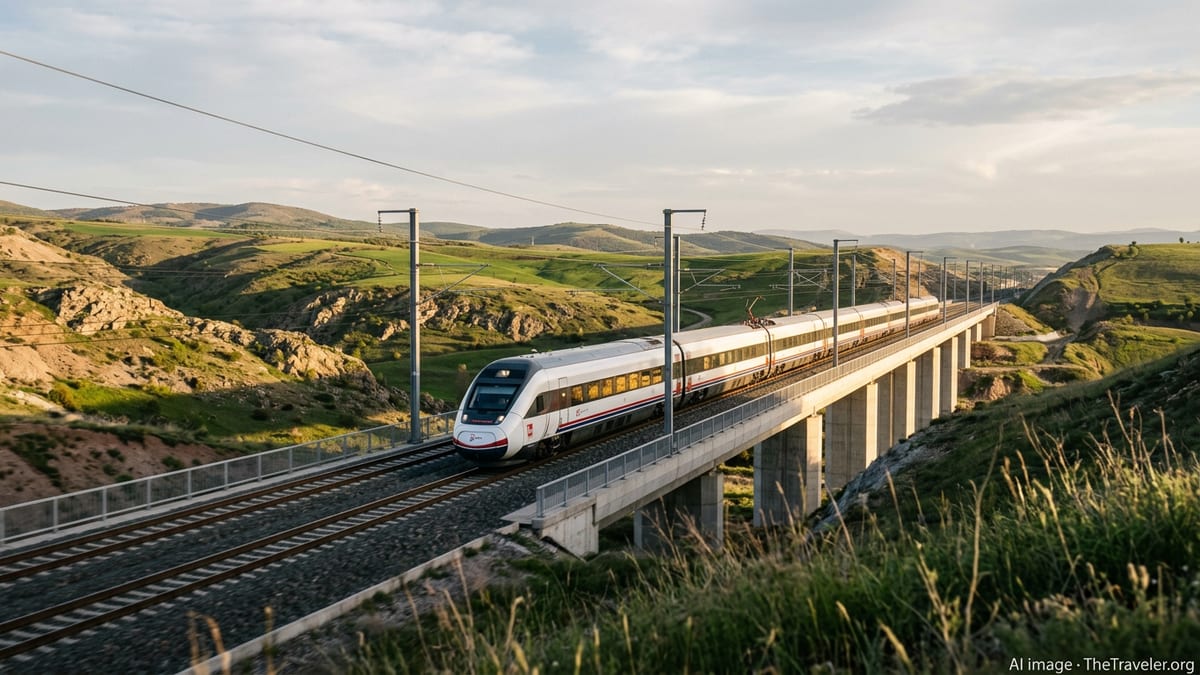
Europe accelerates plans for a connected high-speed grid
In Europe, high-speed rail is shifting from a patchwork of national lines toward a more coordinated, continent-wide system. The European Commission’s roadmap "Connecting Europe through High-Speed Rail," presented in late 2025, sets a target for a faster, better-integrated network by 2040, anchored in the Trans-European Transport Network framework. The plan places high-speed rail at the center of long-distance mobility, with the explicit aim of making rail a competitive alternative to short-haul flights on many intra-European routes.
Analysis from passenger groups and policy papers indicates that the strategy goes beyond building new tracks. It calls for standardised digital safety and signalling systems, harmonised rules for rolling stock, and simplified cross-border ticketing so passengers can book multi-operator journeys more easily. Advocates argue that these changes are essential to unlock the full potential of existing and planned infrastructure, particularly on international corridors where fragmented regulations have limited capacity and ridership.
Investment remains substantial. Publicly available budget documents and position papers show that European governments are supporting a mix of new dedicated high-speed lines and upgrades of conventional routes to at least 160 kilometers per hour, targeting travel-time reductions of 30 to 40 percent on key corridors. Projects such as Northern Powerhouse Rail in the United Kingdom and Rail Baltica in northeastern Europe illustrate this dual strategy, combining new-build segments with upgraded links to regional hubs.
At the same time, funding gaps and shifting fiscal priorities are testing ambitions. Reports from advocacy groups, national rail operators and financial disclosures highlight pressures on capital budgets in several member states, with some projects facing delays or phasing adjustments. Even so, long-term plans remain largely intact, reflecting expectations that demand for rail will grow as governments tighten climate targets and look for alternatives to congested air and road corridors.
Asia’s high-speed networks push capacity and regional connectivity
Asia continues to lead on high-speed rail scale, with China, Japan and a growing group of Southeast Asian countries using new lines to unlock economic corridors and reshape domestic travel. Academic research on China’s network, which now connects most major cities, suggests that high-speed services have altered regional economic structures at the county level, supporting the growth of service industries and higher-value manufacturing along key routes.
According to published analyses, the expansion of high-speed rail in China has also had measurable effects on competing air routes. Studies of the Beijing–Shanghai corridor and similar lines show significant reductions in domestic air traffic once fast, frequent rail services were introduced, while maintaining or increasing overall passenger volumes as more travelers are attracted by lower total trip times between city centers.
Elsewhere in Asia, governments are using new high-speed projects to deepen cross-border links. The Jakarta–Bandung line in Indonesia, built with Chinese technical support, marked Southeast Asia’s first operational high-speed railway and is seen in regional policy discussion as a test case for further corridors. In Vietnam, planning for a North–South express high-speed line between Hanoi and Ho Chi Minh City has gained momentum, with recent reports pointing to a start of mainline construction later in 2026 and intensive debate over financing models and technology choices.
These developments point to a broader regional competition and cooperation dynamic. Publicly available information on international bids and memoranda of understanding shows Japanese and Chinese consortia vying to export their high-speed technologies, while multilateral lenders evaluate how large-scale rail investments can support climate objectives and trade integration across Asia.
United States moves cautiously but unlocks record rail funding
In North America, the United States is still in the early stages of building true high-speed rail, yet the funding environment has shifted markedly since 2021. The federal Infrastructure Investment and Jobs Act committed tens of billions of dollars to passenger rail, described in legislative summaries as the largest such investment since Amtrak was created. A separate proposal, the American High-Speed Rail Act, has sought to channel additional federal funds specifically toward electrified high-speed and higher-speed corridors.
Most of this money is being disbursed through existing Federal Railroad Administration programs, including the Federal-State Partnership for Intercity Passenger Rail and the Consolidated Rail Infrastructure and Safety Improvements grants. Publicly available grant announcements show awards to a mix of projects, from upgrading existing lines in the Northeast and Midwest to advancing environmental reviews and early works for potential new high-speed corridors in states such as California and Texas.
The most advanced U.S. high-speed effort remains California’s project linking the San Francisco Bay Area and Los Angeles Basin. The California High-Speed Rail Authority’s 2026 business plan outlines a staged approach that focuses first on an initial operating segment in the Central Valley, supported by a blend of state bonds, federal grants and new private financing tools. The document also compares international governance models, noting that countries such as Spain and Japan rely heavily on dedicated high-speed tracks, while Italy and Germany mix high-speed and conventional operations to control costs and boost frequency.
Advocacy groups and industry analysts argue that demand for faster, more reliable rail in dense U.S. corridors is strong, pointing to crowded conventional services and growing highway congestion. However, they also note that fragmented governance, right-of-way constraints and political debates over cost make the U.S. trajectory slower and more uncertain than in many parts of Europe and Asia, even with record federal funding now in place.
Investment strategies respond to climate, demand and capacity pressures
Behind the flurry of announcements, governments and investors are wrestling with how to structure high-speed rail spending to match future travel demand. Published environmental assessments comparing modes on corridors such as Paris–Bordeaux indicate that high-speed rail can dramatically cut emissions compared with short-haul flights and private cars, particularly when powered by low-carbon electricity and when trains operate with high occupancy.
Policy analyses suggest that these climate benefits are influencing investment decisions. Several European and Asian governments have linked high-speed rail programs to aviation policies, including restrictions on short domestic flights where strong rail alternatives exist. Modeling cited in academic work finds that, under certain scenarios, substituting flights with rail on short and medium-haul routes can reduce air traffic on those city pairs by up to around a quarter while sustaining overall mobility through increased rail capacity.
Capacity and reliability on existing networks are another driver. In Germany, financial presentations from Deutsche Bahn show a planned increase in government rail infrastructure funding through 2026, intended to tackle bottlenecks and support more frequent services. Across multiple countries, infrastructure managers are weighing the trade-offs between building entirely new dedicated high-speed lines, which maximize speed but are costly, and upgrading conventional routes to medium-high speeds that can be delivered faster and at lower capital cost.
At station level, recent research on workforce planning and passenger assistance demand underscores how higher train frequencies and rising passenger numbers strain operating budgets. Forecasting tools are being deployed to match staffing with peaks in demand, illustrating that meeting the growth in high-speed and higher-speed travel requires investment not only in tracks and trains but also in the broader systems that keep networks running smoothly.
Balancing public and private roles in long-term high-speed bets
As high-speed rail projects proliferate, the question of who pays, and how, is becoming more prominent. European Commission documents and national planning papers increasingly reference blended finance, with public funds used to de-risk sections that are crucial for cross-border connectivity but may not be commercially attractive in early years. Public-private partnerships are being explored for certain segments, particularly around stations and real-estate developments where future land value gains can help repay capital costs.
In North America and parts of Asia, private developers and infrastructure funds are showing interest in specific corridors where projected ridership and ancillary development opportunities appear strongest. However, industry commentary and academic evaluations caution that high-speed rail typically requires sustained public support, particularly for construction risk and early operating years, even when private partners are involved.
Across markets, the emerging consensus in policy and research circles is that high-speed rail will play a central role in meeting rising travel demand in densely populated corridors while supporting climate targets. The pace and pattern of investment will vary widely by region, but the shared direction is clear: faster, more frequent rail is moving from a niche premium service toward the backbone of long-distance ground transport, and governments are adjusting funding strategies accordingly.