


Booking flights to Tokyo, locking in a Mediterranean cruise or planning a lap around Australia can be exciting, but it only takes one missed connection or a sudden illness to turn a dream trip into a financial headache. Medibank, one of Australia’s largest private health insurers, also sells travel insurance that can step in when things go wrong, from overseas medical bills to lost bags and last minute cancellations. Understanding how Medibank travel insurance works before you hit “purchase” can help you choose the right level of cover and avoid surprises at claim time.
Get the latest updates straight to your inbox!
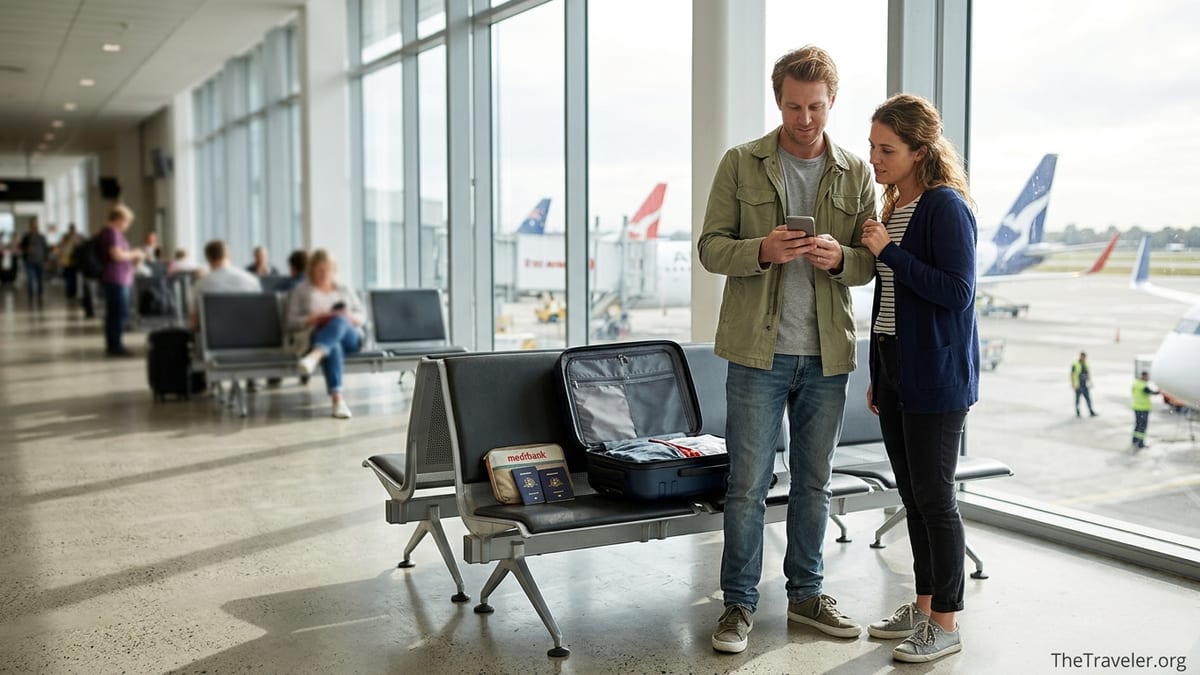
Who Medibank Travel Insurance Is For
Medibank travel insurance is primarily designed for Australian residents heading overseas or travelling domestically, as well as some non-residents starting their journey from Australia. The cover is underwritten and administered separately from Medibank’s health insurance products, but many travellers consider it because they already know the brand through their hospital or extras cover. If you already hold a Medibank or ahm health policy, you may also be eligible for a member discount on your travel insurance premium, which can make a meaningful difference on a longer or higher-value trip.
In practical terms, Medibank suits travellers who want fairly broad protection with options to customise. A couple taking a three week Japan holiday, for example, might choose the International Comprehensive plan to get cancellation cover, unlimited overseas medical and higher luggage limits. A student backpacking through Southeast Asia on a tight budget may prefer the International Medical Only plan and rely on cheaper hostels and low-cost airlines, accepting that non-medical losses will be at their own risk.
Medibank also offers domestic-only policies for Australians exploring their own backyard. Someone flying from Sydney to Darwin for a week in Kakadu National Park might pick a domestic plan that focuses on cancellation costs, delays and luggage, because Medicare already covers most local hospital treatment. Frequent travellers, such as consultants who fly to New Zealand or Singapore every month, can look at the Annual Multi-Trip option instead of buying a new policy each time.
If you are already overseas when you decide you need cover, Medibank may still insure you, but there is usually a waiting period before benefits take effect. For instance, if you are halfway through a Europe rail trip and only buy a policy after your wallet is stolen, the theft will not be covered. The policy wording explains that events that have already happened, or occur during the initial no-cover period, are excluded.
The Main Types of Medibank Travel Policies
Medibank’s international products are broadly split into two categories: International Comprehensive and International Medical Only. The International Comprehensive plan is their flagship product, designed to cover both big-ticket overseas medical issues and non-medical mishaps like stolen luggage, trip delays and cancellation. For a family of four taking a two week winter holiday to Canada that includes skiing, International Comprehensive with optional snow cover is typically the relevant choice because it combines high medical limits with protection for expensive equipment and prepaid lift passes.
The International Medical Only plan focuses on the most financially catastrophic risk: hospital and medical costs overseas. This can appeal to budget travellers who are less worried about losing a low-cost backpack or having to rebook a budget airline ticket. A solo traveller on a four week Thailand and Vietnam trip, staying in simple guesthouses and booking flexible flights, might choose Medical Only to access unlimited emergency medical cover and 24/7 assistance, while accepting they will self-insure their belongings.
For trips within Australia, Medibank’s domestic plan shifts the emphasis toward cancellation, delays and luggage, because Australian residents can already rely on Medicare or existing private hospital cover for most medical treatment at home. A common use case is someone booking a series of non-refundable flights and accommodation over the Christmas period, when a last minute illness or family emergency could otherwise mean losing several thousand dollars.
Frequent travellers can opt for Medibank’s Annual Multi-Trip cover, which typically allows unlimited trips during a 12 month period, each up to a chosen maximum duration such as 30, 45 or 60 days. A consultant flying from Melbourne to Auckland every month, plus one longer trip to Europe, might find that an annual policy costs less than buying four or five separate comprehensive policies, and it simplifies paperwork because only one product disclosure statement and renewal date need to be tracked.
What Medibank Travel Insurance Typically Covers
Like most Australian travel insurers, Medibank builds its policies around a set of core benefits that apply up to maximum limits. While you should always check the latest product disclosure statement, International Comprehensive cover generally includes unlimited overseas hospital and medical costs for sudden illness or injury, subject to exclusions. That might include a broken ankle from slipping on icy steps in Prague, or treatment for a severe case of food poisoning in Bali that requires overnight admission.
Cancellation and amendment cover is another key pillar. This benefit can reimburse prepaid, non-refundable travel costs if you have to cancel or cut short your trip for a covered reason, such as a serious illness, injury or unexpected death in the family. For example, if you pay 7,000 Australian dollars upfront for a European river cruise and need to cancel three weeks before departure because your partner is hospitalised, a Medibank policy with sufficient cancellation limit could help recover much of that outlay, minus any excess specified in the policy.
Luggage and personal effects cover applies if your belongings are stolen, accidentally damaged or checked-in bags are permanently lost by a carrier. Medibank’s International Comprehensive plan can provide up to tens of thousands of dollars in total luggage cover, but there are strict per-item and category limits. A stolen laptop might be capped at a few thousand dollars, and high-end camera gear could only be partially reimbursed unless you have specified it for extra cover. Travellers heading to destinations with known pickpocket risks, like Barcelona or Rome, should pay close attention to these item limits and consider listing expensive items individually when they get a quote.
Medibank policies also usually include cover for travel delays, missed connections due to certain unforeseen events, and rental vehicle excess. Suppose you rent a car in Queenstown, New Zealand, and lightly collide with a fence while parking, triggering a 5,000 dollar rental company excess. If your Medibank policy includes rental vehicle excess up to at least that amount, it can reimburse you after you pay the rental company, provided the accident meets the policy terms and you were driving legally.
COVID-19, Pre-Existing Conditions and Optional Extras
Since the pandemic, many travellers want clarity on COVID-19 benefits. Medibank states that its domestic and international policies now include some COVID-19 related cover. In practice, that can extend to overseas medical expenses if you are diagnosed with COVID-19 while travelling, and in some cases cancellation or trip disruption when you, a travelling companion or sometimes a close relative tests positive before departure. The detail is complex, so a couple flying to London in December, for instance, should read the COVID-19 section carefully to understand what happens if one of them receives a positive test 48 hours before their flight.
Existing medical conditions are another critical area. Medibank, like many insurers, classifies conditions into three groups: those automatically covered, those that can never be covered, and those that may be covered after assessment. Common, stable conditions like well-controlled mild asthma or seasonal allergies may be automatically covered, but recent heart problems, ongoing cancer treatment or recent major surgery often need to be disclosed and assessed. If you have an excluded or undeclared condition and later require treatment for it on your trip, related claims are likely to be declined, even if you did not see a doctor immediately before travel.
Optional extras let you tailor the policy. Medibank offers additional cover for snow sports like skiing and snowboarding, motorcycle and moped riding, and sea or ocean cruises. If you are planning a week at Niseko in Japan, you will generally need to add snow sports cover; otherwise, injuries from skiing or snowboarding could be excluded, even if you hold a comprehensive policy. Similarly, if you intend to ride a 125cc scooter around the Greek islands, you usually need to add motorcycle and moped cover and comply with conditions such as wearing a helmet and respecting engine capacity limits.
Another common add-on is increasing item limits for high-value belongings. A professional photographer flying to Iceland with 12,000 dollars of camera bodies and lenses cannot rely on the default per-item cap of a standard policy. Instead, they can specify individual items, such as a camera worth 3,500 dollars and a lens worth 2,200 dollars, pay an additional premium and receive higher cover limits for those specific pieces of equipment, subject to receipts and valuation evidence at claim time.
How Much Medibank Travel Insurance Can Cost
Travel insurance pricing moves with risk factors such as age, destination, trip length and the level of cover. As a rough guide, many comprehensive travel insurance policies in the Australian market cost somewhere between 5 and 10 percent of the total trip price. Medibank’s premiums typically fall within this broad range, although real-world quotes vary widely according to the options selected and any existing medical assessments.
For example, an Australian in their early thirties booking a 14 day trip to Japan with a total spend of about 4,000 dollars for flights and accommodation could see a Medibank International Comprehensive quote in the ballpark of a few hundred dollars, depending on the chosen cancellation limit and any extras like snow sports cover for a side trip to Hakuba. Some travellers on consumer forums have reported paying around 200 dollars for a month-long Medibank comprehensive policy for Japan, although premiums change over time and can be higher for older travellers.
A 65 year old planning a six week tour of Europe with a trip cost of 12,000 dollars, including a river cruise, is likely to face a substantially higher premium, possibly heading towards 1,000 dollars or more, because age and trip value increase the insurer’s exposure. If this traveller also discloses a pre-existing heart condition that Medibank is willing to cover after assessment, there may be an additional loading on the premium or special terms applied.
Annual Multi-Trip policies can sometimes offer better value for frequent flyers. A management consultant who takes eight international trips a year, each about a week long, plus several domestic work trips, might receive a Medibank annual policy quote of, for instance, 800 to 1,200 dollars depending on destinations and maximum trip length. Purchased individually, equivalent single-trip policies could easily exceed that combined cost. The key is to compare an annual quote with realistic single-trip totals based on your actual travel calendar.
Key Fine Print To Check Before You Buy
The most important step before purchasing Medibank travel insurance is reading the current product disclosure statement for the exact policy you are considering. While the marketing pages highlight major benefits, the PDS explains conditions, exclusions, waiting periods and definitions that determine whether a claim is accepted. For instance, cancellation cover usually only applies to specific unforeseen events; deciding you no longer feel like travelling or disliking news reports about your destination may not be sufficient grounds for a claim.
Pay particular attention to excess amounts. Medibank’s policies often let you choose between different standard excesses, such as 100 or 250 dollars per claim. A lower excess generally means a higher premium. If you are mainly concerned about very large expenses, you might accept a higher excess to reduce the upfront cost. On the other hand, if you expect you might need to claim for smaller items, such as a lost phone worth 800 dollars, a 100 dollar excess may be more acceptable.
Look closely at activity exclusions. Many adventure sports are either excluded or require specific optional cover. Trekking to Everest Base Camp, for example, may fall outside standard policy wording if the altitude exceeds a defined limit, or if mountaineering equipment like ropes is used. Scuba diving beyond a certain depth or without recognised certification can also be excluded. If your trip includes anything more adventurous than city sightseeing and casual beach time, it is important to cross-check your planned activities against the list of allowed and excluded pursuits.
Finally, understand claim documentation requirements. Medibank will generally expect supporting evidence such as medical reports, police reports for theft, airline delay notifications or original receipts. If your suitcase is lost on a flight from Brisbane to Los Angeles, you will need a Property Irregularity Report from the airline and receipts or bank statements for the contents. Keeping digital copies of documents in cloud storage or emailing them to yourself before departure can make it much easier to substantiate a claim later.
Comparing Medibank With Other Travel Insurers
Although Medibank is a familiar brand and often competitively priced, it is not automatically the best choice for every traveller or destination. Comparison sites and independent reviews regularly note that different insurers excel in different niches. One insurer may offer higher rental vehicle excess limits that particularly benefit people driving motorhomes in New Zealand; another might have more generous cover for high-value electronics or more flexible definitions of family members who can trigger cancellation benefits.
A traveller planning a budget trip around Southeast Asia might find that Medibank’s International Medical Only policy is priced similarly to other insurers’ basic offerings but offers stronger medical assistance services or clearer COVID-19 wording. Meanwhile, someone booking a luxury African safari with prepaid private lodge stays may discover that a specialist travel insurer provides higher single item limits for expensive camera gear and more extensive cover for remote medical evacuation, albeit at a higher cost than Medibank’s comprehensive plan.
It can be useful to compare at least three or four policies side by side looking at key benefits: overseas medical limit, evacuation cover, cancellation limit, luggage total and per-item caps, rental vehicle excess, COVID-19 provisions and the policy excess. Rather than focusing purely on premium price, consider where each insurer sits on benefits that matter most for your itinerary. In many cases, Medibank will appear as a strong all-rounder, but another brand may be better tailored for highly specialised trips such as long multi-month expeditions or extended working holidays.
Customer service and claims handling reputation are also worth weighing. Reading recent anecdotes on Australian consumer forums can reveal how quickly different insurers respond to emergencies, how they treat borderline claims and how easy the online claims process is in practice. While no insurer can approve every claim, consistent reports of slow communication or unexpected application of exclusions may prompt you to look elsewhere, even if the headline premium looks attractive.
The Takeaway
Buying Medibank travel insurance can be straightforward once you understand the main choices: international versus domestic, comprehensive versus medical only, and single-trip versus annual cover. The brand’s policies are designed for a wide audience of Australian travellers, from backpackers needing emergency medical protection in Southeast Asia to families booking multi-leg Europe holidays with significant prepaid costs.
To make a smart purchase, start by mapping your trip risks. Consider where you are going, what you will do, how much you have prepaid and any existing medical conditions. Then match those needs against Medibank’s benefits, focusing on overseas medical, cancellation, luggage, COVID-19 provisions and any optional extras such as snow sports or moped cover. Take time to read the current product disclosure statement so you are clear on exclusions, limits and excesses before you enter your card details.
Finally, compare Medibank’s quote with at least a couple of alternatives, not only on price but on coverage that matches your itinerary. If Medibank offers the mix of cover, service and cost that suits your circumstances, you can head to the airport knowing you have a well-understood safety net behind your trip, rather than a generic policy you only skimmed in a rush.
FAQ
Q1. Does Medibank travel insurance cover COVID-19 related cancellations?
Medibank includes some COVID-19 benefits, which may cover certain cancellation and trip disruption scenarios, but the details are specific and may change, so you must read the latest product disclosure statement and COVID-19 benefit summary for your policy before purchase.
Q2. Can I buy Medibank travel insurance if I am already overseas?
In many cases you can, but cover will not apply to events that have already happened and there is usually a no-cover period of several days from purchase, so you cannot backdate protection for earlier incidents.
Q3. Are pre-existing medical conditions automatically covered?
No. Some common, stable conditions may be automatically covered, others must be disclosed and individually assessed, and some are excluded entirely, so you need to check how your condition is classified before you buy.
Q4. How much luggage cover does Medibank provide?
Medibank’s comprehensive policies can offer a relatively high total luggage limit, but individual items such as laptops, phones or cameras are subject to lower per-item caps unless you pay extra to specify them for higher cover.
Q5. Does Medibank travel insurance cover rental car excess?
Yes, many Medibank policies include rental vehicle insurance excess cover up to a stated limit, which can help reimburse you if your hire car is damaged or stolen and the rental company charges an excess.
Q6. Is snow sports cover included as standard?
Generally not. Activities like skiing and snowboarding usually require adding an optional snow sports benefit; if you do not add it and are injured while skiing, related claims may be declined.
Q7. What excess will I have to pay if I make a claim?
When you buy a Medibank policy you typically choose from a range of standard excesses; a higher excess can reduce your premium but increases the amount you must pay yourself for each accepted claim.
Q8. Can I get Medibank travel insurance for domestic trips within Australia?
Yes. Medibank sells domestic policies that focus on cancellation, delays, luggage and rental vehicle excess for trips within Australia, recognising that Medicare and any existing private health cover already handle most local medical expenses.
Q9. Do Medibank health insurance members get a discount on travel insurance?
Medibank and ahm health insurance members are often offered a discount on Medibank travel insurance premiums, although the exact percentage and eligibility conditions can vary over time and by promotion.
Q10. How do I make a claim on my Medibank travel insurance policy?
You can usually start a claim online or via a claim form, then submit supporting documents such as medical reports, police reports, airline confirmations and receipts; detailed instructions and contact details are provided in your policy documents.