

More news on this day
Rising salary thresholds and unprecedented visa surcharges are transforming the U.S. H-1B system into a costlier, more exclusive gateway, with ripple effects now reaching airlines, global mobility planners and would-be travelers around the world.
Get the latest news straight to your inbox!
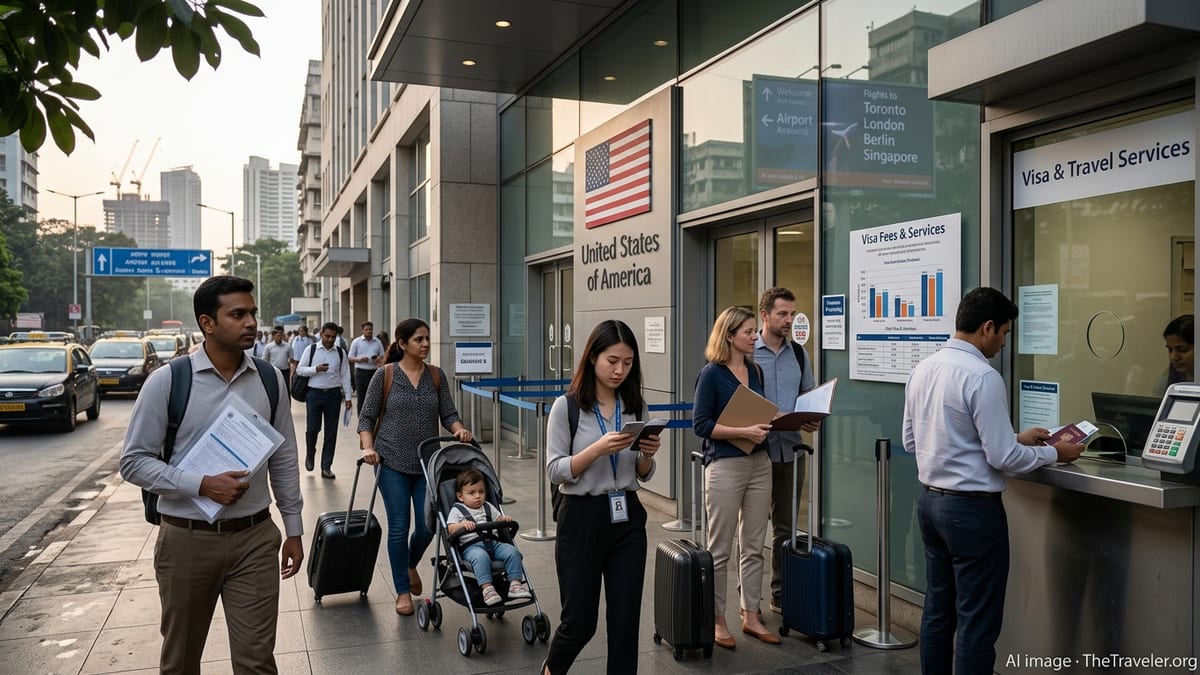
A Costlier Ticket to America’s Talent Market
The H-1B category, long a primary channel for highly skilled workers heading to U.S. tech hubs, is entering a new phase defined by higher wages and heavier fees. Recent regulatory changes have tightened program integrity rules and shifted selection mechanisms toward better-paid roles, while employers also contend with sharply higher government charges tied to petitions and registrations. Publicly available analyses indicate that the policy direction is clear: the United States is seeking fewer low-wage H-1B roles and more positions benchmarked to upper tiers of the prevailing wage scale.
Alongside these structural changes, a headline-grabbing development has been the introduction of an additional fee of around 100,000 dollars for many new H-1B cases initiated from outside the country. Coverage from legal advisories and university guidance notes that this supplemental charge applies primarily to fresh petitions used for visa stamping abroad, rather than to extensions or changes of status for workers already in the United States. For employers that rely on recruiting talent directly from overseas, the added cost turns each new hire into a high-stakes investment.
These measures arrive on top of earlier fee increases for core application forms and electronic H-1B registration. Immigration law firms report that base filing costs, new integrity surcharges and higher registration fees have collectively raised the price of participation in the annual H-1B cycle. For many smaller firms and startups, the barrier is no longer only the lottery odds but the financial calculus of sponsoring a worker under the new regime.
From Wage Floors to Wage Gravity
Behind the scenes, the evolving rules are also changing the salary landscape itself. Federal guidance on prevailing wage requirements for H-1B and similar classifications has long required U.S. employers to pay at or above government-set local wage levels for a given occupation. More recent modernization moves, described in regulatory summaries and policy analyses, aim to push the system toward favoring petitions at higher wage levels when demand exceeds supply.
In practice, this creates a form of wage gravity, pulling viable H-1B offers upward. Companies that previously relied on entry-level wage categories are now under pressure to shift roles to higher bands, particularly in sectors such as software development, data science and engineering. Some advisory reports suggest that employers are restructuring job descriptions to meet more senior wage thresholds, while others may pivot to remote or nearshore teams when U.S. compensation and fee demands climb too high.
For workers, the implications are mixed. On one hand, a bias toward higher pay offers could benefit top earners and make underpayment less likely. On the other, candidates in early-career roles or in fields with narrower salary ranges may find fewer sponsors willing to shoulder elevated wage and fee obligations. Analysts following the program note that this could gradually tilt the H-1B pool toward senior specialists and away from large cohorts of junior coders and analysts.
Travel Surcharges Add a New Layer of Friction
The financial pinch does not stop with the petition itself. Broader shifts in U.S. entry costs are creating additional friction for international mobility, including for families and business travelers connected to H-1B workers. Recent fee legislation and rule changes referenced in public summaries have raised charges across several nonimmigrant visa categories and introduced a general “visa integrity” surcharge on many temporary entries.
At the same time, travelers from visa waiver countries have seen the price of the Electronic System for Travel Authorization climb, with consumer-focused travel coverage highlighting the increase as part of a wider rise in border-related fees. While these charges may look modest on a single itinerary, they accumulate quickly for companies that move teams frequently across borders or for H-1B professionals whose travel patterns involve multiple short trips in and out of the United States.
For global mobility managers, the result is a more complex cost matrix. Flight prices, accommodation and per diems now sit alongside a growing stack of government surcharges, consular fees and premium processing charges. Some corporate travel departments are already flagging U.S. assignments as materially more expensive than comparable deployments to Europe or parts of Asia, particularly when visa fees must be multiplied across family members.
Rerouted Talent Flows and Emerging Hubs
As the American gateway grows more expensive, competing destinations are watching closely. Business media coverage points to Canada, the United Kingdom and several European Union member states as potential beneficiaries, with comparatively lower sponsorship costs and streamlined pathways for highly skilled migrants. Countries offering digital nomad visas and points-based systems are also positioning themselves as flexible alternatives for globally mobile tech workers and entrepreneurs.
Industry observers note that multinational firms facing six-figure surcharges for certain H-1B hires may instead expand engineering and research centers in Toronto, London, Berlin or Singapore. Some organizations are experimenting with hybrid models, keeping a smaller U.S. headquarters footprint while building satellite teams abroad that collaborate virtually. Travel patterns then shift accordingly, with more short-term business trips into the United States rather than long-term relocations under H-1B status.
For individual migrants, new cost realities can influence not only destination choices but also long-term life plans. High fees for initial U.S. entry can make alternative pathways, such as study-to-work routes in other countries or remote-first careers, more attractive. Travel agents and relocation specialists report growing interest in multi-country strategies in which professionals split time between a lower-cost base and periodic U.S. visits.
What Travelers and Employers Are Watching Next
Looking ahead, several moving parts will shape how sustainable the new framework proves to be. Legal challenges and political debates may affect how long the largest surcharges remain in place or whether exemptions expand for certain categories of workers. Policy think tanks and employer coalitions are closely tracking rulemaking activity related to wage levels, registration mechanics and fee schedules, aware that additional adjustments could arrive with little lead time for upcoming H-1B cycles.
In the meantime, both employers and travelers are adapting. Companies are revising hiring forecasts, routing more roles through consular posts with shorter backlogs, or turning to premium processing despite its own rising fees. Prospective H-1B workers are advised in public-facing guidance to plan for more extensive documentation, higher wage benchmarks and greater financial exposure if they remain outside the United States while petitions are filed.
For the international travel ecosystem, the new American gateway is no longer defined solely by flight connections and airport hubs. It now revolves around a layered regime of wage rules, petition fees and entry surcharges that influence who makes the journey, how often they cross the border and which alternative destinations gain momentum as a result.