


More news on this day
Himalaya Airlines has resumed direct flights between Kathmandu and Beijing, restoring a key air corridor that links Nepal’s capital with northern China and signaling renewed momentum in regional tourism, business travel and Asian aviation recovery efforts.
Get the latest news straight to your inbox!
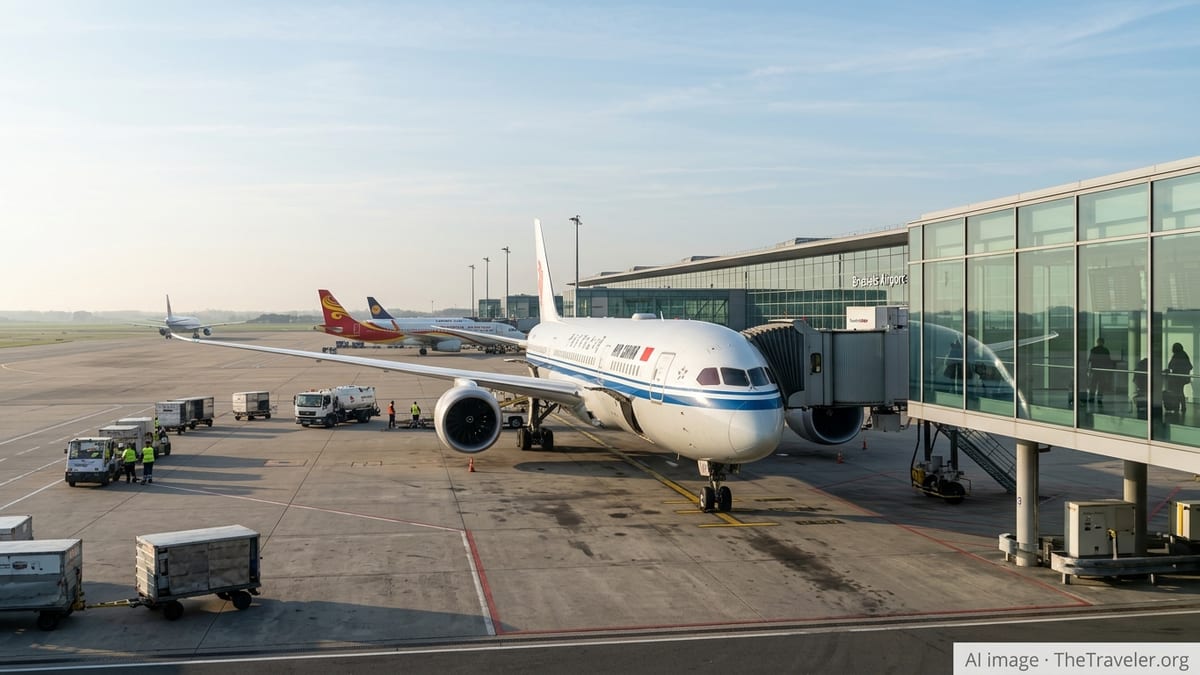
Route Resumption Reconnects Two Capital Cities
Publicly available schedules and industry reports indicate that Himalaya Airlines has reinstated its nonstop Kathmandu–Beijing service, reactivating a route that was first launched in 2019 and later suspended during the height of the pandemic. The carrier had previously revived limited operations on the sector in 2023 with weekly flights to Beijing Daxing International Airport, and current timetables for the northern summer season show the direct link back in regular operation.
The service connects Tribhuvan International Airport in Kathmandu with Beijing Daxing, the Chinese capital’s newer international hub. Flight timings are structured for daytime departures from Kathmandu and afternoon arrivals in Beijing, with return services operating the same day, offering a block time of around five to six hours across the Himalayas.
Himalaya Airlines operates the route with Airbus A320 family aircraft, configured for single aisle medium haul operations that are common on South and East Asian corridors. The resumption restores a rare direct bridge between Nepal and northern China, giving travelers an alternative to itineraries that require transits through Chengdu, Kunming or other Chinese gateways.
For Himalayan airspace planners and regional route developers, the Kathmandu–Beijing link is also significant because it utilizes trans-Himalayan routings that reduce overall journey time compared with more circuitous paths. Airline statements and technical documents on Asia Pacific ATS routes highlight potential fuel and emissions savings associated with optimized tracks across the mountain chain.
Boost for Nepal–China Tourism and Cultural Travel
The return of direct Kathmandu–Beijing flights is expected to support a gradual rebuilding of Chinese visitor numbers to Nepal, which had grown steadily before the pandemic. Data cited in tourism analyses show that China was among Nepal’s largest source markets in 2019, and local industry coverage notes that outbound Chinese travel to South Asia has been slowly recovering as travel restrictions eased.
Tour operators in both countries have been promoting packages that combine heritage sites in Kathmandu with Himalayan trekking, Lumbini pilgrimages and multi destination itineraries linking Nepal with Tibet and other Chinese provinces. The availability of a nonstop connection from Beijing simplifies these offerings, particularly for group tours and incentive travel that favor through services over multi stop routings.
On the Chinese side, the route provides a direct option for travelers interested in Nepal’s cultural and religious attractions, including UNESCO listed monuments in Kathmandu Valley and adventure activities in the Annapurna and Everest regions. Analysts commenting in regional travel media suggest that improved air access, coupled with targeted marketing and visa facilitation policies, can help Nepal capture a larger share of the outbound Chinese market as overall volumes in Asia return toward pre pandemic levels.
Industry observers also point to the symbolic value of a capital to capital link at a time when both governments have emphasized tourism and people to people exchanges in broader economic cooperation frameworks. Air connectivity is frequently highlighted in policy documents as a catalyst for such exchanges, giving practical effect to high level agreements.
Business Travel and Investment Links Strengthened
Beyond leisure demand, the reinstated Kathmandu–Beijing route is positioned to facilitate business travel tied to trade, infrastructure projects and investment flows between Nepal and China. Publicly available information on bilateral economic cooperation shows a portfolio of transport, energy and construction projects that require frequent movement of technical experts, project managers and executives.
Previously, many travelers on this corridor relied on indirect routings via Chinese hubs or third country gateways in the Gulf and Southeast Asia. A nonstop service shortens door to door travel time, making short business trips and site visits more practical and reducing uncertainty that can come with multiple connections in a still normalizing aviation environment.
Travel industry coverage notes that Chinese corporate travelers have been gradually returning to international markets since 2023, with a particular focus on Asia Pacific destinations that offer direct connectivity and predictable schedules. The Kathmandu–Beijing service aligns with this pattern, potentially supporting small and medium sized enterprises as well as larger state linked contractors active in Nepal.
For Nepali businesses, direct access to Beijing expands opportunities to engage with suppliers, investors and trade fairs in the Chinese capital without the additional cost and complexity of transits. Analysts argue that such links can have an outsized impact on smaller economies, where incremental gains in connectivity reduce friction for exporters and service providers.
Sign of Wider Asian Aviation Recovery
The revival of Himalaya Airlines’ Beijing service comes as Asian aviation continues a multi year recovery from the pandemic, characterized by phased reinstatement of suspended routes and cautious expansion into secondary markets. Regional news outlets tracking airline schedules have documented a wave of resumptions on short and medium haul sectors across South and East Asia during 2024 and 2025, with carriers prioritizing routes that showed strong pre crisis performance.
Nepal’s international network illustrates this shift. Civil aviation schedules for Tribhuvan International Airport list more than 30 airlines serving over 60 destinations, including renewed connections to the Gulf, Southeast Asia and multiple points in China. Within this context, the Kathmandu–Beijing link represents both a niche trans Himalayan route and part of a broader pattern in which smaller carriers rebuild their long haul and regional portfolios after stabilizing core operations.
Industry commentary describes a competitive but opportunity rich environment in which airlines seek to balance pent up demand against higher operating costs and evolving travel patterns. Point to point routes such as Kathmandu–Beijing allow carriers like Himalaya Airlines to leverage joint venture partnerships and geographic positioning, providing connectivity between markets that are not always a priority for larger global network airlines.
The resumption is also aligned with policy level initiatives promoting greater air connectivity within Asia. Aviation working papers and route development forums have highlighted the role of optimized Himalayan and Central Asian corridors in cutting travel times and reducing environmental impact, themes that are increasingly important for regulators and airlines alike.
Implications for Future Connectivity and Secondary Hubs
Observers suggest that a sustained performance on the Kathmandu–Beijing route could encourage further experimentation with trans Himalayan links, including additional frequencies or seasonal services tied to major tourism events and pilgrimage periods. Some analyses point to potential synergies with emerging routes that connect Nepal to Lhasa and other western Chinese gateways, supporting multi stop itineraries within a broader regional network.
For Beijing Daxing, the presence of Himalaya Airlines adds to the airport’s role as a hub for both Chinese and foreign carriers serving South and Southeast Asia. The airport has been gradually expanding its international footprint, and the Kathmandu service contributes to its positioning as a convenient transfer point for travelers combining South Asia with domestic Chinese destinations.
In Nepal, policymakers and aviation planners continue to view international connectivity as central to long term tourism and trade strategies. The performance of direct services such as Kathmandu–Beijing is likely to inform decisions on slot allocation, infrastructure investment and potential incentives for airlines considering new links to East Asia.
While challenges remain, including fluctuating fuel prices, currency pressures and lingering uncertainty in some outbound markets, the resumption of this route underscores the resilience of regional air travel and its importance to Nepal’s broader economic outlook. If sustained, the direct Kathmandu–Beijing connection could serve as a template for future niche routes that bridge South Asia with key Chinese and East Asian hubs.