


More news on this day
Hundreds of cruise passengers are stranded at sea off the coast of Cape Verde after a suspected hantavirus outbreak left three people dead and several others seriously ill, prompting an international public health response and complicated efforts to bring those on board safely back to land.
Get the latest news straight to your inbox!
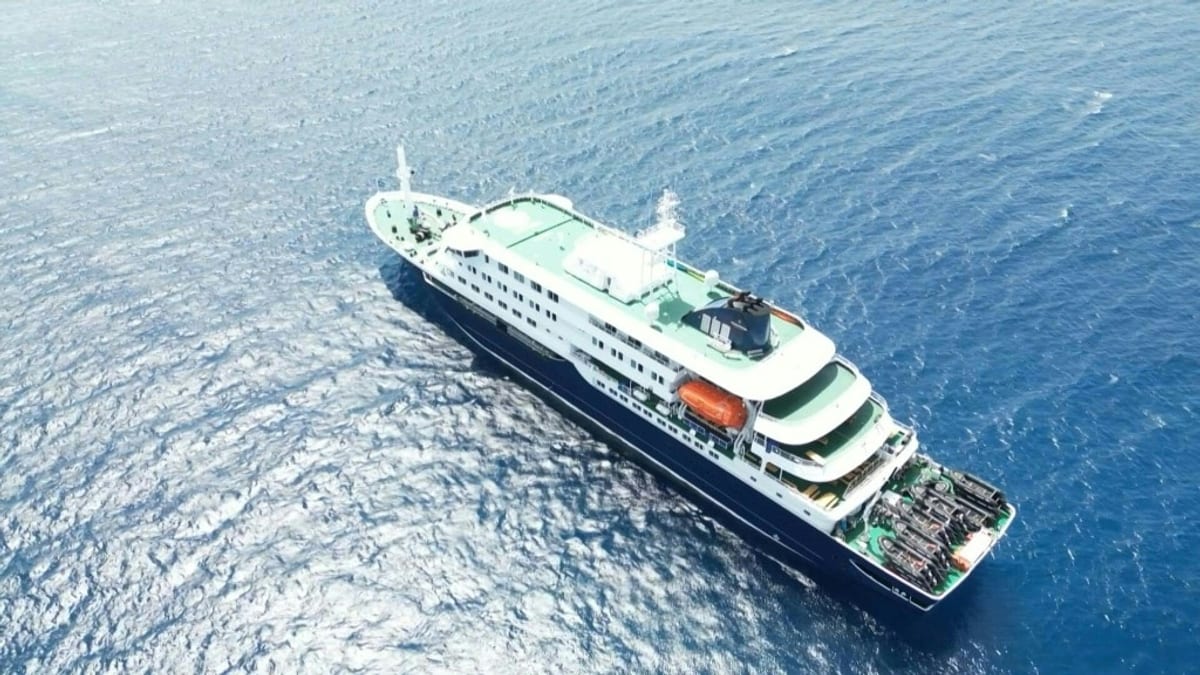
Rare virus outbreak turns expedition cruise into emergency
The incident centers on the Dutch-flagged expedition vessel MV Hondius, which had been sailing a South Atlantic itinerary when the first passenger, a 70-year-old Dutch national, died on board on April 11. Publicly available information indicates that his body was taken ashore on the remote island of Saint Helena, while his wife continued the voyage.
Subsequent testing linked at least two of the deaths to hantavirus infection, a rare but potentially fatal rodent-borne illness. Health briefings and media reports describe a chain of suspected and confirmed cases involving passengers who left the ship at different points of the journey and later fell ill in hospitals in South Africa and Europe.
The ship later headed north toward Cape Verde, an island nation off West Africa, where its arrival off the capital, Praia, brought the situation firmly into the global spotlight. Aerial images showed the Hondius anchored offshore, with small craft ferrying medical teams in protective gear between the vessel and the port.
According to published coverage, there were around 150 people from more than 20 countries on board, including crew, when the outbreak was recognized and international health agencies began coordinating a response.
Why the ship is stranded off Cape Verde
The Hondius remained for days off Cape Verde without permission for passengers to disembark, as local authorities weighed the risks of allowing potentially infected travelers into the archipelago’s limited health system. Reports indicate that officials requested expert input on how to manage a virus that is typically transmitted by contact with infected rodent droppings but has occasionally raised concern over possible human-to-human spread.
Cape Verde ultimately allowed only tightly controlled medical evacuations rather than a full docking. Several severely ill passengers, including the ship’s doctor in some accounts, were airlifted from Praia’s Nelson Mandela International Airport to specialized hospitals in Europe for further treatment.
The decision to keep most people aboard offshore has stirred debate among health specialists and travel commentators. Some note that hantavirus is not generally regarded as easily transmissible between people, while others argue that the close confines of a ship, combined with incomplete early information about the outbreak, justified a highly cautious approach.
For those still aboard, the standoff has meant extended days at anchor, with the ship effectively functioning as an isolation facility while international partners arranged a longer-term solution for evacuation and repatriation.
Escalating international health response
As details of the deaths and suspected cases emerged, the World Health Organization and national health agencies in Europe, Africa, and South America intensified surveillance related to the cruise. Publicly available data show that at least three passengers have died and multiple others have either tested positive for hantavirus or are being treated as suspected cases.
Authorities in several countries have been tracing travelers who disembarked earlier in the voyage, including on Saint Helena and other stopovers, to check for symptoms and prevent further spread. One Dutch passenger who left the ship was taken off a commercial flight in Johannesburg because of a serious deterioration in her condition and later died in a South African hospital, with posthumous testing confirming hantavirus.
Reports also describe a British passenger evacuated from Ascension Island and flown to South Africa for intensive care, as well as additional suspected infections in Europe. Airlines involved in transporting former passengers have implemented precautionary measures, including monitoring crew members and other travelers who may have had brief contact.
In parallel, health agencies have moved to expand diagnostic capacity. According to international coverage, thousands of hantavirus testing kits are being deployed to laboratories in multiple countries, reflecting concern that more cases linked to the cruise could surface as passengers and crew return home.
Planned evacuations and the route to safety
With Cape Verde reluctant to accept a full docking, the Hondius has since been redirected toward Spain’s Canary Islands under an arrangement designed to minimize infection risks while finally getting passengers off the ship. Regional officials have outlined plans for the vessel to remain anchored offshore, with disembarkation handled by smaller boats that will shuttle travelers to a secure terminal area.
From there, passengers are expected to be transported in controlled convoys to the airport, where repatriation flights will operate under strict biosecurity protocols. Reports indicate that sections of airport facilities will be cordoned off during transfers, with health assessments and, where appropriate, isolation measures implemented before travelers board onward flights.
The operator of the Hondius has stated through public communications that, by the time the ship sailed for the Canary Islands, no one remaining on board was showing new symptoms consistent with hantavirus infection. Even so, authorities in Spain, the Netherlands, the United Kingdom and other countries receiving passengers are preparing for potential follow-up testing and monitoring.
The complex operation recalls early-pandemic cruise disruptions but is unfolding around a very different pathogen. For passengers, it has turned what was marketed as a remote nature expedition into a prolonged and uncertain journey, with final homecomings now hinging on a tightly choreographed multi-country evacuation plan.
Hantavirus concerns reshape perceptions of cruise health risks
The suspected outbreak has drawn attention to hantavirus, an illness more commonly associated with rural cabins and rodent-infested storage areas than with modern cruise ships. Medical references describe symptoms that can start with fever and muscle aches and in some cases progress to severe respiratory distress or kidney complications, with a significant fatality rate in serious forms.
Travel health experts consulted in media reports emphasize that outbreaks of this kind at sea are extremely rare. Yet the Hondius episode is prompting new questions about how cruise lines screen for unusual infections, particularly on itineraries that include remote regions where medical facilities and rapid testing may be limited.
Specialists note that many cruise companies strengthened infection-control practices in response to the COVID-19 pandemic, including more robust onboard medical staffing, isolation cabins, and pre-boarding health checks. The suspected hantavirus cluster is now serving as an unexpected test of those systems in a real-world scenario involving a different and far less familiar pathogen.
For now, passengers and crew aboard the Hondius remain symbols of the lingering vulnerabilities in global travel. Their experience off Cape Verde underscores how quickly a routine voyage can intersect with the front lines of emerging infectious disease management and how responses by coastal nations, cruise operators, and health agencies must be carefully balanced between public safety and the welfare of those stranded at sea.