


More news on this day
With airfare often rivaling the cost of the cruise itself, more travelers are rethinking how they structure a weeklong sailing, turning a simple seven day itinerary into a longer, more efficient trip that makes every mile flown count.
Get the latest news straight to your inbox!
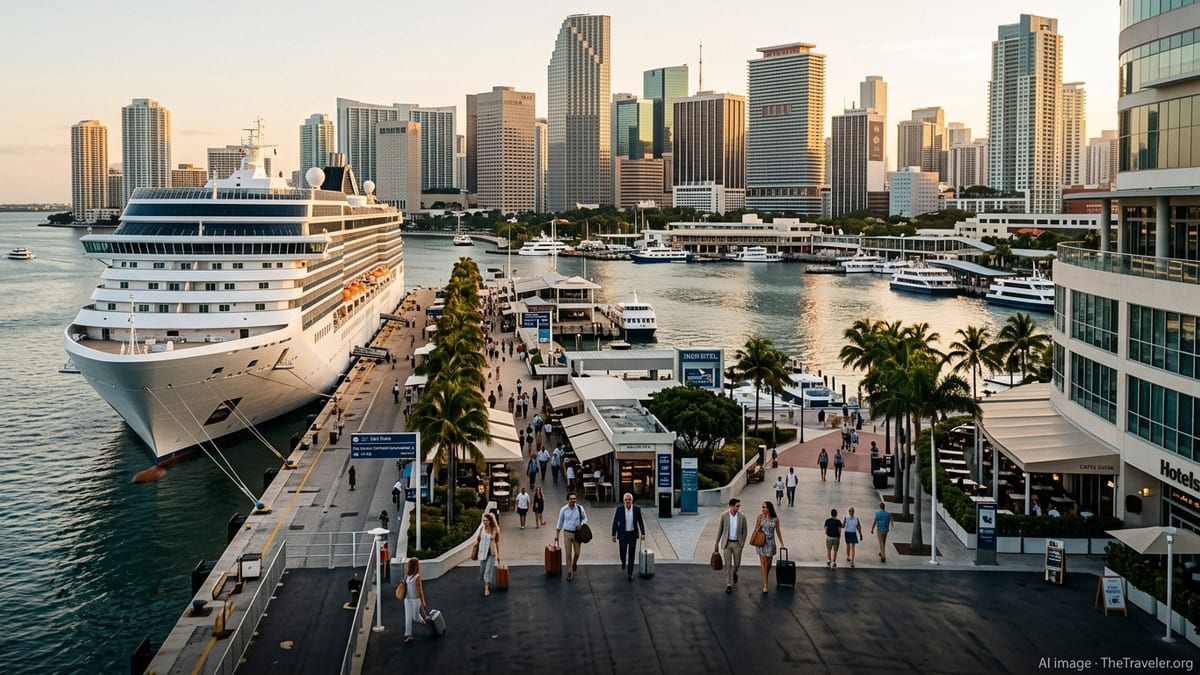
Why Flying Across the Country for a Cruise Still Makes Sense
Seven day cruises remain a mainstay of the industry, particularly in the Caribbean and Alaska, at a time when demand for sailings is setting new records. Recent trade data suggests global passenger numbers are climbing toward all time highs in 2026, with bookings for weeklong itineraries out of major U.S. ports such as Miami, Fort Lauderdale, Seattle and Los Angeles described in industry coverage as particularly strong. For many Americans who live far from these hubs, that growth often begins with a cross country flight.
At the same time, publicly available airfare analyses show that domestic ticket prices have risen sharply over the last two years, in some cases approaching or exceeding the base fare of a seven night cruise. Travel industry reporting notes that the average domestic round trip ticket in 2026 can run into the mid hundreds of dollars before seat fees or checked bags, making it common for travelers to spend as much or more flying to a port city as they do on their cabin.
This imbalance has encouraged many cruisers to approach a seven day sailing as the centerpiece of a longer journey rather than a standalone vacation. Instead of treating the outbound and return flights as necessary but wasted days, some travelers are deliberately adding time on either side of the cruise to explore departure cities, visit nearby attractions or simply build in buffers against disruption. The strategy is framed less as an indulgence and more as a way of extracting maximum value from expensive air travel.
Analysts following cruise and airline trends say this behavior aligns with a broader pattern in 2026: travelers are consolidating trips, taking fewer but longer vacations and trying to make each journey cover more ground. For a traveler who has flown from the Pacific Northwest to South Florida for a seven night Caribbean itinerary, that can mean transforming what would have been a nine day airport to airport experience into an 11 or 12 day multi stop trip anchored by the cruise.
Arrive Early, Stay Late: The New Cruise Playbook
One of the most widely recommended strategies for flyers heading to a cruise port is arriving at least one day before embarkation. Cruise focused publications and traveler forums alike emphasize that a same day flight leaves little margin for delays, missed connections or weather disruptions, any of which can result in a traveler quite literally missing the boat. Arriving early converts that risk buffer into usable vacation time, especially in cities with strong tourism infrastructure.
Miami, Fort Lauderdale, Orlando, Tampa, Seattle and Los Angeles all serve as both cruise gateways and destinations in their own right. Reports highlight that travelers flying from other regions increasingly reserve a night or two pre cruise to explore neighborhoods, visit museums, check out local food scenes or recover from jet lag before boarding. For those arriving from the opposite coast, a pre cruise stay also helps adjust to time zone changes so that the first sea day is not spent catching up on sleep.
Post cruise stays are gaining traction as well. Instead of booking an early afternoon return flight on disembarkation day and racing from ship to security, some travelers choose a late evening departure or an overnight stay. Industry surveys referenced by cruise associations indicate that a notable share of passengers now add at least one post cruise night in the port city, and a smaller percentage stay three or more nights, using the end of the cruise as a launch point for further travel inland.
In practice, a traveler who flies across the country for a seven night sailing might arrive two days early to explore the port city and stay a night afterward to avoid a rushed departure. That modest extension effectively turns a one week cruise into a 10 day adventure without adding another set of flights. For many, the incremental cost of extra hotel nights and local transport is justified by the reduced stress on travel days and the sense of getting more out of the airfare already paid.
Smart Booking Tactics to Stretch a Seven Day Sailing
Beyond adding nights on land, travelers are also leaning on a range of booking tactics to stretch the value of their cruise. One approach highlighted in travel trade outlooks is choosing round trip sailings from a single port instead of repositioning itineraries that start and end in different cities. While repositioning cruises can offer attractive fares, research into cruise pricing patterns notes that booking separate one way flights to distant ports often erodes those savings.
Bundling airfare with cruise packages is another strategy gaining attention. Some large cruise lines promote air programs that promise competitive fares, protected connections and assistance if flights are delayed. Analysts say these offers can provide peace of mind for travelers who are nervous about getting to the ship on time, though they still encourage price comparison against independent bookings to ensure overall value.
Choosing shoulder season departures can also make a cross country flight more worthwhile. Coverage of 2026 itineraries points to late spring and early autumn sailings in Alaska, the Caribbean and the Mediterranean as periods when fares can be more favorable and crowds slightly thinner. For a traveler willing to adjust school or work schedules, booking a seven day cruise during these windows may free budget for extra nights pre and post cruise or paid excursions in key ports.
Observers also note that the booking curve for cruises has stretched further out, with many cabins for high demand ships and itineraries selling quickly more than a year in advance. For travelers who must account for long haul flights, locking in cruise dates early can help secure reasonably priced airfare before departure approaches and prices climb. Coordinating flight and cruise reservations as a single planning exercise, rather than treating them separately, is increasingly viewed as essential for complex cross country trips.
Using Ground Time to Balance Cost and Experience
How travelers use extra days around a cruise is becoming as important as whether they book them. Some opt for lower cost airport hotels outside downtown cores, relying on rideshares or public transit to reach city centers, while others favor walkable neighborhoods near popular attractions. Travel reporting suggests that splitting a stay between a more affordable pre cruise hotel and a splurge night after the sailing can balance budgets without sacrificing experience.
There is also a growing emphasis on making port days and land extensions more meaningful rather than more hectic. Guides aimed at 2026 cruisers emphasize slowing the pace, choosing one or two well considered activities instead of trying to see everything, and allowing time for unexpected discoveries. For travelers who have already outlaid significant sums on airfare and cruise fare, this more intentional approach aims to maximize satisfaction instead of simply filling every hour.
Health and safety considerations factor into planning as well. Public health researchers continue to study outbreaks associated with cruise and air travel, and while major incidents remain rare relative to overall passenger numbers, recent analyses underscore the importance of hygiene practices, adequate travel insurance and flexible booking policies. Those elements can be especially important for travelers who have tied a seven day sailing to additional hotel stays and multiple flights.
In the end, the logic behind flying across the country for a seven day cruise and then extending the journey is straightforward: if the cost and effort of reaching a distant port are fixed, spreading that investment across a longer, better structured itinerary raises the overall value of the trip. For many in 2026, the smarter decision is not to skip the cruise but to give it more room on the calendar, turning a week at sea into the centerpiece of a broader, carefully planned escape.