


Rome is not short on churches or cobblestones, but peaceful green space can feel surprisingly rare. Two of the city’s most alluring escapes sit just a couple of kilometers apart: the secluded Vatican Gardens hidden behind St Peter’s, and the sprawling Villa Borghese park overlooking Piazza del Popolo. Both promise a break from traffic and tour groups, yet they deliver very different experiences. Choosing between them is less about which is objectively “better” and more about what kind of Roman interlude you are looking for.
Get the latest updates straight to your inbox!
The Essence of Each Escape
The Vatican Gardens occupy roughly half of Vatican City, about 23 hectares of manicured lawns, winding paths, shrines and fountains tucked behind the walls of the Vatican. For centuries this has been the private retreat of popes, a quiet enclave where the public was not allowed. Today access is still tightly controlled and only possible on official guided visits, which means numbers are limited and the mood stays hushed compared with most of Rome.
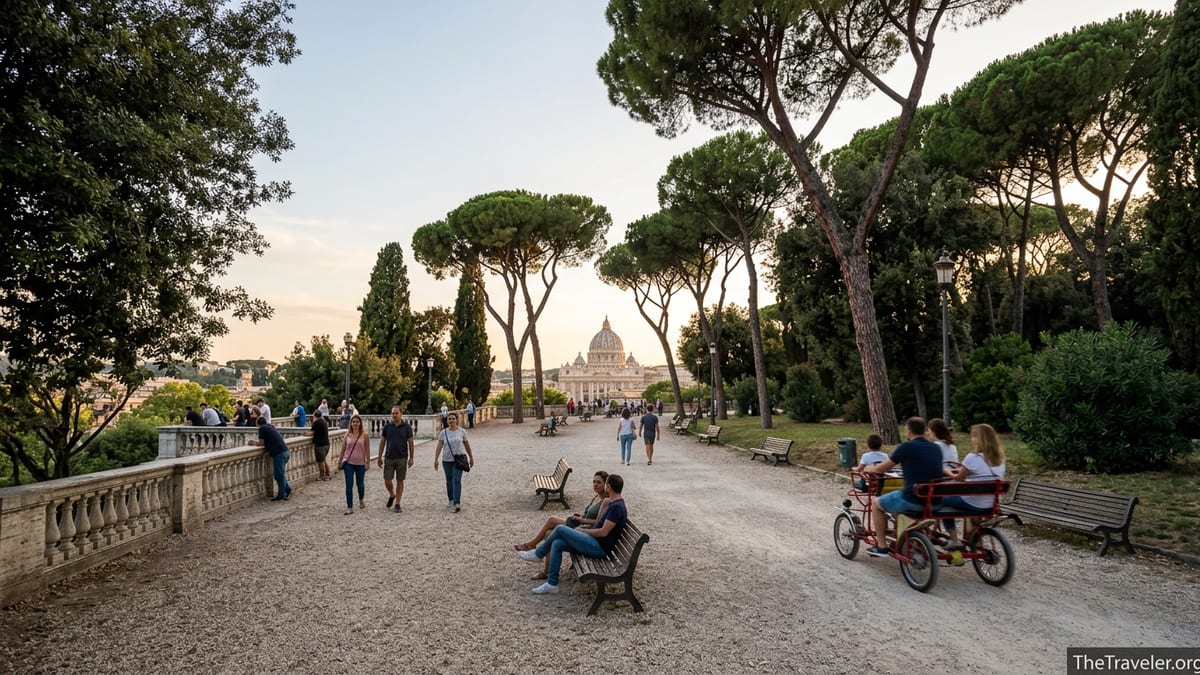
Villa Borghese, by contrast, is Rome’s third-largest public park at around 80 hectares in the heart of the city. It spreads across gently rolling hills east of the Tiber, with wide avenues, patches of woodland, playgrounds and some of the city’s best viewpoints. Locals walk their dogs at 7 am, teenagers meet by the lake in the afternoon, and families pedal four-seater bikes past joggers as the sun goes down. It is Rome’s backyard and feels that way in the best possible sense.
In practice, Vatican Gardens feel like an intimate, curated experience you dip into for a couple of hours, often tied to a broader Vatican Museums visit. Villa Borghese is a place you can return to again and again over several days: a morning run, a lazy picnic after the Galleria Borghese, or a sunset stroll above Piazza del Popolo. Deciding which “wins” starts with deciding whether you want a structured, contemplative outing or casual, day-to-day Roman life.
For many travelers, the ideal trip includes both: Vatican Gardens as a one-off splurge and Villa Borghese as the recurring refuge. But when time or budget force a choice, the details matter.
Access, Booking and Practicalities
The biggest difference shows up before you even see a tree. Vatican Gardens can only be visited on an official tour booked in advance through the Vatican Museums’ channels or reputable resellers. You cannot simply walk up to a gate and wander in on your own. Standard garden tours are usually combined with Vatican Museums access. Expect a set departure time, a fixed route and a group led by an official guide or an audio-guided minibus, depending on the option you choose.
These visits typically last around 2 hours for the walking tour of the gardens, plus the time you then spend inside the museums. Because capacity is limited, dates in peak months can sell out days or weeks ahead. Travelers often find that popular mid-morning English-language tours are gone well before their trip, which means you may need to adjust your Vatican schedule around the gardens rather than the other way around.
Villa Borghese is the polar opposite in terms of logistics. The park itself is open daily and free to enter, without turnstiles or ticket checks. You can walk in from several sides: up from Piazza del Popolo via the steps to the Pincio Terrace, from Via Veneto near Porta Pinciana, or from the residential neighborhoods to the north. There is no need to book, no group to join and no time limit on how long you linger under the pines.
The one exception inside the park is the Galleria Borghese art museum. Reservations are mandatory, and standard adult tickets purchased through official channels are about 18 euros including the booking fee. Time slots are strict 2-hour windows, and in busy seasons those slots can disappear within hours of release, so travelers who want the gallery need to plan ahead. But you can still enjoy the lawns, viewpoints and lake of Villa Borghese with no planning at all, even if the gallery is sold out for your dates.
Cost, Value and What You Get for Your Money
For budget-conscious visitors, the contrast is stark. Vatican Gardens tours are a premium product. Combined garden and museum tickets often run in the range of several tens of euros per person, particularly if you opt for a small-group guided visit in English. Third-party providers may package the gardens with early museum entry or a guided basilica visit, which can push the price even higher. For a couple or family, that quickly becomes one of the trip’s more expensive half-days.
What you get in return is exclusivity and depth. Group sizes are usually much smaller than the crowds swirling through the Sistine Chapel. A typical walking tour takes you through areas that remain off-limits to the general Vatican Museums visitor, such as quiet lanes with views onto the back of St Peter’s dome, historic fortification walls and small chapels and grottoes. You are not paying for amenities like cafes or playgrounds; you are paying for access to a normally hidden part of the tiny city-state, with commentary that connects the landscape to five centuries of church history.
Villa Borghese itself is free, and that alone makes it compelling. A visiting couple might spend a modest amount for a shared experience: perhaps 6 to 8 euros for an hour’s rental of a standard bicycle to explore the park, or 3 to 5 euros each for a short rowboat ride on the small lake below the Temple of Aesculapius. Families often spring for a pedal-powered four-seater cart, which can cost noticeably more per hour but spreads the price across several people and turns transport into entertainment.
If you add Galleria Borghese to the day, the cost climbs but stays moderate compared with many guided Vatican experiences. An 18 euro timed-entry ticket buys you two hours with Bernini’s sculptures and Caravaggio’s paintings. Even if you book a more expensive guided art tour inside the gallery, you still have the rest of the park at no extra charge. For many travelers this combination of world-class art and free green space offers strong value across an entire morning or afternoon.
Atmosphere, Crowds and Sense of Escape
On a typical morning in the Vatican Museums, tour groups funnel through galleries at a brisk pace, audio guides pressed to their ears. Step into the Vatican Gardens, and the shift in mood is immediate. Because visits are limited to guided groups and numbers are capped, paths feel spacious, birdsong competes successfully with human chatter, and it is not unusual to walk several minutes without seeing anyone beyond your own group and the Swiss Guards at a distance. The feeling is less “city park” and more “inside the grounds of a private estate.”
Some travelers describe the experience as almost surreal: you are still in one of the most visited places on earth, but for an hour or two the crowds fall away. Instead of elbowing your way toward the Sistine Chapel, you might be standing by a Renaissance fountain with only a handful of fellow visitors while your guide points out the Papal apartments on the hill above. This sense of controlled seclusion is the gardens’ greatest asset. It also means there is little spontaneity. You follow the set path, keep to the group and move at the official pace.
Villa Borghese has an entirely different rhythm. On weekday mornings, joggers, dog walkers and parents pushing strollers dominate, giving it a distinctly local flavor. By afternoon, especially in spring and autumn, the park fills with school groups near the playgrounds, couples lounging on the grass with takeaway panini, and sightseers heading to the Pincio Terrace for a panoramic photo. Weekends can feel like half of Rome has decided to go for a walk. Yet because the park is large and crisscrossed by numerous paths, it rarely feels claustrophobic if you are willing to wander beyond the busiest corners.
If your idea of escape is solitude and hushed voices, Vatican Gardens have the edge. If you want to feel part of everyday Roman life, sharing space with families, teenagers and elderly couples in their Sunday best, Villa Borghese wins. Many first-time visitors end up appreciating the park precisely because it is not a “sight” in the traditional sense but a lived-in urban space where you can slow your pace without stepping out of the city’s story.
Scenery, Highlights and Photography
Both green spaces are beautiful, but in very different ways. Vatican Gardens excel in structured, layered vistas. Much of the planting is formal: trimmed hedges, geometric lawns, symmetrical flowerbeds and sculpted trees. Scattered throughout are historic elements such as medieval towers, sections of Leonine Wall, grottoes and Marian shrines. As you move along the paths, views open up toward St Peter’s dome rising above the treetops, a reminder that you are still inside the smallest sovereign state in the world.
For photographers, the gardens offer a mix of architectural details and quiet corners. Morning light can be especially flattering, softening the stonework and backlighting the cypresses. Unlike in the basilica, you have fewer crowds stepping into your frame. However, you cannot roam freely in search of the perfect shot; you need to work with the angles available along the tour route, and tripods and professional setups are not allowed.
Villa Borghese’s charm lies in its variety. The view from the Pincio Terrace is perhaps the park’s most famous postcard: the twin churches of Santa Maria in Montesanto and Santa Maria dei Miracoli framing Piazza del Popolo, domes and terraces running toward the horizon, and St Peter’s in the distance. From another corner of the park you might be looking down Via Veneto, while yet another path leads you past the small boating lake surrounded by umbrella pines and classical statuary.
Because the park is open and unguided, you can hunt for your own favorite spots. Early morning light often catches the mist between the trees, while sunset from Pincio becomes a daily ritual for many visitors. Casual smartphone snaps, engagement photoshoots and exercise selfies all coexist. If you enjoy photography, the freedom to circle back to a viewpoint at different times of day is a clear advantage of Villa Borghese over the one-off constrained access at the Vatican Gardens.
Activities and How You Actually Spend Your Time
A Vatican Gardens visit is structured around listening, looking and walking. On a typical walking tour you follow a guide who explains the evolution of the gardens, points out symbolic plantings, and tells stories about different popes who expanded or redesigned certain sections. You might stop by the Lourdes Grotto replica, pause near the Vatican radio tower, or view sculptures and fountains commemorating past papal initiatives. There are no cafes, playgrounds or picnic lawns; this is not a place to spread out a blanket but a place to absorb history in a serene setting.
Some tours use electric minibuses or open vehicles with audio commentary. These are particularly popular with visitors who have mobility issues or limited stamina in the Roman heat. In those cases, your “activity” becomes more like a gentle cruise through a private landscape, with strategic stops for photos and short walks. Either way, the gardens visit usually acts as a quiet prelude to the sensory overload of the Vatican Museums that follow.
In Villa Borghese, the activities are as varied as the people who come. Rental kiosks dotted around the park offer standard bikes, e-bikes, tandem bicycles, and pedal-powered carts that can accommodate families or groups of friends. Prices vary by operator and vehicle type, but it is common to find simple bikes advertised from only a few euros per hour. Around the little lake, staff rent rowing boats for short spins on the water, a popular break for couples and families, especially in warm weather.
Scattered across the grounds you will find playgrounds for children, open lawns where locals toss frisbees or practice yoga, and benches in the shade for reading or people-watching. Cultural options include the Galleria Borghese, the smaller but intriguing Carlo Bilotti Museum, and occasional outdoor performances or small festivals. It is easy to turn an hour’s stroll into a half day of mixed activities without ever leaving the park.
Who Each Place Suits Best
Vatican Gardens work best for travelers already planning significant time at the Vatican who are interested in church history, landscape design, or seeing an unusual side of the city-state. If you are the kind of visitor who values context over checklists, enjoys guided commentary and does not mind a fixed schedule, the gardens offer a rewarding, relatively calm addition to a Vatican day. They also appeal to repeat visitors to Rome looking for something more unusual than the standard museum circuit.
On the other hand, the cost and structure can make the gardens less appealing for casual travelers on short stays or tight budgets. Families with very young children may find that a two-hour guided visit with little opportunity for free play is simply too demanding. Visitors who dislike group tours or prefer to discover places at their own pace may also feel constrained, no matter how beautiful the surroundings.
Villa Borghese is far more flexible. Solo travelers can use it as a jogging route at sunrise, couples can plan a relaxed date combining Galleria Borghese and a sunset at Pincio, and families can spend a low-pressure afternoon moving between playgrounds, rental bikes and gelato stands. The fact that entry is free makes it easy to dip in and out: twenty minutes of shade during a hot walk between sites, or an extended break after a busy morning at the Spanish Steps and Trevi Fountain.
Because the park is open late and has several access points, it also helps knit together different neighborhoods on foot. A traveler staying near Termini station, for instance, can cut through Villa Borghese on a pleasant evening walk to Piazza del Popolo instead of taking the metro. For anyone who wants green space to be part of daily life in Rome rather than a single scheduled attraction, Villa Borghese is the more natural fit.
The Takeaway
Choosing between Vatican Gardens and Villa Borghese is less about crowning an overall winner and more about matching the space to your travel style. Vatican Gardens provide curated quiet within one of the most visited complexes in Europe, an opportunity to glimpse the private world behind the Vatican walls under the guidance of an official tour. The price and planning demands are significant, but so is the satisfaction of walking through a place few people ever see.
Villa Borghese, in turn, delivers freedom. You can visit in running shoes at dawn, with a picnic at noon, or in your best outfit at sunset without ever checking a timetable. It gives you some of Rome’s finest viewpoints, access to a museum that rivals many national galleries, and endless people-watching, all layered over a landscape of pines, lawns and gravel paths that feels genuinely lived in.
If you have the time and budget, experiencing both offers a rich contrast: one morning immersed in papal seclusion, another afternoon mingling with Romans at their favorite city park. If you must choose, opt for Vatican Gardens if you crave a rare, guided glimpse into Vatican City and do not mind structure, and pick Villa Borghese if you want an easy, flexible green refuge that fits around the rest of your Roman days. Either way, you will have found a way to balance Rome’s intensity with a pocket of restorative calm.
FAQ
Q1. Do I need a ticket to visit the Vatican Gardens?
Yes. Access to the Vatican Gardens is only possible with an official guided visit or tour ticket booked in advance; you cannot simply walk in independently.
Q2. Is Villa Borghese free to enter?
Yes. The park of Villa Borghese is free and open to the public. You only pay for optional extras such as bike rentals, boat rides or museum tickets.
Q3. How far in advance should I book a Vatican Gardens tour?
In busy months it is wise to look for availability several weeks ahead, especially if you want a specific language or time slot, as numbers are limited.
Q4. Can I visit the Galleria Borghese without exploring the park?
Yes, but you will still walk through a section of the park to reach the gallery. Most visitors combine their timed ticket with at least a short stroll in Villa Borghese before or after.
Q5. Which is better for children, Vatican Gardens or Villa Borghese?
Villa Borghese is usually better for children because it offers open space, playgrounds and activities like bikes and boats, while Vatican Gardens tours are structured and mostly focused on walking and listening.
Q6. Are there food and drink options in each place?
Villa Borghese has kiosks and cafes where you can buy snacks or drinks, and picnicking is common. Vatican Gardens visits do not include cafes or picnic areas; you eat before or after the tour.
Q7. Can people with limited mobility enjoy these green spaces?
Both can work. Vatican Gardens offer minibus or vehicle-based tours, while Villa Borghese has many flat, paved paths suitable for wheelchairs, though some hills and gravel sections require extra care.
Q8. Is it safe to be in Villa Borghese after dark?
Villa Borghese is generally considered safe, especially along main paths and around busy viewpoints, but like any large city park it is sensible to stay in well-lit areas and avoid very isolated corners late at night.
Q9. Can I see St Peter’s Basilica from either location?
Yes. From Vatican Gardens you get close-up views of the back and dome of St Peter’s. From Villa Borghese, especially the Pincio Terrace, you see the dome on the skyline in the distance.
Q10. If I only have one free afternoon in Rome, which should I choose?
If you already have Vatican Museums tickets and value a guided, exclusive experience, the Vatican Gardens are memorable. If you want maximum flexibility, low cost and a taste of local life, Villa Borghese is the better choice.